The universe, a canvas of unimaginable scale and complexity, continues to present humanity with enigmas that stretch the very limits of our comprehension. From the cosmic ballet of distant galaxies to the fleeting whispers of strange signals, space is a repository of phenomena that defy conventional explanation, sparking curiosity and driving relentless scientific inquiry. These unexplained events, often dubbed “mysteries beyond our understanding,” serve as potent reminders of how much we have yet to discover about the cosmos and our place within it. They challenge established theories, push the boundaries of observational technology, and inspire a sense of awe and wonder that has captivated humanity for millennia.
Whispers from the Void: Anomalous Radio Signals
The vast expanse of space is not silent. For decades, astronomers have been detecting peculiar radio signals originating from beyond our solar system. These signals, often fleeting and originating from seemingly random directions, have defied easy categorization, prompting intense debate and speculation within the scientific community. While some have been attributed to natural astrophysical processes, a persistent minority continue to elude definitive explanation, hinting at possibilities that range from novel stellar phenomena to, more speculatively, extraterrestrial intelligence.
The Enigma of Fast Radio Bursts (FRBs)
Perhaps the most compelling modern celestial radio mystery is the phenomenon of Fast Radio Bursts (FRBs). First detected in 2007, these are intense, millisecond-long flashes of radio waves, often repeated from the same cosmic address. Their immense power, compressed into such a short duration, suggests an extremely energetic event. While the repeating nature of some FRBs has provided crucial clues, allowing astronomers to pinpoint their host galaxies, the precise mechanism generating these bursts remains elusive. Leading theories involve highly magnetized neutron stars, known as magnetars, undergoing extreme energetic events, or perhaps the interactions within binary star systems. However, the sheer diversity observed in FRB properties – their durations, frequencies, and polarization – hints at a multitude of underlying astrophysical engines, or even entirely new classes of cosmic objects. The discovery of a persistent radio source associated with one repeating FRB has added another layer of complexity, suggesting a continuous, though weaker, emission accompanying the powerful bursts, further confounding simplistic explanations.
Pulsars and the Search for Extraterrestrial Intelligence (SETI)
Beyond the energetic bursts of FRBs, the search for extraterrestrial intelligence has long been intertwined with the study of radio astronomy. For decades, projects like SETI have scanned the skies for artificial radio signals that might betray the presence of advanced civilizations. While the “Wow! Signal,” a strong, narrow-band radio signal detected in 1977, remains a tantalizing, albeit unrepeated, anomaly, the search continues. The sheer silence from the vast majority of the universe, in the face of billions of potential star systems, is itself a profound mystery, often referred to as the Fermi Paradox. Could the absence of detectable signals be due to the immense distances involved, the transient nature of advanced civilizations, or perhaps that life, if it exists elsewhere, communicates in ways we cannot yet detect? The exploration of pulsars, rapidly rotating neutron stars that emit beams of radio waves, has also played a role in this quest, as their predictable pulses were initially considered potential candidates for artificial signals. However, understanding the natural mechanisms behind these celestial beacons has, thus far, steered the focus away from artificial origins.
Unexplained space phenomena continue to captivate scientists and enthusiasts alike, as they challenge our understanding of the universe. For those interested in delving deeper into this intriguing subject, a related article can be found at Freaky Science, where various mysterious occurrences in space are explored, shedding light on the unknown and sparking curiosity about what lies beyond our planet.
Cosmic Illusions: Unexplained Visual Anomalies

The universe, when viewed through the powerful lenses of our telescopes, often presents sights that challenge our understanding of physics and perception. These visual anomalies, from peculiar galactic formations to fleeting, unidentifiable objects, ignite the imagination and underscore the vastness of the unknown that still exists in the visual spectrum of cosmic observation.
The Phantom Islands of the Kuiper Belt
Within our own solar system, beyond the orbit of Neptune, lies the Kuiper Belt, a vast region populated by icy bodies. While this region is expected to be a relatively uniform distribution of celestial detritus, observations have occasionally hinted at the presence of much larger, and unexpectedly bright, objects that do not conform to our current models of planetary formation. These “phantom islands” have, in some instances, been attributed to instrumental artifacts or misinterpretations of data. However, the persistence of such observations in some cases fuels speculation about the possibility of undiscovered dwarf planets, or even larger, more exotic bodies, lurking in the dimly lit outer reaches of our solar system. The immense distances and faintness of these potential objects make definitive identification a formidable challenge, leaving these celestial “islands” to drift in the realm of the unexplained.
The Dark Matter Halos and Galactic Cannibalism
The visible matter in galaxies – stars, gas, and dust – constitutes only a fraction of their total mass. The majority is believed to be comprised of dark matter, an invisible substance that interacts gravitationally but not electromagnetically. While the concept of dark matter is widely accepted, its true nature remains one of the most significant mysteries in modern cosmology. Furthermore, the way galaxies interact and evolve often involves dramatic events of “galactic cannibalism,” where larger galaxies absorb smaller ones. The resulting structures, however, sometimes exhibit peculiar shapes and distributions of stars that are not easily replicated by current simulations. These discrepancies could point to a more nuanced understanding of dark matter’s behavior, or perhaps reveal unexpected dynamics in the gravitational interplay between galaxies and their dark matter halos during these cosmic mergers. The precise distribution and interaction of this invisible scaffolding play a crucial role in shaping the visible universe we observe, and its subtle influence continues to perplex scientists.
Gravitational Riddles: Anomalies in Spacetime
Gravity, the fundamental force that governs the motion of celestial bodies, is also a source of profound cosmic puzzles. Subtle deviations from predicted gravitational behavior, and the very fabric of spacetime itself, present phenomena that continue to challenge our deepest understanding of the universe.
The Pioneer Anomaly: A Slowdown in Cosmic Travel
For decades, the Pioneer 10 and 11 spacecraft, launched in the 1970s, exhibited a slight, unexplained deceleration as they journeyed out of the solar system. This “Pioneer anomaly” represented a tiny but persistent deviation from the expected trajectory due to the Sun’s gravitational pull and other known forces. While the anomaly was eventually explained by a small, but consistent, thrust generated by the spacecraft’s own thermal radiation – a phenomenon not fully accounted for in the initial trajectory calculations – its decades-long mystery highlights the delicate precision required in tracking spacecraft and the potential for subtle, overlooked forces to influence cosmic trajectories. The prolonged period during which it remained unexplained served as a stark reminder of how even seemingly minor forces can manifest significant effects over vast cosmic distances.
The Cosmic Microwave Background Fluctuations
The Cosmic Microwave Background (CMB) radiation is the afterglow of the Big Bang, a faint, uniform hum of radiation permeating the entire universe. While the CMB is remarkably uniform, precise measurements reveal tiny temperature fluctuations, or anisotropies, that are believed to be the seeds of the large-scale structures we observe today, such as galaxies and clusters of galaxies. However, some of these fluctuations appear statistically unusual or exhibit unexpected patterns that do not perfectly align with the standard cosmological model. For instance, there are observed alignments of large-scale structures in the CMB that seem too ordered to be purely random. These “anomalies” in the CMB data have led to various hypotheses, ranging from the possibility of a more complex early universe than currently theorized, to the influence of phenomena beyond our current physical understanding, such as the effects of other universes or exotic particles that played a role in the very early moments of cosmic existence. Understanding these subtle variations is crucial for refining our picture of cosmic origins and evolution.
Cosmic Curiosities: The Unexplained Nature of Certain Objects
Beyond the grand phenomena and forces, the universe is populated by individual objects that defy easy classification. Their peculiar properties, unusual compositions, or unexpected behaviors continue to perplex astronomers and cosmologists, prompting new lines of inquiry and a deeper appreciation for the sheer diversity of celestial bodies.
The Oumuamua Enigma: An Interstellar Visitor
In 2017, the scientific community was abuzz with the detection of ‘Oumuamua, the first observed interstellar object to pass through our solar system. Its trajectory, unusually elongated, and its peculiar shape and apparent lack of a cometary tail, despite its speed and trajectory, raised significant questions. While initial explanations focused on conventional astrophysical phenomena, such as outgassing from an unusual composition or a non-gravitational acceleration, the exact nature of ‘Oumuamua remains a subject of ongoing debate. Some researchers have even proposed more speculative origins, including the possibility of it being an artifact of an extraterrestrial civilization, a hypothesis that, while unproven, underscores the profound impact such an anomaly can have on our imagination and scientific inquiry. Its passage, though brief, left a lasting impression of the vast and unknown nature of interstellar travel and the objects that might traverse it.
Anomalous Galactic Structures and Formation
While we have models for how galaxies form and evolve, observations occasionally reveal structures that challenge these predictions. Peculiar dwarf galaxies with surprisingly high proportions of dark matter, or spiral galaxies exhibiting unusually high rates of star formation in unexpected regions, can be perplexing. These anomalies might suggest that our understanding of the complex interplay between dark matter, gas dynamics, and stellar feedback within galaxies is still incomplete. Furthermore, the discovery of extremely old, yet seemingly metal-poor, stars in unexpected locations could hint at remnants of the very early universe or processes of galactic evolution that we have not yet fully grasped. These cosmic curiosities serve as important benchmarks for refining our astrophysical models and pushing the frontiers of our knowledge about galactic ecosystems.
Recent discoveries in the realm of unexplained space phenomena have captivated scientists and enthusiasts alike, prompting further investigation into the mysteries of our universe. One intriguing article that delves into these enigmatic occurrences can be found at Freaky Science, where researchers explore various theories and observations that challenge our understanding of cosmic events. As we continue to unravel these mysteries, the potential for groundbreaking revelations about the universe grows ever more exciting.
The Unseen Architects: Mysteries of Dark Energy and Dark Matter
| Phenomenon | Description | Frequency of Occurrence | Notable Observations | Scientific Theories |
|---|---|---|---|---|
| Fast Radio Bursts (FRBs) | Brief, intense bursts of radio waves from distant galaxies | Several per day detected globally | Repeating FRBs from specific sources | Magnetars, neutron star collisions, unknown astrophysical sources |
| Tabby’s Star (KIC 8462852) | Unusual and irregular dimming of star brightness | Irregular, observed since 2009 | Brightness dips up to 22% | Comet swarms, dust clouds, alien megastructures (speculative) |
| Dark Matter | Invisible matter inferred from gravitational effects | Ubiquitous in galaxies and clusters | Galaxy rotation curves, gravitational lensing | WIMPs, axions, modified gravity theories |
| Gamma-Ray Bursts (GRBs) | Extremely energetic explosions observed in distant galaxies | About once per day detected | Short and long duration bursts with afterglows | Collapsing massive stars, neutron star mergers |
| Unidentified Aerial Phenomena (UAPs) | Objects or lights observed in Earth’s atmosphere with unknown origin | Occasional reports worldwide | Military and civilian sightings, radar detections | Advanced technology, atmospheric phenomena, unknown physics |
The vast majority of the universe’s mass-energy content remains invisible and enigmatic. Dark energy and dark matter, while inferred through their gravitational effects, are fundamentally unknown entities that shape the cosmos on the grandest scales, and their true nature represents one of the most profound challenges to modern physics.
The Accelerating Expansion and the Dark Energy Puzzle
Observations of distant supernovae in the late 1990s revealed a startling fact: the expansion of the universe is not slowing down as expected due to gravity; it is, in fact, accelerating. This acceleration is attributed to a mysterious force dubbed “dark energy,” which seems to be inherent to spacetime itself and possesses a negative pressure, driving things apart. The exact nature of dark energy remains one of the most significant unsolved problems in cosmology. Is it a constant energy density of the vacuum (the cosmological constant), or is it a dynamic field that changes over time? The implications are immense, as dark energy is believed to constitute about 68% of the universe’s total energy density and will dictate the ultimate fate of the cosmos, potentially leading to a “Big Rip” where everything is torn apart. Current theoretical frameworks struggle to explain its observed value, leaving a significant gap in our understanding of the fundamental forces governing the universe.
The Subtleties of Dark Matter Distribution and Interaction
While dark matter is accepted as the dominant form of matter, its precise distribution and how it interacts (or doesn’t interact) with itself and with visible matter are still subjects of intense research. While we can map its gravitational influence through gravitational lensing and the rotation curves of galaxies, its intrinsic properties remain elusive. Are there different types of dark matter particles? Do they interact with each other in ways we haven’t detected? The lack of direct detection of dark matter particles in laboratory experiments, despite decades of searching, adds to the enigma. Some theories suggest that dark matter might even interact weakly with itself, leading to observable astrophysical phenomena that are not yet fully understood. Unraveling the secrets of dark matter is crucial not only for understanding galaxy formation and evolution but also for providing a complete picture of the universe’s composition and its fundamental constituents. The ongoing quest to understand these unseen architects of the cosmos continues to drive innovation in observational techniques and theoretical physics, promising new revelations about the universe’s deepest mysteries.
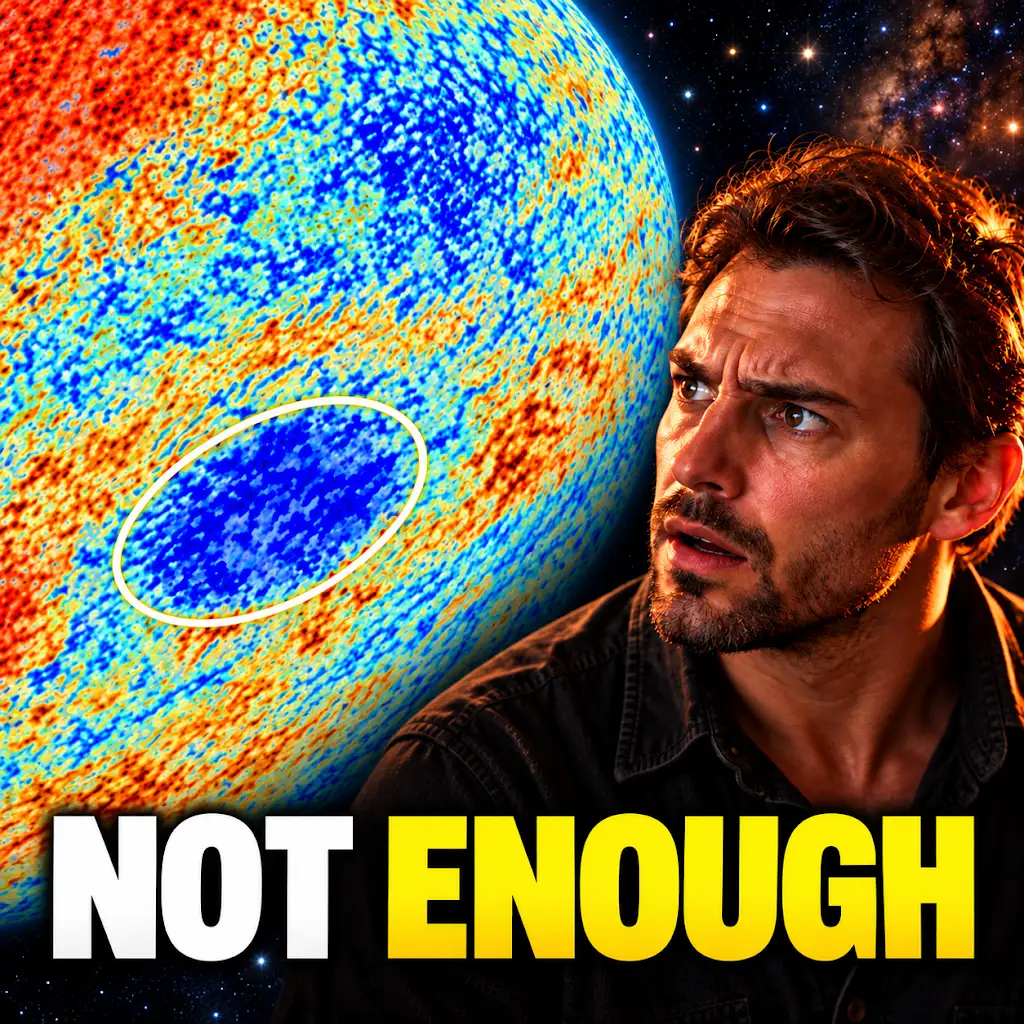
The Universe’s Cold Spot Has an Explanation. It’s Not Enough.
FAQs
What are some examples of unexplained space phenomena?
Some examples of unexplained space phenomena include fast radio bursts (FRBs), dark matter, dark energy, and the unidentified flying objects (UFOs) observed in space.
How do scientists study and research unexplained space phenomena?
Scientists study and research unexplained space phenomena using various tools and technologies such as telescopes, satellites, space probes, and computer simulations. They also collaborate with international space agencies and research institutions to gather data and analyze the phenomena.
What are some theories proposed to explain unexplained space phenomena?
Some theories proposed to explain unexplained space phenomena include the existence of advanced extraterrestrial civilizations, alternative dimensions, and undiscovered laws of physics. Scientists continue to explore these theories through research and experimentation.
Why is it important to study unexplained space phenomena?
Studying unexplained space phenomena is important because it can lead to new discoveries and advancements in our understanding of the universe. It also helps scientists uncover hidden mysteries of space and potentially find answers to fundamental questions about the nature of the cosmos.
Are there any ongoing missions or projects dedicated to investigating unexplained space phenomena?
Yes, there are ongoing missions and projects dedicated to investigating unexplained space phenomena. For example, the James Webb Space Telescope (JWST) is set to launch and will help scientists study the origins of the universe and potentially uncover new insights into unexplained space phenomena.