
The hum of the laboratory was a familiar lullaby to Dr. Aris Thorne, a constant companion in his pursuit of the inexplicable. For weeks, an anomaly had been brewing within the Freaky Science Facility, a whisper of something gone awry in the otherwise predictable world of controlled experimentation. It wasn’t a malfunction, not a power surge, but something far more subtle and, frankly, unnerving: a pocket of absolute cold. Not just chilly, but a profound, bone-deep frigidity that defied all known scientific principles governing heat transfer within their state-of-the-art environment. This “Freaky Science Cold Spot,” as it had been unofficially dubbed by the increasingly anxious research staff, was becoming an obsession.
The Genesis of an Anomaly
The origin of the cold spot was as elusive as its nature. It had first been detected during routine environmental monitoring of Sector Gamma, a section dedicated to advanced quantum entanglement research. Initially, the readings were dismissed as sensor calibration errors. However, the discrepancies persisted, and a pattern emerged. A specific, localized area, roughly the size of a small office, was consistently reporting temperatures far below ambient, even when the surrounding climate control systems were functioning optimally. The readings were so extreme that they threatened to freeze delicate instrumentation, necessitating the cordon-off of the affected zone. This immediate containment, while prudent, only served to deepen the mystery. What force, or lack thereof, could create such a localized thermal vacuum?
Initial Observations and Data Collection
Dr. Thorne, a theoretical physicist with a penchant for the unconventional, was among the first to personally investigate the anomaly. Armed with an array of advanced thermal imaging equipment, he approached the cordoned-off area with a mixture of scientific curiosity and a prickle of apprehension. The air immediately surrounding the perimeter felt normal, but as he neared the designated zone, a palpable chill began to seep into his bones. His breath plumed in front of him, a stark contrast to the comfortable temperature just meters away. Thermal imaging confirmed the bizarre phenomenon. While the walls and equipment outside the anomaly glowed with expected infrared signatures, the cold spot appeared as a void, a chilling absence of heat. The data collected was unprecedented. Temperatures within the spot hovered around -150 degrees Celsius, a level of frigidity that should have been impossible to achieve without specialized cryogenics, which were not in use in Sector Gamma. The humidity levels also plummeted, creating an almost desert-like dryness within the affected region.
Ruling Out Conventional Explanations
The immediate priority was to systematically eliminate all plausible scientific explanations. The facility’s engineering team conducted a thorough review of the HVAC systems, ensuring no leaks, blockages, or unexpected coolant flows were contributing to the localized cooling. They meticulously checked all power conduits, searching for any electromagnetic interference that might be affecting the sensors or, more speculatively, creating a localized energy drain. The results were consistently negative. The equipment was functioning perfectly, and there was no discernible energy source or sink that could account for the extreme temperature drop. Furthermore, the anomaly was not expanding or contracting in a manner consistent with any known physical process. It remained stubbornly in its designated area, a silent, frozen enigma.
If you’re intrigued by the concept of cold spots in science, you might find the article on “The Mysterious Cold Spot in the Cosmic Microwave Background” particularly fascinating. This article delves into the implications of a significant cold area in the universe’s background radiation and its potential connections to dark energy and cosmic inflation. To explore this topic further, you can read the full article here: The Mysterious Cold Spot in the Cosmic Microwave Background.
The Quantum Conundrum

As conventional explanations faltered, Dr. Thorne and his team began to turn their attention to the more esoteric fields of physics, particularly those related to the research conducted in Sector Gamma: quantum entanglement and vacuum energy. The very nature of quantum mechanics, with its inherent uncertainties and probabilistic outcomes, offered a fertile ground for exploring phenomena that defied macroscopic understanding. The cold spot, with its seemingly impossible thermodynamics, began to feel less like a malfunction and more like a manifestation of something fundamentally different.
The Role of Quantum Entanglement
Sector Gamma was at the forefront of research into quantum entanglement, the phenomenon where two particles become linked in such a way that they share the same fate, regardless of the distance separating them. Experiments involved creating entangled pairs of subatomic particles and then manipulating one particle to observe the effect on its entangled partner. The hypothesis began to form: could an entanglement experiment gone awry have somehow created a localized region of altered quantum vacuum energy, leading to this inexplicable cold? Thorne speculated that perhaps an unintended consequence of manipulating entangled states at a very high energy level might have momentarily disrupted the zero-point energy of the vacuum in that specific area, effectively “siphoning” thermal energy away.
Zero-Point Energy and Vacuum Fluctuations
Zero-point energy, the residual energy that remains in a quantum system even at absolute zero temperature, is a fundamental concept in quantum field theory. It is believed to be the source of vacuum fluctuations, spontaneous creation and annihilation of particle-antiparticle pairs. Thorne theorized that the cold spot might be a manifestation of an extreme, localized fluctuation in this vacuum energy. Perhaps a highly unstable quantum state had been inadvertently created, leading to an excessive extraction of energy from the surrounding environment, manifesting as intense cold. The challenge was to find a way to detect or measure such a phenomenon without further exacerbating the anomaly.
The Unseen Dance of Particles
The abstract nature of quantum mechanics made direct observation of the cold spot’s internal workings incredibly difficult. The subatomic particles within the anomaly were in a state of constant flux, their interactions too rapid and subtle to be easily tracked. However, Thorne envisioned experiments that might indirectly probe the quantum state of the region. This involved sending precisely calibrated energy pulses into the anomaly and analyzing the subtle ways they were absorbed or reflected. The hope was that these interactions would reveal clues about the underlying quantum mechanics at play, offering a glimpse into the unseen dance of particles that was generating the frigid conditions.
Delving into Exotic Physics Theories
The peculiarity of the cold spot pushed the research team beyond the established paradigms of physics. Conventional theories, while robust in many applications, seemed insufficient to explain this localized thermodynamic anomaly. This led to an exploration of more speculative, yet scientifically grounded, theories that might offer a framework for understanding such an event.
String Theory and Extra Dimensions
One avenue of inquiry involved the more speculative aspects of string theory. While string theory primarily aims to unify fundamental forces, some of its formulations propose the existence of extra spatial dimensions, curled up at incredibly small scales. The question arose: could the cold spot be a manifestation of a localized interaction with these hypothetical extra dimensions? Perhaps the anomaly was a point where energy was being siphoned off into a higher dimension, or where the fabric of spacetime itself was behaving in an unexpected way due to an infinitesimal warp. This was, of course, highly theoretical, but in the absence of any other explanations, it became a subject of serious discussion.
Exotic Matter and Dark Energy Analogues
Another line of thought considered the possibility of an extremely rare form of exotic matter, or even an analogue of dark energy, being present in the localized region. Dark energy, the mysterious force driving the accelerated expansion of the universe, is characterized by its negative pressure and its ability to create repulsive gravitational effects. While the cold spot was a phenomenon of cooling, not expansion, the idea of a localized energy-altering substance was intriguing. Could some form of as-yet-undiscovered matter possess properties that actively consumed thermal energy from its surroundings? This hypothesis, while highly speculative, fueled further experimental design considerations.
Gravitational Anomalies and Warped Spacetime
While the primary manifestation was thermal, the research team also considered the possibility of subtle gravitational anomalies. Extreme energy densities, or even the presence of exotic matter, could theoretically warp spacetime in ways that might influence energy distribution. They employed highly sensitive gravimeters to scan the area, searching for any minute deviations from expected gravitational readings. The data, while subtle, was inconclusive, but it remained a thread of investigation, a potential pathway to understanding the deep physical principles at play.
The Search for a Control Mechanism
The ultimate goal was not merely to understand the cold spot, but to find a way to control or reverse it. The continued existence of such an unpredictable anomaly posed a significant risk to the facility and its research. Dr. Thorne and his team recognized that without a means of intervention, the Freaky Science Cold Spot would remain an uncontrolled variable, a constant source of unease and potential danger.
Developing Advanced Sensory Arrays
To better understand the dynamics of the anomaly, the team began developing an array of highly sensitive, specialized sensors. These were not standard thermal or pressure gauges, but instruments designed to detect subtle quantum fluctuations, exotic particle emissions, and even minute changes in the fabric of spacetime. The aim was to create a more comprehensive, multi-faceted picture of what was occurring within the frigid zone, moving beyond simple temperature readings to probe the underlying physical processes.
Theoretical Models for Energy Reintegration
Based on the emerging theoretical frameworks, Dr. Thorne began constructing theoretical models for how the anomaly might be reversed. These models ranged from attempts to re-introduce specific energy frequencies into the affected area, designed to counteract the energy drain, to more radical ideas involving the controlled manipulation of entangled particles to stabilize the quantum vacuum. Each model was rigorously simulated, with the facility’s supercomputers working overtime to predict potential outcomes and risks.
The Ethical Considerations of Intervention
The potential for intervention brought with it a heavy burden of ethical consideration. Any attempt to manipulate such a profound anomaly carried inherent risks. Could an ill-conceived intervention exacerbate the problem, leading to unforeseen consequences? The team engaged in extensive discussions with the facility’s ethics board, carefully weighing the potential benefits of control against the risks of unintended destabilization. The scientific imperative to understand and control the anomaly was tempered by a profound respect for the unknown and the potential for catastrophic error.
The concept of cold spots in the universe has intrigued scientists for years, leading to various theories about their origins and implications. A fascinating article that delves deeper into this phenomenon can be found on Freaky Science, where researchers explore the mysteries surrounding these unusually low-temperature areas. For more insights, you can read the article here. Understanding these cold spots not only challenges our current knowledge of cosmic structures but also opens up new avenues for research in astrophysics.
Towards Resolution and Future Implications
| Metric | Value | Description |
|---|---|---|
| Location | Southern Hemisphere, near the constellation Eridanus | Approximate area of the cosmic microwave background cold spot |
| Temperature Anomaly | -70 µK | Temperature difference compared to average cosmic microwave background temperature |
| Angular Size | 5° to 10° | Apparent size of the cold spot on the sky |
| Discovered | 2004 | Year when the cold spot was first identified in WMAP data |
| Possible Causes | Supervoid, cosmic texture, or statistical anomaly | Hypotheses explaining the cold spot’s origin |
| Significance Level | 2-3 sigma | Statistical significance of the cold spot anomaly |
| Data Sources | WMAP, Planck Satellite | Primary missions that observed the cold spot |
The journey to unraveling the mystery of the Freaky Science Cold Spot was far from over. Each discovery, each failed hypothesis, brought them closer to a deeper understanding, but also highlighted the vastness of what remained unknown. The anomaly served as a stark reminder of the universe’s capacity for surprise, and the limitations of current scientific knowledge when faced with truly exceptional phenomena.
Collaborative Efforts and Global Interest
News of the Freaky Science Cold Spot, though kept under tight wraps initially, inevitably began to leak. The sheer strangeness of the anomaly attracted the attention of physicists and research institutions worldwide. Collaborative efforts were initiated, with experts in quantum physics, theoretical cosmology, and exotic matter offering their insights and proposing new avenues of research. The cold spot, once a localized enigma, was quickly becoming a global scientific puzzle, a testament to the interconnectedness of scientific inquiry.
Potential Technological Advancements
The ongoing research into the cold spot, regardless of its ultimate resolution, was already yielding unexpected technological advancements. The development of new sensor technology, the refinement of quantum simulation techniques, and the exploration of novel energy manipulation methods held the promise of significant breakthroughs in fields ranging from energy production to advanced computing. The lessons learned from grappling with this anomaly were poised to ripple outwards, impacting technological progress in unforeseen ways.
The Enduring Mystery
As Dr. Thorne stood before the cordoned-off area, the familiar chill still emanating from within, he knew that the Freaky Science Cold Spot had irrevocably altered their understanding of physics. It was a tangible manifestation of the universe’s boundless complexity, a stark reminder that even in the most controlled environments, the extraordinary could manifest. Whether they would ultimately conquer this frigid enigma or merely learn to coexist with it, the journey of unraveling its mystery was a testament to the unyielding human drive to explore the unknown, to push the boundaries of comprehension, and to find wonder in the most unexpected of places. The cold spot remained, a silent testament to the freaky, and often beautiful, nature of science.
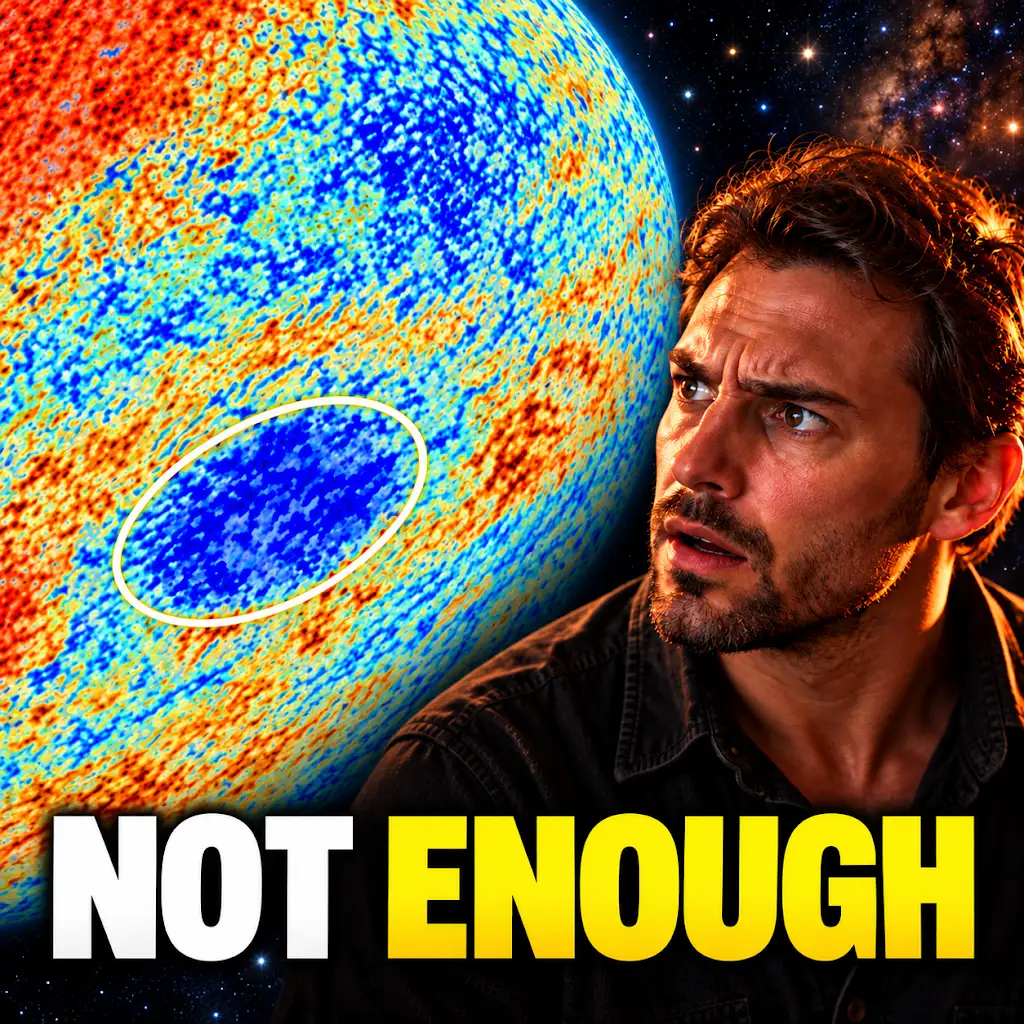
The Universe’s Cold Spot Has an Explanation. It’s Not Enough.
FAQs
What is the cold spot in the article “Freaky Science Cold Spot” about?
The cold spot in the article refers to a mysterious area in the universe where the temperature is significantly lower than its surroundings.
Where is the cold spot located?
The cold spot is located in the southern constellation Eridanus, which is a region of the sky visible from Earth.
How was the cold spot discovered?
The cold spot was discovered by astronomers using data from the Planck satellite, which mapped the cosmic microwave background radiation in the universe.
What are some theories about the origin of the cold spot?
Some theories suggest that the cold spot could be the result of a supervoid, a vast empty region of space with fewer galaxies and less matter than its surroundings. Other theories propose that it could be a remnant of the early universe or a result of interactions with dark energy.
What implications does the cold spot have for our understanding of the universe?
The cold spot challenges current models of the universe and raises questions about the distribution of matter and energy on a cosmic scale. Studying the cold spot could provide valuable insights into the nature of dark energy, the evolution of the universe, and the formation of large-scale structures.