
The vast expanse of the cosmos, teeming with galaxies, stars, and nebulae, has long captivated the human imagination. Astronomers, through meticulous observation and groundbreaking theories, have pieced together a stunning tapestry of the universe’s structure. However, amidst this grand cosmic architecture, there exist anomalies that challenge our understanding and beckon further exploration. One such enigma is the Eridanus Supervoid, a colossal region of space seemingly devoid of matter, stretching across billions of light-years. Its sheer scale and apparent emptiness have prompted scientists to ponder its origins and implications for our cosmic neighborhood.
The Unveiling of an Uncharted Void
The discovery of the Eridanus Supervoid was not an immediate, dramatic revelation, but rather a gradual emergence from mountains of observational data. As astronomers meticulously mapped the distribution of galaxies and the faint glow of the cosmic microwave background (CMB) radiation, a peculiar deficit began to manifest in a specific sector of the sky. Early surveys, such as the Sloan Digital Sky Survey (SDSS), provided increasingly detailed maps of nearby galaxies. These surveys revealed that the density of galaxies in the direction of the constellation Eridanus was significantly lower than what statistical models predicted for a homogeneous and isotropic universe.
The Cosmic Microwave Background Anomaly
The cosmic microwave background (CMB) radiation is the afterglow of the Big Bang, a faint thermal radiation permeating the entire universe. It acts as a snapshot of the universe when it was only about 380,000 years old, a time when it was a hot, dense plasma. Tiny temperature fluctuations in the CMB, imprinted on this ancient light, are the seeds from which all cosmic structures, from galaxies to galaxy clusters, eventually grew. The precision with which these fluctuations are measured has provided invaluable insights into the universe’s composition and evolution.
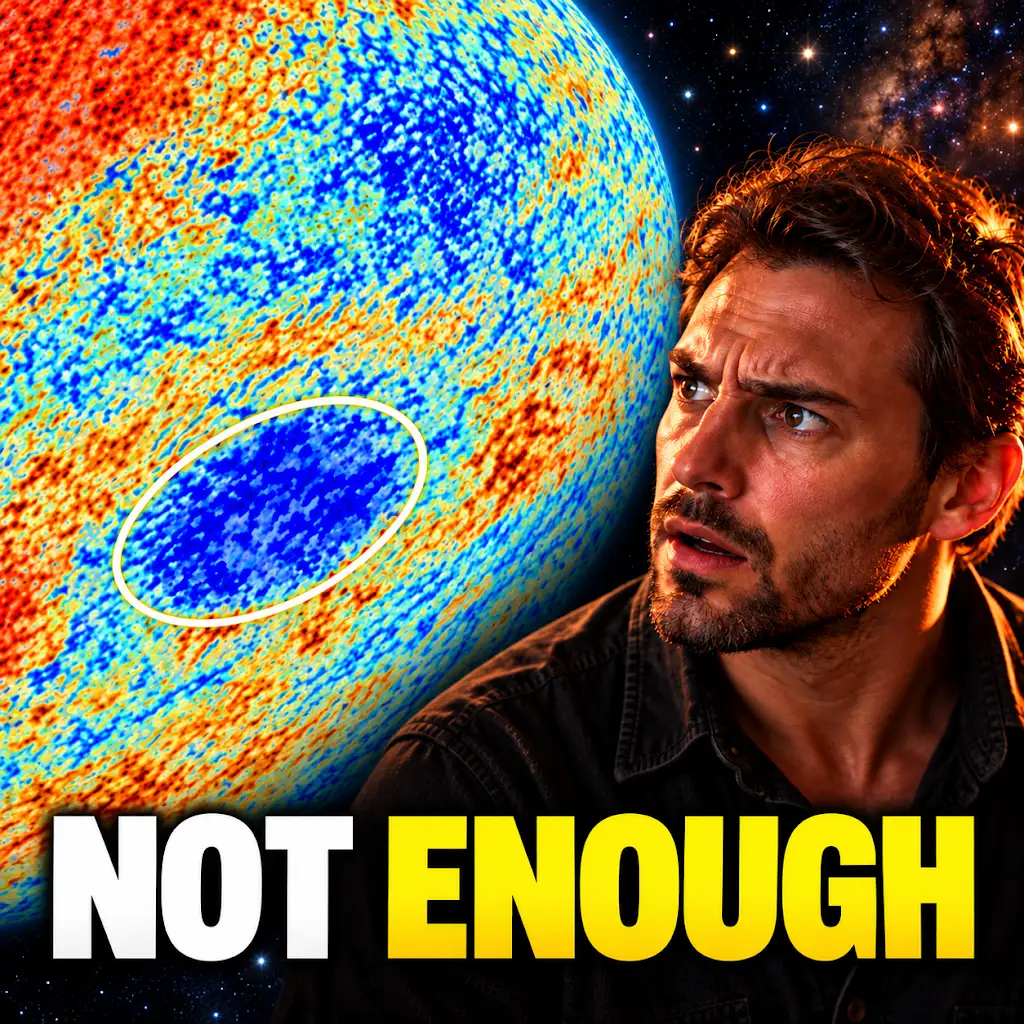
It was during the analysis of CMB data, particularly from missions like the Wilkinson Microwave Anisotropy Probe (WMAP) and later the Planck satellite, that a particularly perplexing feature was identified within the Eridanus region. This feature, often referred to as the “CMB cold spot,” is a region where the CMB radiation is inexplicably colder than the surrounding sky. While statistical fluctuations are expected in the CMB, the magnitude and extent of this cold spot were deemed statistically unlikely to arise from random chance alone. The coldness suggests a deficit in the density of matter along the line of sight from Earth to that part of the universe, implying a region of lower-than-average gravitational pull.
Early Indications and Evolving Perspectives
Initially, the low galaxy density in Eridanus was noted as an interesting statistical anomaly. However, as more comprehensive galaxy surveys were conducted and the CMB data became more refined, the picture solidified into something far more significant. The combined evidence pointed towards a vast, underdense region of space, far larger and emptier than any previously known cosmic void. The term “supervoid” was coined to describe this gargantuan structure, emphasizing its immense scale and the profound emptiness it represented.
The concept of cosmic voids is not new. The universe is not uniformly distributed; it exhibits a foamy, web-like structure known as the cosmic web. This web consists of dense filaments of galaxies and galaxy clusters, connected by nodes, and interspersed with vast, largely empty regions called voids. These voids are still not entirely devoid of matter, containing some dark matter and a sparse scattering of galaxies and gas. However, the Eridanus Supervoid appeared to be an extreme example, significantly larger and emptier than typical voids.
The Eridanus Supervoid, a vast region of space that is significantly less dense than the surrounding universe, has intrigued astronomers and cosmologists alike due to its sheer size and mysterious nature. For those interested in exploring more about this fascinating cosmic phenomenon, you can read a related article that delves deeper into its implications and the ongoing research surrounding it. Check it out here: Freaky Science.
Defining the Eridanus Supervoid
To truly grasp the immensity of the Eridanus Supervoid, one must consider the scales involved. It is not a pocket of emptiness the size of a galaxy cluster, nor even a single galaxy. Instead, it is a colossal structure that dwarfs these familiar cosmic entities. The supervoid is estimated to span a diameter of approximately 1 to 1.5 billion light-years. To put this into perspective, our Milky Way galaxy is about 100,000 light-years across. The supervoid is therefore roughly 10,000 to 15,000 times the diameter of our galaxy.
Immense Scale and Underdensity
The defining characteristic of the Eridanus Supervoid is its profound underdensity of matter. While the average density of matter in the universe, as described by the Lambda-CDM model, is relatively uniform on large scales, this supervoid represents a significant deviation from that average. Within this region, the density of galaxies and baryonic matter (normal matter composed of protons and neutrons) is estimated to be anywhere from 20% to 50% lower than the cosmic average. This means that for a given volume within the supervoid, there are significantly fewer galaxies, stars, and gas clouds compared to similar volumes elsewhere in the universe.
Dark matter, which constitutes about 85% of the universe’s matter content, also appears to be less concentrated within the supervoid, though its distribution is harder to directly observe. The gravitational influence of this lack of matter is what is thought to have caused the observed CMB cold spot. Light traveling from the far side of the universe through the supervoid would have lost some of its energy as it climbed out of the gravitational well of this less dense region, resulting in a cooler observed temperature.
Location and Visibility
The Eridanus Supervoid is located in the direction of the constellation Eridanus, a prominent constellation in the southern celestial hemisphere. Its precise boundaries are not sharply defined, as it is a region of underdensity rather than a completely empty bubble. Rather, it represents a vast expanse where the cosmic web is stretched thin. The supervoid’s immense size means that it occupies a significant portion of our observable sky, making it a region of particular interest for astronomers studying large-scale structure.
Its visibility is primarily through the absence of galaxies and the distinctive CMB cold spot. While we cannot “see” the void itself in the way we see a luminous galaxy, its presence is inferred from the distribution of the matter that is there and the effects it has on light. Astronomers use large redshift surveys, which measure the distance to galaxies by analyzing the redshift of their light (caused by the expansion of the universe), to map out the cosmic web and identify regions of low density.
Potential Explanations for its Existence
The existence of such a colossal and empty region poses a significant challenge to our standard cosmological model, the Lambda-CDM model. This model, which describes a universe that is largely homogeneous and isotropic on large scales, predicts that such extreme underdensities should be exceedingly rare. Several hypotheses have been proposed to explain the Eridanus Supervoid, ranging from established cosmological phenomena to more speculative ideas.
Fluctuations in the Early Universe
One of the most straightforward explanations, within the framework of the Lambda-CDM model, is that the Eridanus Supervoid is a product of statistical fluctuations in the very early universe. The initial conditions of the universe, as imprinted on the CMB, were not perfectly uniform. There were tiny variations in density that, over billions of years of cosmic evolution, grew into the structures we observe today. Denser regions attracted more matter and grew into galaxies and clusters, while less dense regions expanded and became voids.
The Eridanus Supervoid could simply be an exceptionally large and deep “valley” in this initial density field. While the Lambda-CDM model predicts that such extreme voids are statistically improbable, it does not render them impossible. The universe is vast, and with enough volume, even rare events can occur. The CMB cold spot, in this interpretation, is a direct consequence of the initial lower density in that region, amplified by the gravitational effects of the surrounding matter.
Topological Defects and Exotic Physics
More speculative, but nonetheless intriguing, explanations involve phenomena beyond the standard Lambda-CDM model. One such idea relates to topological defects, hypothetical structures that might have formed in the early universe as a result of phase transitions. Examples include cosmic strings (one-dimensional defects) or domain walls (two-dimensional defects). The formation and evolution of these defects could, in theory, have sculpted the distribution of matter, potentially leading to the creation of large voids.
Another area of exploration involves theories of modified gravity or exotic forms of dark energy. If our understanding of gravity on cosmic scales is incomplete, or if dark energy, the mysterious force driving the accelerated expansion of the universe, behaves in unexpected ways, it could influence the formation and growth of large-scale structures. For instance, a region with particularly strong or unusually behaving dark energy could have been more resistant to gravitational collapse, leading to a larger void.
The ‘Boötes Void’ Connection and Scale
It is worth noting that the Eridanus Supervoid is not the only large cosmic void discovered. The Boötes Void, also known as the Great Wall of China void, is another massive empty region discovered in the 1980s, approximately 250 million light-years in diameter. While significantly smaller than the Eridanus Supervoid, its discovery was the first indication that the universe was not as uniformly filled with matter as previously thought. The existence of multiple large voids, including the Eridanus Supervoid, suggests a common mechanism for their formation, albeit with variations in scale and depth.
The sheer scale of the Eridanus Supervoid, however, continues to be a point of intense study. While statistical fluctuations within the standard model can explain voids, the probability of an anomaly of this magnitude occurring within our observable universe is a topic of ongoing debate. This has led to continued research and the development of more sophisticated statistical tools to analyze its significance.
Implications for Cosmology and Our Universe
The Eridanus Supervoid, as a colossal cosmic anomaly, has profound implications for our understanding of the universe and its fundamental laws. Its existence challenges the assumptions of homogeneity and isotropy on certain scales and prompts us to refine our cosmological models.
Testing the Cosmological Principle
The cosmological principle states that on large scales, the universe is homogeneous (the same everywhere) and isotropic (the same in all directions). While this principle has been remarkably successful in describing the universe’s overall behavior, the Eridanus Supervoid, with its extreme underdensity, raises questions about the limits of this assumption. If such a massive deviation from homogeneity exists, it might suggest that our understanding of how structures form and evolve needs to be re-evaluated.
Astronomers are constantly seeking to confirm or refute the cosmological principle through detailed mapping of the universe’s large-scale structure. The Eridanus Supervoid serves as a crucial test case. If it is indeed a statistically rare fluctuation, it strengthens the cosmological principle. However, if it points to a systemic deviation or a process not accounted for in current models, it could necessitate revisions to our fundamental cosmological framework.
The Nature of Dark Matter and Dark Energy
The formation and evolution of cosmic voids are deeply intertwined with the properties of dark matter and dark energy. Dark matter provides the gravitational scaffolding around which structures form, while dark energy drives the accelerated expansion of the universe, counteracting gravity and potentially influencing void growth. A supervoid like Eridanus could provide unique insights into the behavior of these enigmatic components.
For example, if dark matter clumps less efficiently in this region than predicted, it might hint at subtle properties of dark matter particles that are not yet understood. Similarly, if the influence of dark energy is found to be different within the supervoid compared to denser regions, it could shed light on its spatial or temporal variations. Studying the dynamics of galaxies within and around the supervoid can offer clues about the distribution and influence of these invisible constituents of the universe.
The Future of Cosmic Structure Formation Studies
The study of the Eridanus Supervoid underscores the importance of observing and analyzing the universe’s large-scale structure. Future generations of telescopes and surveys, with even greater sensitivity and resolution, will be able to map out the cosmic web with unprecedented detail. These observations will not only help to better define the boundaries and properties of the Eridanus Supervoid but also to uncover other such anomalies, if they exist.
Understanding the formation and evolution of voids, including supervoids, is crucial for a complete picture of cosmic structure formation. It complements the study of galaxy clusters and filaments, providing a more balanced and comprehensive view of the universe’s grand design. The ongoing investigation into the Eridanus Supervoid is a testament to the dynamic and ever-evolving nature of cosmology, where each discovery pushes the boundaries of our knowledge and inspires new avenues of research.
The Eridanus Supervoid, one of the largest known voids in the universe, has intrigued astronomers for years due to its immense size and the mysteries it holds about cosmic structure. For those interested in exploring this fascinating topic further, you can read a related article that delves into the implications of such vast emptiness in the cosmos. Understanding the scale of the Eridanus Supervoid can provide insights into the distribution of galaxies and dark matter. To learn more about this intriguing phenomenon, check out the article here.
Ongoing Research and Future Directions
| Metric | Value | Unit | Description |
|---|---|---|---|
| Diameter | 1.8 | billion light years | Approximate size across the widest part of the Eridanus Supervoid |
| Volume | ~3.05 | billion cubic light years | Estimated volume assuming a spherical shape |
| Density Contrast | -0.3 to -0.4 | dimensionless | Relative underdensity compared to the average cosmic density |
| Distance from Earth | 2 | billion light years | Approximate distance to the center of the supervoid |
| Redshift (z) | 0.14 | dimensionless | Redshift corresponding to the supervoid’s distance |
The Eridanus Supervoid remains an active area of research, with astronomers employing a variety of techniques and ongoing observational campaigns to unravel its mysteries. The quest for a definitive explanation involves continued data collection, sophisticated simulations, and theoretical modeling.
Advanced Observational Techniques
Modern astronomical instruments, such as the Atacama Large Millimeter/submillimeter Array (ALMA) and the upcoming James Webb Space Telescope (JWST), are providing unprecedented views of the universe. These powerful observatories are capable of detecting faint signals and probing the distribution of matter in previously inaccessible regions. Astronomers are using these tools to conduct more detailed galaxy surveys around the Eridanus Supervoid, looking for subtle clues about its formation and the matter it does contain.
Furthermore, ongoing and future CMB experiments are aiming to improve the precision with which the CMB is measured, particularly in the Eridanus region. Higher resolution maps of the CMB will allow for a more accurate characterization of the cold spot and provide more stringent tests for theoretical models attempting to explain it.
Cosmological Simulations
Computer simulations play a vital role in understanding the formation of cosmic structures. By inputting the initial conditions of the universe and applying the laws of physics, cosmologists can simulate the evolution of the cosmic web over billions of years. These simulations are being used to model the formation of supervoids, including the Eridanus Supervoid, and to determine the probability of such structures arising within the Lambda-CDM framework.
By comparing the results of these simulations with observational data, scientists can refine their models and identify potential discrepancies. If simulations consistently fail to reproduce the observed characteristics of the Eridanus Supervoid, it would strengthen the case for alternative explanations. Conversely, if simulations can accurately predict its existence and properties, it would provide further validation for our current understanding of cosmology.
Theoretical Developments and Interdisciplinary Approaches
The enigma of the Eridanus Supervoid is also prompting theoretical physicists to explore new ideas and revisit existing ones. This includes developing more refined models of topological defects, investigating alternative theories of gravity, and exploring novel properties of dark energy. The challenge posed by this supervoid encourages interdisciplinary approaches, bringing together cosmologists, particle physicists, and theoretical physicists to tackle a common problem.
The ongoing investigation into the Eridanus Supervoid is a prime example of how scientific inquiry progresses. It highlights the interplay between observation, theory, and computation, where anomalies serve as powerful catalysts for discovery. As our observational capabilities grow and our theoretical frameworks evolve, the secrets of this colossal cosmic mystery are likely to be gradually unveiled, further enriching our understanding of the vast universe we inhabit.
The Universe’s Cold Spot Has an Explanation. It’s Not Enough.
FAQs
What is the Eridanus Supervoid?
The Eridanus Supervoid is a vast region of space that is largely devoid of galaxies and stars.
How big is the Eridanus Supervoid?
The Eridanus Supervoid is approximately 1 billion light-years across, making it one of the largest known voids in the universe.
Where is the Eridanus Supervoid located?
The Eridanus Supervoid is located in the constellation Eridanus, which is in the southern celestial hemisphere.
What is the significance of the Eridanus Supervoid?
The Eridanus Supervoid is significant because its size and emptiness challenge our current understanding of the distribution of matter in the universe.
How was the Eridanus Supervoid discovered?
The Eridanus Supervoid was discovered through observations of the cosmic microwave background radiation, which revealed a cold spot in the universe where fewer galaxies and stars are present.