
The universe, in its infinite expanse, is punctuated by regions of profound emptiness. These are the cosmic voids, vast, seemingly featureless gulfs that stand in stark contrast to the clumping of galaxies and matter elsewhere. Far from being mere absence, these colossal structures are integral to the cosmic web, playing a crucial role in the formation and evolution of the universe as we know it. Exploring these enigmatic spaces offers a unique perspective on the forces that have sculpted the cosmos over billions of years.
The Cosmic Tapestry and Its Empty Spaces
The universe is not a uniform soup of stars and galaxies. Instead, it is structured like a giant, three-dimensional sponge, a phenomenon known as the cosmic web. This web consists of filaments, vast strands of galaxies and dark matter, that intersect at dense nodes, forming galaxy clusters. Surrounding these luminous structures are enormous, mostly empty regions known as cosmic voids. These are the largest known structures in the universe, dwarfing even the most massive galaxy clusters. While they appear empty to our telescopes, they are not entirely devoid of matter. They contain diffuse gas and a significant proportion of the universe’s dark matter, though the density of luminous matter is extremely low. The formation of these voids is intrinsically linked to the growth of the cosmic web. Gravity pulls matter together, forming the filaments and clusters, while simultaneously, the regions between these concentrations are stretched and emptied, creating the voids. The very existence and scale of these voids provide crucial tests for our cosmological models, particularly for the nature of dark energy, the mysterious force driving the accelerating expansion of the universe.
Defining the Undefined: What Constitutes a Void?
Defining a cosmic void is not as straightforward as identifying a patch of blackness. Astronomers typically define a void based on the density of luminous matter, such as galaxies. A region is considered a void if the number of galaxies within it is significantly lower than the average density of galaxies in the universe. However, this is a simplified definition. Voids are three-dimensional structures, and their boundaries are not sharply defined. They gradually transition from regions of very low galaxy density to the filaments and clusters that surround them. The term “void” itself can be somewhat misleading, as these regions are not completely empty. They contain diffuse baryonic matter, primarily in the form of hydrogen and helium gas, and crucially, a substantial amount of dark matter. Dark matter, which does not interact with light and thus remains invisible, is thought to be essential for the gravitational scaffolding upon which the cosmic web, including the voids, is built. The concept of a void is therefore a statistical one, referring to regions where baryonic matter is significantly underdense compared to the cosmic average.
The Genesis of Emptiness: How Voids Form
The formation of cosmic voids is a direct consequence of the gravitational instability that drove the evolution of the universe from its early, more homogeneous state to the clumpy structure we observe today. In the early universe, matter was distributed almost uniformly. Tiny quantum fluctuations, amplified over cosmic time, led to slight overdensities and underdensities in the distribution of matter. Gravity, the dominant force on large scales, began to pull matter from the underdense regions towards the overdense regions. This process caused the overdense regions to grow into filaments and clusters of galaxies, while the underdense regions were progressively emptied, expanding and becoming larger voids. This cosmic expansion, driven by the initial conditions and later by dark energy, effectively pushed matter outwards from these nascent voids, creating the vast empty spaces. The process is analogous to boiling water; the bubbles expand, pushing the water away from them. In the universe, the “bubbles” are the voids, and the “water” is the baryonic and dark matter. The size and distribution of these voids are sensitive probes of the expansion history of the universe and the nature of dark energy.
Cosmic voids are vast, empty spaces in the universe that contain very few galaxies compared to denser regions. These intriguing structures play a significant role in our understanding of the universe’s large-scale structure and evolution. For a deeper exploration of cosmic voids and their implications for cosmology, you can read the related article found here: What is a Cosmic Void?. This article delves into the formation of these voids and their impact on the distribution of matter in the cosmos.
The Silent Inhabitants: What Lies Within the Voids?
Despite their name, cosmic voids are not entirely devoid of matter. They are, however, characterized by extremely low densities of luminous objects like stars and galaxies. The matter that does exist within these vast expanses is primarily in the form of diffuse gas and, more importantly, dark matter. Understanding the composition and distribution of this matter within voids offers crucial insights into the fundamental workings of gravity and the nature of the universe.
The Whisper of Gas: Diffuse Baryonic Matter in Void Interiors
While galaxies are scarce within the voids, they are not completely devoid of baryonic matter – the stuff that makes up stars, planets, and ourselves. This baryonic matter exists primarily as a very diffuse intergalactic gas, predominantly composed of hydrogen and helium, the most abundant elements in the universe. This gas is far too tenuous to form stars and galaxies on its own. Its presence is often detected through subtle absorption lines in the spectra of distant quasars that pass through these regions. These faint signals reveal the composition and temperature of the gas, providing clues about its history and its interaction with the surrounding cosmic structures. The low density of this gas also means that it is very cold, with temperatures only slightly above absolute zero. Studying this diffuse gas is challenging but essential for a complete picture of matter distribution in the universe, especially in these underdense regions.
The Invisible Scaffold: Dark Matter’s Dominance in the Emptiness
The most significant component of matter within cosmic voids is dark matter. Although invisible and undetectable by conventional means, its gravitational influence is profound. Dark matter is thought to be distributed throughout the cosmic web, forming the underlying scaffolding upon which visible structures like galaxies and clusters form. In the voids, where luminous matter is scarce, dark matter still constitutes a substantial portion of the total matter density. The distribution of dark matter within voids is not uniform; it tends to be slightly denser towards the edges of the void, where it connects to the surrounding filaments. This dark matter halo within a void is crucial for understanding the gravitational potential of the region and its role in the overall structure of the cosmic web. Simulations of cosmic structure formation consistently show that voids are not merely empty spaces but are regions where dark matter has also been pushed aside by the expansion, albeit to a lesser extent than baryonic matter. The study of dark matter distribution in voids is a key area of research in cosmology, aiming to unravel the mystery of this enigmatic substance.
Probing the Abyss: Methods of Void Detection and Study
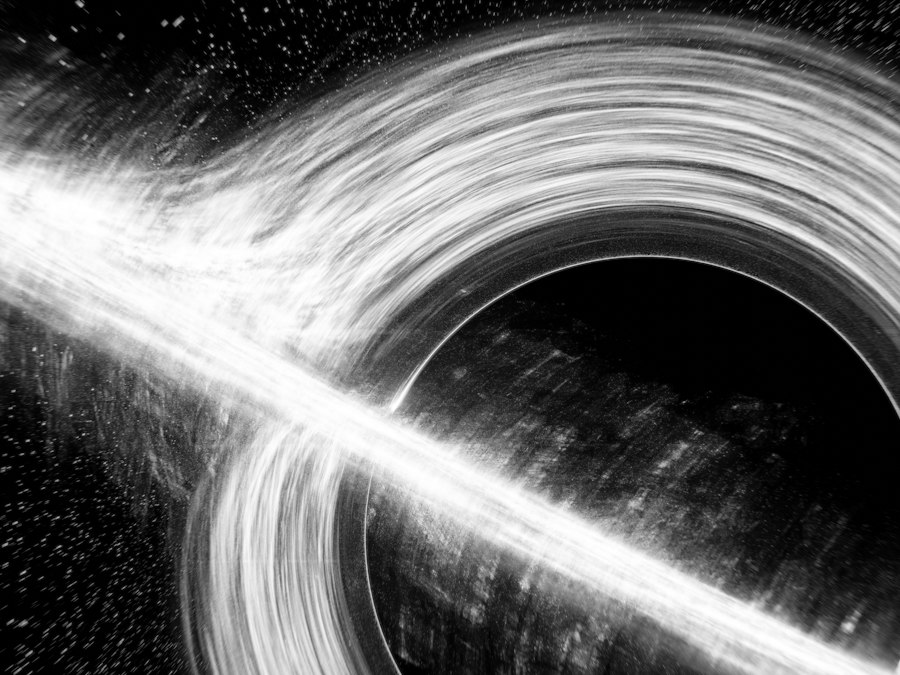
The immense scale and apparent emptiness of cosmic voids present significant challenges for their detection and study. Astronomers employ sophisticated techniques and large-scale surveys to map these structures and understand their properties. By analyzing the distribution of galaxies, the absorption of light from distant sources, and the subtle gravitational effects on visible matter, scientists are gradually unveiling the secrets held within these cosmic gulfs.
Mapping the Cosmic Canvas: Galaxy Redshift Surveys
One of the primary methods for identifying and mapping cosmic voids relies on galaxy redshift surveys. These surveys meticulously measure the positions and distances of millions of galaxies across vast stretches of the sky. By analyzing the redshift of light from these galaxies – a measure of how much their light has been stretched due to the expansion of the universe – astronomers can create a three-dimensional map of the cosmic web. In these maps, regions with a sparse distribution of galaxies are clearly visible as voids. The surveys are crucial for understanding the shape, size, and connectivity of these voids. Projects like the Sloan Digital Sky Survey (SDSS) and the Dark Energy Survey (DES) have been instrumental in revealing the intricate structure of the cosmic web and the prominent voids within it. These large-scale surveys are continuously expanding, providing ever more detailed maps of the universe and its enigmatic empty spaces.
The Silent Witnesses: Absorption Lines and the Intergalactic Medium
While galaxies are the most visible tracers of cosmic structure, the diffuse gas within voids also leaves its mark, albeit in a more subtle way. Astronomers can study this intergalactic medium (IGM) by observing the absorption of light from distant, luminous objects such as quasars. As light from a quasar travels through the universe, it encounters clouds of gas in various regions, including within voids. The atoms in these gas clouds absorb specific wavelengths of light, creating dark lines, or absorption lines, in the quasar’s spectrum. By analyzing the pattern of these absorption lines, astronomers can deduce the composition, temperature, and density of the intervening gas. This technique allows scientists to probe the IGM even in regions where galaxies are absent, providing invaluable information about the matter content and physical conditions within cosmic voids. The study of the Lyman-alpha forest, a series of absorption lines in the spectra of distant quasars caused by neutral hydrogen, is particularly important for mapping the distribution of matter at large scales, including within voids.
The Cosmic Architects: Voids and the Formation of Structure
Cosmic voids are not passive entities; they are active participants in the grand cosmic drama of structure formation. Their very existence and evolution are intrinsically linked to the processes that sculpted the universe, influencing the growth of galaxies and the overall large-scale distribution of matter. Understanding the role of voids offers profound insights into the fundamental forces that govern the cosmos.
The Gravity Well Effect: Voids as Catalysts for Galaxy Formation
While voids are characterized by a lack of galaxies, they are not entirely isolated from the process of galaxy formation. Instead, they act as gravitational sinks, their surrounding filaments and clusters drawing matter towards them. This gravitational pull influences the flow of gas and dark matter in the universe. The edges of voids, where the gravitational pull is strongest, are often sites where gas accumulates, eventually leading to the formation of new galaxies and the growth of existing ones. In this sense, voids, by their emptiness, paradoxically contribute to the concentration of matter and the birth of cosmic structures. The intergalactic gas that is pushed out of voids can be funneled into filaments and clusters, providing the raw material for star formation. The size and distribution of voids are therefore directly related to the distribution and evolution of galaxies in the universe.
The Dark Energy Connection: Voids as Probes of Cosmic Expansion
The existence and expansion of cosmic voids are profoundly linked to the mysterious force known as dark energy, which is driving the accelerating expansion of the universe. As the universe expands, the voids, being regions of lower matter density, expand more rapidly than the filaments and clusters. This differential expansion is a key characteristic of a universe dominated by dark energy. By studying the sizes of voids and how they evolve over cosmic time, astronomers can place constraints on the properties of dark energy and test different cosmological models. The observed correlation between the size of voids and the rate of cosmic expansion provides strong evidence for the existence of dark energy and its role in shaping the universe’s destiny. The study of voids is thus a crucial avenue for understanding the ultimate fate of the cosmos.
A cosmic void is a vast, empty space in the universe that contains very few galaxies, making it a fascinating subject for astronomers and astrophysicists. These voids can stretch for millions of light-years and provide valuable insights into the large-scale structure of the cosmos. For those interested in exploring more about the mysteries of the universe, you can read a related article that delves into the formation and significance of these intriguing regions by visiting Freaky Science. Understanding cosmic voids not only enhances our knowledge of galactic distribution but also sheds light on the fundamental nature of dark matter and dark energy.
The Unfolding Mystery: Future of Void Research
| Metric | Description | Typical Value | Units |
|---|---|---|---|
| Size | Diameter of a typical cosmic void | 10 to 100 | Megaparsecs (Mpc) |
| Density Contrast | Ratio of matter density inside the void compared to the average cosmic density | 0.1 to 0.3 | Dimensionless |
| Temperature | Average temperature of the intergalactic medium inside the void | 10,000 to 20,000 | Kelvin (K) |
| Redshift Range | Typical redshift range where voids are observed | 0 to 1 | Dimensionless |
| Galaxy Count | Number of galaxies found inside a typical void | Few to none (0-10) | Count |
| Expansion Rate | Relative expansion rate of voids compared to the average universe expansion | 5% to 20% faster | Percentage |
The exploration of cosmic voids is a frontier in modern cosmology, with ongoing research promising to unlock deeper secrets about the universe’s structure, evolution, and fundamental constituents. Future advancements in observational technology and theoretical modeling will undoubtedly shed more light on these enigmatic empty spaces.
Next-Generation Telescopes and Surveys: A Clearer View of Emptiness
The next generation of astronomical surveys and telescopes are poised to revolutionize our understanding of cosmic voids. Instruments like the Vera C. Rubin Observatory and the Nancy Grace Roman Space Telescope will provide unprecedentedly deep and wide-field views of the universe, mapping millions of galaxies with greater precision than ever before. These advanced surveys will enable astronomers to identify and characterize voids with remarkable detail, revealing their shapes, sizes, and internal structures with a clarity previously unimaginable. Furthermore, these new instruments will allow for more precise measurements of the distribution of dark matter within voids, providing crucial data for refining cosmological models. The increased sensitivity of these telescopes will also improve our ability to detect the faint signals of diffuse gas within voids, offering a more complete census of matter in these underdense regions.
Theoretical Advancements and Simulations: Modeling the Void Landscape
Alongside observational progress, theoretical cosmology and computational simulations are crucial for interpreting the data gathered from void research. Advanced simulations, incorporating our current understanding of gravity, dark matter, and dark energy, are essential for modeling the formation and evolution of cosmic voids and the cosmic web as a whole. These simulations allow scientists to test different hypotheses about the nature of dark matter and dark energy by comparing the simulated void structures with observed ones. Future theoretical work will likely focus on refining these simulations to account for subtle physical processes occurring within voids, such as the behavior of neutrinos and the impact of baryonic feedback from nascent galaxies. The interplay between increasingly sophisticated observations and powerful theoretical models will be key to unraveling the profound mysteries that cosmic voids continue to hold. Their silent expanse, once a testament to the limitations of our observation, is slowly yielding its secrets, painting a more complete and awe-inspiring picture of our universe.
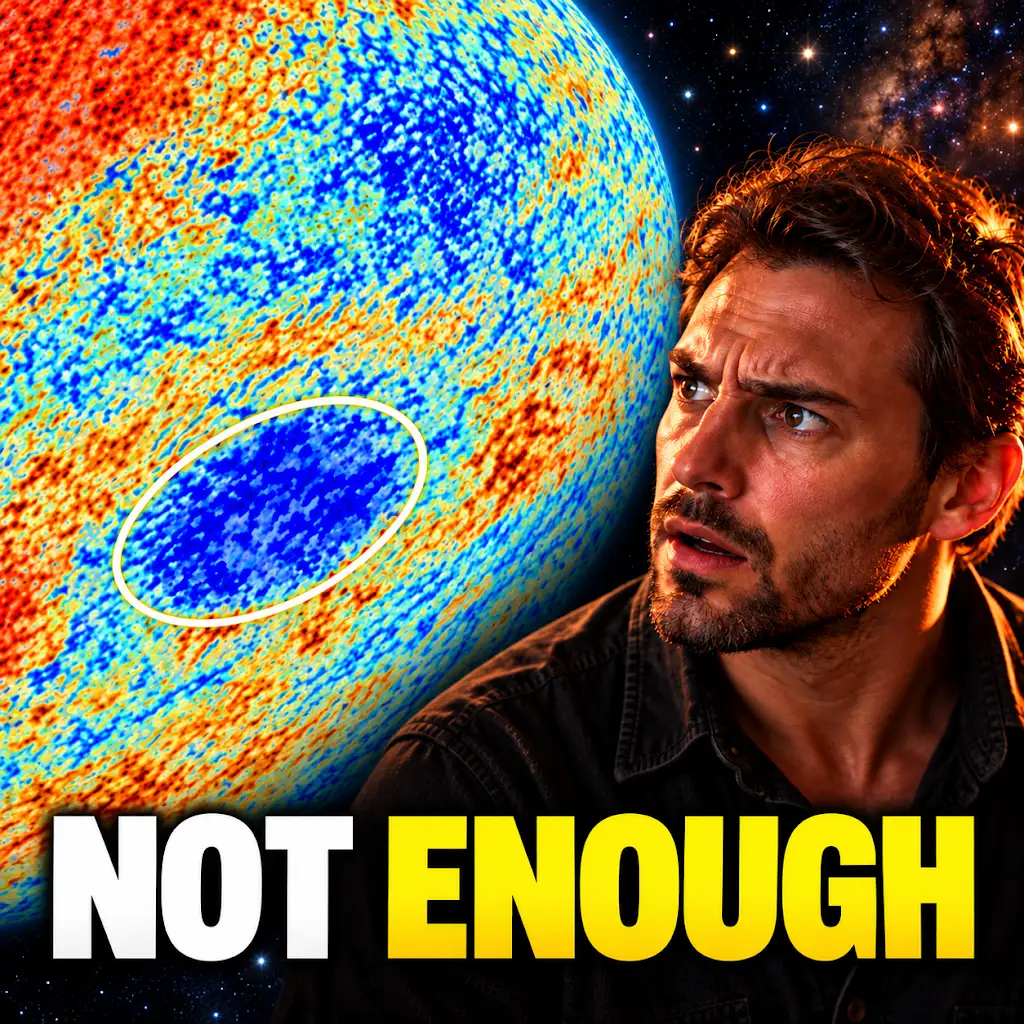
The Universe’s Cold Spot Has an Explanation. It’s Not Enough.
FAQs
What is a cosmic void?
A cosmic void is a vast, empty region of space that contains very few or no galaxies.
How are cosmic voids formed?
Cosmic voids are formed as a result of the large-scale structure of the universe, where matter is distributed unevenly due to the expansion of the universe.
What is the size of a typical cosmic void?
Cosmic voids can vary in size, but they are typically hundreds of millions of light-years across.
What is the significance of cosmic voids in the study of the universe?
Studying cosmic voids can provide valuable insights into the distribution of matter in the universe, the nature of dark matter and dark energy, and the overall structure of the cosmos.
Are there any known cosmic voids in our universe?
Yes, there are several known cosmic voids in our universe, such as the Boötes Void and the Eridanus Supervoid.