The flickering images on the screen offered a glimpse into a universe not as it is now, but as it once was. “Unveiling the Cosmic Microwave Background: A Documentary” is a cinematic journey that transcends time, taking viewers on an expedition to the very edge of existence. It is a testament to human curiosity, scientific endeavor, and the profound beauty of our cosmic origins. This documentary, lauded for its stunning visuals and insightful explanations, delves into the story of the Cosmic Microwave Background (CMB) – the faint afterglow of the Big Bang, a celestial whisper that has shaped our understanding of the universe’s birth, evolution, and ultimate fate.
The Echoes of Creation
The initial segment of the documentary meticulously sets the stage, transporting the audience back to a time when the universe was an incandescent, undifferentiated plasma. The narrative skillfully employs CGI to depict a cosmos teeming with energy, where light and matter were inextricably bound. It emphasizes that for the first few hundred thousand years after the Big Bang, the universe was opaque, a dense fog through which light could not travel freely. This fundamental constraint meant that no direct observation of this primordial epoch was possible, leaving a gaping void in our cosmic narrative. The film expertly illustrates the concept of recombination, the pivotal moment when the universe cooled enough for protons and electrons to combine, forming neutral atoms. This event, occurring approximately 380,000 years after the Big Bang, decoupled light from matter, allowing photons to travel unimpeded through space for the first time. These liberated photons, the documentary explains, are the very particles that, after billions of years of expansion and cooling, we now detect as the CMB.
The Genesis of the Universe
The documentary’s portrayal of the Big Bang is not a simplistic explosion, but rather a period of rapid expansion and cooling. It stresses that the Big Bang was not an event in space, but rather the expansion of space itself. The filmmakers utilize abstract animations to convey the immense energies and densities involved, avoiding anthropocentric interpretations and focusing on the physics. The film introduces the concept of inflation, a hypothetical period of exponential expansion that is thought to have occurred in the universe’s first fraction of a second, explaining the remarkable uniformity of the CMB across vast distances. This section is crucial for establishing the scientific foundation upon which the rest of the documentary is built. It’s a visual and intellectual primer, ensuring that viewers, regardless of their scientific background, can grasp the immense scale and profound implications of the universe’s origin. The narrative weaves in the contributions of early cosmologists, highlighting their theoretical frameworks that predicted the existence of such a primordial radiation.
Decoupling: The Birth of Transparency
The visual representation of decoupling is particularly striking. The film contrasts the dense, opaque early universe with the sudden transparency that followed recombination. It shows light particles, previously trapped, streaming outwards in all directions. This visual metaphor is powerful, underscoring the significance of this transition. The documentary explains how this “first light” has been traveling through the expanding universe ever since, a cosmic message from a time when the universe was young and vibrant. The narration, delivered in a calm yet authoritative tone, guides the audience through complex astrophysical concepts, making them accessible without oversimplifying them. The use of sound design further enhances the immersive experience, with subtle echoes and ambient tones evoking a sense of vastness and antiquity.
For those interested in exploring the fascinating details of the cosmic microwave background (CMB) and its significance in understanding the early universe, a related article can be found at Freaky Science. This article delves into the origins of the CMB, its discovery, and the pivotal role it plays in cosmology, providing viewers of the documentary with a deeper context and appreciation for the subject.
The Accidental Discovery and Early Exploration
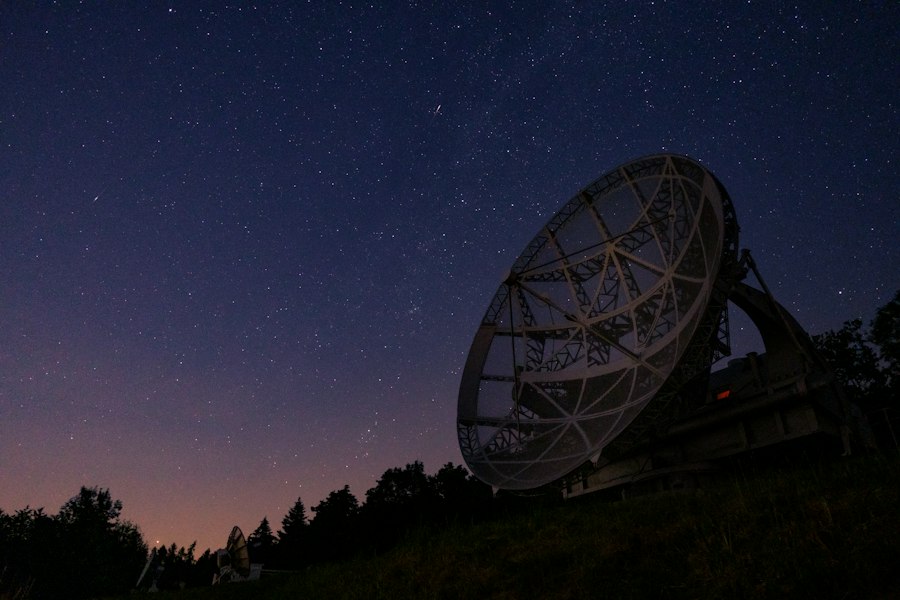
The documentary then transitions to the story of the CMB’s discovery, a tale of serendipity and persistent scientific inquiry. It recounts the work of Arno Penzias and Robert Wilson in the 1960s, two Bell Labs engineers who stumbled upon an unexplained, persistent microwave hiss in their radio antenna. The film vividly describes their attempts to pinpoint the source of this “excess antenna temperature,” attributing it to everything from pigeon droppings to a malfunctioning component. The narrative masterfully builds suspense as Penzias and Wilson exhaust all terrestrial explanations, leading them to the groundbreaking realization that their signal was coming from everywhere in the sky, a constant hum that seemed to originate from the cosmos itself. This section is a testament to the scientific method, showcasing how anomalies, when investigated rigorously, can lead to paradigm-shifting discoveries.
The “Noise” That Changed Everything
The “noise” that Penzias and Wilson detected was, in fact, the CMB. The documentary explains how their discovery, initially met with some skepticism, was later confirmed by theoretical predictions made by physicists like George Gamow and Ralph Alpher decades earlier. The film highlights the Nobel Prize awarded to Penzias and Wilson, recognizing the profound impact of their accidental find. It emphasizes that they were not looking for the Big Bang’s afterglow; they were simply trying to improve the performance of their antenna. This element of chance underscores the unpredictable nature of scientific exploration and the importance of being open to unexpected results. The archival footage and reenactments effectively bring this historical moment to life, offering a human dimension to the scientific narrative. The documentary doesn’t just present facts; it tells a story, making the historical context of the discovery as engaging as the science itself.
Early Probes and Groundbreaking Insights
Following the initial discovery, the documentary details the crucial role of early space-based missions in studying the CMB. The Cosmic Background Explorer (COBE) satellite, launched in 1989, is prominently featured. Viewers witness how COBE, with its sensitive instruments, was able to precisely measure the spectrum of the CMB, confirming it to be a near-perfect blackbody radiation, exactly as predicted by the Big Bang model. More importantly, COBE detected tiny temperature fluctuations – anisotropies – in the CMB. These minute variations, on the order of parts per hundred thousand, are the seeds of all the structure we see in the universe today: galaxies, clusters of galaxies, and the vast cosmic web. The film explains that these slight differences in temperature correspond to tiny variations in density in the early universe, areas that would eventually gravitationally collapse to form the cosmic structures we observe.
Mapping the Infancy of the Universe
The core of “Unveiling the Cosmic Microwave Background” lies in its exploration of how scientists have painstakingly mapped the CMB with increasing precision. The documentary highlights subsequent missions like the Wilkinson Microwave Anisotropy Probe (WMAP) and the Planck satellite. These missions, equipped with more advanced technology, have provided increasingly detailed maps of the CMB, revealing a tapestry of subtle temperature differences that are a direct imprint of the early universe. The visual representations of these maps are breathtaking. The familiar mottled patterns, often depicted as colorful spheres, are explained as snapshots of the universe when it was just a baby, allowing cosmologists to infer crucial information about its composition, age, and geometry.
WMAP: A Higher Resolution Gaze
The documentary dedicates a significant portion to the WMAP mission, launched in 2001. It showcases how WMAP’s improved resolution allowed for a more detailed examination of the CMB anisotropies. The film explains how these variations in temperature reveal information about the proportions of dark matter, dark energy, and ordinary matter in the universe. The narrative meticulously breaks down how different patterns in the CMB map correspond to these fundamental cosmological constituents. For example, the angular scale of the dominant fluctuations provides a measurement of the universe’s curvature, indicating whether it is flat, open, or closed. The film uses engaging animations to illustrate how the acoustic oscillations in the primordial plasma, imprinted on the CMB, provide these crucial measurements. The documentary emphasizes that WMAP’s data provided the most precise measurements of the universe’s age and composition at the time, solidifying the Lambda-CDM model of cosmology.
Planck: The Ultimate Cosmic Portrait
The Planck satellite, launched in 2009, represents the apex of CMB observation discussed in the documentary. The film marvels at the extraordinary sensitivity of Planck’s instruments, which captured the CMB with unprecedented detail. The Planck maps, presented in stunning clarity, reveal an even richer complexity of anisotropies, allowing scientists to test cosmological models with greater rigor. The documentary explains how Planck’s data has helped refine our understanding of fundamental cosmological parameters, such as the Hubble constant, the rate of the universe’s expansion, and the initial conditions of the universe. The narrative delves into how Planck’s observations have placed tight constraints on theories of cosmic inflation and have provided clues about the nature of dark energy and dark matter, two of the universe’s most enigmatic components. The visual spectacle of the Planck maps, with their intricate patterns and subtle color variations, serves as a powerful testament to human ingenuity and our ability to probe the deepest mysteries of the cosmos.
Decoding the CMB: A Window into Cosmology
The documentary effectively moves beyond simply presenting the CMB data to explaining what it means. It showcases how cosmologists use these maps as a cosmic Rosetta Stone, decoding the information embedded within the CMB to answer fundamental questions about the universe. The film illustrates how the statistical properties of the CMB anisotropies – their distribution, size, and amplitude – are incredibly sensitive to the underlying cosmological model. By comparing observed patterns with theoretical predictions, scientists can refine their understanding of the universe’s history and evolution. This section is crucial for demonstrating the power of the CMB as a scientific tool, transforming abstract theoretical concepts into observable realities.
The Composition of the Cosmos
A significant takeaway from the documentary is how the CMB has revealed the universe’s constituents. The film explains that the precise measurements of CMB fluctuations by WMAP and Planck have allowed scientists to determine the relative abundances of different components of the universe with remarkable accuracy. It highlights that ordinary matter, the stuff of stars, planets, and ourselves, makes up only about 4.9% of the universe’s total mass-energy. Dark matter, an invisible substance that interacts gravitationally but not electromagnetically, accounts for approximately 26.8%. The remaining 68.3% is attributed to dark energy, a mysterious force driving the accelerated expansion of the universe. The visual aids employed are clear and effective, using pie charts and bar graphs that are integrated seamlessly into the narrative, making these complex proportions easily digestible. The documentary emphasizes that without the CMB, these proportions would remain largely speculative.
The Geometry and Fate of the Universe
The documentary also explores how the CMB provides crucial insights into the geometry of the universe. By analyzing the angular size of the largest temperature fluctuations, scientists can infer the curvature of spacetime. The film explains that the CMB data strongly suggests that the universe is spatially flat, a finding that has profound implications for our understanding of its evolution and ultimate fate. The narrative delves into the concept of cosmic destiny, explaining how a flat universe, combined with the observed accelerated expansion driven by dark energy, points towards a future where galaxies will continue to drift apart, leading to a cold, dark, and ever-expanding cosmos. The film avoids definitive pronouncements, acknowledging the ongoing research and the possibility of future discoveries, but presents the current scientific consensus based on CMB evidence. The visualisations used to depict spatial curvature are particularly impressive, offering intuitive analogies that help viewers grasp the abstract concept of a curved or flat universe.
The cosmic microwave background (CMB) is a fascinating topic that reveals the early universe’s secrets, and for those interested in delving deeper, there is an insightful article that explores its significance and implications. This documentary not only highlights the CMB’s role in cosmology but also connects it to broader themes in astrophysics. To further enhance your understanding, you can read more about these concepts in this informative piece on Freaky Science, which provides a comprehensive overview of the universe’s evolution and the mysteries that still surround it.
Unanswered Questions and Future Frontiers
| Metric | Value | Description |
|---|---|---|
| Documentary Title | The Cosmic Microwave Background: Echoes of the Big Bang | Name of the documentary focused on the cosmic microwave background (CMB) |
| Duration | 60 minutes | Length of the documentary |
| Release Year | 2019 | Year the documentary was released |
| Primary Topic | Cosmic Microwave Background Radiation | Main scientific focus of the documentary |
| Key Scientists Featured | Arno Penzias, Robert Wilson, George Smoot | Notable scientists discussed or interviewed in the documentary |
| Viewership | Over 1 million | Estimated number of viewers worldwide |
| IMDB Rating | 8.2/10 | User rating on IMDB |
| Production Company | ScienceVision Media | Company that produced the documentary |
| Languages Available | English, Spanish, French | Languages in which the documentary is available |
| Scientific Accuracy | High | Level of scientific accuracy as reviewed by experts |
Despite the immense progress made in understanding the CMB, “Unveiling the Cosmic Microwave Background” does not shy away from the mysteries that remain. The documentary acknowledges that the CMB, while incredibly informative, also raises new questions. It touches upon the lingering puzzles surrounding the nature of dark matter and dark energy, the fundamental forces that shape our universe. The film hints at the possibility of new physics that may be required to fully explain some of the subtle anomalies observed in the CMB data, such as potential alignments that don’t perfectly fit with current models. This forward-looking perspective is crucial, reminding viewers that science is an ongoing process of discovery.
The Enigma of Dark Matter and Dark Energy
The documentary dedicates a section to the ongoing quest to understand dark matter and dark energy. It explains that while the CMB provides strong evidence for their existence and relative proportions, their fundamental nature remains unknown. The film briefly touches upon various theoretical candidates for dark matter, such as WIMPs (Weakly Interacting Massive Particles) and axions, and the experimental efforts underway to detect them. Similarly, it discusses the ongoing debate about the nature of dark energy, with theories ranging from a cosmological constant to more exotic explanations. The documentary emphasizes that the CMB data serves as a critical guide for these investigations, providing the cosmic context against which proposed theories are tested. The visual representations here are more speculative, using abstract imagery to convey the unknown nature of these phenomena, further enhancing the sense of wonder and the vastness of our ignorance.
The Next Generation of Cosmic Observatories
The documentary concludes by looking towards the future of CMB research. It highlights upcoming experiments and planned missions that aim to probe the CMB with even greater precision, potentially revealing even finer details about the early universe. The film discusses the potential of polarization measurements in the CMB, which could offer direct evidence for the inflationary epoch and perhaps even shed light on the very earliest moments of the universe. The narrative suggests that future observations might uncover evidence for other exotic phenomena, such as cosmic strings or variations in fundamental constants over cosmic time. This final section serves as an inspiring call to action, underscoring that the journey of cosmic discovery is far from over, and the CMB, the ancient whisper from the dawn of time, continues to hold profound secrets waiting to be unveiled. The film leaves the audience with a sense of awe and a deep appreciation for the ongoing scientific endeavor to understand our place in the universe.
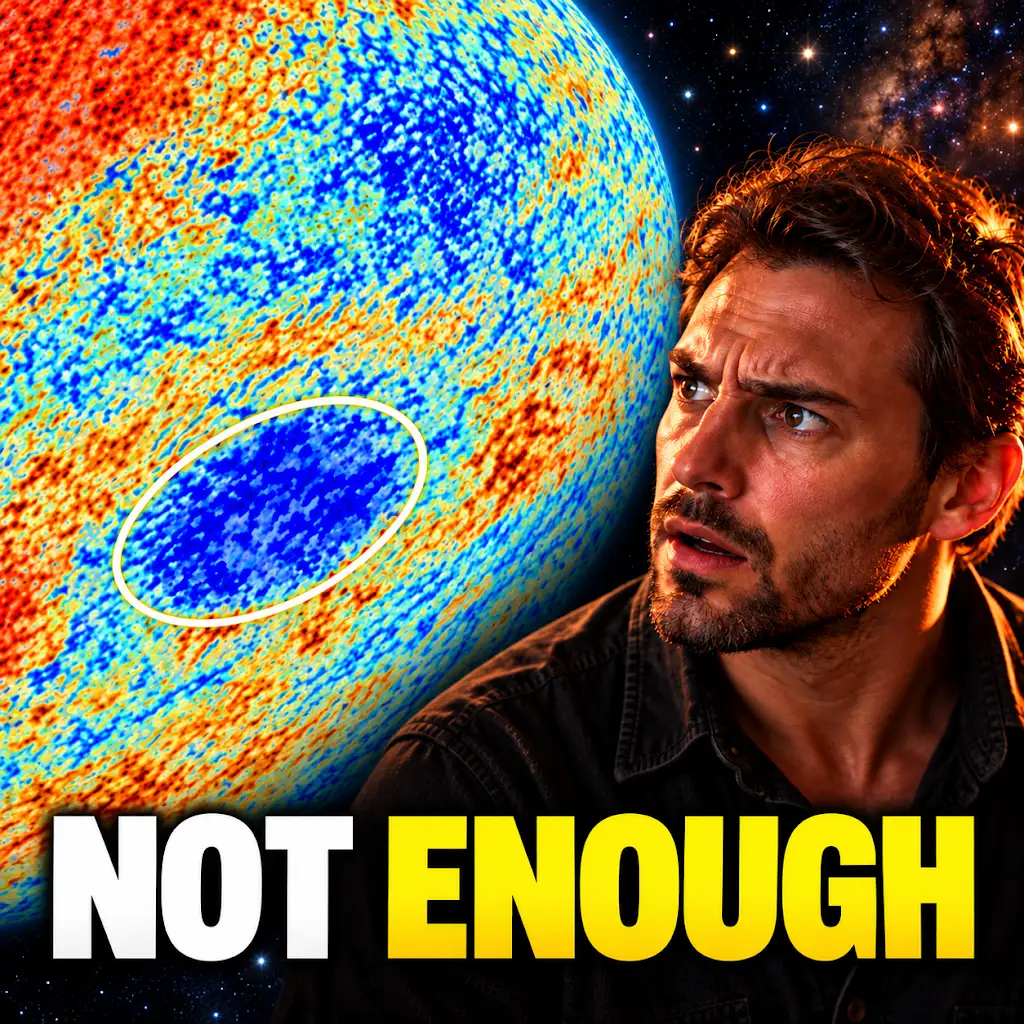
The Universe’s Cold Spot Has an Explanation. It’s Not Enough.
FAQs
What is the cosmic microwave background (CMB)?
The cosmic microwave background (CMB) is the afterglow of the Big Bang, a faint radiation that fills the universe and is visible in all directions.
How was the cosmic microwave background discovered?
The CMB was accidentally discovered in 1965 by Arno Penzias and Robert Wilson, who were conducting radio astronomy experiments and found a persistent noise that could not be explained.
What does the cosmic microwave background tell us about the early universe?
Studying the CMB provides valuable insights into the early universe, such as its age, composition, and the seeds of structure that eventually led to the formation of galaxies and galaxy clusters.
How is the cosmic microwave background measured?
Scientists use specialized instruments, such as telescopes and satellites like the Planck and WMAP missions, to measure the temperature and polarization of the CMB across the sky.
What are some key findings from studying the cosmic microwave background?
Key findings from studying the CMB include confirming the Big Bang theory, determining the universe’s composition (5% ordinary matter, 27% dark matter, 68% dark energy), and providing evidence for cosmic inflation.