
The universe, a vast and silent expanse, is a tapestry woven with wonders that have captivated humanity since the dawn of consciousness. From the twinkling lights in the night sky to the colossal structures that dwarf entire galaxies, space presents an unending series of enigmas. Scientists, armed with ever-advancing technology and an insatiable curiosity, dedicate their lives to unraveling these cosmic mysteries, pushing the boundaries of our understanding and redefining our place within the grand cosmic narrative. This pursuit is not merely academic; it is a fundamental human endeavor to comprehend the origins, evolution, and ultimate fate of everything that exists.
The Enigmatic Nature of Dark Matter and Dark Energy
Perhaps the most profound and unsettling discoveries in modern cosmology concern the unseen components that dominate the universe. For decades, astronomers observed discrepancies between the visible matter in galaxies and galaxy clusters and the gravitational forces that held them together. This led to the postulation of a mysterious substance that exerts gravitational influence but does not interact with light, hence its name: dark matter. The evidence for its existence is compelling, derived from the rotation curves of galaxies, the gravitational lensing of light from distant objects, and the cosmic microwave background radiation. Yet, its composition remains one of the most elusive puzzles in physics.
Searching for the Invisible: The Hunt for Dark Matter Particles
The nature of dark matter is a subject of intense theoretical and experimental investigation. Particle physicists have proposed numerous candidates, ranging from Weakly Interacting Massive Particles (WIMPs) to axions and sterile neutrinos. Each of these hypothetical particles possesses unique properties that could explain the observed gravitational effects without emitting or absorbing electromagnetic radiation. Experiments designed to detect dark matter are deployed in various ingenious ways. Some, like the Large Underground Xenon (LUX) and XENONnT experiments, are located deep underground to shield them from cosmic rays, using highly sensitive detectors filled with noble liquids like xenon. When a dark matter particle, if it exists and interacts weakly, passes through the detector, it might collide with a xenon nucleus, producing a faint flash of light or a tiny electrical signal. Other experiments, like those searching for axions, employ strong magnetic fields to attempt to convert axions into observable photons. The absence of direct detection so far, despite decades of searching, has led to a re-evaluation of some models and has opened the door to even more exotic possibilities. The ongoing quest for dark matter is a testament to scientific perseverance, pushing the limits of our technological capabilities in the pursuit of fundamental understanding.
The Accelerating Expansion: Unveiling Dark Energy
Complementing the mystery of dark matter is the enigma of dark energy, the force responsible for the observed acceleration of the universe’s expansion. For much of the 20th century, cosmologists debated whether the universe’s expansion would eventually slow down due to gravity or continue indefinitely. The discovery in the late 1990s, using observations of distant Type Ia supernovae, that the expansion is actually speeding up was a profound shock. This acceleration implies the existence of a repulsive force pervading space, which has been dubbed dark energy. While dark matter constitutes about 27% of the universe’s mass-energy content, dark energy is estimated to make up a staggering 68%.
The Cosmological Constant vs. Quintessence
The simplest explanation for dark energy is Einstein’s cosmological constant, a term he initially introduced into his field equations of general relativity to allow for a static universe. While he later abandoned it, the concept has resurfaced as a potential explanation for the accelerated expansion. In this model, dark energy is an intrinsic property of space itself, with a constant energy density. However, theoretical calculations of the vacuum energy density predicted by quantum field theory are vastly larger than what is observed, a discrepancy that remains a major theoretical challenge. Another class of models proposes that dark energy is not constant but rather a dynamic field, often referred to as “quintessence.” These models suggest that the energy density of dark energy can evolve over time, potentially offering more flexibility in explaining observational data. Distinguishing between these models and other alternatives requires increasingly precise cosmological measurements, such as those provided by large-scale galaxy surveys and the cosmic microwave background. Understanding dark energy is crucial for predicting the ultimate fate of the universe, determining whether it will continue to expand indefinitely, leading to a “Big Freeze,” or perhaps undergo a reversal.
Space continues to be a realm filled with mysteries that captivate scientists and enthusiasts alike. One intriguing article that delves into some of these enigmas is found on Freaky Science, which explores the latest discoveries and theories surrounding black holes and their implications for our understanding of the universe. To read more about these fascinating topics, you can visit the article here: Freaky Science.
Echoes of the Beginning: Exploring the Cosmic Microwave Background
The cosmic microwave background (CMB) radiation is a relic of the early universe, a faint glow of photons that have traveled unimpeded through space since shortly after the Big Bang. Discovered serendipitously in 1964 by Arno Penzias and Robert Wilson, the CMB provides a snapshot of the universe when it was only about 380,000 years old, a time when it had cooled enough for electrons and protons to combine and form neutral atoms. Before this epoch, the universe was an opaque plasma, with photons constantly scattering off charged particles. The CMB is therefore the earliest light we can observe, offering an unparalleled window into the conditions of the nascent cosmos.
Fluctuations and the Seeds of Structure
While the CMB is remarkably uniform in temperature across the sky, precise measurements have revealed tiny temperature fluctuations, on the order of parts per hundred thousand. These minute variations, first detected by the Cosmic Background Explorer (COBE) satellite and later mapped with unprecedented detail by the Wilkinson Microwave Anisotropy Probe (WMAP) and the Planck satellite, are not random noise. Instead, they represent the initial density fluctuations in the early universe. These tiny over- and under-densities in the primordial plasma acted as the seeds from which all cosmic structures – galaxies, clusters of galaxies, and the vast cosmic web – eventually grew through the relentless pull of gravity. Studying the pattern and amplitude of these fluctuations allows cosmologists to determine fundamental parameters of the universe, such as its age, composition, and geometry.
The Precision of Cosmological Parameters
The detailed analysis of CMB anisotropies has led to a highly precise determination of several key cosmological parameters. The data from Planck, for instance, has refined our estimates of the Hubble constant, the rate at which the universe is expanding, and the densities of baryonic matter, dark matter, and dark energy. These measurements have solidified the Lambda-CDM model as the standard model of cosmology, providing a coherent framework for understanding the universe’s evolution. However, some tensions remain, particularly regarding the value of the Hubble constant derived from CMB data and measurements from local astronomical objects, a discrepancy that may hint at new physics beyond the standard model. The ongoing analysis of CMB data continues to be a fertile ground for discovering subtle clues about the universe’s earliest moments and its fundamental constituents.
The Enigma of Black Holes: Gravitational Monsters and Warped Spacetime

Black holes, regions of spacetime where gravity is so strong that nothing, not even light, can escape, represent some of the most extreme and fascinating objects in the universe. Predicted by Albert Einstein’s theory of general relativity, they are formed from the gravitational collapse of massive stars at the end of their lives. While invisible themselves, their presence is inferred through their powerful gravitational influence on surrounding matter and their emission of characteristic radiation.
Stellar Black Holes vs. Supermassive Black Holes
Black holes come in a range of sizes. Stellar black holes, typically a few times the mass of our Sun, are formed from the collapse of individual massive stars. They are found scattered throughout galaxies. In contrast, supermassive black holes, millions to billions of times the mass of the Sun, reside at the centers of most large galaxies, including our own Milky Way, which harbors Sagittarius A*. The formation mechanism of these gargantuan black holes is still a subject of active research, with theories involving the merger of smaller black holes or the direct collapse of massive gas clouds in the early universe.
Accretion Disks and Relativistic Jets
The spectacular phenomena associated with black holes often arise from their interaction with surrounding matter. When gas and dust fall towards a black hole, they form a swirling disk known as an accretion disk. Friction within this disk heats the material to extremely high temperatures, causing it to emit intense radiation across the electromagnetic spectrum, from X-rays to visible light. In many cases, a fraction of this infalling matter is ejected along the black hole’s rotation axis in powerful beams of charged particles traveling at nearly the speed of light, known as relativistic jets. These jets can extend for hundreds of thousands of light-years, impacting their host galaxies and playing a significant role in galactic evolution. Studying these phenomena allows astronomers to probe the extreme physics near black holes and test the predictions of general relativity in its most rigorous regime.
The Birth and Death of Stars: Cosmic Furnaces and Stellar Remnants
Stars, the luminous beacons of the night sky, are the fundamental building blocks of galaxies and the cosmic furnaces responsible for forging all elements heavier than hydrogen and helium. Their life cycles are a testament to the interplay of gravity, nuclear fusion, and radiative pressure, a process that spans billions of years and results in a dazzling array of stellar remnants.
Stellar Nurseries and the Formation Process
Stars are born in vast, cold clouds of gas and dust called nebulae. Within these interstellar nurseries, gravity causes denser regions to collapse, forming protostars. As a protostar contracts, its core temperature and pressure increase until nuclear fusion ignites, primarily the fusion of hydrogen into helium. This marks the birth of a main-sequence star, where it will spend the majority of its life, radiating energy and maintaining hydrostatic equilibrium. The more massive a star, the hotter and brighter it burns, and the shorter its lifespan.
Stellar Evolution and Nucleosynthesis
As a star exhausts its hydrogen fuel, it begins to evolve. Low-mass stars, like our Sun, will eventually expand into red giants, shed their outer layers to form planetary nebulae, and leave behind a dense white dwarf. More massive stars undergo a more dramatic end. After fusing helium into carbon, oxygen, and heavier elements in their cores, they eventually iron. Since iron fusion consumes energy rather than releasing it, the star’s core collapses catastrophically, triggering a supernova explosion. These cataclysmic events are responsible for creating and dispersing many of the heavy elements found throughout the universe, including the very elements that make up our bodies and our planet. The remnants of supernovae can be either neutron stars, incredibly dense objects composed almost entirely of neutrons, or, if the progenitor star was sufficiently massive, black holes. Understanding stellar evolution is crucial for comprehending the chemical enrichment of the universe and the conditions necessary for the formation of planets and life.
In the quest to unravel the enigmas of the universe, scientists continue to explore various space mysteries that challenge our understanding of physics and cosmology. One intriguing aspect is the phenomenon of dark matter, which makes up a significant portion of the universe yet remains largely invisible and undetectable. For those interested in delving deeper into this captivating subject, you can read more about it in this insightful article on space mysteries at Freaky Science. As researchers strive to uncover the secrets behind these cosmic puzzles, our knowledge of the universe expands, revealing the complexities of existence beyond our planet.
The Grand Design: Unraveling the Structure and Evolution of the Universe
| Space Mystery | Description | Key Metrics/Data | Scientific Theories |
|---|---|---|---|
| Dark Matter | Invisible matter that does not emit light but exerts gravitational effects. | ~27% of the universe’s mass-energy content; detected via gravitational lensing and galaxy rotation curves. | WIMPs, axions, modified gravity theories. |
| Dark Energy | Mysterious force causing the accelerated expansion of the universe. | ~68% of the universe’s mass-energy; measured through supernovae redshift and cosmic microwave background. | Cosmological constant, quintessence, vacuum energy. |
| Fast Radio Bursts (FRBs) | Brief, intense bursts of radio waves from distant galaxies. | Duration: milliseconds; frequency: 400 MHz to 8 GHz; over 1000 detected. | Magnetars, neutron star collisions, alien signals (speculative). |
| Black Hole Information Paradox | Conflict between quantum mechanics and general relativity about information loss in black holes. | Event horizon radius varies by mass; Hawking radiation temperature inversely proportional to mass. | Holographic principle, firewall hypothesis, quantum gravity models. |
| Origin of Cosmic Rays | High-energy particles from outer space hitting Earth’s atmosphere. | Energy range: 10^9 to 10^20 eV; flux decreases with energy. | Supernova remnants, active galactic nuclei, gamma-ray bursts. |
Cosmology, the study of the universe as a whole, aims to understand its origins, large-scale structure, and ultimate fate. For centuries, our understanding of the cosmos was limited by our limited observational capabilities. However, with the advent of powerful telescopes and sophisticated theoretical models, we have begun to piece together a remarkably coherent picture of the universe’s grand design.
Galaxies and Galaxy Clusters: The Cosmic Web
The universe is not uniformly distributed; rather, matter is organized in a vast, intricate network known as the cosmic web. Galaxies, the fundamental units of this structure, are gravitationally bound collections of stars, gas, dust, and dark matter. These galaxies are not scattered randomly but are clustered together in groups and massive superclusters, separated by immense voids. This hierarchical structure, from individual galaxies to galaxy clusters and superclusters, is a direct consequence of the gravitational amplification of initial density fluctuations in the early universe.
The Role of Cosmic Simulations
Understanding the formation and evolution of the cosmic web is a monumental task, made possible by sophisticated computer simulations. These simulations start with initial conditions derived from CMB observations and then use the laws of physics, particularly gravity and hydrodynamics, to evolve the distribution of matter over billions of years. By comparing the results of these simulations with observational data, cosmologists can test their models, refine their understanding of the interplay between dark matter, dark energy, and baryonic matter, and gain insights into the processes that shaped the universe into the complex structure we observe today. The ongoing quest to unravel the mysteries of space is a testament to humanity’s enduring curiosity and its profound desire to understand its place within the grand, awe-inspiring cosmos. Each discovery, each solved enigma, only serves to reveal new layers of wonder, propelling us ever forward in our cosmic exploration.
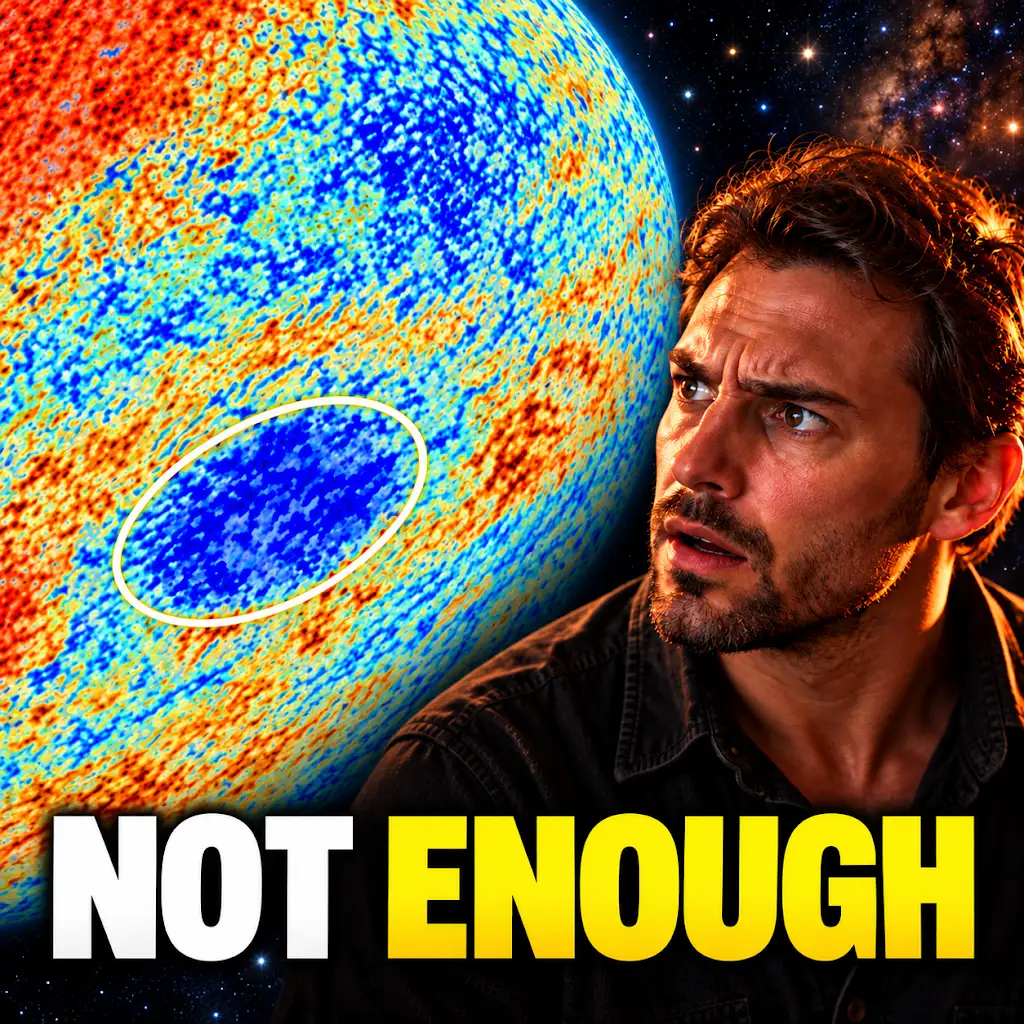
The Universe’s Cold Spot Has an Explanation. It’s Not Enough.
FAQs
What are some of the biggest mysteries in space science?
Some of the biggest mysteries in space science include dark matter, dark energy, the nature of black holes, the origin of cosmic rays, and the existence of parallel universes.
What is dark matter and why is it a mystery?
Dark matter is a hypothetical form of matter that does not emit, absorb, or reflect light, making it invisible and detectable only through its gravitational effects on visible matter. It is a mystery because its exact nature and composition remain unknown, despite making up approximately 27% of the universe.
What is dark energy and why is it a mystery?
Dark energy is a mysterious force that is causing the universe to expand at an accelerating rate. Its origin and properties are not well understood, leading to it being one of the biggest mysteries in cosmology.
What are black holes and why are they mysterious?
Black holes are regions in space where gravity is so strong that nothing, not even light, can escape. They are mysterious because their formation, behavior, and the nature of what lies beyond their event horizon are still not fully understood.
What are cosmic rays and why are they a mystery?
Cosmic rays are high-energy particles that travel through space at nearly the speed of light. Their origin is still a mystery, with scientists debating whether they come from supernovae, black holes, or other sources in the universe.