
The Unexpected Whisper of the Early Universe
For years, the Planck satellite stood as a beacon of cosmological precision, meticulously charting the faint afterglow of the Big Bang – the Cosmic Microwave Background (CMB). Its mission was to paint the most detailed picture yet of the universe’s infancy, a snapshot from just 380,000 years after its violent birth. This incredibly uniform sea of radiation, however, holds subtle variations in temperature, the imprints of tiny quantum fluctuations that, over eons, grew into the vast cosmic structures we observe today. Planck’s exquisite sensitivity allowed scientists to probe these fluctuations with unprecedented accuracy, confirming many predictions of the Standard Model of Cosmology (Lambda-CDM) with remarkable fidelity. Yet, amidst the triumphs, a series of persistent anomalies emerged, whispers of discord in the symphony of the early universe that challenged our fundamental understanding of cosmic evolution. These anomalies, initially dismissed as statistical flukes or instrumental quirks, have proven remarkably resilient, prompting a re-evaluation of the prevailing cosmological paradigm and sparking intense debate within the scientific community.
The Planck satellite has provided a wealth of data about the cosmic microwave background, but recent anomalies have sparked intriguing discussions among scientists. For a deeper understanding of these anomalies and their implications for our understanding of the universe, you can explore the article available at Freaky Science. This resource delves into the various interpretations and theories surrounding the unexpected findings from the Planck mission, offering a comprehensive overview of the ongoing research in this fascinating field.
Echoes of an Imbalanced Dawn

The most prominent of Planck’s surprising findings, the “cold spot,” represents a region of the CMB that is significantly colder than its surrounding areas. Imagine a vast, circular patch in the cosmic tapestry, noticeably dimmer than the rest. While the universe’s temperature is remarkably uniform, with variations of only a few parts per million, the Planck cold spot stands out as statistically improbable within the framework of the standard Lambda-CDM model. Initial explanations ranged from statistical fluctuations to foreground contamination, but as more data was analyzed and refined, the significance of this cold region persisted. It’s not just a slight dip; it’s a deep, extended chill that doesn’t quite fit the expected distribution of cosmic temperatures. The sheer size and depth of this anomaly have led to some intriguing, albeit speculative, hypotheses.
The Cosmic Void Hypothesis
One of the more compelling explanations for the Planck cold spot involves the existence of a supervoid, a vast expanse of space with a significantly lower density of matter than average. If such a void were situated between the observer and the source of the CMB radiation, the photons traveling through this less dense region would lose energy due to the gravitational pull of surrounding matter – a phenomenon known as the Integrated Sachs-Wolfe effect. This energy loss would manifest as a cooling of the CMB photons. While the existence of supervoids is not entirely ruled out by Lambda-CDM, the specific configuration and emptiness required to explain the cold spot’s magnitude are considered unlikely. However, the possibility remains that we are observing an exceptionally rare cosmic structure.
Exotic Physics and String Theory
Beyond the realm of ordinary matter and dark matter, some researchers have ventured into more speculative territory. Theories involving extra dimensions, cosmic strings (hypothetical one-dimensional topological defects in spacetime), or even the interaction of dark matter with other exotic particles have been proposed as potential culprits. These ideas, while pushing the boundaries of current physics, offer alternative mechanisms that could, in principle, generate such a large-scale temperature anomaly. The challenge, of course, lies in finding observable evidence to support these unconventional explanations.
A Peculiar Preference: The Hemispheric Asymmetry

Another persistent puzzle revealed by Planck is the observed hemispheric asymmetry in the CMB. When scientists divided the sky into two hemispheres, they found a statistically significant difference in the amplitude of temperature fluctuations between them. One hemisphere appeared to have slightly larger temperature variations than the other. This is akin to finding that one side of a perfectly balanced spinning top has more pronounced wobbles than the other. In the Lambda-CDM model, the CMB should be statistically isotropic, meaning that these fluctuations should be the same in all directions on large scales. The observed asymmetry, while not drastically deviating, is statistically significant enough to warrant serious investigation.
The Alignment Mystery
Further compounding the hemispheric asymmetry is the peculiar alignment of some of the largest CMB structures. The quadrupole (the largest angular scale fluctuation) and octopole (the next largest) moments, which represent the gross features of the CMB sky, appear to be unusually aligned with each other and with our solar system’s plane. This alignment is statistically improbable within the standard cosmological model, where these large-scale features are expected to be randomly oriented. It’s as if the largest ripples on the cosmic pond have a preferred direction, a suggestion of a bias that shouldn’t exist in a truly homogeneous and isotropic universe.
Unanswered Questions about the Early Universe’s Genesis
The hemispheric asymmetry and the quadrupole-octopole alignment raise fundamental questions about the very initial conditions of the universe. Did something happen during the inflationary epoch, the theorized period of rapid expansion shortly after the Big Bang, that imprinted this asymmetry? Or could it be an indication of physics beyond the Standard Model, perhaps related to the nature of dark energy or the early universe’s composition? These anomalies hint that our picture of the universe’s birth might be incomplete, a snapshot that, while accurate in broad strokes, misses crucial details.
The Horizon Problem’s Stubborn Shadow
The “horizon problem” is a classic cosmological conundrum that the theory of cosmic inflation was designed to solve. It stems from the observation that widely separated regions of the CMB, which should never have been in causal contact in the early universe, exhibit remarkably similar temperatures. Inflation proposes a period of exponential expansion that stretched a tiny, causally connected region to encompass the entire observable universe, thus ironing out initial temperature differences. However, while Planck’s data generally supports the validity of inflation, some of its observations seem to cast a long shadow over its simplest forms.
Challenging Inflationary Assumptions
The Planck data, particularly the observed large-scale anomalies, has led some cosmologists to question the most straightforward implementations of inflationary theory. The specific patterns of anisotropy and the lack of predicted universality on certain scales suggest that perhaps the inflationary process was more complex or that alternative mechanisms were at play. While inflation remains the leading paradigm for explaining the homogeneity and flatness of the universe, these persistent anomalies indicate that a more nuanced understanding might be required. The quest is now to find inflationary models that can simultaneously explain the observed CMB features and these intriguing deviations.
The Search for a More Complete Picture
The anomalies observed by Planck are not necessarily a death knell for the Lambda-CDM model or inflationary cosmology. Instead, they serve as powerful signposts, guiding scientists towards a deeper and more comprehensive understanding of the cosmos. They are the subtle dissonances in a grand cosmic composition that suggest the composer had more complex motifs in mind than initially assumed. The ongoing analysis of Planck data, coupled with observations from other experiments and theoretical advancements, continues to chip away at these mysteries, striving to paint a more complete and accurate picture of our universe’s origins and evolution.
Recent studies have raised intriguing questions about anomalies observed by the Planck satellite, which has provided invaluable data on the cosmic microwave background. These anomalies could potentially reshape our understanding of the universe’s structure and evolution. For a deeper dive into the implications of these findings, you can explore a related article that discusses the significance of these anomalies and their potential impact on cosmology. Check it out here to learn more about the fascinating developments in this field.
The Anomalies as Catalysts for New Physics
| Anomaly | Description | Planck Data Metric | Significance Level | Notes |
|---|---|---|---|---|
| Cold Spot | Large region of lower temperature in the CMB | Temperature decrement ~ -150 µK | ~3σ | Possible supervoid or primordial origin debated |
| Low Quadrupole | Lower than expected power in the quadrupole moment | Quadrupole power ~ 200 µK² | ~2-3σ | Consistent with WMAP results, challenges ΛCDM predictions |
| Hemispherical Power Asymmetry | Unequal power distribution between hemispheres | Amplitude asymmetry ~ 7% | ~3σ | Direction roughly aligned with ecliptic plane |
| Parity Asymmetry | Odd multipoles have more power than even multipoles | Parity asymmetry ratio ~ 0.7 | ~2-3σ | Unexplained by standard cosmological models |
| Alignment of Low Multipoles | Unexpected alignment of quadrupole and octopole | Angular separation | ~3σ | Dubbed the “Axis of Evil” |
The Planck satellite’s legacy is not solely defined by its confirmation of existing cosmological models, but perhaps even more so by the anomalies it unveiled. These unexpected deviations from predictions have become powerful drivers of new theoretical research, pushing the boundaries of our understanding of fundamental physics. They are not just curiosities; they are potential windows into physics beyond the Standard Model. The scientific community is actively engaged in exploring a myriad of theoretical frameworks that could accommodate these observations, ranging from modifications to gravity to entirely new particles and forces.
Re-examining Dark Energy and Dark Matter
The nature of dark energy, the mysterious force driving the accelerated expansion of the universe, and dark matter, the invisible scaffolding of galaxies, remain two of the biggest enigmas in modern cosmology. Some of the Planck anomalies have led to suggestions that these enigmatic components might interact in ways not currently accounted for in the Standard Model. Could a more complex interaction between dark matter and dark energy, or even a different form of dark energy altogether, explain the observed hemispheric asymmetry or the cold spot? These are active areas of theoretical investigation.
The Future of Cosmological Exploration
The Planck anomalies have not ended the journey; they have, in many ways, just begun it. Future cosmological surveys, both ground-based and space-borne, will aim to provide even more precise measurements of the CMB and large-scale structure, seeking to either confirm these anomalies with greater certainty or to reveal new ones. Simultaneously, theoretical physicists will continue to develop and test new models that can explain these intriguing puzzles. The current era of cosmology is one of exciting tension between established paradigms and the tantalizing whispers of the unknown, a testament to the enduring human quest to unravel the cosmic mystery. The Planck satellite, with its profound insights and unexpected revelations, has irrevocably altered our perception of the universe, inviting us to look deeper, question more, and ultimately, to understand our cosmic home with greater clarity.
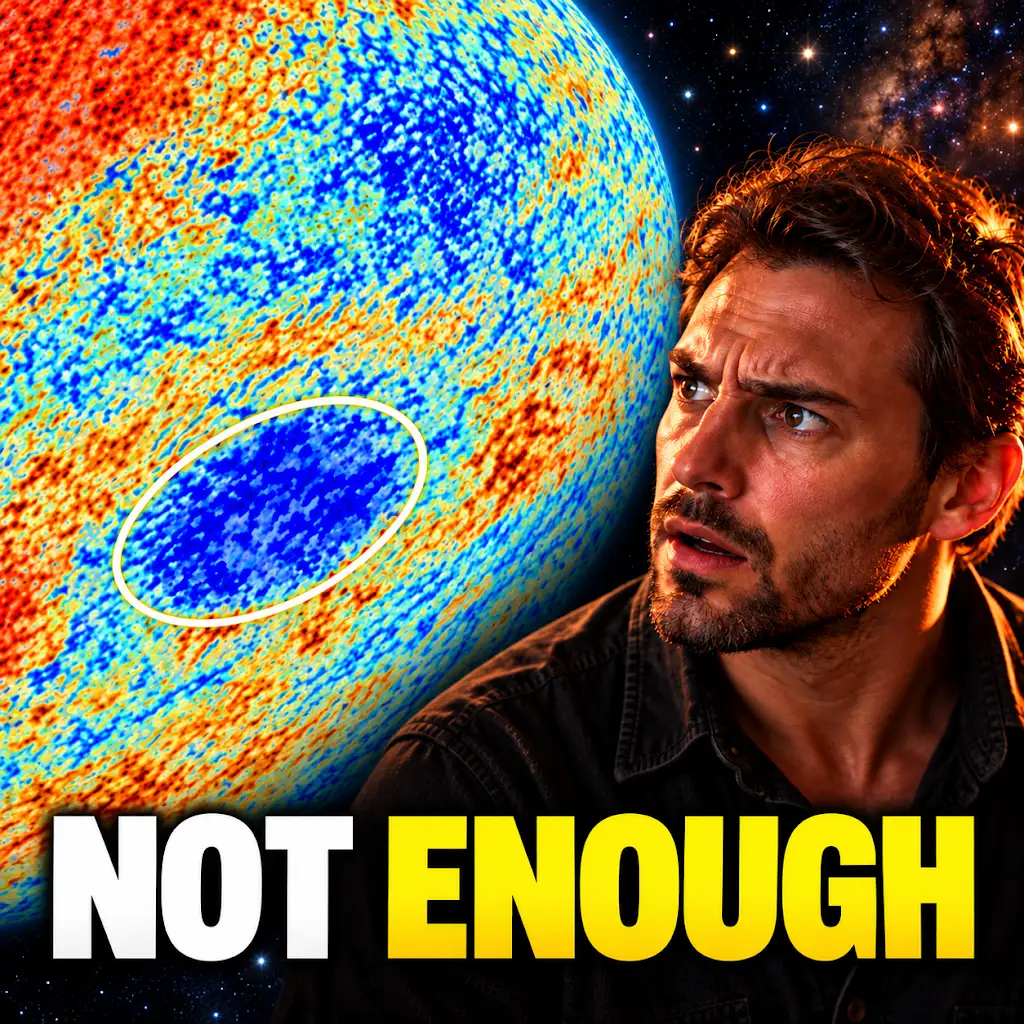
The Universe’s Cold Spot Has an Explanation. It’s Not Enough.
FAQs
What is the Planck satellite?
The Planck satellite is a space observatory operated by the European Space Agency (ESA) to study the cosmic microwave background radiation, which is the afterglow of the Big Bang.
What are anomalies detected by the Planck satellite?
The Planck satellite detected anomalies in the cosmic microwave background radiation that do not fit the standard model of cosmology. These anomalies include temperature fluctuations that are larger than expected and asymmetries in the distribution of radiation.
What do the anomalies suggest about the universe?
The anomalies detected by the Planck satellite suggest that there may be unknown physics or phenomena at play in the early universe that are not accounted for in the current cosmological model. This could potentially lead to a reevaluation of our understanding of the universe’s evolution.
How are scientists investigating these anomalies?
Scientists are conducting further analysis of the Planck satellite data to better understand the nature of the anomalies. They are also exploring alternative cosmological models and theories to see if they can better explain the observed discrepancies.
What are the implications of the Planck satellite anomalies?
The implications of the Planck satellite anomalies could be significant, potentially leading to a paradigm shift in our understanding of the universe’s origins and evolution. Further research and analysis are needed to determine the true nature of these anomalies and their impact on cosmology.