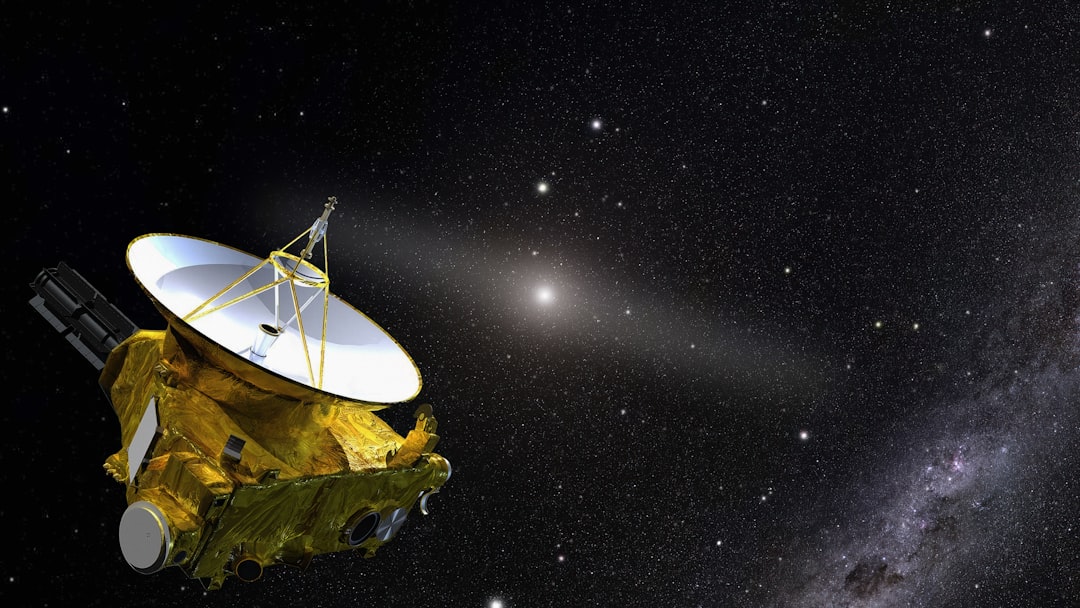
The Planck Space Telescope, a European Space Agency (ESA) mission, represents a monumental leap in humanity’s quest to understand the cosmos. Launched in 2009, it embarked on a groundbreaking journey to map the entire sky with unprecedented precision, focusing on the faint afterglow of the Big Bang – the Cosmic Microwave Background (CMB). For four years, Planck meticulously collected data, observing the universe in nine different frequency bands. Its mission was not merely to observe, but to dissect the very fabric of spacetime, to uncover the composition of the universe, and to shed light on its earliest moments. The data it gathered has fundamentally reshaped our understanding of cosmology, providing some of the most accurate and detailed measurements of the universe’s age, composition, and evolution to date. Planck’s legacy is one of profound discovery, pushing the boundaries of scientific knowledge and inspiring future generations of astronomers and physicists.
Illuminating the Echo of Creation
The primary objective of the Planck Space Telescope was to study the Cosmic Microwave Background (CMB) radiation. This faint, pervasive radiation is the oldest light in the universe, originating from a time when the cosmos was a hot, dense plasma. As the universe expanded and cooled, this plasma eventually transformed into neutral atoms, allowing photons to travel freely. These photons, stretched by the expansion of spacetime over billions of years, are what Planck detected as microwave radiation. The tiny temperature fluctuations, or anisotropies, within the CMB are like ripples on a pond, carrying information about the conditions of the early universe. Planck’s extraordinary sensitivity and broad frequency coverage allowed it to map these fluctuations with a detail never before achieved. These maps are not just images; they are sophisticated scientific instruments in themselves, encoding information about the fundamental parameters that govern our universe. By analyzing the patterns of these anisotropies, scientists can infer crucial details about the universe’s geometry, its age, and the relative abundance of its constituent components. The precision of Planck’s measurements has allowed for stringent tests of the standard cosmological model, known as the Lambda-CDM model, and has offered tantalizing hints about physics beyond our current understanding.
The Precision of Planck’s Gaze
Planck’s instruments, the Low Frequency Instrument (LFI) and the High Frequency Instrument (HFI), were designed to be incredibly sensitive. LFI operated in the lower frequency range, observing the CMB with less sensitivity to foreground emissions from our own galaxy, while HFI, with its bolometer arrays, observed at higher frequencies, providing the crucial information about the CMB’s finest structures. The meticulous calibration of these instruments and the sophisticated data processing techniques employed were critical to extracting the subtle CMB signal from overwhelming foreground noise. Galactic dust, for instance, emits microwave radiation that can mimic or obscure the CMB. Planck’s ability to distinguish between these sources, by observing across multiple frequencies, was a testament to its technological prowess. The mission’s design also accounted for the degradation of spacecraft systems over time, ensuring that the data remained accurate throughout its operational life. The careful selection of Planck’s orbit, far from the Earth’s heat and radio interference, further contributed to the pristine quality of its observations. The success of Planck’s observations can be attributed to a combination of cutting-edge detector technology, sophisticated cooling systems, and meticulous data analysis pipelines, all working in concert to unveil the faintest signals from the dawn of time.
Unraveling the CMB’s Story
The detailed maps of the CMB produced by Planck revealed a wealth of information. These maps showed that the universe is remarkably homogeneous on large scales, but also exhibits small, statistically isotropic temperature fluctuations. The statistical properties of these fluctuations – their amplitude, distribution, and correlation – are directly related to the physical processes that occurred in the very early universe. By studying the power spectrum of these fluctuations, cosmologists can determine fundamental cosmological parameters such as the Hubble constant, the density of baryonic matter, dark matter, and dark energy, and the spectral index of primordial density fluctuations. Planck’s measurements have refined these parameters to an unprecedented degree, providing the most precise estimates yet for the age of the universe (approximately 13.8 billion years), the proportion of normal matter (around 4.9%), dark matter (about 26.8%), and dark energy (approximately 68.3%). These values paint a detailed picture of the universe’s composition, suggesting that the familiar matter we interact with daily constitutes only a tiny fraction of the cosmic inventory. The slight deviations from perfect uniformity observed in the CMB are the seeds from which all the structures we see today – galaxies, clusters of galaxies, and the vast cosmic web – eventually grew through gravitational collapse.
Recent findings from the Planck Space Telescope have provided groundbreaking insights into the cosmic microwave background radiation, shedding light on the early universe’s conditions. For a deeper understanding of these findings and their implications for cosmology, you can explore a related article that discusses the significance of the Planck data in detail. Check it out here: Freaky Science.
The Cosmic Inventory Revealed
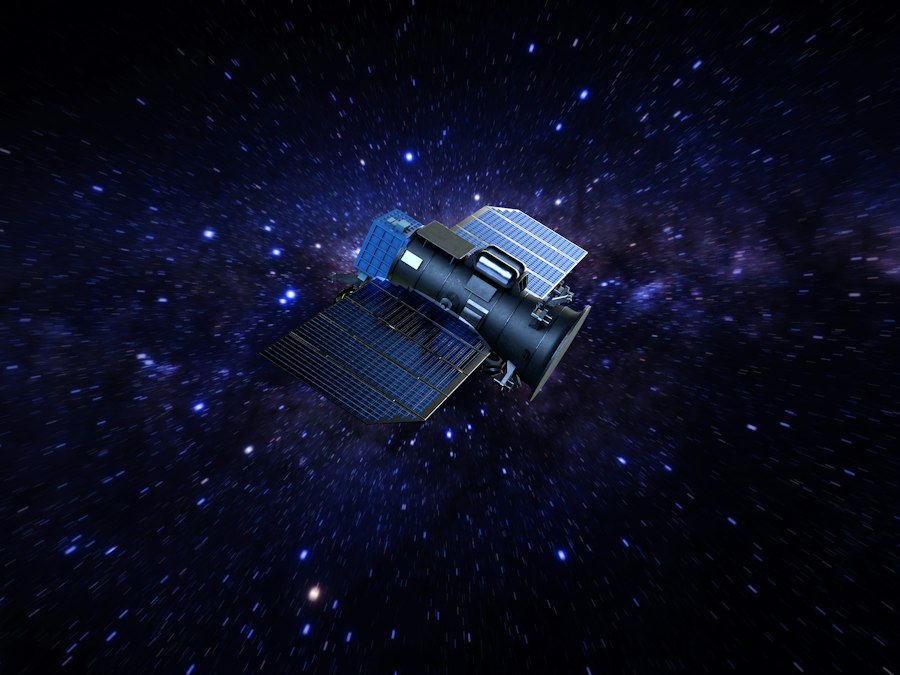
Beyond its primary focus on the CMB, Planck also contributed significantly to our understanding of the universe’s composition. By meticulously cataloging and characterizing various foreground sources, Planck was able to subtract their contributions from the CMB data, leaving a purer picture of the ancient light. However, in the process of this extensive sky survey, Planck also collected valuable data on other celestial objects and phenomena. Its sensitive instruments detected and mapped the distribution of dust and gas within our own Milky Way galaxy, providing insights into star formation processes and the galactic magnetic field. Furthermore, Planck observed distant galaxies and quasars, offering a unique perspective on the distribution of matter in the universe at different epochs. These observations allowed scientists to study the evolution of cosmic structures and test cosmological models that predict how these structures should form and evolve over time. The comprehensive nature of Planck’s all-sky survey made it a treasure trove of cosmological data, extending its impact far beyond the initial goals of CMB observation.
The Enigmatic Dark Matter and Dark Energy
One of the most profound implications of Planck’s data concerns the nature of dark matter and dark energy, the two mysterious components that are believed to dominate the universe’s mass-energy content. Planck’s precise measurements of the CMB anisotropies provided strong confirmation of the existence and abundance of dark matter, a non-luminous substance that interacts gravitationally but not electromagnetically. The gravitational influence of dark matter is crucial for the formation of the large-scale structures observed in the universe. Similarly, Planck’s data strongly supports the existence of dark energy, a repulsive force that is driving the accelerated expansion of the universe. The precise measurement of the universe’s expansion rate and its composition provided by Planck has allowed scientists to constrain theoretical models of dark energy and to probe its potential evolution over cosmic time. While Planck has not directly detected dark matter or dark energy particles, its precise measurements of their cosmic abundance and their effects on the CMB have significantly narrowed down the possibilities for their fundamental nature, guiding future theoretical and experimental investigations.
Mapping Our Galactic Home and Beyond
Planck’s sensitive instruments also provided

The Universe’s Cold Spot Has an Explanation. It’s Not Enough.
FAQs
What is the Planck Space Telescope?
The Planck Space Telescope was a European Space Agency mission designed to study the cosmic microwave background radiation, which is the afterglow of the Big Bang.
What were some of the key findings of the Planck Space Telescope?
The Planck Space Telescope provided detailed maps of the cosmic microwave background radiation, revealing fluctuations in temperature that helped scientists better understand the early universe’s structure and composition.
How did the Planck Space Telescope contribute to our understanding of the universe?
The Planck Space Telescope’s findings supported the theory of cosmic inflation, helped refine the age of the universe, and provided insights into the distribution of dark matter and dark energy.
When was the Planck Space Telescope launched and how long did it operate?
The Planck Space Telescope was launched in May 2009 and operated until October 2013, during which time it collected data and made groundbreaking discoveries about the universe’s origins.
What is the legacy of the Planck Space Telescope?
The Planck Space Telescope’s legacy includes a wealth of data that continues to be analyzed by scientists worldwide, shaping our understanding of the universe’s evolution and informing future cosmological research.