
The Cosmic Microwave Background: A Whisper from the Dawn of Time
The Unforeseen Echo of Creation
The story of the Cosmic Microwave Background (CMB) is one of serendipity, persistent inquiry, and a profound shift in our understanding of the universe. It is a tale that begins not with grand telescopic surveys aimed at deciphering the cosmos, but with a mundane problem: persistent static in a sensitive radio antenna. The individuals at the heart of this discovery, Arno Penzias and Robert Wilson, were not cosmologists in the traditional sense. They were radio astronomers working at Bell Telephone Laboratories in Holmdel, New Jersey, in the early 1960s. Their goal was to develop highly sensitive radio receivers that could be used for satellite communication and radio astronomy.
The instrument they were using, a large horn antenna designed for early satellite experiments, was a marvel of engineering for its time. It was capable of detecting incredibly faint radio signals from space. However, it was also plagued by an inexplicable, low-level hiss, a constant background noise that seemed to originate from everywhere in the sky, regardless of where they pointed the antenna. This pervasive static was an annoyance, a source of frustration for Penzias and Wilson, as it interfered with their attempts to measure faint radio signals from astronomical sources. They meticulously worked to eliminate all possible terrestrial sources of interference, from the stray radio waves emitted by New York City to the natural thermal radiation from the antenna itself. Yet, the noise persisted, and it was remarkably uniform in all directions.
A Persistent and Puzzling Static
Penzias and Wilson spent months trying to understand the source of this interfering signal. They checked and rechecked every component of their apparatus. They considered every conceivable local source of radio interference. They even went so far as to clean out the pigeon droppings from the antenna, humorously attributing the noise to “white dielectric material.” But their efforts were in vain. The noise remained, a constant, isotropic hiss that defied all their attempts at explanation. It was as if the entire universe was emitting this faint radio hum. Their meticulous work to eliminate all other possibilities inadvertently led them down a path toward one of the most significant discoveries in modern physics.
The Holmdel Horn Antenna: A Humble Instrument
The Holmdel horn antenna itself was a crucial element in this story. A massive, 20-foot by 40-foot horn made of aluminum, it was designed to be highly directional and sensitive. Its sheer size and sophisticated design allowed it to collect even the weakest radio waves. It was a testament to the engineering prowess of Bell Labs, a company at the forefront of telecommunications technology. It was within the confines of this sophisticated, yet ultimately somewhat blind, instrument that the universe decided to reveal one of its deepest secrets, not through a targeted search, but through an accidental observation of unwanted noise. The antenna, designed to capture specific signals, became the unintended receiver of a signal from the very beginning of time.
The discovery of the Cosmic Microwave Background (CMB) radiation was a pivotal moment in our understanding of the universe, providing strong evidence for the Big Bang theory. For a deeper insight into this groundbreaking discovery and its implications for cosmology, you can read a related article on the topic at Freaky Science. This resource explores the history, significance, and the scientists involved in uncovering the CMB, shedding light on how it has shaped our current understanding of the cosmos.
The Theoretical Precursors: A Universe in Expansion
While Penzias and Wilson were grappling with their persistent static, a revolution in cosmology was already underway, driven by theoretical physics. The development of Einstein’s theory of general relativity in the early 20th century provided the framework for understanding the universe on its largest scales. General relativity predicted that the universe could not be static; it must either be expanding or contracting. This radical idea was met with considerable resistance, and even Einstein himself initially introduced a “cosmological constant” to force a static solution. However, observational evidence soon began to accumulate that supported the notion of an expanding universe.
The Expanding Universe: Hubble’s Observations
Edwin Hubble’s groundbreaking work in the late 1920s provided the first strong observational evidence for the expansion of the universe. By observing distant galaxies and measuring their redshifts, Hubble discovered that galaxies are moving away from us, and the farther away they are, the faster they are receding. This relationship, now known as Hubble’s Law, painted a picture of a universe that was once much smaller and denser, and has been growing ever since. This realization had profound implications for the history and evolution of the cosmos.
The Big Bang Hypothesis: Gamow and Alpher
Building on the idea of an expanding universe, physicists began to speculate about its ultimate origin. The most prominent theory to emerge was the Big Bang hypothesis, first championed by George Gamow and his colleagues, Ralph Alpher and Robert Herman, in the 1940s. They proposed that the universe began in an incredibly hot, dense state and has been expanding and cooling ever since. They reasoned that if this were true, then the intense heat of this early epoch should have left behind a faint afterglow, a residual radiation permeating all of space.
Predicting the Afterglow: A Cosmic Thermometer
Gamow, Alpher, and Herman, through their theoretical calculations, predicted that this residual radiation should be detectable as microwave radiation. They estimated its temperature to be a few degrees Kelvin above absolute zero. Their work, while prescient, was somewhat ahead of its time, and their predictions were not widely known or understood by the broader scientific community. The technology to detect such faint microwave radiation simply did not exist in a readily available form during their era of research. Their theoretical musings, however, laid the intellectual groundwork for what Penzias and Wilson would accidentally stumble upon.
The Synchronous Discovery: Two Paths Converge
The parallel tracks of theoretical prediction and accidental observation were set to converge in a remarkable act of scientific synchronicity. While Penzias and Wilson were diligently attempting to silence the “noise” in their antenna, unaware of the cosmic implications of their findings, a team of physicists at Princeton University, led by Robert Dicke, were actively designing an experiment to search for the very afterglow predicted by the Big Bang theorists. Dicke’s group was aware of the work of Gamow, Alpher, and Herman and believed that detecting this faint microwave radiation would provide strong evidence for the Big Bang theory.
The Princeton Experiment: A Deliberate Search
The Princeton group, including James Peebles, Peter Roll, and David Wilkinson, were constructing a highly sensitive microwave radiometer designed to measure the temperature of the cosmic background radiation. They were painstakingly building their equipment, anticipating the challenges of detecting such a faint signal. Their experimental setup was intended to be a targeted quest, a deliberate attempt to find the evidence that had eluded direct detection for so long. They were preparing to look for precisely what Penzias and Wilson were finding, albeit with a very different motivation.
The Astonishing Measurement: A Universal Constant
When Penzias and Wilson finally published their findings in 1965, describing the uniform, isotropic microwave noise they had detected, the scientific community was electrified. The measured temperature of this radiation, around 3.5 Kelvin, was remarkably close to the predictions made by Gamow and his colleagues. The key insight came when the Princeton group contacted Penzias and Wilson. Dicke, upon hearing about their unexpected measurement, immediately recognized that Penzias and Wilson had likely found the cosmic microwave background radiation they were searching for. The “noise” that had frustrated Penzias and Wilson was, in fact, the faint whisper of the Big Bang itself, echoing across the universe.
The Nobel Recognition: A Cosmic Revelation
The significance of this accidental discovery was immense. It provided the strongest piece of evidence yet for the Big Bang theory, transforming it from a compelling hypothesis into a cornerstone of modern cosmology. Penzias and Wilson were awarded the Nobel Prize in Physics in 1978 for their discovery, a testament to the profound impact of their work. Their story serves as a powerful reminder that sometimes, the most important discoveries are not found through a direct, planned search, but through careful observation and a willingness to investigate unexpected phenomena, even if they initially appear to be mere annoyances.
Unlocking the Universe’s Secrets: The CMB as a Cosmic Rosetta Stone
The discovery of the Cosmic Microwave Background was not merely the detection of a faint signal; it was the unlocking of a profound cosmic archive. This ancient light, traveling across billions of years and vast expanses of space, carries within it an imprint of the very early universe, a snapshot of conditions when the cosmos was only about 380,000 years old. Before the discovery of the CMB, our understanding of the universe’s origins was largely based on theoretical models. The CMB provided direct observational evidence, allowing cosmologists to refine and validate their theories with unprecedented precision.
Tiny Fluctuations, Immense Information: The Anisotropies
One of the most remarkable aspects of the CMB is its near-perfect uniformity. However, upon closer examination, scientists discovered tiny temperature fluctuations, known as anisotropies, on the order of parts per hundred thousand. These minute variations, which appear as slightly warmer or cooler patches in the CMB map, are of immense scientific importance. They represent slight density differences in the primordial plasma that existed just after the Big Bang. These tiny overdensities were the seeds from which all the structure we see in the universe today – galaxies, stars, and clusters of galaxies – eventually grew through the force of gravity.
The Standard Model of Cosmology: A Triumph of Precision
The detailed study of these anisotropies, primarily through sophisticated space-based telescopes like the Cosmic Background Explorer (COBE), the Wilkinson Microwave Anisotropy Probe (WMAP), and the Planck satellite, has allowed cosmologists to precisely determine many fundamental parameters of the universe. These include the age of the universe, its geometry, its composition (the relative amounts of dark matter, dark energy, and ordinary matter), and the rate of its expansion. The CMB has thus been instrumental in solidifying what is now known as the “Lambda-CDM” model, the standard model of cosmology, which provides a remarkably accurate description of the universe’s evolution from its earliest moments to the present day.
The CMB as a Time Machine: Probing the Early Universe
The CMB acts as a cosmic Rosetta Stone, allowing us to decipher the history and fundamental properties of our universe. By analyzing the pattern of these temperature fluctuations, scientists can effectively “look back in time” to an era when the universe was a vastly different place. It provides a window into a universe that was smooth, hot, and filled with a dense plasma of protons, electrons, and photons. The CMB photons, decoupled from this plasma when the universe cooled enough for neutral atoms to form, have been traveling unimpeded ever since, carrying their ancient message to us.
The discovery of the Cosmic Microwave Background (CMB) radiation marked a pivotal moment in our understanding of the universe’s origins. This faint glow, which fills the universe, was first detected in 1965 by Arno Penzias and Robert Wilson, providing strong evidence for the Big Bang theory. For those interested in exploring the details of this groundbreaking discovery, you can read more in this insightful article. The CMB not only supports the idea of an expanding universe but also offers a glimpse into the conditions that existed just after the Big Bang. To delve deeper into the topic, check out this related article.
The Ongoing Exploration: New Mysteries from Ancient Light
| Aspect | Details |
|---|---|
| Discovery Year | 1965 |
| Discoverers | Arno Penzias and Robert Wilson |
| Instrument Used | Bell Labs Horn Antenna |
| Frequency of Detection | Approximately 4 GHz (7.35 cm wavelength) |
| Temperature Measured | About 3 Kelvin (2.7 K later confirmed) |
| Significance | Evidence for the Big Bang theory; discovery of cosmic microwave background radiation |
| Initial Interpretation | Isotropic microwave noise unexplained by known sources |
| Follow-up Confirmation | Measurements by COBE satellite in 1992 confirmed blackbody spectrum |
Despite the immense progress made since the initial discovery of the CMB, the exploration of this primordial radiation continues to be a vibrant and active field of research. The precise measurements obtained from missions like Planck have provided a wealth of data that continues to be analyzed, leading to new insights and raising new questions about the universe. While the standard model of cosmology is remarkably successful, there are still lingering mysteries and avenues for further investigation.
Polarization and Inflation: Searching for Early Signals
One of the most exciting areas of current research involves the polarization of the CMB. The polarization of light refers to the orientation of its electromagnetic wave. In the context of the CMB, specific patterns of polarization, known as B-modes, are predicted to be generated by gravitational waves that were produced during a period of rapid expansion in the very early universe known as cosmic inflation. Detecting these B-modes would provide powerful evidence for inflation, a theoretical concept that is crucial for explaining the homogeneity and flatness of the observed universe but has not yet been directly confirmed. Experiments like the BICEP/Keck Array and future missions are dedicated to searching for these faint signals.
Beyond the Standard Model: Unforeseen Phenomena
The CMB data has also opened up possibilities for exploring physics beyond the standard model. For instance, there are subtle discrepancies between some CMB measurements and predictions from the standard model, leading to ongoing debate and research into potential new physics. The study of the CMB also allows scientists to probe the nature of dark matter and dark energy, the enigmatic components that make up the vast majority of the universe’s mass-energy content. Understanding their properties and interactions is one of the most pressing challenges in modern cosmology.
The CMB as a Map of Cosmic Evolution
The ongoing analysis of CMB data continues to refine our understanding of cosmic evolution. By studying the subtle variations in the CMB across different angular scales, scientists can learn about the processes that governed the formation of structure in the universe. This includes understanding the distribution and properties of the first stars and galaxies, as well as the role of gravity and dark matter in shaping the cosmic web. The Cosmic Microwave Background remains an unparalleled resource, a cosmic tapestry woven with the earliest light, continually revealing new secrets about our universe’s past, present, and future.
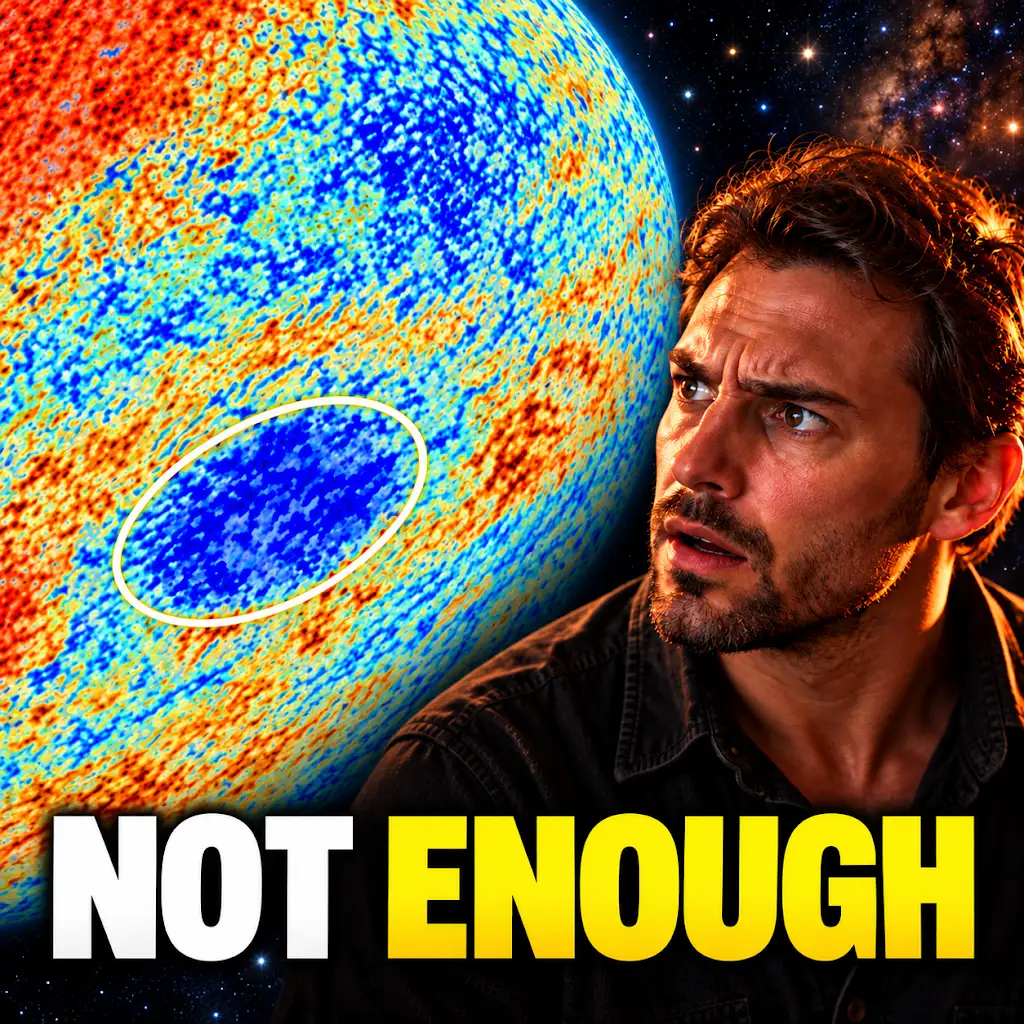
The Universe’s Cold Spot Has an Explanation. It’s Not Enough.
FAQs
What is CMB?
The Cosmic Microwave Background (CMB) is the afterglow of the Big Bang, a faint radiation that fills the universe.
When was the CMB discovered?
The CMB was discovered accidentally in 1965 by Arno Penzias and Robert Wilson at the Bell Telephone Laboratories in New Jersey.
How was the CMB discovered?
Penzias and Wilson discovered the CMB while trying to eliminate background noise in a radio antenna. They found a persistent noise that was coming from all directions in the sky, which turned out to be the CMB.
What does the discovery of the CMB tell us about the universe?
The discovery of the CMB provided strong evidence for the Big Bang theory and helped confirm the idea that the universe began as a hot, dense state and has been expanding ever since.
How has the discovery of the CMB impacted our understanding of the universe?
The discovery of the CMB has revolutionized our understanding of the universe, providing crucial insights into its origins, evolution, and composition. It has become a cornerstone of modern cosmology.