The universe, in its vastness and complexity, holds many mysteries that continue to intrigue and challenge scientists. Among these enigmas, the Cosmic Microwave Background (CMB) stands out as a relic of the Big Bang, a faint afterglow that permeates all of space. While the CMB is remarkably uniform, a closer examination reveals subtle variations in its temperature. One of the most prominent and perplexing of these anomalies is the “Cold Spot,” a region of the CMB that appears significantly cooler than its surroundings. For those new to cosmology, understanding the CMB Cold Spot can seem daunting, but it offers a fascinating glimpse into the early universe and the potential for new physics. This guide aims to demystify this cosmic anomaly, making it accessible to the curious beginner.
Unveiling the Cosmic Microwave Background Radiation
Before delving into the Cold Spot itself, it is crucial to grasp the fundamental nature of the Cosmic Microwave Background (CMB). The CMB is not just random radiation; it is a snapshot of the universe when it was just about 380,000 years old. At this point, the universe had cooled enough for protons and electrons to combine and form neutral hydrogen atoms. This event, known as recombination, made the universe transparent to light for the first time. The photons that were freely streaming at that moment have been traveling through space ever since, stretching and cooling as the universe has expanded. Today, these ancient photons are observed as microwave radiation, with a temperature of approximately 2.7 Kelvin, or -270.45 degrees Celsius. This nearly uniform temperature across the entire sky is a powerful testament to the Big Bang theory.
The Genesis of the CMB: A Universe in its Infancy
The Big Bang theory, the prevailing cosmological model, describes the universe as originating from an extremely hot and dense state. In the moments after the Big Bang, the universe was a plasma of fundamental particles. As it expanded and cooled, these particles began to form more complex structures. The period of recombination was a pivotal moment, marking the transition from an opaque, plasma-dominated universe to a transparent, neutral one. The CMB photons released at this time carry information about the conditions of the universe at that epoch, including its density, composition, and the seeds of future structures like galaxies and galaxy clusters.
Mapping the Cosmic Tapestry: How We Observe the CMB
Observing the CMB is a monumental task, requiring highly sensitive instruments capable of detecting faint microwave signals. Satellites like the COBE (Cosmic Background Explorer), WMAP (Wilkinson Microwave Anisotropy Probe), and Planck have been instrumental in mapping the CMB with increasing precision. These missions have produced detailed maps of the sky, revealing tiny temperature fluctuations, or anisotropies, in the CMB. These anisotropies are not random noise; they represent minute differences in the density of the early universe, which eventually grew into the large-scale structures we see today. The intensity of these fluctuations is incredibly small, on the order of parts per 100,000, but their study has revolutionized our understanding of cosmology.
The Cosmic Microwave Background (CMB) Cold Spot is a fascinating topic for those interested in cosmology and the early universe. For beginners looking to understand this phenomenon and its implications for our understanding of the cosmos, a related article can provide valuable insights. You can explore more about the CMB Cold Spot and its significance in the universe by visiting this informative article at Freaky Science.
The Curious Case of the CMB Cold Spot

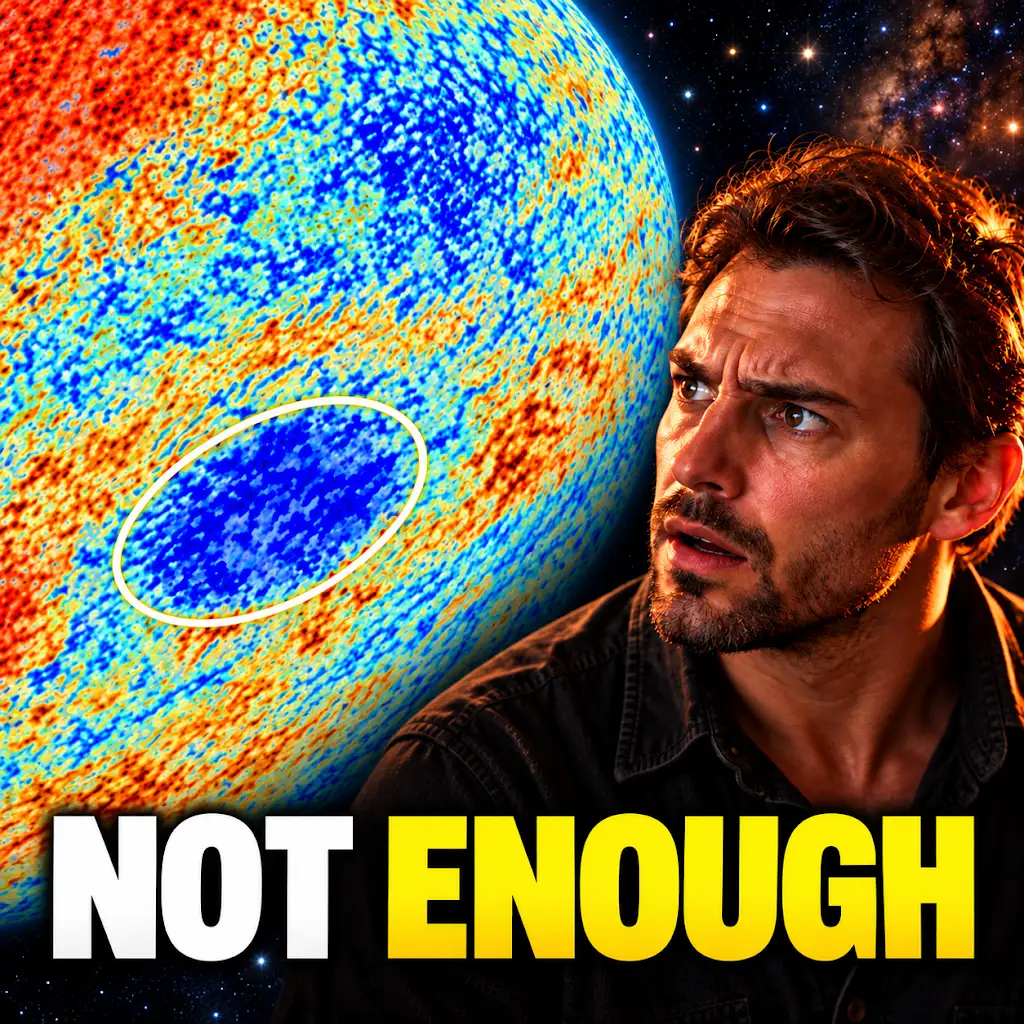
The CMB Cold Spot is, quite simply, a region in the sky where the CMB appears to be a few thousandths of a degree Kelvin colder than the average temperature. While this difference might seem minuscule, in the context of the remarkably uniform CMB, it is a significant anomaly. First identified in data from the WMAP satellite and later confirmed by Planck, the Cold Spot is a large, roughly circular area spanning several degrees across the sky. Its existence poses a challenge to the standard cosmological model, which predicts that the CMB should be largely uniform with only small, random fluctuations.
Pinpointing the Anomaly: Discovery and Characteristics
The discovery of the CMB Cold Spot was a serendipitous outcome of meticulous sky surveys. Scientists analyzing the detailed temperature maps of the CMB noticed a persistent area of lower temperature. The statistical significance of this region was such that it warranted further investigation. The Cold Spot is not just a single cold pixel; it’s an extended region. Its size and the degree of its coldness have been refined with successive, more sensitive observations. What makes it particularly intriguing is its apparent lack of significant structure within it, meaning it doesn’t seem to correlate with any known overdensities or underdensities of matter in the foreground or background.
Statistical Significance: Is it Just a Fluke?
A key question surrounding the CMB Cold Spot is whether it is a statistically significant feature or merely a random fluctuation in the CMB data. The standard cosmological model, known as the Lambda-CDM model, predicts that such cold spots, or indeed any particular pattern, should occur only with a certain probability. Scientists have performed numerous statistical analyses to determine the likelihood of observing a region as cold and as large as the CMB Cold Spot purely by chance. While the exact probability is debated and depends on the specific statistical methods used, many studies suggest that the Cold Spot is statistically unlikely to be a random occurrence within the standard model. This has led to a search for alternative explanations.
Exploring Potential Explanations for the Cold Spot

The anomalous nature of the CMB Cold Spot has spurred a flurry of theoretical investigations into its origins. Scientists have proposed a variety of explanations, ranging from extensions of the standard cosmological model to more exotic hypotheses. These proposed solutions attempt to reconcile the observed anomaly with our understanding of the universe and its evolution.
The “Supervoid” Hypothesis: A Gravitational Dent
One of the most widely discussed explanations for the CMB Cold Spot is the “supervoid” hypothesis. This theory suggests that the Cold Spot is caused by a vast region of space that contains significantly less matter than average – a cosmic void. According to Einstein’s theory of general relativity, gravity is a consequence of the curvature of spacetime caused by mass. If photons from the CMB were to travel through such a supervoid, they would expend less energy climbing out of a gravitational “well” than they would if they passed through a region with more matter. This would result in the photons arriving at Earth with slightly lower energy, which we observe as a colder temperature.
The Challenge of Finding a Sufficiently Large Void
While the supervoid hypothesis offers an elegant explanation, it faces its own challenges. For this effect to be significant enough to explain the observed coldness of the CMB Cold Spot, the void would need to be exceptionally large and deep. Scientists have been actively searching for such a supervoid in the direction of the Cold Spot, but definitive observational evidence has been elusive. Some studies have identified candidate voids, but their size and emptiness may not be sufficient to fully account for the anomaly. The lack of a clearly identified supervoid remains a significant hurdle for this hypothesis.
Exotic Physics and Beyond the Standard Model
The CMB Cold Spot has also opened the door to more speculative, “beyond the standard model” explanations. These hypotheses explore possibilities that lie outside the current framework of cosmology, suggesting that the Cold Spot might be a hint of new physics.
Collisions with Other Universes: A Multiverse Intrigue
One of the more imaginative theories proposes that the Cold Spot could be a “bruise” from a collision with another universe in a multiverse scenario. If our universe is just one of many, and these universes occasionally interact, such an interaction could have left its imprint on the CMB. This idea, while highly speculative, is a fascinating example of how scientists push the boundaries of our understanding to explain cosmic anomalies. However, directly testing or observing such interactions is extremely challenging.
Topological Defects and Cosmic Strings
Another class of exotic explanations involves topological defects, such as cosmic strings. These are hypothetical one-dimensional objects predicted by some theories of particle physics that could have formed in the early universe. If a sufficient number of cosmic strings were present or passed through the region of the CMB that we observe as the Cold Spot, they could have influenced the propagation of CMB photons, leading to a colder temperature. These theories often require the existence of new particles or fields that have not yet been detected.
The Search for Evidence and Future Investigations
The ongoing study of the CMB Cold Spot is a dynamic field, with researchers continually refining their observations and theoretical models. The quest to understand its origin is not just an academic exercise; it has the potential to fundamentally alter our understanding of the universe.
Enhanced Observational Campaigns
The precision of cosmological measurements is constantly improving. New telescopes and instruments are being developed that will provide even more detailed maps of the CMB. These next-generation observatories will be able to probe the CMB with unprecedented resolution, allowing scientists to better characterize the Cold Spot and search for any subtle features or correlations that might provide clues to its origin. Future surveys will also aim to map the distribution of matter in the universe with greater accuracy, which will be crucial for testing hypotheses like the supervoid explanation.
Refined Theoretical Frameworks
As observational data becomes more precise, theoretical cosmologists are working to develop more sophisticated models. These models aim to incorporate potential explanations for the Cold Spot within the broader framework of cosmology. This involves exploring extensions to the standard Lambda-CDM model, as well as developing new theoretical tools to analyze the implications of exotic physics. The interplay between observation and theory is crucial in unraveling this cosmic mystery.
The Cosmic Microwave Background (CMB) cold spot is a fascinating area of the universe that has intrigued astronomers and cosmologists alike. For those who are new to this topic, understanding the implications of the cold spot can be quite enlightening. A related article that delves deeper into this phenomenon can be found at Freaky Science, where you can explore various theories and research surrounding the CMB and its significance in our understanding of the universe.
The Significance of the Cold Spot for Cosmology
| Metric | Description | Typical Value | Notes for Beginners |
|---|---|---|---|
| Temperature Fluctuation | Variation in CMB temperature at the cold spot | ~ -150 µK | Significantly colder than average CMB temperature (~2.725 K) |
| Angular Size | Apparent size of the cold spot on the sky | ~5° to 10° | Large enough to be noticeable in CMB maps |
| Location (Galactic Coordinates) | Position of the cold spot in the sky | l ≈ 209°, b ≈ -57° | Located in the southern galactic hemisphere |
| Significance Level | Statistical significance of the cold spot anomaly | ~2-3 sigma | Indicates it is an unusual but not definitive anomaly |
| Possible Explanations | Hypotheses about the cold spot’s origin | Supervoid, cosmic texture, statistical fluke | Beginners should explore these theories for context |
The CMB Cold Spot, despite its relatively small size and temperature difference, holds immense significance for the field of cosmology. Its existence challenges our current understanding and serves as a powerful impetus for further exploration and discovery.
Pushing the Boundaries of the Standard Model
The fact that the CMB Cold Spot might not be easily explained by the standard Lambda-CDM model suggests that our current understanding of the universe may be incomplete. This anomaly acts as a crucial test for the validity and completeness of our cosmological framework. If a robust explanation cannot be found within the existing paradigm, it indicates that new physics or a revision of our fundamental assumptions might be necessary.
A Window into the Unknown
Ultimately, the CMB Cold Spot represents a tantalizing glimpse into the unknown. Whether it is a consequence of a vast cosmic void, a relic of early universe phase transitions, or something even more profound, its study promises to expand our knowledge of the cosmos. It reminds us that even in the seemingly uniform afterglow of the Big Bang, there are still profound mysteries waiting to be unveiled, driving scientific curiosity and the relentless pursuit of understanding the universe we inhabit.
The Universe’s Cold Spot Has an Explanation. It’s Not Enough.
FAQs
What is the CMB cold spot?
The CMB cold spot is a region of the cosmic microwave background (CMB) radiation that appears colder than its surroundings. It is a mysterious and puzzling feature of the universe.
Where is the CMB cold spot located?
The CMB cold spot is located in the southern hemisphere of the sky, near the constellation Eridanus. It covers an area of about 20 degrees in diameter.
What causes the CMB cold spot?
The exact cause of the CMB cold spot is still unknown. Some theories suggest that it could be the result of a void in the universe, where there is less matter and therefore less radiation. Other theories propose that it may be a remnant of the early universe or a result of gravitational lensing.
How was the CMB cold spot discovered?
The CMB cold spot was first discovered in 2004 by astronomers analyzing data from the Wilkinson Microwave Anisotropy Probe (WMAP) satellite. It was confirmed by subsequent observations from other telescopes and satellites.
What are the implications of the CMB cold spot?
Studying the CMB cold spot can provide valuable insights into the large-scale structure of the universe, the distribution of matter, and the nature of dark energy. It challenges our current understanding of the universe and continues to be a topic of ongoing research and debate among scientists.