
The vast expanse of the cosmos, a canvas of unimaginable scale, is punctuated by an intricate tapestry of galaxies, nebulae, and dark matter. While astronomers have charted countless celestial wonders, some regions of space defy easy explanation, presenting enigmas that push the boundaries of our understanding. Among these cosmic puzzles, the Eridanus Supervoid stands as a particularly profound mystery, a colossal emptiness in the universe that challenges prevailing cosmological models. This immense void, stretching across hundreds of millions of light-years, represents a significant anomaly, a region where matter is strikingly absent compared to its surroundings. Unraveling its secrets holds the key to comprehending the large-scale structure of the universe, the distribution of matter, and potentially, the very fabric of spacetime.
The Colossal Absence: Defining the Eridanus Supervoid
The Eridanus Supervoid, also known as the Great Eridanus Void, is not merely a patch of empty space; it is a gargantuan cavity within the cosmic web, a region characterized by a profound deficit of galaxies and galaxy clusters. Its sheer size is almost incomprehensible. Estimates suggest it spans an astonishing 250 megaparsecs in diameter, which translates to roughly 800 million light-years. To put this into perspective, our own Milky Way galaxy resides within the Local Group, a relatively small collection of galaxies. The Eridanus Supervoid is so vast that it dwarfs entire clusters of galaxies and stretches across a significant portion of the observable universe.
Mapping the Cosmic Web
The discovery and mapping of supervoids like Eridanus are intrinsically linked to our understanding of the cosmic web. This web-like structure, revealed through extensive galaxy surveys, describes the large-scale distribution of matter in the universe. Galaxies are not randomly scattered; instead, they tend to congregate in filaments and clusters, with vast, underdense regions of dark matter and gas lying between them. Supervoids are the most extreme examples of these underdense regions. The Eridanus Supervoid was first hinted at through its gravitational influence on the cosmic microwave background (CMB) radiation, the faint afterglow of the Big Bang.
The CMB Anomaly: A Cold Spot with a Story
One of the most compelling pieces of evidence for the Eridanus Supervoid comes from observations of the CMB. Specifically, a region within the Eridanus constellation exhibits a statistically significant “cold spot” – an area where the CMB temperature is slightly lower than the surrounding regions. While cold spots can arise from various statistical fluctuations, the sheer scale and unusual nature of the Eridanus cold spot have led some cosmologists to hypothesize that it might be the imprint of a massive supervoid. The idea is that as CMB photons passed through the supervoid during their journey to Earth, they would have lost energy due to the lack of gravitational pull from intervening matter, resulting in a cooler observed temperature. This phenomenon is often referred to as the Rees-Sciama effect.
Galactic Deficit: A Striking Lack of Structure
The most direct evidence for the Eridanus Supervoid lies in the conspicuous absence of galaxies and galaxy clusters within its boundaries. Extensive galaxy surveys, such as the Sloan Digital Sky Survey (SDSS) and others, have meticulously mapped the distribution of galaxies. When astronomers analyze the density of galaxies in different regions of space, the Eridanus Supervoid stands out as a stark contrast to the filamentary and clustered structures that dominate the rest of the universe. Within this colossal void, galaxy densities are significantly lower than what would be predicted by standard cosmological models. It is not completely devoid of matter, as there are still sparse populations of galaxies and intergalactic gas, but their numbers are dramatically reduced compared to regions like the Great Attractor.
The Eridanus Supervoid is a vast region of space that has garnered significant interest among astronomers due to its unusual lack of galaxies. This phenomenon raises intriguing questions about the structure of the universe and the distribution of dark matter. For a deeper understanding of cosmic voids and their implications, you can explore a related article that delves into the mysteries of the universe at this link: Freaky Science.
Challenging the Standard Model: Implications for Cosmology
The existence of such a massive underdensity as the Eridanus Supervoid poses a significant challenge to the Lambda-CDM model, the current standard model of cosmology. This model, which describes the universe as being composed of dark energy, cold dark matter, and ordinary matter, has been remarkably successful in explaining a wide range of cosmological observations. However, the Eridanus Supervoid, with its extreme emptiness, appears to be larger and more underdense than what the Lambda-CDM model typically predicts for structures of its size.
The Inflationary Paradox: Seeds of Structure
Cosmological inflation, a hypothetical period of rapid expansion in the very early universe, is believed to have smoothed out initial inhomogeneities and generated the quantum fluctuations that eventually grew into the large-scale structures we observe today. According to the standard inflationary paradigm, these initial fluctuations should be relatively uniform and Gaussian. The Eridanus Supervoid, however, suggests the possibility of exceptionally large negative fluctuations – regions where the density was significantly lower than average. This raises questions about the precise nature of inflation and the distribution of initial density fluctuations.
Are Supervoids Rare Anomalies?
One possible explanation is that supervoids like Eridanus are simply rare statistical outliers within the framework of the Lambda-CDM model. In an infinite or sufficiently large universe, even extremely improbable events can occur. Astronomers continue to search for other supervoids to determine whether Eridanus is a unique anomaly or if such colossal voids are a more common feature of the cosmic landscape than previously thought. The discovery of other large supervoids would strengthen the argument that the Lambda-CDM model might need adjustments to better accommodate these extreme structures.
Alternative Cosmological Models: Beyond Lambda-CDM
The existence of the Eridanus Supervoid has also fueled speculation and research into alternative cosmological models. Some theories propose modifications to the nature of dark energy or dark matter, which could influence the formation and evolution of large-scale structures. For instance, certain models suggest that dark energy might not be a constant and could have varied over time or space, leading to different expansion rates in different regions. Other ideas explore the possibility of exotic physics in the early universe that could have produced larger-than-expected underdensities.
The Cosmic Microwave Background Reconsidered
The interpretation of the Eridanus cold spot in the CMB is a crucial aspect of this debate. While the Rees-Sciama effect remains a leading candidate for explaining the cold spot’s connection to the supervoid, some researchers have proposed more speculative explanations. These include the possibility that the cold spot is a sign of a collision between our universe and another “bubble” universe, or even evidence of physics beyond the standard model, such as cosmic strings or variations in fundamental constants. While these are more radical ideas, they highlight the profound implications the Eridanus Supervoid has for our understanding of the universe’s origins and evolution.
Searching for Clues: Observational Efforts and Techniques
Unraveling the mysteries of the Eridanus Supervoid requires sophisticated observational techniques and ongoing astronomical surveys. Scientists are employing a multi-pronged approach, utilizing data from various telescopes and instruments to gather more information about this enigmatic region. The goal is to refine our understanding of its size, depth, and the distribution of matter within and around it.
Deep Galaxy Surveys: Mapping the Emptiness
Large-scale galaxy surveys are paramount to this endeavor. These surveys systematically observe millions of galaxies across vast swathes of the sky, meticulously recording their positions and velocities. By analyzing the density of galaxies in different regions, astronomers can delineate the boundaries of voids and supervoids. The ongoing and future galaxy surveys, with their increased sensitivity and depth, are expected to provide even more detailed maps of the Eridanus Supervoid and potentially reveal other hidden structures.
Redshift and Structure: A Three-Dimensional View
Galaxy redshift is a key measurement in these surveys. The redshift of a galaxy tells us how fast it is moving away from us due to the expansion of the universe. By combining redshift measurements with angular position on the sky, astronomers can construct a three-dimensional map of the universe. This allows them to precisely map the location and extent of the Eridanus Supervoid, revealing the precise distribution of galaxies within it and in the surrounding filaments and clusters.
Cosmic Microwave Background Observations: The Echoes of the Early Universe
As mentioned earlier, the CMB provides crucial indirect evidence for the Eridanus Supervoid. Precise measurements of the CMB temperature fluctuations by missions like the Planck satellite have provided detailed maps of the cosmic microwave background. The analysis of these maps, particularly the detection of the Eridanus cold spot, has been instrumental in identifying the potential presence of this supervoid. Future CMB observations, with even higher precision, may offer further insights into the interaction between the void and the early universe’s radiation.
Gravitational Lensing: Bending Light, Revealing Mass
Gravitational lensing, the bending of light by massive objects, is another powerful tool for studying dark matter and the distribution of mass. While the Eridanus Supervoid is characterized by a deficit of matter, the surrounding filaments and clusters are gravitationally lensing the light from background galaxies. By studying these lensing effects, astronomers can infer the distribution of mass, including dark matter, in and around the supervoid. This can help to constrain the “emptiness” of the void and the density of its boundaries.
Theories and Hypotheses: Potential Explanations
The existence of the Eridanus Supervoid has spurred a variety of theoretical explanations, ranging from statistical anomalies within the standard model to more exotic scenarios that push the boundaries of our current cosmological understanding. Each hypothesis attempts to reconcile the observed emptiness with our theories of how the universe evolved.
Statistical Fluctuation: A Rare Event
The simplest explanation, and one that remains plausible within the Lambda-CDM framework, is that the Eridanus Supervoid is an exceptionally large statistical fluctuation. In a universe as vast as ours, even extremely improbable events can occur. While the probability of such a large underdensity forming might be low according to current simulations, it is not necessarily zero. Further simulations and observations of other regions of the sky will help to determine the statistical likelihood of such structures.
Simulation and Probability: Testing the Odds
Cosmological simulations are crucial for testing the probability of supervoid formation within the Lambda-CDM model. These simulations start with initial conditions mimicking the early universe and evolve them according to the known laws of physics and the composition of the universe. By running numerous simulations, astronomers can estimate how often structures like the Eridanus Supervoid would arise by chance. If these simulations consistently fail to produce such large voids, it would lend more weight to alternative explanations.
Non-Gaussian Initial Conditions: A Different Big Bang
Some theories propose that the initial conditions of the universe were not as purely Gaussian as predicted by standard inflationary models. If the initial quantum fluctuations that seeded the formation of structure were more skewed, with a higher probability of large negative fluctuations, then supervoids could form more readily. This would imply a modification to our understanding of the inflationary epoch itself.
Multiverse Scenarios: Bubbles of Reality
More speculative hypotheses suggest that the Eridanus Supervoid might be a relic from the early universe’s tumultuous formation. In some multiverse scenarios, our universe might have formed as a “bubble” within a larger, eternally inflating spacetime. If our bubble had a peculiar initial configuration, or if it interacted with other “neighboring” bubbles, it could have resulted in regions of exceptionally low matter density like the Eridanus Supervoid. These are highly theoretical ideas, but they illustrate the profound questions that such cosmic anomalies can raise.
Modified Gravity or Exotic Dark Energy: Rethinking the Fundamentals
Another avenue of research explores the possibility that our understanding of gravity or dark energy is incomplete. Some theories of modified gravity propose that gravity behaves differently on very large scales, potentially influencing the formation and growth of structures. Similarly, models that feature more complex or dynamic forms of dark energy could lead to different patterns of cosmic expansion and structure formation, potentially accommodating the existence of supervoids.
The Role of Dark Matter: More Than Just a Glue?
While dark matter is understood to be a major component of the universe’s structure, its precise nature remains elusive. Some researchers are exploring whether variations in the properties of dark matter, or interactions between dark matter and other fundamental forces, could contribute to the formation of extremely underdense regions. This is a frontier of theoretical physics, where new ideas about the fundamental constituents of the universe are constantly being explored.
The Eridanus Supervoid is a fascinating cosmic structure that has intrigued astronomers due to its vast emptiness and potential implications for our understanding of the universe. This supervoid, located in the direction of the constellation Eridanus, raises questions about the distribution of dark matter and the formation of galaxies. For those interested in exploring more about the mysteries of the universe, a related article can be found at Freaky Science, which delves into various cosmic phenomena and their significance in the grand scheme of astrophysics.
The Future of Void Research: Unlocking Cosmic Secrets
| Metric | Details |
|---|---|
| Name | Eridanus Supervoid |
| Type | Cosmic Void / Supervoid |
| Location | Constellation Eridanus |
| Approximate Diameter | 1 billion light-years |
| Discovery | Identified through cosmic microwave background (CMB) studies and galaxy surveys |
| Significance | One of the largest known voids; linked to the Cold Spot in the CMB |
| Density | Significantly lower than average cosmic matter density |
| Impact on CMB | Potentially causes the Cold Spot anomaly via the Integrated Sachs-Wolfe effect |
The Eridanus Supervoid is more than just a curiosity; it is a frontier of cosmological research, a tantalizing puzzle that promises to deepen our understanding of the universe. As observational capabilities continue to advance and theoretical models are refined, astronomers are poised to make significant progress in unraveling its secrets. The ongoing exploration of this colossal emptiness is a testament to humanity’s enduring quest to comprehend our place in the cosmos.
Next-Generation Surveys: Sharper Eyes on the Universe
The development of next-generation telescopes and sky surveys, such as the Vera C. Rubin Observatory and the Square Kilometre Array (SKA), will revolutionize our ability to study the large-scale structure of the universe. These instruments will provide unprecedented depth, resolution, and sky coverage, allowing for more precise mapping of galaxy distributions, a more detailed study of the CMB, and a more thorough investigation of gravitational lensing effects. This will enable astronomers to definitively confirm the extent and properties of the Eridanus Supervoid and search for other similar structures with greater confidence.
Cataloging and Characterizing Voids: Building a Void Census
A crucial aspect of future research will be the creation of comprehensive catalogs of voids and supervoids. By systematically identifying and characterizing these underdense regions across the observable universe, astronomers can build a statistically robust dataset. This “void census” will be invaluable for testing cosmological models and understanding the prevalence and properties of these cosmic gaps. The Eridanus Supervoid will likely serve as a benchmark in this ongoing cataloging effort.
Theoretical Refinements: Fine-Tuning Our Cosmic Story
The observational data gathered from these advanced surveys will provide critical feedback for theoretical cosmologists. This data will be used to refine existing models, test new hypotheses, and potentially guide the development of entirely new theoretical frameworks. The Eridanus Supervoid, by presenting a significant challenge, is a powerful catalyst for pushing the boundaries of theoretical physics.
The Hunt for Exotic Physics: Pushing the Boundaries of Knowledge
Ultimately, the study of the Eridanus Supervoid and other cosmic anomalies may lead to the discovery of new physics beyond the Standard Model. Whether it reveals a subtle statistical quirk or a profound deviation from our current understanding, the quest to explain this cosmic emptiness is a journey into the fundamental nature of reality. The Eridanus Supervoid, a silent testament to the vastness and complexity of the universe, continues to inspire wonder and drive scientific inquiry, reminding us that even in the deepest voids, there are profound secrets waiting to be uncovered.
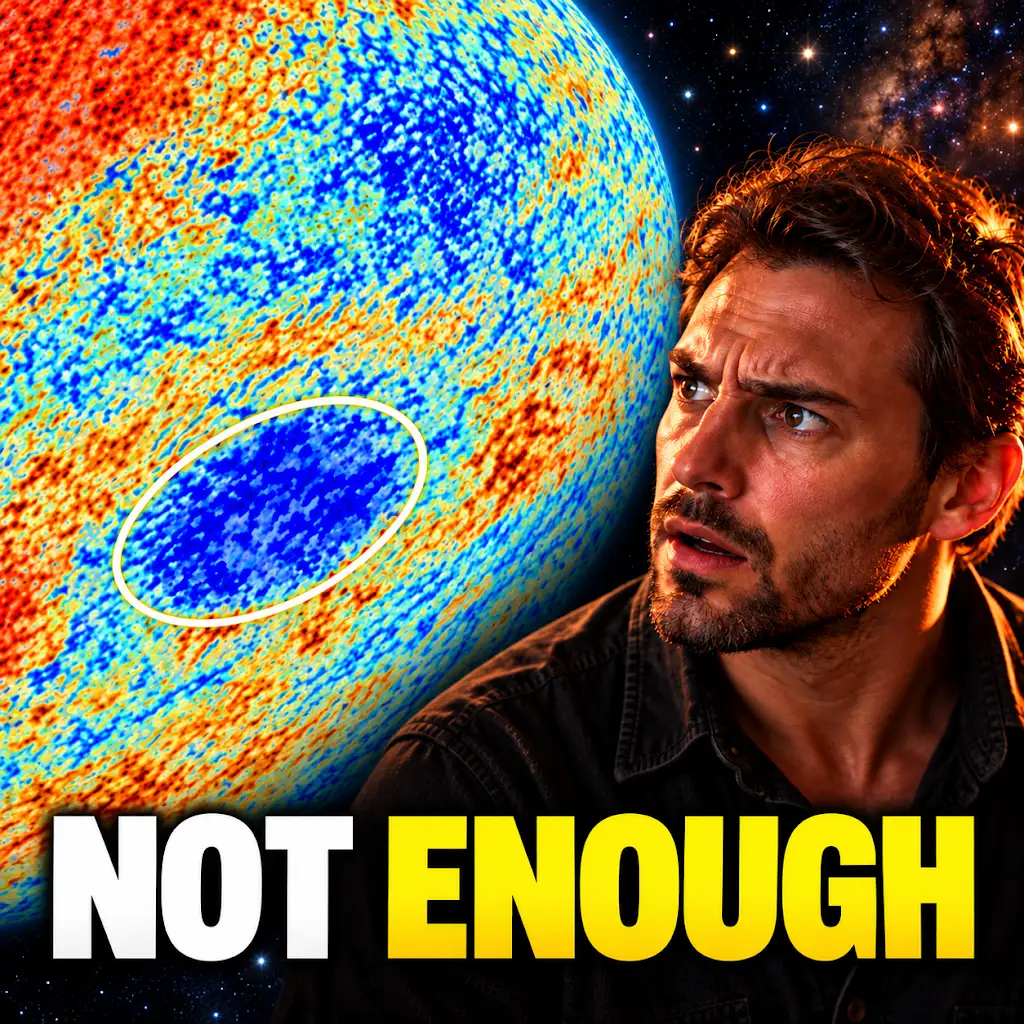
The Universe’s Cold Spot Has an Explanation. It’s Not Enough.
FAQs
What is the Eridanus Supervoid?
The Eridanus Supervoid is a vast region of space that is largely devoid of galaxies and stars.
How big is the Eridanus Supervoid?
The Eridanus Supervoid is one of the largest known voids in the universe, spanning about 1.8 billion light-years in diameter.
Where is the Eridanus Supervoid located?
The Eridanus Supervoid is located in the constellation Eridanus, which is in the southern celestial hemisphere.
What causes the Eridanus Supervoid?
The exact cause of the Eridanus Supervoid is still unknown, but it is believed to be a result of the expansion of the universe and the distribution of matter.
What impact does the Eridanus Supervoid have on the universe?
The Eridanus Supervoid has a significant impact on the large-scale structure of the universe, influencing the distribution of galaxies and the overall dynamics of cosmic expansion.