
The universe, in its infancy, was a canvas of unimaginable heat and density. As it expanded and cooled, it left behind a faint whisper, an echo of its fiery birth – the Cosmic Microwave Background (CMB). For decades, scientists have been meticulously studying this relic radiation, piecing together the story of our cosmos. Among the most revolutionary tools in this endeavor is the Planck satellite, whose detailed maps of the CMB have unlocked profound insights into cosmology. Unraveling the Planck CMB Map is not merely an exercise in astronomical observation; it is a journey into the very foundations of our universe, from its initial moments to its grand cosmic architecture.
The Cosmic Dawn and the Birth of the CMB
The story of the CMB begins in the Big Bang, the universally accepted model for the origin of the universe. In its earliest moments, the cosmos was a scorching hot soup of elementary particles and radiation, far too hot and dense for atoms to form. Photons, the fundamental particles of light, were constantly scattering off free electrons, creating an opaque plasma. This era, known as the “dark ages,” persisted for hundreds of thousands of years.
The Epoch of Recombination
As the universe continued to expand, it cooled. Eventually, around 380,000 years after the Big Bang, the temperature dropped sufficiently for electrons and protons to combine, forming neutral hydrogen and helium atoms. This pivotal event is known as recombination. With the free electrons now bound into atoms, the photons were no longer constantly scattering. They were free to travel unimpeded through space. This moment marks the release of the CMB radiation we observe today, a snapshot of the universe at this crucial transition. It’s like the fog finally lifting, allowing us to see what lies beyond. The CMB, therefore, is often referred to as the “afterglow” of the Big Bang.
The Nature of Cosmic Microwave Background Radiation
The CMB is not a uniform glow. While it appears remarkably uniform to the naked eye, sensitive instruments reveal subtle temperature fluctuations, known as anisotropies. These tiny variations, on the order of parts per million, are the imprints of quantum fluctuations in the very early universe that were amplified by inflation. These minute differences in temperature correspond to slight variations in density in the primordial plasma. Denser regions would eventually grow into the galaxies and galaxy clusters we see today, while less dense regions would become the vast voids. The CMB, therefore, is a treasure trove of information about the initial conditions of the universe. It allows cosmologists to test and refine their models of cosmic evolution.
For a deeper understanding of the Planck Cosmic Microwave Background (CMB) map and its significance in cosmology, you can explore the article titled “Planck CMB Map Explained” available at this link. The article provides a comprehensive overview of the CMB, detailing how the Planck satellite has contributed to our knowledge of the universe’s early moments and its subsequent evolution.
The Planck Satellite: A Leap in CMB Observation

Before Planck, missions like COBE (Cosmic Background Explorer) and WMAP (Wilkinson Microwave Anisotronoy Probe) had already provided groundbreaking maps of the CMB. However, Planck, launched by the European Space Agency (ESA) in 2009, represented a significant technological leap, offering unprecedented resolution and sensitivity. Its mission was to map the CMB with such precision that it could distinguish between competing cosmological models and provide the most accurate measurements of fundamental cosmological parameters to date.
Technological Advancements of Planck
Planck’s success was a testament to its sophisticated instrumentation. It carried two highly sensitive instruments: the Low Frequency Instrument (LFI) and the High Frequency Instrument (HFI). These instruments were designed to detect microwave radiation across a range of frequencies, with HFI being particularly crucial for its high resolution. To achieve such sensitivity, Planck was equipped with advanced detectors cooled to extremely low temperatures, close to absolute zero. This minimized the instrument’s own thermal noise, allowing it to detect the faint CMB signals against the background. Furthermore, Planck was placed in an orbit at the Sun-Earth L2 Lagrange point, a gravitationally stable location far from the heat and interference of Earth, which allowed for continuous and unobstructed observations of the entire
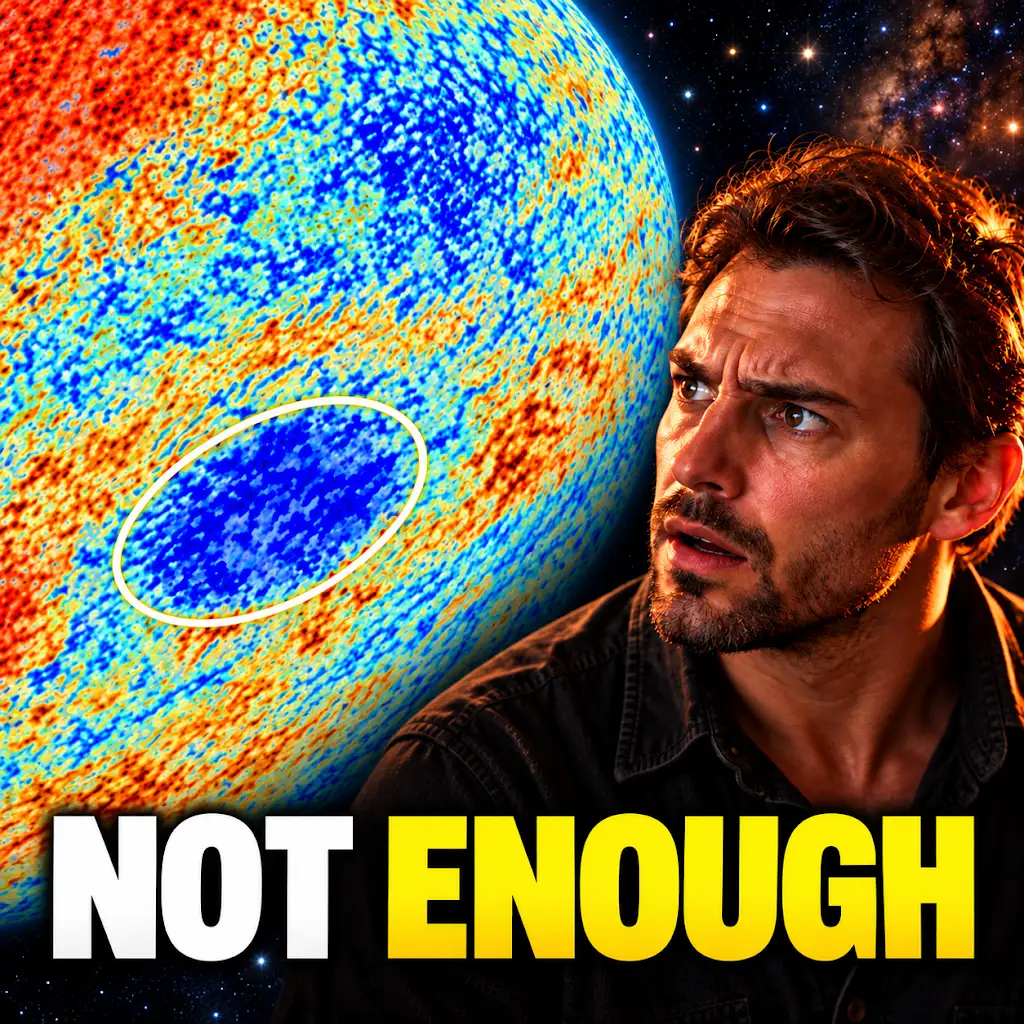
The Universe’s Cold Spot Has an Explanation. It’s Not Enough.

FAQs
What is the Planck CMB map?
The Planck Cosmic Microwave Background (CMB) map is a detailed map of the oldest light in the universe, known as the Cosmic Microwave Background radiation. It was created by the European Space Agency’s Planck satellite.
How was the Planck CMB map created?
The Planck satellite measured the temperature and polarization of the CMB radiation across the entire sky. By analyzing this data, scientists were able to create a high-resolution map of the CMB, providing valuable insights into the early universe.
What does the Planck CMB map reveal about the universe?
The Planck CMB map provides important information about the composition, history, and evolution of the universe. It helps scientists understand the distribution of matter, the formation of galaxies and galaxy clusters, and the overall structure of the cosmos.
What are some key findings from the Planck CMB map?
The Planck CMB map has helped scientists determine the age of the universe, the amount of dark matter and dark energy present, and the initial conditions that led to the formation of galaxies. It has also provided insights into the process of cosmic inflation.
How does the Planck CMB map contribute to our understanding of the universe?
By studying the Planck CMB map, scientists can test theories about the origin and evolution of the universe, refine models of cosmology, and gain a deeper understanding of the fundamental forces and particles that govern the cosmos.