The universe, in its vastness, often presents enigmas that challenge our understanding of physics and cosmology. Among these celestial puzzles, the “Cold Spot” in the cosmic microwave background (CMB) radiation stands out as a particularly intriguing anomaly. Discovered in 2004, this region appears significantly colder than the average temperature of the CMB, which is a faint afterglow from the Big Bang. Its existence has sparked debate and a multitude of proposed explanations, ranging from mundane statistical fluctuations to the truly exotic. Unraveling the mystery of the Cold Spot is not just about understanding a curious temperature dip; it offers a potential window into the very early universe, the nature of dark energy, and even the possibility of structures beyond our observable universe.
The Unveiling of a Cosmic Chill
The cosmic microwave background is a cornerstone of modern cosmology, providing an almost perfect snapshot of the universe about 380,000 years after the Big Bang. At this epoch, the universe had cooled enough for electrons and protons to combine into neutral atoms, allowing photons to travel freely. These photons, stretched and cooled by the expansion of the universe over billions of years, now permeate all of space with a uniform temperature of approximately 2.725 Kelvin. However, precise measurements reveal tiny temperature variations, or anisotropies, in this background radiation, which are crucial for understanding the formation of large-scale structures like galaxies and galaxy clusters.
Initial Observations and Surprise
The anomaly was first detected by the Wilkinson Microwave Anisotropy Probe (WMAP) satellite. Scientists analyzing the WMAP data were surprised to find a region, roughly 1.2 billion light-years across, that was several millikelvin cooler than its surroundings. This temperature deficit, while small, was statistically significant, meaning it was unlikely to have arisen by chance from the natural fluctuations expected in the early universe. The size and depth of this “Cold Spot” were not easily explained by the standard model of cosmology, which posits that such temperature variations should be relatively uniform in all directions. Subsequent observations by the Planck satellite, with its higher resolution and sensitivity, confirmed the existence and characteristics of the Cold Spot, solidifying its status as a genuine cosmological puzzle. The statistical significance of the Cold Spot, according to Planck, is around 3-sigma, indicating a less than 1% probability of being a random fluctuation.
The Standard Cosmological Model and Its Limits
The standard model of cosmology, known as the Lambda-CDM model, successfully explains a wide range of cosmological observations, including the CMB anisotropies, the abundance of light elements, and the accelerating expansion of the universe driven by dark energy. This model predicts that the temperature fluctuations in the CMB should follow a statistical distribution, with larger structures being rarer. The Cold Spot, as a particularly large and pronounced anomaly, seemed to push the boundaries of what the standard model would predict as a likely occurrence. While the model allows for such variations, the probability of observing a cold spot of this magnitude in our observable universe is considered low. This discrepancy has led cosmologists to explore various hypotheses to account for its existence without necessarily abandoning the Lambda-CDM model entirely.
The mystery of the cold spot in space has intrigued astronomers and cosmologists for years, leading to various theories about its origins and implications for our understanding of the universe. For those interested in exploring this phenomenon further, a related article can be found at Freaky Science, which delves into the potential explanations and the significance of this enigmatic region in the cosmic microwave background.
Probing the Depths: Explanations for the Cold Spot

The existence of the Cold Spot has spurred a flurry of theoretical investigations, with scientists proposing a variety of explanations. These range from relatively straightforward astrophysical phenomena to more speculative and groundbreaking cosmological concepts. Each hypothesis attempts to reconcile the observed cold region with our understanding of the universe, or to propose new physics that could lead to such an anomaly.
The Supervoid Hypothesis: A Gravitational Shadow
One of the earliest and most widely discussed explanations is the supervoid hypothesis. This theory suggests that the Cold Spot is a result of the gravitational influence of a vast, underdense region of matter – a supervoid – located between us and the surface of last scattering. According to Einstein’s theory of general relativity, massive objects warp spacetime. Photons passing through a region of lower-than-average matter density (a void) will gain a small amount of energy as they fall into the gravitational potential well and then lose that energy as they climb out. However, if the photons are traveling through a void, they are in a weaker gravitational field and spend less time gaining energy than they lose over the entire path. More precisely, the Integrated Sachs-Wolfe effect explains that photons passing through evolving gravitational potentials gain or lose energy. In a supervoid, the gravitational potential is shallower than average. As photons travel through this void, they lose slightly less energy climbing out than they gained on the way in, leading to a net loss of energy, which is observed as a lower temperature in the CMB.
The Scale and Placement Challenge
The supervoid hypothesis faces a significant challenge: the sheer size and depth required for such a void to create a temperature anomaly as pronounced as the Cold Spot. Calculations suggest that a void of the necessary scale would need to be exceptionally large, perhaps encompassing billions of light-years. Furthermore, for the Integrated Sachs-Wolfe effect to be the primary cause, this supervoid would need to be situated in a specific location relative to our line of sight to the CMB, and its gravitational influence would need to be substantial enough to explain the observed temperature deficit. While several large voids have been identified in the universe, none have definitively matched the requirements to fully account for the Cold Spot. However, ongoing and future surveys are mapping the large-scale structure of the universe with increasing detail, which may help to confirm or refute this explanation.
Exotic Physics: Beyond the Standard Model
The apparent discrepancy between the Cold Spot and the predictions of the standard cosmological model has also opened the door to more speculative explanations involving new physics. These hypotheses often propose phenomena that occurred in the very early universe or involve the fundamental nature of dark matter and dark energy.
Cosmic String Intersecting the Line of Sight
One intriguing, albeit less favored, idea involves cosmic strings. These are hypothetical one-dimensional topological defects that may have formed during phase transitions in the early universe. If a sufficiently massive cosmic string were to intersect the line of sight to the Cold Spot, its gravitational pull could cause a localized redshift of CMB photons, leading to a cooler observed temperature. However, the existence of such massive cosmic strings remains purely theoretical, and observational evidence for them is lacking. Moreover, the specific alignment and mass required to explain the Cold Spot are quite precise.
Interaction with Other Universes or Bubbles
A more radical proposition suggests that the Cold Spot might be a sign of interaction with structures beyond our observable universe. One such idea is that our universe is a “bubble” within a larger multiverse. If this bubble collided with another, or if there are other universal structures with different properties, it could leave an imprint on the CMB. Specifically, a “bruise” from such a collision could manifest as a colder region. Alternatively, the Cold Spot could be a remnant of a region where the fundamental constants of physics were different in the very early universe, or where exotic forms of matter or energy existed. These are highly speculative ideas that are difficult to test with current observational capabilities but highlight the creative thinking inspired by this cosmic anomaly.
The Planck Satellite’s Contribution and New Insights

The Planck satellite, launched in 2009, was designed to map the CMB with unprecedented precision, surpassing its predecessors like WMAP. Its observations provided a much clearer and more detailed picture of the universe’s earliest light. The Planck data not only confirmed the existence of the Cold Spot but also refined its characteristics, allowing scientists to better scrutinize the various hypotheses.
High-Resolution Data and Refined Measurements
Planck’s advanced instrumentation allowed for a more accurate measurement of the temperature, size, and shape of the Cold Spot. This high-resolution data enabled cosmologists to perform more rigorous statistical analyses, comparing the observed anomaly against the predictions of different cosmological models. While Planck’s measurements solidified the reality of the Cold Spot, they also complicated some of the earlier explanations. For instance, the exact distribution of temperature fluctuations around the Cold Spot, as seen by Planck, did not perfectly align with the predictions of the simplest supervoid models. This prompted further refinement and a deeper look into the nuances of gravitational lensing and the distribution of matter in the universe.
Statistical Significance Re-evaluated
One of the key outcomes of Planck’s observations was a re-evaluation of the statistical significance of the Cold Spot. While WMAP had indicated a 3-sigma anomaly, Planck’s more precise data led some analyses to suggest a slightly lower statistical significance, perhaps closer to 2.5-sigma. This does not mean the Cold Spot is no longer considered anomalous, but it does make the possibility of it being a random statistical fluctuation slightly more plausible. However, the scientific community generally acknowledges that the Cold Spot remains a notable feature worthy of continued investigation. The debate continues about the precise statistical significance and the degree to which it deviates from standard cosmological predictions.
The Role of Dark Energy and Dark Matter
The nature of dark energy and dark matter, the mysterious components that make up about 95% of the universe, is central to many cosmological puzzles, and the Cold Spot is no exception. Their influence on the formation of structures and the evolution of spacetime could play a role in explaining this cosmic anomaly.
Dark Energy’s Influence on Large-Scale Structure
Dark energy is responsible for the accelerating expansion of the universe. Its repulsive force counteracts gravity, influencing the growth of cosmic structures over time. If the distribution or properties of dark energy were not uniform throughout the universe’s history, or if there were variations in its density, it could affect the gravitational potential wells and thus the temperature of CMB photons passing through different regions. Some theories propose that the Cold Spot might be a region where dark energy’s influence was slightly different in the past, leading to altered structure formation and a colder CMB. This could involve localized variations in dark energy density or perhaps even changes in its equation of state.
Dark Matter Distribution and Anomalies
Dark matter, which interacts gravitationally but not electromagnetically, plays a crucial role in holding galaxies and galaxy clusters together. The distribution of dark matter dictates the formation of the cosmic web and the gravitational potentials that influence CMB photons. If the Cold Spot corresponds to a region with an unusually low density of dark matter, or if there’s a peculiar clustering pattern of dark matter, it could lead to the observed temperature deficit. While current models of dark matter are generally assumed to be smooth and uniform on large scales, localized anomalies or unexpected clustering could be a potential explanation.
The recent discovery of a cold spot in space has puzzled astronomers and sparked numerous theories about its origins. This intriguing phenomenon may be linked to cosmic events or even the presence of dark matter. For those interested in exploring this mystery further, an insightful article on the subject can be found here, which delves into the implications of this cold spot and what it might reveal about the universe’s structure. Understanding these cosmic anomalies could provide valuable clues about the fundamental forces at play in our universe.
Future Prospects and the Pursuit of Clarity
| Metric | Value | Description |
|---|---|---|
| Temperature | ~1 Kelvin | Approximate temperature of the cold spot, colder than the cosmic microwave background average |
| Angular Size | 5° to 10° | Apparent size of the cold spot on the sky |
| Location | RA 03h 15m, Dec -19° | Approximate celestial coordinates of the cold spot |
| Discovered | 2004 | Year when the cold spot was first identified in WMAP data |
| Possible Explanations | Supervoid, Cosmic texture, Statistical anomaly | Leading hypotheses explaining the cold spot phenomenon |
| Significance Level | ~2-3 sigma | Statistical significance of the cold spot’s deviation from expected CMB fluctuations |
| Associated Surveys | WMAP, Planck | Space missions that have observed and analyzed the cold spot |
The Cold Spot remains an active area of research, with ongoing efforts to gather more data and refine theoretical models. The quest to unravel its mystery is driven by the desire to test the limits of our current cosmological understanding and to potentially discover new physics.
Next-Generation CMB Experiments
Future CMB experiments, such as CMB-S4, are poised to provide even more precise measurements of the cosmic microwave background. With increased sensitivity and resolution, these experiments will offer a more detailed map of temperature fluctuations, allowing for a more definitive assessment of the Cold Spot’s statistical significance and its spatial characteristics. These observations may also help to identify subtle correlations between the Cold Spot and other cosmological phenomena, potentially providing clues to its origin.
Theoretical Advancements and Simulations
Theoretical cosmologists continue to refine existing models and develop new hypotheses to explain the Cold Spot. Sophisticated computer simulations are employed to model the formation of large-scale structures and the evolution of the universe under different cosmological parameters. By comparing these simulations with observational data, scientists can test the viability of various explanations for the Cold Spot. The integration of new data from future experiments with these evolving theoretical frameworks is crucial for finally resolving this enigmatic feature of our universe. The ongoing scientific endeavor to understand the Cold Spot is a testament to humanity’s insatiable curiosity about the cosmos and our persistent drive to unravel its deepest secrets.
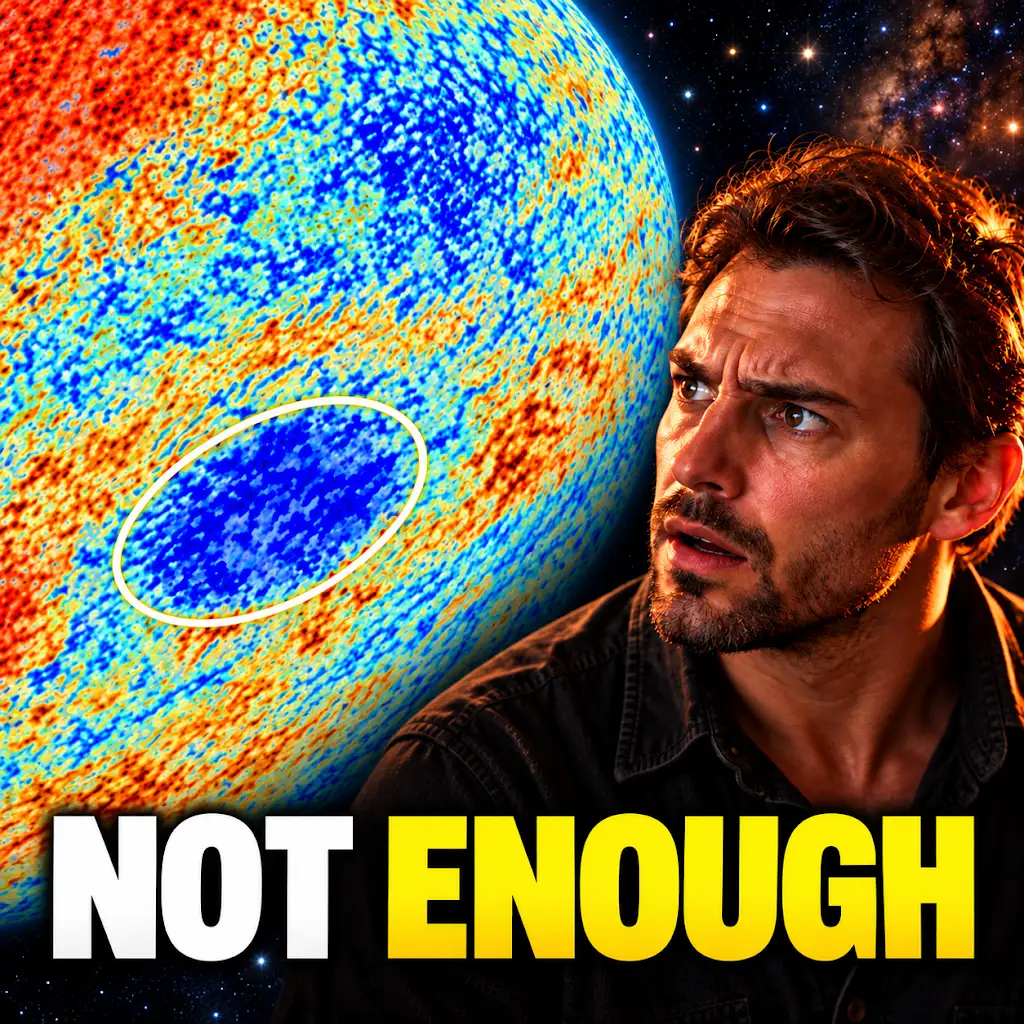
The Universe’s Cold Spot Has an Explanation. It’s Not Enough.
FAQs
What is the cold spot in space mystery?
The cold spot in space mystery refers to a large, unusually cold region in the universe that has puzzled scientists for years.
Where is the cold spot located?
The cold spot is located in the southern galactic hemisphere, covering a vast area of the sky.
What are some theories about the origin of the cold spot?
Some theories suggest that the cold spot could be a remnant of the Big Bang, a void in the universe, or the result of interactions between different universes.
How do scientists study the cold spot in space?
Scientists study the cold spot using telescopes and satellites to observe the temperature fluctuations and cosmic microwave background radiation in that region.
What are the implications of understanding the cold spot in space?
Understanding the cold spot could provide valuable insights into the early universe, the nature of dark matter and dark energy, and the overall structure of the cosmos.