
The vast expanse of the universe, a canvas of unfathomable scale, harbors some of its most profound mysteries within seemingly empty regions. Among these cosmic enigmas, the Eridanus Supervoid stands out, a colossal expanse of near-absolute nothingness that challenges our understanding of the cosmos. Located in the constellation Eridanus, this immense void, also known as the Great Void or the Boötes Void (though the latter is a distinct, albeit also large, void), is a perplexing absence of matter that stretches across hundreds of millions of light-years. Its discovery has prompted intense scientific scrutiny, pushing the boundaries of cosmological models and sparking debates about the very fabric of reality. Unraveling the Eridanus Supervoid is not merely an academic exercise; it is a journey into the fundamental nature of the universe, a quest to understand why such a gargantuan emptiness exists in a cosmos that is otherwise teeming with galaxies, stars, and matter.
The Discovery of a Cosmic Anomaly
The initial hints of the Eridanus Supervoid emerged from meticulous astronomical surveys conducted in the late 20th and early 21st centuries. As astronomers mapped the distribution of galaxies across the observable universe, a startling pattern began to emerge. Rather than a uniform scattering of matter, the universe exhibits a complex web-like structure, a cosmic web composed of dense filaments and clusters of galaxies, interspersed with vast, relatively empty regions known as voids. The Eridanus Supervoid, however, was different. Its sheer size and the profound lack of galaxies within its boundaries set it apart from other cosmic voids.
Early Observations and Mapping Efforts
The development of increasingly sensitive telescopes and sophisticated data analysis techniques allowed for more detailed mapping of the cosmic microwave background (CMB) radiation and galaxy distributions. Projects like the Sloan Digital Sky Survey (SDSS) provided unprecedented catalogs of galaxies, revealing their positions and velocities in three-dimensional space. It was through these large-scale surveys that astronomers began to identify statistically significant underdensities of galaxies. The Eridanus Supervoid, specifically, was pinpointed by its striking absence of galactic structures within a region of space that, according to prevailing cosmological models, should have been populated. Early researchers, while acknowledging the existence of voids, were confronted with the sheer scale of this particular void, prompting initial questions about its formation and implications. The early stages of its study were characterized by cautious observation and the accumulation of more data, attempting to confirm the anomaly and better define its boundaries.
The Significance of the Void’s Size
The Eridanus Supervoid is not just a patch of emptiness; it is an entity of truly staggering proportions. Estimates of its diameter vary, but it is commonly cited as being at least 300 million light-years across. To put this into perspective, our own Milky Way galaxy is about 100,000 light-years in diameter. This means that the Eridanus Supervoid is roughly 3,000 times the diameter of our galaxy. The implication of such a vast region devoid of galaxies is profound. Cosmological models, such as the Lambda-CDM model, which successfully describes many aspects of the universe’s evolution, predict a certain distribution of matter. The existence of a void of this magnitude challenges those predictions, suggesting that either our models are incomplete or that there are processes at play that we do not yet fully understand. The sheer scale of the void implies that it took an immense amount of cosmic time for such a region to form, and its existence is a testament to the complex interplay of gravity and the early conditions of the universe.
The Eridanus Supervoid, a vast and mysterious region of space that appears to contain significantly fewer galaxies than expected, has intrigued astronomers for years. For those interested in exploring this phenomenon further, a related article that delves into the implications of the supervoid on our understanding of the universe can be found at Freaky Science. This article offers insights into how the Eridanus Supervoid challenges existing cosmological models and what it might reveal about the large-scale structure of the cosmos.
Challenges to Cosmological Models
The existence of the Eridanus Supervoid presents a significant challenge to the standard cosmological model, often referred to as the Lambda-CDM model. This model, which has been remarkably successful in explaining a wide range of cosmological observations, from the CMB to the large-scale structure of the universe, posits that the universe originated from a hot, dense state and has been expanding and cooling ever since. Gravity acts to pull matter together, forming structures like galaxies and clusters, while dark energy drives accelerating expansion, pushing matter apart. In this framework, voids are expected to form as regions where matter has less gravitational pull, allowing expansion to create greater emptiness. However, the Eridanus Supervoid’s size and depth are far beyond what most simulations based on the standard model predict.
The Lambda-CDM Model and Expected Void Sizes
The Lambda-CDM model describes the universe as being composed of roughly 5% ordinary matter, 27% dark matter, and 68% dark energy. The distribution of ordinary and dark matter dictates the formation of gravitational potentials, which in turn influence where galaxies form. In the early universe, tiny quantum fluctuations were amplified by inflation, creating regions of slightly higher and lower density. Gravity then acted on these density variations. Denser regions attracted more matter, eventually forming galaxies and clusters, while less dense regions became voids. The Lambda-CDM model, with its specific parameters for the density of matter and dark energy, predicts the typical size and distribution of these voids. While voids are an integral part of the cosmic web predicted by Lambda-CDM, the sheer scale of the Eridanus Supervoid suggests an anomaly that is difficult to reconcile with these predictions without invoking unusual circumstances. The model expects voids, but not ones of such extreme emptiness and extent.
The Cold Spot Anomaly and Potential Connections
Interestingly, the Eridanus Supervoid is also associated with another cosmological anomaly: the CMB Cold Spot. This region of the cosmic microwave background radiation is unusually colder than the surrounding areas. While the CMB Cold Spot has been attributed to various phenomena, including statistical fluctuations or the presence of a very large void, some researchers have proposed a connection between the two. The idea is that the extreme emptiness of the Eridanus Supervoid could have influenced the CMB radiation passing through it, causing it to cool slightly. However, the exact nature of this potential connection remains a subject of debate. The presence of the Cold Spot adds another layer of complexity to the Eridanus Supervoid puzzle, hinting at a deeper, perhaps even more exotic, explanation for its existence. Some theories suggest that if the void is indeed exceptionally large and ancient, it might have imprinted itself on the CMB in this manner.
Alternative Cosmological Theories
The challenges posed by the Eridanus Supervoid have spurred the exploration of alternative cosmological theories. Some scientists have proposed modifications to the Lambda-CDM model, such as altering the parameters governing dark energy or introducing new physics into the early universe. Other theories suggest more radical departures from the standard model. For instance, some researchers have investigated the possibility that the universe might have a different topology, or that the void is a relic of a pre-inflationary epoch. Another intriguing, albeit speculative, idea is that the Eridanus Supervoid could be evidence for the existence of “cosmic texture,” or regions of altered physics from the very early universe that could explain the unusual distribution of matter. The search for explanations for the Eridanus Supervoid is, in essence, a search for new physics that can better describe the universe we observe.
Theories of Formation: Grappling with the Emptiness
The question of how such a colossal void came to be has led to a variety of theoretical explanations, each attempting to reconcile the observed emptiness with our understanding of cosmic evolution. These theories range from extensions of standard cosmology to more speculative ideas, reflecting the profound implications of this cosmic anomaly. Understanding the formation of the Eridanus Supervoid is crucial for refining our cosmological models and potentially uncovering new physical principles.
Gravitational Collapse and Early Universe Fluctuations
One of the primary explanations within the framework of standard cosmology involves the nature of initial density fluctuations in the early universe. While inflation is thought to have smoothed out most initial irregularities, tiny quantum fluctuations were stretched to cosmic scales. If, by chance, a region of slightly lower density than average existed, gravity would have had less matter to draw upon, leading to a slower rate of structure formation in that area. Over billions of years, this region would have become increasingly underdense relative to its surroundings, forming a void. The Eridanus Supervoid, in this view, would represent an exceptionally large and rare instance of such an underdense region. The key here is the “rare instance” – the probability of such a large void forming within the standard model is considered low, hence the challenge.
The “Pancake” Model and Structure Formation
Another related concept is the “pancake” model of structure formation, where the universe is envisioned as forming vast, sheet-like structures of galaxies separated by voids. In this model, gravity causes matter to collapse along preferred directions, creating flattened structures. Voids then form in the regions that are squeezed out from these pancake-like formations. While this model helps explain the filamentary structure of the cosmic web, it still struggles to account for the extreme depth and size of the Eridanus Supervoid without invoking significant statistical anomalies. The void would be a large gap between these forming pancakes, but its emptiness might exceed what the model typically predicts.
Exotic Explanations: Cosmic Textures and Pre-Inflationary Relics
More speculative theories propose exotic origins for the Eridanus Supervoid. One such idea involves “cosmic textures” – hypothetical topological defects that could have formed in the early universe. These textures, remnants of phase transitions in the universe’s infancy, might have influenced the distribution of matter, creating large voids. Another possibility is that the void is a relic from a time before cosmic inflation. If the universe underwent multiple inflationary periods, or if inflation was not perfectly uniform, then regions could have been “punched out,” leaving behind immense voids. These theories, while intriguing, are difficult to test directly and remain largely in the realm of theoretical physics. They offer a way to explain the anomaly by suggesting that our current understanding of the very earliest moments of the universe might be incomplete.
Implications for Dark Energy and Cosmic Expansion
The existence and characteristics of the Eridanus Supervoid have significant implications for our understanding of dark energy, the mysterious force driving the accelerated expansion of the universe. The way voids form and evolve is intimately linked to the expansion rate and the balance between gravity and dark energy. An unusually large void might suggest that dark energy’s influence was different in the region of its formation, or that its effects are more complex than currently understood.
The Role of Dark Energy in Void Evolution
Dark energy’s repulsive force counteracts gravity. In regions where matter density is low, gravity is weaker, and dark energy’s influence becomes more dominant, leading to faster expansion. This accelerated expansion can further widen and deepen voids over cosmic time. The Eridanus Supervoid, therefore, could be a consequence of dark energy’s persistent push in a region that was already underdense. However, the standard Lambda-CDM model, with its uniform dark energy density, might not fully account for the specific conditions that led to such a pronounced void. It raises questions about whether dark energy could be non-uniform, or if its behavior has changed over cosmic epochs in ways not yet recognized.
Testing the Uniformity of Dark Energy
The Eridanus Supervoid provides a unique laboratory for testing the uniformity of dark energy. If dark energy is indeed a constant cosmological constant, as predicted by the simplest models, then its effect should be uniform throughout space. However, if the void’s formation suggests a deviation from this uniformity, it could point towards a dynamic dark energy, where its density or pressure changes over time or space. Studying the expansion rates in and around the Eridanus Supervoid could reveal subtle differences that challenge the assumption of uniform dark energy. The precise measurement of galaxy recession velocities within and outside the void’s boundaries is crucial for this investigation.
The Universe’s “Apparent Age” and Regional Expansion
The existence of a vast, underdense region like the Eridanus Supervoid could also have peculiar effects on our perception of cosmic time. In regions where expansion is significantly faster due to the absence of matter’s gravitational pull, light traveling from distant objects might reach us through a path that appears to have traversed a longer duration than if it had passed through a denser region. This concept, often referred to as the “time-redshift relation” or “cosmic time dilation,” suggests that the “apparent age” of the universe as observed from within or near such a void might be subtly different. While this doesn’t change the fundamental age of the universe, it can influence how we interpret cosmological distances and timescales, particularly for light that has propagated through such a large, empty region. It’s a subtle but important consideration in cosmological modeling and interpretation of observational data.
The Eridanus Supervoid, a vast region of space with significantly fewer galaxies than expected, has intrigued astronomers for years. This mysterious phenomenon raises questions about the large-scale structure of the universe and the nature of dark energy. For a deeper understanding of this cosmic enigma, you can explore a related article that delves into the implications of the supervoid on our comprehension of the universe. To read more about this fascinating topic, visit Freaky Science.
Future Research and Unanswered Questions
| Metric | Description | Value / Data | Source / Notes |
|---|---|---|---|
| Name | Designation of the cosmic void | Eridanus Supervoid | Commonly referred to as the “Cold Spot” supervoid |
| Location | Celestial coordinates | Eridanus constellation region | Identified in the direction of the CMB Cold Spot |
| Approximate Diameter | Size of the supervoid | ~500 million light years (150 Mpc) | Estimated from galaxy surveys and CMB data |
| Redshift Range | Distance indicator | z ≈ 0.14 | Corresponds to roughly 2 billion light years away |
| Density Contrast | Relative matter underdensity compared to average | δ ≈ -0.3 to -0.4 | Indicates 30-40% less matter than average cosmic density |
| Effect on Cosmic Microwave Background (CMB) | Impact on CMB temperature | Temperature decrement of ~70 μK | Associated with the Cold Spot anomaly |
| Proposed Explanation | Cause of the Cold Spot | Integrated Sachs-Wolfe effect due to supervoid | Photons lose energy passing through the underdense region |
| Alternative Theories | Other explanations for Cold Spot | Primordial non-Gaussianity, cosmic texture, statistical fluke | Supervoid explanation is one of several hypotheses |
| Discovery Year | When the supervoid was identified | 2015 | Based on data from galaxy surveys like WISE-2MASS |
Despite decades of study, the Eridanus Supervoid remains a cosmic puzzle with many unanswered questions. Future astronomical observations and theoretical advancements are essential to unravel its mysteries and refine our understanding of the universe. The ongoing quest to understand this colossal void is a testament to the enduring power of scientific curiosity and the vastness of the unknown that still lies within our cosmos.
Advanced Observational Techniques
The next generation of telescopes, such as the James Webb Space Telescope (JWST) and upcoming ground-based observatories, will provide unprecedented capabilities to study the Eridanus Supervoid in greater detail. These instruments can observe fainter and more distant galaxies, potentially revealing structures within the void that were previously undetectable. By mapping the distribution of matter with even higher precision and at greater depths, astronomers can better constrain the void’s boundaries and its internal composition. Furthermore, advancements in radio astronomy could help detect faint traces of gas or dark matter that might exist within the void, providing crucial clues about its formation and evolution. Studying the detailed properties of the CMB within the void’s projected area will also be critical.
Refining Cosmological Simulations
Sophisticated computer simulations play a vital role in testing cosmological models. Scientists are continuously working to improve these simulations, incorporating new physical principles and refining existing ones. By running simulations that specifically attempt to reproduce the formation of large voids like Eridanus, researchers can identify which parameters and physical processes are most critical. If simulations based on the standard Lambda-CDM model consistently fail to create voids of this magnitude, it strengthens the argument for exploring alternative or modified cosmological frameworks. The goal is to create a simulated universe that mirrors the observed structure, including the presence and characteristics of the Eridanus Supervoid.
The Search for Other Anomalous Voids
The Eridanus Supervoid might not be an isolated phenomenon. Astronomers are actively searching for other large voids in the universe, which could provide a broader statistical sample for comparison. The discovery of similar supervoids would indicate that the formation of such vast empty regions is a more common, albeit still rare, occurrence than currently predicted. This would necessitate a significant re-evaluation of our cosmological models. Conversely, if the Eridanus Supervoid remains unique, it might point to a specific, perhaps highly improbable, set of initial conditions or a localized anomaly in the early universe. The ongoing mapping of the cosmos, with ever-increasing detail, is crucial for this comparative study. The Eridanus Supervoid serves as a beacon, guiding astronomers to look for other cosmic oddities and ultimately to piece together a more complete picture of our universe’s grand design.
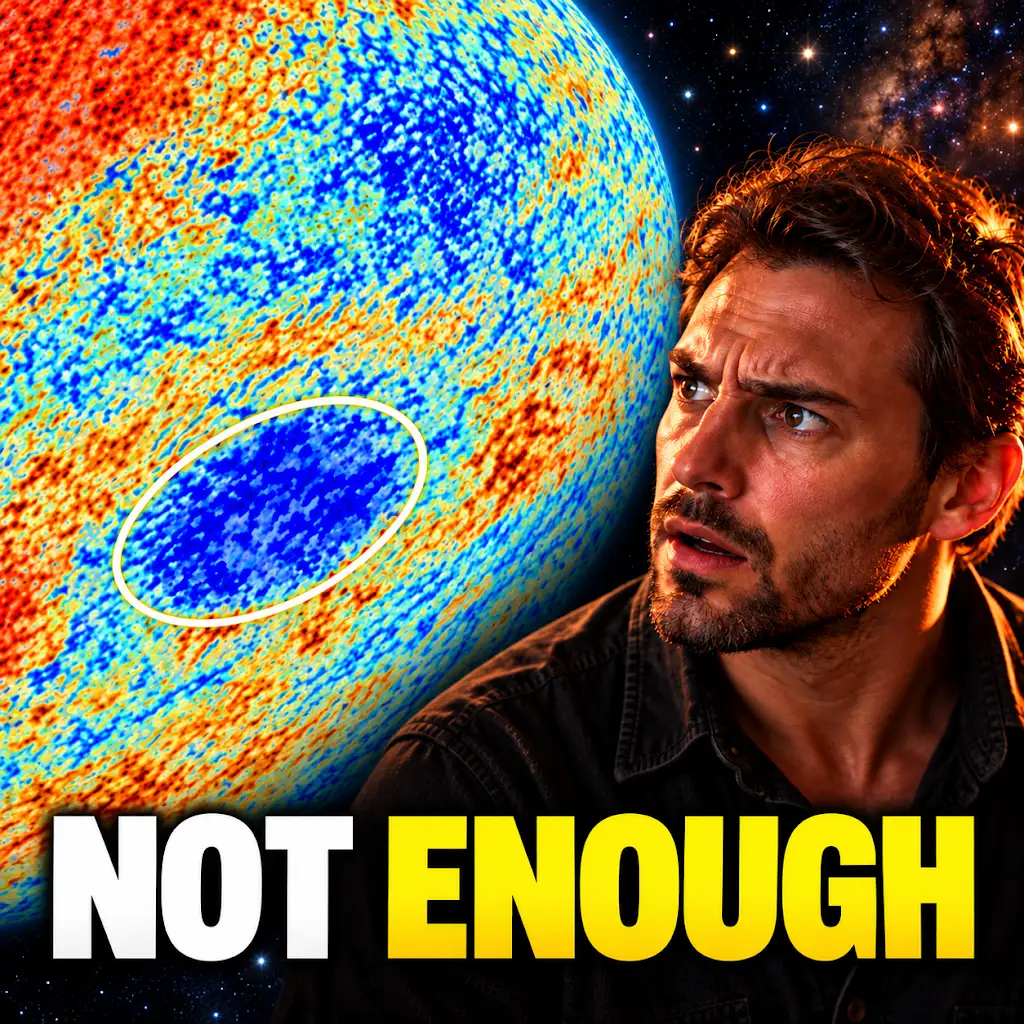
The Universe’s Cold Spot Has an Explanation. It’s Not Enough.
FAQs
What is the Eridanus Supervoid?
The Eridanus Supervoid is a vast region of space that is unusually empty of galaxies, located in the constellation Eridanus.
How large is the Eridanus Supervoid?
The Eridanus Supervoid is one of the largest known voids in the universe, spanning approximately 1.8 billion light-years in diameter.
What causes the Eridanus Supervoid to be so empty?
The Eridanus Supervoid is believed to be so empty due to a lack of dark matter, which is thought to play a crucial role in the formation of galaxies and galaxy clusters.
How was the Eridanus Supervoid discovered?
The Eridanus Supervoid was discovered through observations made by the Wilkinson Microwave Anisotropy Probe (WMAP), a NASA spacecraft that mapped the cosmic microwave background radiation.
What implications does the Eridanus Supervoid have for our understanding of the universe?
Studying the Eridanus Supervoid can provide valuable insights into the large-scale structure of the universe, the distribution of matter, and the nature of dark energy.