
The universe, a vast expanse of stars, galaxies, and unimaginable distances, holds within its depths a story older than any written word. For centuries, humanity gazed upwards, piecing together the cosmic tapestry through the light of distant suns. Yet, the most profound insights into our universe’s origins were not found in the dazzling brilliance of starlight, but in a faint, pervasive whisper – a cosmic echo from the dawn of time. This whisper, known as the Cosmic Microwave Background (CMB), is not just a relic of the past; it is a vibrant, informative snapshot, a cosmic Rosetta Stone that allows cosmologists to decipher the universe’s earliest moments, understand its evolution, and predict its ultimate fate.
The Echoes of Creation: Birth of the Cosmic Microwave Background
The CMB is, in essence, the afterglow of the Big Bang. The prevailing cosmological model posits that the universe began as an incredibly hot, dense singularity that rapidly expanded. In the immediate aftermath, the universe was a searing plasma of fundamental particles and radiation, too hot for atoms to form. Photons, the particles of light, were constantly scattering off free electrons, rendering the universe opaque, much like a dense fog. As the universe continued to expand and cool, a pivotal moment arrived approximately 380,000 years after the Big Bang. At this juncture, the temperature dropped sufficiently for protons and electrons to combine, forming the first neutral atoms, primarily hydrogen and helium. This event, known as recombination or decoupling, dramatically altered the universe’s interaction with light. Suddenly, photons were free to travel unimpeded through space, no longer scattering off charged particles. The universe became transparent, and the radiation present at that moment has been traveling across the cosmos ever since. This ancient light, stretched and cooled by the universe’s ongoing expansion, is what we observe today as the Cosmic Microwave Background. It is a uniform bath of microwave radiation filling all of space, a testament to the Big Bang’s initial fiery genesis.
The Early Universe’s State of Matter
Before recombination, the universe was a chaotic inferno. The extreme temperatures meant that matter existed not as atoms, but as a plasma. Protons, neutrons, and electrons zipped around independently, constantly interacting. Radiation, in the form of high-energy photons, was tightly coupled to this charged plasma. Any photon attempting to travel a significant distance would inevitably collide with a free electron, scattering in a new direction. This constant interaction created a state of thermal equilibrium, where the energy of the photons was distributed across a wide spectrum, but all were essentially trapped within this energetic soup. The universe was, in effect, a glowing sphere of plasma, and the light within it was prevented from escaping.
The Crucial Moment of Transparency
The transition from an opaque plasma to a transparent universe was a watershed moment. As the universe expanded and its temperature plummeted to around 3000 Kelvin (approximately 2700 degrees Celsius), the energetic dance of charged particles began to falter. Electrons, once unbound and energetic, found themselves attracted to the positively charged protons. This electrostatic attraction led to the formation of neutral hydrogen atoms, and later helium atoms. With the free electrons now bound within these atoms, the primary mechanism for photon scattering was effectively removed. Photons, liberated from their constant collisions, could now propagate freely through the expanding cosmos. This radiation, released at the end of the recombination era, has been traveling for billions of years, its wavelength stretched by the expansion of space, its energy diminished, but its information content remarkably preserved. This is the foundational event that gave birth to the CMB.
The cosmic microwave background (CMB) is a fascinating remnant of the early universe, providing crucial insights into its formation and evolution. For those interested in exploring this topic further, a related article can be found at Freaky Science, which delves into the significance of the CMB and its implications for our understanding of cosmology. This resource offers a deeper look into how the CMB serves as a snapshot of the universe just 380,000 years after the Big Bang, shedding light on the conditions that led to the formation of galaxies and large-scale structures.
Discovering the Cosmic Whisper: From Accidental Detection to Precision Measurement
The discovery of the CMB was not the result of a targeted search but rather an accidental encounter with a persistent cosmic noise. In 1964, Arno Penzias and Robert Wilson, engineers at Bell Labs, were attempting to improve the performance of a microwave receiver. They encountered a persistent, annoying hiss of static coming from all directions, regardless of where they pointed their antenna. Initially, they suspected terrestrial interference or even pigeon droppings in the antenna. After exhausting all conventional explanations, they contacted physicists at nearby Princeton University, who had been theoretically anticipating the existence of such leftover radiation from the Big Bang. The Princeton team, led by Robert Dicke, had independently conceived of the idea that the universe’s initial hot state should leave a detectable cosmic microwave background. When Penzias and Wilson described their perplexing hiss, the Princeton group immediately recognized it as the very signature they had been searching for. This serendipitous discovery earned Penzias and Wilson the Nobel Prize in Physics in 1978, marking a monumental achievement in observational cosmology.
The Penzias and Wilson Breakthrough
The work of Penzias and Wilson was pivotal. Their meticulous investigation of what they initially considered an annoying anomaly led to the first direct detection of the CMB. Using a horn antenna, they measured a uniform excess microwave radiation coming from every point in the sky. Crucially, this radiation exhibited a blackbody spectrum, a characteristic signature of thermal radiation. The temperature they measured was approximately 3.5 Kelvin, remarkably close to the predicted temperature of the remnant radiation from the Big Bang. Their findings provided the first strong observational evidence for the Big Bang theory, a significant blow to alternative cosmological models like the Steady State theory. The “discovery” was not just about finding a signal; it was about validating a theoretical prediction with a tangible, albeit faint, cosmic phenomenon.
The Satellite Era: Mapping the Universe’s Infancy
While the initial detection was groundbreaking, the CMB, in its early measurements, appeared remarkably uniform across the sky. This uniformity presented a new puzzle: if the universe began in such a perfectly homogeneous state, how did the large-scale structures like galaxies and galaxy clusters we observe today arise? The answer lay in tiny, almost imperceptible temperature fluctuations, or anisotropies, within the CMB itself. These subtle variations, on the order of one part in 100,000, represent the seeds of cosmic structure. To map these minute temperature differences, space-based observatories were essential, free from the distorting effects of Earth’s atmosphere.
The Cosmic Background Explorer (COBE) satellite, launched in 1989, was the first mission dedicated to precisely measuring the CMB. COBE provided an unprecedentedly accurate measurement of the CMB’s blackbody spectrum, confirming its thermal origin, and crucially, detected the first statistically significant anisotropies. This discovery was monumental, providing concrete evidence that the early universe was not perfectly smooth but contained the initial density fluctuations that would eventually grow into the cosmic web of galaxies.
Following COBE, the Microwave Anisotropy Probe (MAP), later renamed the Wilkinson Microwave Anisotropy Probe (WMAP) and launched in 2001, offered an even higher resolution map of the CMB. WMAP provided exquisite detail about the size, distribution, and strength of these tiny temperature variations. Its observations allowed cosmologists to constrain cosmological parameters with unprecedented accuracy, shedding light on the universe’s age, composition, and geometry.
More recently, the Planck satellite, launched in 2009, has pushed the boundaries of CMB observation even further. Planck delivered the most detailed and precise maps of the CMB to date, further refining our understanding of the universe’s fundamental properties and probing the very early universe with even greater sensitivity. These satellite missions have transformed the CMB from a curious anomaly into a precise tool for cosmic exploration.
The CMB’s Symphony of Information: Unlocking the Universe’s Secrets
The beauty of the CMB lies not in its uniformity, but in its subtle imperfections. These temperature fluctuations, or anisotropies, are not random noise; they are the imprints of quantum fluctuations in the primordial plasma, amplified by the expansion of the universe. They represent regions of slightly higher or lower density in the early universe. Over billions of years, gravity acted upon these density variations, drawing matter into the denser regions and leading to the formation of the cosmic structures we observe today. By studying the pattern of these anisotropies – their size, shape, and distribution – cosmologists can deduce a wealth of information about the universe’s fundamental properties.
Decoding the Power Spectrum: A Cosmic Fingerprint
The statistical analysis of the CMB anisotropies is often visualized through a “power spectrum.” This graph plots the amplitude of temperature fluctuations against their angular size on the sky. The resulting curve is like a cosmic fingerprint, a unique signature that encodes crucial information about the universe. The peaks and troughs of the power spectrum are sensitive to various cosmological parameters. For instance, the position of the first acoustic peak, corresponding to the largest angular scale of fluctuations, is primarily determined by the universe’s geometry. A universe that is geometrically flat will have a specific location for this peak.
The relative heights and widths of subsequent peaks provide information about the composition of the universe. They reveal the relative proportions of ordinary matter (baryonic matter), dark matter, and dark energy. The intricate details within the power spectrum allow cosmologists to determine the precise amounts of each constituent that make up the cosmos. This has led to the remarkable conclusion that the ordinary matter that forms stars, planets, and ourselves constitutes only about 5% of the universe’s total mass-energy content, with dark matter comprising about 27% and the enigmatic dark energy making up the remaining 68%.
The Age and Expansion Rate of the Universe
The CMB acts as a cosmic clock, allowing us to determine the universe’s age with remarkable accuracy. The universe’s expansion rate, also known as the Hubble constant, can be inferred from the observed distribution of CMB anisotropies. By combining this information with models of cosmic evolution, scientists can precisely calculate how long it has been since the Big Bang. Current estimates place the age of the universe at approximately 13.8 billion years. Furthermore, the CMB data has been instrumental in refining our understanding of the Hubble constant, though some discrepancies between CMB-derived values and those from more local measurements persist, pointing to potential avenues for new physics.
The Seeds of Structure: From Tiny Ripples to Galaxies
The CMB anisotropies are the direct evidence for the initial density fluctuations that gave rise to all the structure in the universe. In the primordial plasma, sound waves propagated, compressing and rarefying the matter. These acoustic oscillations left their imprint on the CMB in the form of characteristic patterns of temperature variations. Regions of slightly higher density, where matter was compressed, would eventually evolve into the gravitational wells that attracted more matter, forming galaxies, clusters, and superclusters. The CMB, therefore, shows us the universe in its infancy, before gravity had time to sculpt it into the intricate cosmic web we see today. The specific pattern of these fluctuations tells us about the initial conditions and the processes that governed the early universe’s evolution.
Beyond the Standard Model: What the CMB Reveals About New Physics
While the standard cosmological model, known as the Lambda-CDM model (Lambda representing dark energy and CDM representing cold dark matter), has been remarkably successful in explaining CMB observations, the precision of modern CMB data also allows us to probe for deviations from this model and search for evidence of new physics. The subtle deviations in the CMB, or discrepancies in its interpretation, can hint at phenomena not accounted for by our current understanding of the universe.
Testing Inflationary Theory
The theory of cosmic inflation, a hypothetical period of exponential expansion in the universe’s earliest moments, elegantly explains several key features of the CMB, such as its remarkable homogeneity on large scales and its flatness. Inflation predicts a specific pattern of polarization in the CMB, known as B-modes, which are a signature of primordial gravitational waves. Detecting these B-modes is a major goal in cosmology, as it would provide direct evidence for inflation and offer insights into the physics of the very early universe. While current CMB experiments have not yet definitively detected these primordial B-modes, ongoing and future missions are designed to search for them.
The Enigma of Dark Matter and Dark Energy
As mentioned earlier, the CMB has been crucial in establishing the existence and relative abundance of dark matter and dark energy. However, their fundamental nature remains a profound mystery. The CMB provides constraints on the properties of dark matter and dark energy, helping to rule out certain theoretical candidates and guide future research. For example, by analyzing the CMB, cosmologists can determine if dark matter is “cold” (moving slowly) or “warm” (moving at relativistic speeds) in the early universe. Similarly, the CMB can place limits on how dark energy might evolve over cosmic time. Any significant departure from the standard Lambda-CDM model in the CMB data could indicate that our current understanding of these mysterious components is incomplete.
Beyond Standard Luminosity: Anomalies and the Quest for Answers
Despite the overwhelming success of the standard model, a few intriguing anomalies have been observed in the CMB data. One such anomaly is the “cold spot,” a region of unusually low temperature in the CMB. While some explanations involve statistical fluctuations or foreground contamination, others suggest the possibility of exotic phenomena, such as the gravitational lensing effect of a vast void or even the existence of extra-dimensional structures. Another intriguing observation is the potential alignment of certain large-scale structures in the CMB, which seems to defy statistical expectations. These anomalies, though not definitively proving new physics, serve as tantalizing clues that encourage further investigation and push the boundaries of our cosmological understanding. They highlight that while the CMB is a powerful tool, it may also hold secrets that challenge our current paradigms.
The cosmic microwave background (CMB) is a fascinating remnant of the early universe, providing crucial insights into its formation and evolution. For those interested in exploring this topic further, a related article can be found on Freaky Science, which delves into the implications of the CMB for our understanding of cosmology. You can read more about it in this informative piece here. The study of the CMB not only enhances our knowledge of the universe’s origins but also raises intriguing questions about its ultimate fate.
The Future of Cosmic Microwave Background Research: Pushing the Boundaries of Knowledge
| Metric | Value/Description |
|---|---|
| Definition | Radiation left over from the Big Bang, filling the universe almost uniformly |
| Temperature | Approximately 2.725 Kelvin |
| Discovery Year | 1965 |
| Discoverers | Arno Penzias and Robert Wilson |
| Wavelength Peak | About 1.9 mm (microwave region) |
| Origin | Remnant radiation from the recombination era, about 380,000 years after the Big Bang |
| Uniformity | Highly isotropic with tiny fluctuations (~1 part in 100,000) |
| Significance | Provides evidence for the Big Bang theory and information about the early universe’s conditions |
The study of the Cosmic Microwave Background is far from complete. With each new generation of telescopes and analysis techniques, our understanding of the early universe becomes more refined, and new questions emerge. The pursuit of even greater precision in CMB measurements, the exploration of its polarization, and the search for subtle deviations from the standard model promise to revolutionize our understanding of cosmology.
Next-Generation Observatories and Enhanced Precision
Future CMB experiments, both ground-based and space-based, will aim for even higher sensitivity and angular resolution. These advanced observatories will be capable of detecting fainter signals and resolving smaller structures within the CMB, allowing for more precise measurements of its properties. This enhanced precision will be crucial for testing inflationary models, precisely measuring cosmological parameters, and searching for the
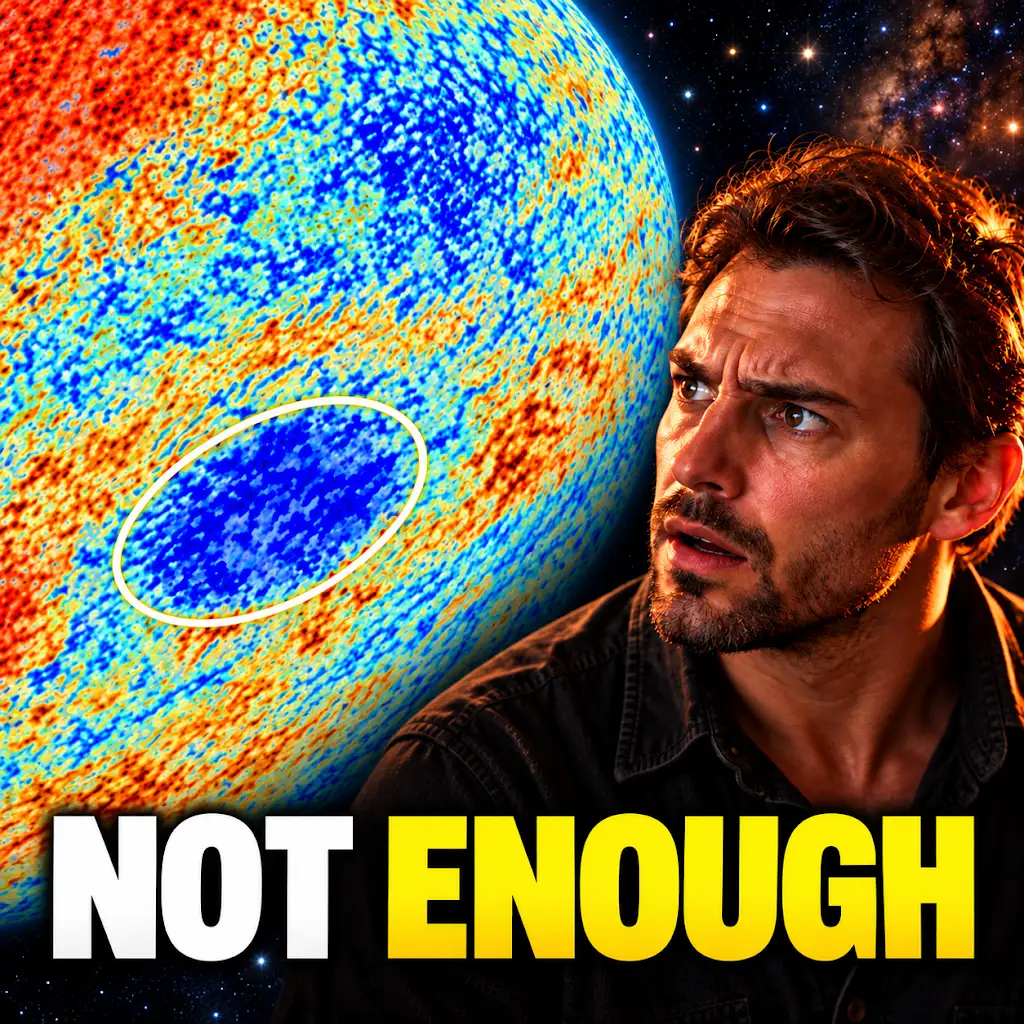
The Universe’s Cold Spot Has an Explanation. It’s Not Enough.
FAQs
What is the cosmic microwave background (CMB)?
The cosmic microwave background (CMB) is the afterglow of the Big Bang, which is the oldest light in the universe.
How was the cosmic microwave background discovered?
The CMB was accidentally discovered in 1965 by Arno Penzias and Robert Wilson, who were awarded the Nobel Prize in Physics in 1978 for their discovery.
What does the cosmic microwave background tell us about the early universe?
Studying the CMB provides valuable information about the early universe, such as its age, composition, and the seeds of structure formation that eventually led to the galaxies we see today.
How is the cosmic microwave background measured?
Scientists use specialized instruments, such as telescopes and satellites like the Planck and WMAP missions, to measure the temperature and polarization of the CMB across the sky.
What are some key findings from studying the cosmic microwave background?
Key findings from studying the CMB include confirming the Big Bang theory, determining the age of the universe, and providing evidence for the existence of dark matter and dark energy.