
The Enigma of the Cold Spot
The Planck satellite, a marvel of modern cosmology, spent years meticulously mapping the cosmic microwave background (CMB) radiation, the faint afterglow of the Big Bang. Its unparalleled precision revealed a universe far more detailed than ever before. Among its many groundbreaking discoveries, one particular anomaly captured the attention of scientists worldwide: the Planck Cold Spot. This region of the CMB, a vast expanse of space, appears unusually cooler than its surrounding areas, a deviation from the otherwise remarkably uniform temperature distribution predicted by the standard cosmological model. The Cold Spot is not just a slight dip; it’s a significant deficit in temperature, a cosmic chill that has defied easy explanation. Its existence challenges our fundamental understanding of the early universe and the processes that shaped it. Physicists have proposed a plethora of hypotheses, ranging from exotic physics beyond the Standard Model to more mundane explanations involving vast cosmic structures. Unraveling the mystery of the Cold Spot is therefore not merely an academic exercise; it’s a quest to potentially uncover new physics or a deeper comprehension of the large-scale structure of the cosmos.
The Cosmic Microwave Background: A Snapshot of Infancy
To understand the Cold Spot, one must first grasp the significance of the CMB. This relic radiation, first detected in 1964, is a window into the universe when it was a mere 380,000 years old. At that time, the universe had cooled enough for protons and electrons to combine, forming neutral atoms. This event, known as recombination, allowed photons to travel freely for the first time, carrying with them information about the conditions of the early universe. These photons, stretched by the expansion of the universe over billions of years, are what we observe today as the CMB. The CMB is remarkably uniform in temperature, averaging around 2.725 Kelvin. However, this uniformity is not absolute. Tiny temperature fluctuations, measured in microkelvins, are present, representing the seeds of the cosmic structures we see today, such as galaxies and galaxy clusters. These fluctuations are crucial for cosmological models, as their pattern and amplitude provide stringent tests for theories of cosmic inflation and the evolution of the universe. Planck’s exquisite sensitivity allowed for the most detailed map of these fluctuations ever created, revealing subtle patterns and, as it turned out, some unsettling anomalies.
Planck’s Precision and the Discovery of Anomalies
The Planck mission, launched in 2009, was designed to build upon the legacy of its predecessors, COBE and WMAP, by achieving unprecedented angular resolution and sensitivity in its measurements of the CMB. This allowed scientists to probe the universe with a level of detail previously unimaginable. As the data from Planck was processed and analyzed, it confirmed many predictions of the Lambda-CDM model, the prevailing framework for understanding the universe. However, it also highlighted several statistically significant deviations from this model, often referred to as anomalies. The Cold Spot, a circular region of space approximately 10 degrees across, was one of the most prominent of these anomalies. Its statistical significance, initially estimated to be around 3-4 sigma, suggested that it was unlikely to be a random fluctuation within the standard cosmological framework. This sent ripples through the astrophysics community, sparking intense debate and a flurry of theoretical investigations.
The Planck satellite cold spot anomaly has intrigued scientists and researchers, leading to various investigations into its origins and implications for our understanding of the universe. A related article that delves deeper into this phenomenon can be found on Freaky Science, where it explores potential explanations and theories surrounding the cold spot. For more insights, you can read the article here: Freaky Science.
Exploring Potential Explanations for the Cold Spot
The unusual coldness of the Planck Cold Spot has spurred a wide range of theoretical investigations, each attempting to reconcile this observation with our current understanding of physics or to suggest modifications to it. These explanations can broadly be categorized into those that invoke modifications to the standard cosmological model and those that propose the existence of unusual structures within the universe. The very existence of such a significant anomaly prompts a re-evaluation of our assumptions, pushing the boundaries of our scientific inquiry.
The Supervoid Hypothesis: A Cosmic Void of Unprecedented Scale
One of the most widely discussed and perhaps most straightforward explanations for the Planck Cold Spot is the existence of a supervoid – a region of space with an exceptionally low density of matter. According to the Sachs-Wolfe effect, photons traveling through a gravitational potential well (a region with more matter) gain energy, appearing slightly hotter to an observer. Conversely, photons traveling out of a gravitational hill (a region with less matter) lose energy, appearing slightly cooler. If the Cold Spot is indeed caused by a supervoid, it would represent a vast emptiness in the cosmos, far larger and more profound than typical voids observed in galaxy surveys. The photon traversing this immense void would lose energy, resulting in the observed lower temperature in the CMB. However, the sheer scale required for such a void to produce the observed temperature deficit presents its own challenges. Detecting such a massive structure directly through galaxy distribution surveys is difficult, and confirming its existence and magnitude is crucial for validating this hypothesis. While some observational evidence has been presented for the existence of a large void in the direction of the Cold Spot, the debate continues regarding its size and its ability to fully account for the observed anomaly.
Exotic Physics Beyond the Standard Model: New Particles and Interactions
The Cold Spot’s anomaly has also opened the door to more speculative explanations, venturing into the realm of physics beyond the Standard Model. These hypotheses suggest that new, undiscovered particles or fundamental interactions might be responsible for the observed temperature deficit. One intriguing idea is the possibility of topological defects, such as cosmic strings or domain walls, formed during phase transitions in the very early universe. These hypothetical structures could, under certain configurations, imprint a cold spot on the CMB. Another avenue of exploration involves the existence of exotic particles that might have interacted with the CMB photons in ways not predicted by current theories. For instance, some models propose the existence of dark matter particles with unusual properties or even interactions between dark matter and dark energy that could leave such a signature. These theories, while more speculative, offer a compelling rationale for the anomaly and highlight the potential for fundamental discoveries if the Cold Spot is indeed a manifestation of new physics.
The Planck satellite cold spot anomaly has intrigued scientists and sparked numerous discussions about its implications for our understanding of the universe. A related article explores various theories surrounding this phenomenon, including the possibility of it being a result of cosmic structures or even a signature of other universes. For more insights into this captivating topic, you can read the full article here. This exploration not only delves into the cold spot itself but also examines the broader context of cosmic microwave background radiation and its significance in cosmology.
Anisotropies and the Cosmic Web: The Interplay of Structure and Radiation
The universe is not uniformly distributed; it is organized into a vast cosmic web of galaxies, clusters, and voids. The CMB, while appearing uniform on large scales, is imprinted with the imprint of this structure. Gravitational lensing, the bending of light by mass, can subtly alter the observed pattern of CMB fluctuations. Some researchers have explored whether the Cold Spot could be an artifact of an unusually large or complex distribution of matter, such as a convergence of voids or an underdense region within the cosmic web, interacting with the CMB photons in a non-trivial way. Additionally, while the standard interpretation of the Sachs-Wolfe effect relies on the gravitational potentials of large-scale structures, some advanced models consider the cumulative effect of photons passing through numerous smaller gravitational potentials, a phenomenon known as the Rees-Sciama effect. The interplay between the underlying distribution of matter and the propagation of CMB photons is a complex area of research, and it is possible that a detailed understanding of these interactions could shed light on the Cold Spot’s origins.
Statistical Significance and Observational Challenges
The question of whether the Planck Cold Spot is a genuine anomaly or a statistical fluke is central to its interpretation. Scientists employ rigorous statistical methods to assess the likelihood of such an observation occurring within the framework of the standard cosmological model. The “significance” of an anomaly is typically expressed in sigma units, where a higher sigma value indicates a lower probability of it arising by chance. While the initial reported significance of the Cold Spot was around 3-4 sigma, subsequent analyses and re-assessments have yielded a range of values, with some studies suggesting it might be less statistically significant than initially thought. This underscores the inherent challenges in interpreting cosmic anomalies. The vastness of the universe and the inherent randomness of quantum fluctuations mean that unusual patterns can and do appear. Distinguishing between a truly anomalous feature and a rare but permissible fluctuation requires careful statistical analysis and, ideally, independent verification.
The Role of Statistical Fluctuations
In any dataset, especially one as vast and complex as the CMB, statistical fluctuations are expected. The question for the Planck Cold Spot is whether its temperature deficit is so profound that it strains the bounds of what is considered a likely fluctuation within the standard cosmological model. Cosmological models predict a specific distribution of temperature fluctuations. While the average temperature is remarkably uniform, the individual “hot” and “cold” spots are expected to vary. The Cold Spot is significantly colder than what might be typically expected, but the precise probability depends on the specific cosmological parameters and the assumed statistical distributions. Different analyses, using different methods of mask selection and statistical tests, can lead to slightly different assessments of its significance. This highlights the subtle, yet critical, nature of statistical interpretation in cosmology.
Independent Verification and Future Missions
The scientific method thrives on independent verification. For the Planck Cold Spot, this means looking for corroborating evidence from other observational techniques and, ideally, from future missions that can provide even higher precision measurements. While Planck provided an unprecedented view of the CMB, future experiments could offer improved resolution or sensitivity in different frequency bands, potentially revealing more about the Cold Spot’s characteristics. Furthermore, ongoing surveys mapping the distribution of galaxies and other large-scale structures are crucial for testing hypotheses like the supervoid explanation. If a massive void is indeed responsible, galaxy surveys should, in principle, be able to detect it. The ongoing quest to understand the Cold Spot is thus intricately linked to the broader observational efforts in cosmology.
The Cold Spot’s Implications for Cosmology
The scientific implications of the Planck Cold Spot, regardless of its ultimate explanation, are profound. If it is indeed a genuine anomaly, it represents a significant crack in the edifice of our current understanding of the universe. It could signal the need for new physics, leading to a paradigm shift in cosmology. Conversely, if it turns out to be a more mundane phenomenon, like a particularly large supervoid, it still offers valuable insights into the distribution of matter in the universe and the interplay between structure and radiation. The ongoing investigation into the Cold Spot is a testament to the dynamic and ever-evolving nature of scientific inquiry, pushing the boundaries of our knowledge and revealing the mysteries that still lie hidden within the cosmos.
Revisiting Fundamental Cosmological Principles
The existence of anomalies like the Cold Spot serves as a crucial reminder that our current cosmological models are not necessarily the final word. They are the best descriptions we have based on current evidence, but they are subject to revision and refinement. If the Cold Spot cannot be explained by existing theories, it may necessitate a rethinking of fundamental cosmological principles, such as the homogeneity and isotropy of the universe on the largest scales, or the nature of dark energy and dark matter. Such an eventuality, while potentially challenging, would also be incredibly exciting, as it would open up entirely new avenues for research and discovery, potentially leading to a more complete and accurate picture of our universe.
The Ongoing Quest for Cosmic Understanding
The Planck Cold Spot remains an active area of research, a tantalizing puzzle piece in the grand tapestry of cosmology. Whether it ultimately proves to be a revolutionary discovery of new physics or a more conventional, albeit unusual, cosmic feature, its investigation has already yielded valuable insights. It has spurred innovation in statistical analysis, stimulated new theoretical frameworks, and highlighted the importance of meticulous observation. The quest to unravel the mystery of the Cold Spot is a microcosm of the broader scientific endeavor: a continuous process of questioning, hypothesizing, observing, and refining our understanding of the universe. The journey to decipher this cosmic chill promises to continue shaping our perception of the cosmos for years to come.
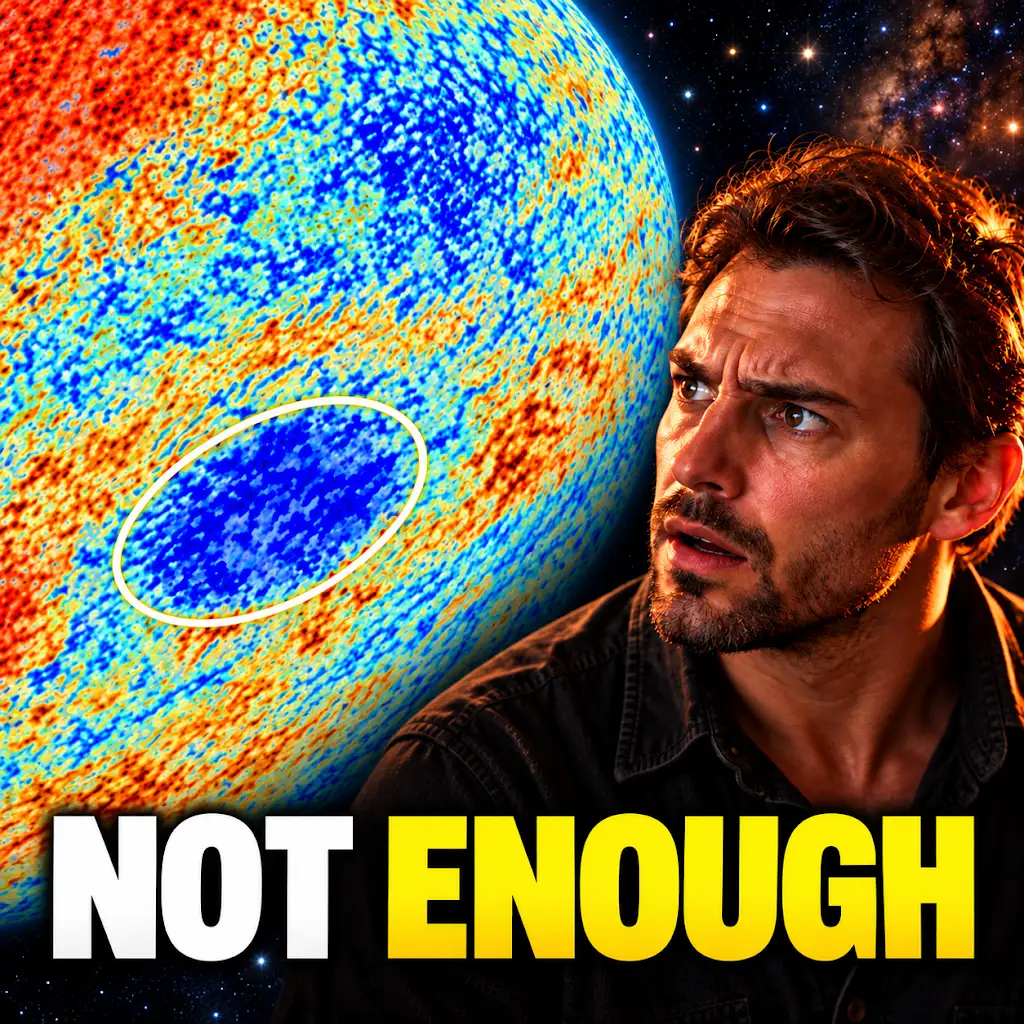
The Universe’s Cold Spot Has an Explanation. It’s Not Enough.
FAQs
What is the Planck satellite cold spot anomaly?
The Planck satellite cold spot anomaly refers to a large, unusually cold area in the cosmic microwave background radiation observed by the Planck satellite.
When was the Planck satellite cold spot anomaly discovered?
The Planck satellite cold spot anomaly was discovered in 2004 by the Wilkinson Microwave Anisotropy Probe (WMAP) satellite and later confirmed by the Planck satellite in 2013.
How large is the Planck satellite cold spot anomaly?
The Planck satellite cold spot anomaly is approximately 1.8 billion light-years across, making it one of the largest structures in the universe.
What are some theories about the origin of the Planck satellite cold spot anomaly?
Some theories suggest that the Planck satellite cold spot anomaly could be the result of a supervoid, a vast region of space with significantly fewer galaxies and matter than the surrounding areas. Other theories propose that it could be a remnant of the early universe or a result of gravitational lensing.
What impact does the Planck satellite cold spot anomaly have on our understanding of the universe?
The Planck satellite cold spot anomaly challenges our current understanding of the distribution of matter in the universe and raises questions about the nature of dark energy, dark matter, and the overall structure of the cosmos. Scientists continue to study this anomaly to gain insights into the fundamental principles governing the universe.