
The Whisper from the Dawn of Time
For millennia, humanity has gazed at the night sky, a tapestry of distant lights that has fueled countless myths, scientific inquiries, and existential ponderings. Yet, the universe’s oldest light, a faint relic from its very infancy, offers a profound and humbling connection to that primordial epoch. This is the Cosmic Microwave Background (CMB), a pervasive glow of radiation that fills every corner of the cosmos, an echo of the Big Bang itself. While the CMB is remarkably uniform, a near-perfect blackbody spectrum indicating a homogeneous early universe, it is not without its anomalies. Among these, one stands out for its sheer scale and enigmatic nature: the Cosmic Microwave Background Cold Spot. This vast, unusually cool region of the CMB has baffled cosmologists since its discovery, hinting at something extraordinary, perhaps even a challenge to our current understanding of the universe.
The CMB, discovered serendipitously by Arno Penzias and Robert Wilson in 1964, is the afterglow of the Big Bang, a snapshot of the universe when it was only about 380,000 years old. At this point, the universe had cooled enough for electrons and protons to combine into neutral atoms, allowing photons to travel freely for the first time. These photons, stretched by the expansion of the universe over billions of years, have cooled to microwave frequencies, detectable by sensitive instruments. The remarkable uniformity of this radiation, with temperature fluctuations of only about one part in 100,000, provided crucial evidence for the Big Bang theory and the inflationary model of the early universe. However, within this near-perfect uniformity lie subtle variations, imprinted on the CMB as tiny temperature differences. These variations are the seeds of all the structure we see today – galaxies, clusters of galaxies, and the vast cosmic web. The study of these anisotropies, or deviations from uniformity, has become a cornerstone of modern cosmology, allowing scientists to probe the fundamental properties of the universe, such as its age, composition, and geometry.
The discovery of the CMB Cold Spot, first identified in data from the Wilkinson Microwave Anisotropy Probe (WMAP) satellite and later confirmed with greater precision by the Planck satellite, sent ripples of excitement and intrigue through the scientific community. This region, roughly 1.8 billion light-years across, is a significant deviation from the expected temperature distribution. While the average temperature of the CMB is about 2.725 Kelvin, the Cold Spot is approximately 0.1 Kelvin cooler than its surroundings. This might seem like a minuscule difference, but in the context of the incredibly precise measurements of the CMB, it represents a statistically significant anomaly. It is considerably larger and colder than what would be expected from random quantum fluctuations in the early universe, which are responsible for most of the CMB’s temperature variations. The Cold Spot’s existence, therefore, begs the question: what could have caused such a peculiar feature in the cosmic microwave tapestry?
The cosmic microwave background (CMB) cold spot has intrigued scientists for years, leading to various theories about its origin and implications for our understanding of the universe. A related article that delves deeper into this phenomenon can be found at Freaky Science, where researchers explore potential explanations and the significance of this anomaly in the context of cosmology.
The Cosmic Microwave Background Cold Spot: An Enigmatic Anomaly
The Cosmic Microwave Background (CMB) Cold Spot is a region in the sky where the microwave radiation emitted by the early universe appears significantly colder than the average temperature of the CMB. This anomaly, a vast expanse approximately 1.8 billion light-years across, represents a deviation from the otherwise remarkably uniform temperature of the CMB. Discovered through painstaking analysis of satellite data, the Cold Spot has presented cosmologists with a persistent puzzle, prompting various theoretical explanations ranging from mundane observational effects to more exotic phenomena that challenge our current cosmological models. Its sheer size and the magnitude of its temperature deficit make it one of the most intriguing features of the CMB.
Initial Detection and Characterization
The first hints of the Cold Spot emerged from the data collected by the Wilkinson Microwave Anisotropy Probe (WMAP) satellite. Launched in 2001, WMAP was designed to map the tiny temperature fluctuations in the CMB with unprecedented accuracy. While analyzing these fluctuations, scientists noticed a large, cold patch in the southern sky that seemed unusually prominent. However, due to the limitations of the WMAP instrument and the initial data processing, the significance of this feature remained a subject of debate.
The Planck satellite, launched by the European Space Agency in 2009, was the successor to WMAP and was equipped with more sensitive instruments capable of higher resolution observations. Planck’s mission was to provide a definitive map of the CMB, refining our understanding of the universe’s early moments. The detailed maps produced by Planck unequivocally confirmed the existence of the Cold Spot and provided a much clearer picture of its characteristics. Planck data revealed that the Cold Spot is indeed a statistically significant anomaly, colder than the surrounding CMB by about 100 microkelvin, or 0.1 millikelvin. This temperature difference, while small in absolute terms, is far larger than predicted by the standard cosmological model for a region of this size resulting from random fluctuations. The Cold Spot spans an angular diameter of about 5 degrees on the sky, which translates to an immense physical size in the early universe.
Statistical Significance and Cosmological Puzzles
The statistical significance of the Cold Spot is a crucial aspect of its enigmatic nature. Cosmological models, particularly the Lambda-CDM model which describes a universe dominated by dark energy and cold dark matter, predict a distribution of temperature fluctuations in the CMB. These fluctuations are expected to follow a statistical pattern governed by the principles of quantum mechanics and the inflationary epoch. While rare, extremely cold or hot spots are expected to occur due to random chance. However, the Cold Spot’s size and depth appear to push the boundaries of what is statistically probable within the standard model.
The Lambda-CDM model predicts that there should be a certain probability of finding such a large and cold anomaly due to the inherent randomness of quantum fluctuations in the early universe. However, multiple statistical analyses of the CMB data have indicated that the probability of observing a feature like the Cold Spot within the framework of the standard model is extremely low. This has led some cosmologists to question whether the standard model is complete or if there are other, more exotic explanations for this anomaly. The Cold Spot thus serves as a potential testbed for our fundamental understanding of cosmology, prompting investigations into whether it is a genuine deviation from the expected, or perhaps a subtle effect that has been overlooked.
Exploring Possible Explanations for the Cold Spot
The existence of the Cosmic Microwave Background Cold Spot has ignited a flurry of theoretical investigations, with scientists proposing a range of explanations. These explanations can be broadly categorized into two main groups: those that suggest the Cold Spot is a statistical fluke within our current cosmological understanding, and those that posit the existence of new physics or exotic phenomena that lie beyond our current models. Each of these avenues offers a unique perspective on how this cosmic anomaly might be understood.
Explanations Within the Standard Cosmological Model
Within the framework of the standard Lambda-CDM model, several explanations attempt to account for the Cold Spot without invoking new physics. These explanations primarily focus on the statistical nature of CMB anisotropies and potential observational biases.
Statistical Rarity and Sample Variance
One of the most straightforward explanations is that the Cold Spot is simply a statistically rare event, a product of random fluctuations in the early universe that happen to be more pronounced in this particular region of the sky. The universe is vast, and even if the probability of such an anomaly is low, given enough “rolls of the cosmic dice,” it is not impossible for it to occur. This concept is often referred to as “sample variance.” Cosmologists calculate the expected distribution of CMB temperature fluctuations and then assess the probability of observing a feature like the Cold Spot. While the initial assessments suggested a low probability, further refined analyses are ongoing to precisely quantify this risk. It is important to acknowledge that even the most robust cosmological models can produce rare events.
Observational Issues and Systemic Errors
Another category of explanations within the standard model involves potential issues with the observational data itself. While the Planck satellite provided incredibly precise measurements, any instrument can have systematic errors or limitations. These could include:
- Foreground Contamination: The CMB is not the only source of microwave radiation in the universe. Our own Milky Way galaxy, as well as other galaxies, emit radiation that can interfere with CMB measurements. While sophisticated techniques are used to subtract these foreground emissions, residual contamination could, in principle, create the appearance of a cold spot. However, extensive efforts have been made to account for and remove foregrounds, and the Cold Spot persists even after these corrections.
- Instrumental Biases: It is possible that subtle biases in the Planck instrument, or in the way the data was processed, could have contributed to the perceived coldness of this region. However, the rigorous calibration and cross-checks performed during the Planck mission make this explanation less likely for such a pronounced feature.
- Alignment of Structures: Some theories suggest that the Cold Spot might be a result of a large-scale structure in the universe that has aligned in a specific way to produce this apparent temperature deficit. For instance, if the Cold Spot lies along a line of sight with a significantly lower density of matter than average, the CMB photons passing through this region would experience less gravitational interaction, leading to a slightly cooler temperature. This is related to the Integrated Sachs-Wolfe effect, where CMB photons gain or lose energy as they pass through evolving gravitational potentials.
Exotic Explanations and New Physics
If the Cold Spot cannot be adequately explained by statistical rarity or observational artifacts within the standard Lambda-CDM model, it opens the door to more speculative, but potentially revolutionary, explanations that involve new physics.
The Supervoid Hypothesis
One of the most popular “exotic” explanations is the presence of a supervoid, an extremely large region of space that contains significantly less matter than the average cosmic density. If the Cold Spot is aligned with such a supervoid, the CMB photons traveling through it would experience a weaker gravitational pull than photons passing through denser regions. According to the Sachs-Wolfe effect, photons that travel through an evolving gravitational potential well gain energy. Conversely, if they travel through a region where the gravitational potential is less deep or even shallowing (like in a void), they can lose energy. In essence, the photons would be “climbing out” of a shallower gravitational potential, causing them to cool down by the time they reach us.
The “supervoid hypothesis” suggests that the Cold Spot is a large-scale cosmic structure, a vast bubble of relatively empty space, which has exerted a subtle gravitational influence on the CMB photons. The size of the Cold Spot implies that this supervoid would have to be exceptionally large, potentially one of the largest structures in the observable universe. While such supervoids are predicted by cosmological simulations, finding one of the required magnitude and precise alignment to explain the Cold Spot has been a challenge. However, ongoing surveys are mapping the distribution of matter in the universe, which may eventually confirm or refute this hypothesis.
Collision with Another Universe
A more speculative, and perhaps more dramatic, explanation involves the possibility of our universe colliding with another universe. In some theoretical frameworks, such as certain models of cosmic inflation or brane cosmology, multiple universes might exist, potentially interacting with each other. A collision or interaction with another universe, especially one with different physical properties, could have left an imprint on the early universe’s radiation, manifesting as a cold spot. This idea, while fascinating, remains firmly in the realm of theoretical physics and lacks direct observational evidence beyond the Cold Spot itself. The nature of such an interaction and how it would specifically imprint a cold region on the CMB is a complex theoretical problem.
Topological Defects
Another avenue of speculation involves topological defects, hypothetical structures that could have formed in the early universe during phase transitions. Examples include cosmic strings, domain walls, or magnetic monopoles. Some theoretical models suggest that the passage of CMB photons through certain types of topological defects could lead to a reduction in their energy, thus creating a cold spot. However, the existence of these defects is not currently supported by strong observational evidence, and their potential to create a feature of the Cold Spot’s magnitude and scale is still under investigation.
Non-Gaussianity in the CMB
The standard inflationary model predicts that the fluctuations in the CMB should be “Gaussian,” meaning they follow a bell-curve distribution. However, some alternative inflationary models, or more complex scenarios in the early universe, could lead to “non-Gaussian” fluctuations. Non-Gaussianity means that the distribution of temperature variations deviates from the expected Gaussian shape. If the CMB exhibits significant non-Gaussianity, it could potentially explain the presence of rare, large-scale anomalies like the Cold Spot. Researchers are actively searching for signs of non-Gaussianity in CMB data.
Investigating the Cold Spot: Observational and Theoretical Approaches
The enigma of the Cosmic Microwave Background Cold Spot has spurred considerable effort in both observational astronomy and theoretical cosmology. Scientists are employing a multi-pronged approach, leveraging advanced instruments and sophisticated theoretical models, to unravel the mystery behind this unusual feature. The goal is to gather enough evidence to either confirm or refute the various hypotheses proposed to explain its existence.
Advanced Observational Techniques
The precision of our measurements of the CMB has been crucial in both discovering and characterizing the Cold Spot. Future observational endeavors aim to refine these measurements and gather complementary data that can shed light on the Cold Spot’s origin.
Improved CMB Mapping
While Planck has provided the most detailed CMB maps to date, future missions with even higher resolution and sensitivity could offer further insights. These missions might be able to detect finer details within the Cold Spot itself, revealing its internal structure and potentially identifying any subtle variations that could point to a specific cause. Satellites like the proposed LiteBIRD (a Japanese-led mission) and ground-based telescopes like the Atacama Cosmology Telescope (ACT) and the South Pole Telescope (SPT) continue to improve our understanding of the CMB. These instruments are designed to measure polarization of the CMB as well as its temperature, which can provide additional clues about the early universe and the nature of any anomalies.
Large-Scale Structure Surveys
One of the most promising avenues for investigating the supervoid hypothesis involves mapping the distribution of matter in the universe. Large-scale structure surveys, such as the Dark Energy Spectroscopic Instrument (DESI) and the upcoming Euclid mission, are designed to measure the distances and positions of billions of galaxies. By constructing a three-dimensional map of the cosmos, these surveys can identify and characterize vast voids and filaments. If a supervoid of the required size and depth is found in the direction of the Cold Spot, it would provide strong evidence for the gravitational explanation. These surveys are also crucial for testing predictions of the Lambda-CDM model regarding the formation and evolution of large-scale structures.
Multi-wavelength Astronomy
Observing the region of the sky containing the Cold Spot across the electromagnetic spectrum, from radio waves to X-rays, can provide complementary information. While the CMB is observed in microwaves, other astrophysical phenomena emit radiation at different wavelengths. Identifying any unusual emission or absorption features in this region could reveal the presence of exotic matter, galactic structures, or other cosmic entities that might be influencing the CMB. For example, studying the distribution of gas and dust in the foreground can help rule out contamination as an explanation for the Cold Spot.
Theoretical Modeling and Simulations
Theoretical cosmologists play a vital role in interpreting observational data and developing frameworks to explain anomalies like the Cold Spot. Their work involves creating sophisticated computer simulations and developing new theoretical models.
Refining Cosmological Simulations
Cosmological simulations are essential for testing the predictions of the Lambda-CDM model and its potential extensions. Scientists run simulations of the universe’s evolution from the Big Bang to the present day, incorporating different parameters and physical processes. By comparing the simulated CMB maps with the observed ones, they can assess whether the standard model, or modified versions of it, can naturally produce features like the Cold Spot. Simulations are also used to explore the statistical properties of CMB fluctuations and to calculate the probability of rare events occurring.
Developing New Theoretical Frameworks
If the Cold Spot cannot be explained by existing models, theoretical physicists may need to develop new ones. This could involve exploring alternative theories of inflation, investigating the physics of extra dimensions, or proposing new mechanisms for structure formation in the early universe. The Cold Spot acts as a crucial constraint on these new theories, which must be able to reproduce the observed CMB map while also making testable predictions for other cosmological observations. The development of theoretical models that incorporate non-Gaussianity, or explore the implications of a multiverse, are examples of this ongoing effort.
Statistical Analysis and Bayesian Inference
Rigorous statistical analysis is paramount in determining the significance of the Cold Spot and evaluating the plausibility of different explanations. Bayesian inference, a powerful statistical tool, allows scientists to update their beliefs about hypotheses as new evidence becomes available. By assigning prior probabilities to different explanations and then incorporating the observational data from CMB maps and large-scale structure surveys, researchers can calculate the posterior probabilities of each hypothesis. This helps to quantify the confidence with which different explanations can be favored.
The cosmic microwave background cold spot has intrigued scientists for years, sparking debates about its origins and implications for our understanding of the universe. A related article discusses various theories surrounding this enigmatic feature, including the possibility of large-scale cosmic structures influencing the temperature fluctuations we observe. For more insights into this fascinating topic, you can read the full article here.
Implications for Our Understanding of the Universe
| Metric | Value | Description |
|---|---|---|
| Angular Size | 5° to 10° | Approximate diameter of the cold spot on the sky |
| Temperature Deviation | ~ -70 µK | Temperature difference below the average CMB temperature |
| Location (Galactic Coordinates) | l ≈ 209°, b ≈ -57° | Position of the cold spot in the Milky Way coordinate system |
| Redshift Range | z ≈ 0.5 to 1 | Estimated redshift range of structures possibly related to the cold spot |
| Significance Level | ~3σ to 4σ | Statistical significance of the cold spot anomaly in CMB data |
| Discovered By | WMAP Satellite | First detection of the cold spot in CMB data |
| Follow-up Observations | Planck Satellite | Confirmed and further studied the cold spot |
The Cosmic Microwave Background Cold Spot, whether it proves to be a statistical quirk or a harbinger of new physics, carries profound implications for our understanding of the universe. Its resolution will undoubtedly deepen our knowledge of cosmology, testing the limits of our current theories and potentially opening new avenues of scientific inquiry.
A Test of the Standard Cosmological Model
The primary significance of the Cold Spot lies in its potential to challenge or refine the standard Lambda-CDM model. This model, which has been remarkably successful in describing a vast array of cosmological observations, relies on a number of fundamental assumptions about the universe’s composition, evolution, and the nature of physical laws. If the Cold Spot is indeed a statistically improbable anomaly within this model, it suggests that one or more of these assumptions may need to be revisited.
- Assumptions about the Early Universe: The Lambda-CDM model is built upon the foundation of an inflationary epoch, a period of rapid expansion in the universe’s earliest moments. If the Cold Spot is evidence of physics beyond standard inflation, it could point to different mechanisms that shaped the initial conditions of the cosmos. For instance, models with different inflationary potentials or those incorporating a multiverse could lead to different statistical properties of CMB fluctuations.
- The Cosmological Principle: The cosmological principle, which states that the universe is homogeneous and isotropic on large scales, is a cornerstone of modern cosmology. While the CMB is remarkably isotropic, the Cold Spot’s sheer size and unusual coldness might raise questions about the absolute uniformity of the universe, particularly if it is linked to a very large-scale structure like a supervoid. However, even with a supervoid, the universe could still be considered statistically homogeneous on sufficiently large scales.
- Fundamental Physics: The more exotic explanations for the Cold Spot, such as collisions with other universes or the presence of topological defects, would necessitate a significant revision of our understanding of fundamental physics. These hypotheses venture into realms that are currently speculative but are grounded in theoretical frameworks that aim to unify physics or explain phenomena beyond the Standard Model of particle physics.
The Search for New Physics
If the Cold Spot cannot be explained within the existing framework, it would serve as a powerful impetus for the development of new theoretical physics. The scientific community thrives on anomalies; they are the catalysts for progress.
- Beyond the Standard Model of Cosmology: The Lambda-CDM model is incredibly successful, but it is not considered a complete theory. It does not, for example, explain the nature of dark matter or dark energy. The Cold Spot could be a clue that points towards the missing pieces of the puzzle. It might hint at new particles, new forces, or even modifications to gravity on cosmic scales.
- Multiverse Scenarios: The idea of a multiverse, where our universe is just one among many, is gaining traction in theoretical physics. While currently untestable in its most general forms, the Cold Spot could potentially be interpreted as indirect evidence for interactions between universes. If such interactions are possible, it opens up a vast new landscape for scientific exploration.
- The Nature of Reality: Ultimately, the resolution of the Cold Spot mystery could lead to a profound shift in our understanding of the fundamental nature of reality. It could reveal that the universe is stranger, more complex, or more interconnected than we currently imagine. The implications could extend to our place within this cosmic tapestry and the very laws that govern existence.
A Milestone in Cosmological Exploration
Regardless of its ultimate explanation, the study of the Cosmic Microwave Background Cold Spot represents a significant milestone in our ongoing quest to understand the universe. It demonstrates the power of meticulous observation, advanced technology, and theoretical innovation.
- Precision Cosmology: The ability to detect and analyze such subtle features in the CMB is a testament to the maturity of precision cosmology. The scientific community has developed tools and techniques that allow us to probe the universe with unprecedented accuracy, revealing details that were unimaginable just a few decades ago.
- International Collaboration: The discovery and ongoing investigation of the Cold Spot are prime examples of successful international collaboration in scientific research. Missions like WMAP and Planck, involving numerous countries and thousands of scientists, highlight the global nature of scientific endeavor.
- Inspiring Future Generations: The mystery of the Cold Spot, with its blend of established science and speculative possibilities, has the power to inspire future generations of scientists and thinkers. It reminds us that even in the face of seemingly well-understood phenomena, there are still profound questions waiting to be answered, urging us to continue our exploration of the cosmos. The journey to understand this cosmic whisper from the dawn of time is far from over.
The Cosmic Symphony and its Anomalies
The Cosmic Microwave Background (CMB) is often described as the universe’s baby picture, a snapshot of the cosmos when it was a mere infant, just 380,000 years old. This faint glow of radiation, permeating every corner of the universe, is a remarkably faithful representation of the early, hot, dense state predicted by the Big Bang theory. Its near-perfect uniformity, with temperature variations of only about one part in 100,000, is a profound confirmation of the inflationary model and the homogeneity of the early universe. However, like any masterpiece, the CMB is not devoid of subtle imperfections, anomalies that, while small, can hold immense significance for our understanding of the cosmos. The Cold Spot, a vast region of unusual coolness, stands out as one of the most compelling of these cosmic dissonances.
The Perfect Blackbody and Its Meaning
The CMB exhibits a spectrum that is incredibly close to that of a perfect blackbody. A blackbody is an idealized object that absorbs all incident electromagnetic radiation and emits radiation based solely on its temperature. The fact that the CMB’s spectrum so closely matches a blackbody curve is a strong indicator that it originated from a hot, dense plasma in thermal equilibrium, as predicted by the Big Bang model. The slight deviations from perfect blackbody radiation, if they were significant, could point to energy injections or interactions after the era of recombination. However, the CMB is remarkably isothermal, meaning it has a very uniform temperature across the sky.
Fluctuations as Seeds of Structure
The tiny temperature variations observed in the CMB, known as anisotropies, are not random noise. Instead, they represent the primordial density fluctuations in the early universe. These minute differences in temperature correspond to slight differences in the density of matter and energy. Regions that were slightly denser had a stronger gravitational pull, attracting more matter over time. These primordial overdensities acted as the gravitational seeds from which all the structures we see today – galaxies, galaxy clusters, and the vast cosmic web – eventually grew. The statistical properties of these fluctuations, such as their amplitude and distribution, provide crucial information about the fundamental parameters of the universe, including its age, composition (the relative amounts of ordinary matter, dark matter, and dark energy), and geometry.
The Statistical Expectation of Anomalies
The standard cosmological model, based on the theory of cosmic inflation, predicts that these primordial density fluctuations should be random and largely Gaussian in their distribution. This means that most of the temperature variations should be relatively small, with a bell-curve distribution of their magnitudes. However, in any random distribution, there is always a non-zero probability of observing extreme events – very large fluctuations, either positive (hot spots) or negative (cold spots). These rare events are expected to be statistically improbable but not impossible. The question regarding the CMB Cold Spot, therefore, is not whether such a cold region can exist, but whether its observed characteristics – its size and the degree of its coolness – fall within the realm of statistical possibility predicted by our current cosmological models, or if they hint at something more profound. This is where the Cold Spot transitions from being a curiosity to a potential puzzle that could reshape our cosmic understanding.
Conclusion: A Universe of Unfolding Mysteries
The Cosmic Microwave Background Cold Spot remains one of the most captivating enigmas in modern cosmology. Its existence, a vast region of slightly cooler radiation from the universe’s infancy, challenges our assumptions and beckons for deeper investigation. Whether it is ultimately explained as a rare statistical fluctuation within the standard Lambda-CDM model, the imprint of a colossal supervoid, or a testament to physics beyond our current grasp, the Cold Spot serves as a potent reminder of the universe’s enduring mysteries.
The ongoing efforts to understand this anomaly, through increasingly sophisticated observational techniques and refined theoretical models, exemplify the dynamic nature of scientific inquiry. Each new dataset, each refined simulation, brings us closer to a definitive answer. The resolution of the Cold Spot mystery will undoubtedly mark a significant advance in our cosmic narrative, either solidifying our current understanding or compelling us to redraw the boundaries of our cosmological knowledge. The universe, it seems, continues to whisper its secrets, and the Cold Spot is a particularly intriguing whisper from its earliest moments, a testament to the ongoing journey of discovery that defines humanity’s quest to comprehend its place in the grand cosmic expanse.
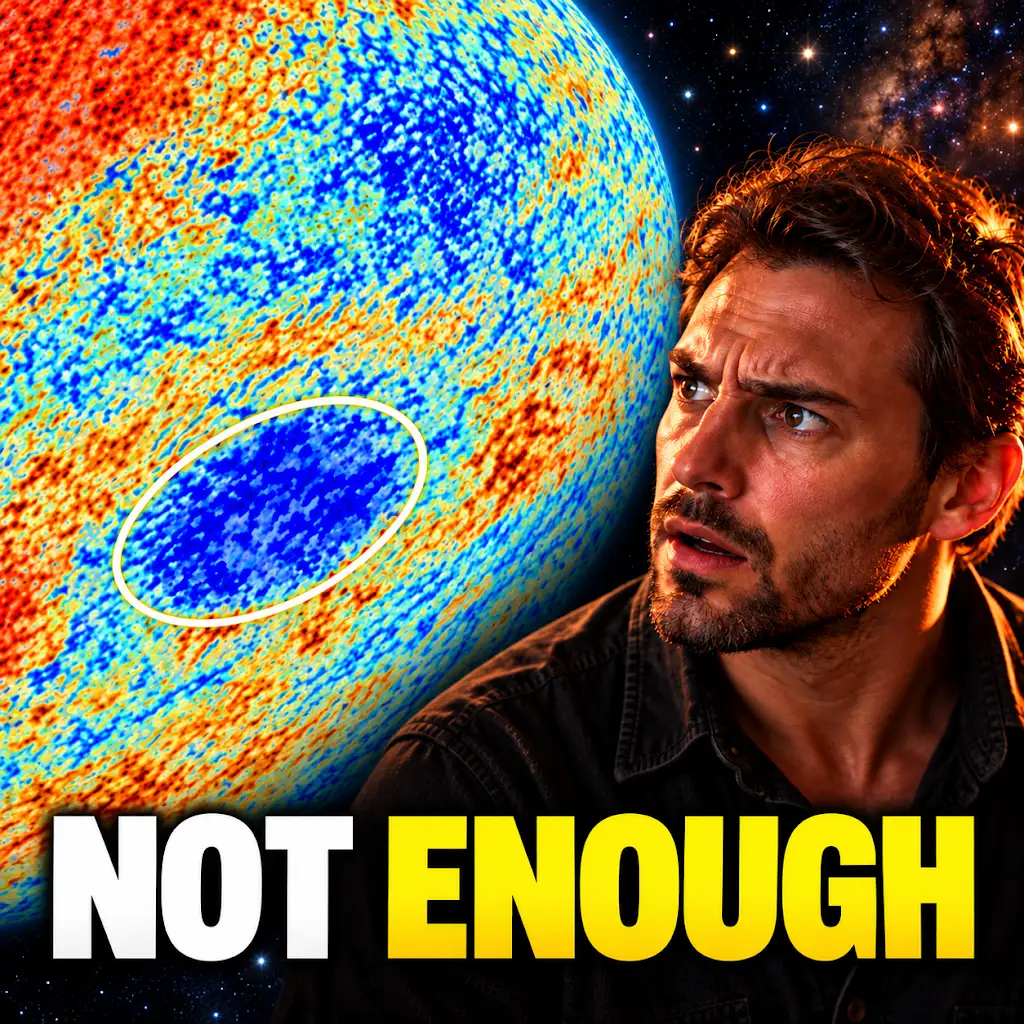
The Universe’s Cold Spot Has an Explanation. It’s Not Enough.
FAQs
What is a cosmic microwave background cold spot?
A cosmic microwave background cold spot is a region in the universe where the temperature of the cosmic microwave background radiation is lower than the average temperature.
How are cosmic microwave background cold spots detected?
Cosmic microwave background cold spots are detected through observations made by telescopes that measure the temperature of the cosmic microwave background radiation across the sky.
What causes cosmic microwave background cold spots?
The exact cause of cosmic microwave background cold spots is still not fully understood, but they may be the result of fluctuations in the early universe, gravitational effects, or interactions with other structures in the cosmos.
What can cosmic microwave background cold spots tell us about the universe?
Studying cosmic microwave background cold spots can provide valuable insights into the large-scale structure of the universe, the distribution of matter, and the evolution of cosmic structures over time.
Are cosmic microwave background cold spots rare?
Cosmic microwave background cold spots are relatively rare compared to regions with average temperatures, making them of particular interest to astronomers and cosmologists studying the universe’s origins and evolution.