
The vast canvas of the cosmos, a tapestry woven with the threads of spacetime and illuminated by the incandescent glow of countless stars, harbors phenomena that continue to push the boundaries of human understanding. Among these cosmic enigmas, the “Primordial Fluctuation Cold Spot,” often referred to as the CMB Cold Spot, stands out as a particularly intriguing anomaly. This vast expanse of seemingly cooler-than-expected microwave radiation, detected within the Cosmic Microwave Background (CMB) – the faint afterglow of the Big Bang – presents a profound challenge to our current cosmological models. Its existence, and the myriad potential explanations that have been proposed, offer a tantalizing glimpse into the very earliest moments of our universe and the fundamental physics that governed its genesis.
The discovery of the CMB Cold Spot was not a singular event but rather a gradual revelation, pieced together through meticulous observations and sophisticated data analysis. Its significance lies not just in its unusual temperature deviation but in its potential to either confirm our existing understanding of the universe’s infancy or necessitate a radical rethinking of our fundamental cosmological principles. This article aims to unravel the mystery of the CMB Cold Spot, exploring its discovery, its characteristics, the leading theoretical explanations, and the ongoing scientific endeavors to comprehend this cosmic peculiarity.
The Dawn of Discovery: Detecting the CMB Cold Spot
The journey to uncovering the CMB Cold Spot began with the very detection of the Cosmic Microwave Background itself. In 1964, Arno Penzias and Robert Wilson, while working with a radio antenna at Bell Labs, stumbled upon a persistent, isotropic microwave hiss that pervaded the sky. This serendipitous discovery, later attributed to the residual heat from the Big Bang, earned them the Nobel Prize in Physics and laid the foundation for observational cosmology. For decades, the CMB was studied as a remarkably uniform bath of radiation, with minuscule temperature fluctuations that provided crucial evidence for the Big Bang theory and the subsequent formation of large-scale structures in the universe. These tiny variations, on the order of parts per hundred thousand, were the imprints of quantum fluctuations in the early universe, amplified by inflation to become the seeds of galaxies and clusters.
The identification of the CMB Cold Spot, however, was a more recent development, emerging from the era of high-precision CMB mapping. The Wilkinson Microwave Anisotropy Probe (WMAP) and, subsequently, the Planck satellite, were instrumental in this endeavor. These missions, launched by NASA and the European Space Agency respectively, provided increasingly detailed and sensitive maps of the CMB across the entire sky. It was within these exquisitely detailed maps that astronomers began to notice a statistically significant region where the CMB temperature was consistently lower than the average. Initially, the anomaly was subtle, perhaps dismissed as a statistical fluke or an instrumental artifact. However, as more data accumulated and the quality of observations improved, the Cold Spot’s presence became more robust and undeniable.
Early Indications and Statistical Significance
The first hints of the Cold Spot emerged in the WMAP data, released in the early 2000s. While not the primary focus of the mission, careful analysis of the temperature maps revealed a region of unusually low temperature in the constellation Eridanus. However, the statistical significance of this early detection was debated, with some researchers suggesting it might be a chance alignment of random fluctuations. The inherent noise in the data and the limited resolution of the instruments at the time made it difficult to definitively rule out mundane explanations.
The true impact of the Cold Spot came with the advent of the Planck mission. Planck, with its superior sensitivity and angular resolution, provided an unprecedentedly detailed view of the CMB. The Planck data confirmed the existence of the Cold Spot with high statistical significance, making it a compelling target for theoretical investigation. The Cold Spot is characterized by a temperature deficit of approximately 100 microkelvins (µK) compared to the average CMB temperature of about 2.725 Kelvin (K). This might seem like a minuscule difference, but in the context of the CMB’s incredibly uniform temperature, it represents a significant deviation from the expected distribution of fluctuations. The statistical significance of the Cold Spot is often cited as being around 3-4 sigma, meaning there is a low probability (less than 1 in 1,000 for 3 sigma) that such a feature could arise from random fluctuations within the standard cosmological model. This statistical robustness has elevated the CMB Cold Spot from an intriguing anomaly to a significant puzzle that demands explanation.
The Planck Satellite’s Definitive Contribution
The Planck mission, operating from 2009 to 2013, revolutionized our understanding of the CMB. Its advanced instruments were designed to detect even the faintest temperature variations with unprecedented accuracy. Planck’s all-sky maps revealed the CMB with a level of detail that allowed for the precise measurement of its statistical properties, including the power spectrum of temperature fluctuations. It was within these high-fidelity maps that the CMB Cold Spot was definitively identified and its properties precisely quantified. The consistency of the signal across different Planck instruments and data release iterations solidified its status as a genuine cosmological feature.
The Planck data not only confirmed the existence of the Cold Spot but also allowed scientists to study its morphology and extent. It is a large, roughly circular region covering several square degrees of the sky. Its angular size suggests it originated from a vast region in the early universe. The definitive nature of the Planck observations has made the CMB Cold Spot a focal point for cosmological research, pushing theoretical physicists and observational astronomers to reconcile this anomaly with established cosmological paradigms.
The primordial fluctuation cold spot, a significant anomaly in the cosmic microwave background radiation, has sparked considerable interest among cosmologists and astrophysicists. This intriguing feature may provide insights into the early universe’s conditions and the formation of large-scale structures. For a deeper understanding of related cosmic phenomena, you can explore the article on cosmic inflation and its implications for our understanding of the universe at Freaky Science.
Characterizing the Cosmic Anomaly: Properties of the Cold Spot

The CMB Cold Spot is not just a point of cooler radiation; it possesses distinct characteristics that provide crucial clues about its origin. Its immense size, its specific location in the sky, and the nature of its temperature deficit all contribute to the puzzle it represents. Understanding these properties is essential for evaluating the plausibility of different theoretical explanations.
Angular Size and Spatial Extent
The CMB Cold Spot is a spatially extended feature, not a point source. It spans several degrees across the celestial sphere. This large angular size is a key characteristic because it implies that the anomaly originated from a substantial volume of the early universe. In the standard cosmological model, the CMB reflects the universe as it was about 380,000 years after the Big Bang, when it became transparent to radiation. The scale of the structures imprinted on the CMB corresponds to the acoustic oscillations that occurred in the primordial plasma. Features on the scale of the Cold Spot would have originated from relatively large overdensities or underdensities in the early universe.
The fact that the Cold Spot is a relatively large, coherent region of lower temperature is significant. If it were a small, localized anomaly, it might be more easily explained by statistical fluctuations or localized phenomena. However, its expanse suggests a more widespread underlying cause. The precise angular diameter measured by Planck is approximately 5 degrees, though its exact boundaries can be somewhat subjective due to the gradual decrease in temperature away from its center.
Location and Orientation
The CMB Cold Spot is located in the southern celestial hemisphere, predominantly in the direction of the constellations Eridanus and Fornax. This specific location is important because it allows astronomers to investigate whether there are any foreground or background structures that might be responsible for the observed temperature deficit. For example, if there were a vast void or a supervoid of matter lying between us and the CMB emitting surface in that direction, it could gravitationally affect the photons passing through it, leading to a lower observed temperature (an ISW effect, explained later).
Furthermore, the Cold Spot’s orientation in the sky, relative to other CMB features and large-scale structures, is a subject of ongoing research. Cosmologists examine its alignment with other anisotropies in the CMB, as well as with known galaxy distributions, to search for correlations that might hint at its origin. Some studies have explored potential correlations with the plane of the Milky Way or with the distribution of superclusters and voids, though no definitive link has been established.
Temperature Deficit and Statistical Significance
As mentioned earlier, the CMB Cold Spot exhibits a temperature deficit of around 100 µK compared to the average CMB temperature. This deficit, while small in absolute terms, is significant in the context of the CMB’s minuscule temperature variations. The standard cosmological model, Lambda-CDM, predicts a certain distribution of temperature fluctuations, and the Cold Spot appears as an outlier in this distribution.
The statistical significance of the Cold Spot is a critical aspect of its study. While the standard model predicts that such an anomaly could occur by chance, the probability is generally considered to be low, especially when considering the combined evidence from multiple CMB experiments and different statistical analyses. Some cosmologists argue that if the Cold Spot is indeed a rare statistical fluctuation, it reinforces the idea that our universe is a vast ensemble of possibilities, and we happen to reside in one where such an anomaly exists. However, others see it as a potential crack in the edifice of the standard model, suggesting that our understanding of the early universe might be incomplete.
Theoretical Explanations: Seeking the Cause

The existence of the CMB Cold Spot has spurred a wealth of theoretical investigations, each proposing different mechanisms that could account for this unusual cosmic feature. These explanations range from mundane, within-model scenarios to more exotic, beyond-standard-model hypotheses. The scientific community is actively engaged in evaluating the plausibility and observational consequences of these competing ideas.
The Standard Model Challenge: ISW Effect and Supervoids
Within the framework of the standard Lambda-CDM model, the most commonly invoked explanation for the CMB Cold Spot is the Integrated Sachs-Wolfe (ISW) effect, combined with the presence of a large-scale underdensity of matter, often referred to as a supervoid. The ISW effect occurs when CMB photons travel through evolving gravitational potentials. If a photon passes through a region that is transitioning from being matter-dominated to dark-energy-dominated, it can gain or lose energy depending on the specifics of the potential’s evolution.
In the case of a supervoid – a region of space with significantly less matter than average – the gravitational potential is shallower. As CMB photons pass through such a void, they traverse a region where the gravitational field is weakening over time. This weakening gravitational pull can cause the photons to lose a small amount of energy, resulting in a slightly cooler observed temperature. The Cold Spot’s location in a region that appears to be relatively empty of galaxies and clusters, as observed in galaxy surveys, supports this supervoid hypothesis. However, the sheer size and depth of the Cold Spot, if solely attributed to a supervoid, would require an exceptionally large and perhaps unusually structured void to produce such a significant temperature drop. Furthermore, the absence of other similarly large cold spots predicted by this scenario within the observable universe is a point of contention.
Exotic Hypotheses: Beyond the Standard Model
The perceived challenge to the standard model posed by the CMB Cold Spot has opened the door to more speculative, “beyond the standard model” explanations. These hypotheses often involve new physics that was active in the very early universe or modifications to our understanding of gravity or fundamental forces.
One intriguing hypothesis involves a supermassive black hole in the very early universe. The idea is that a colossal black hole, far larger than any observed today, could have gravitationally lensed and distorted the CMB radiation as it passed through its vicinity. This gravitational lensing could, in theory, create a region of cooler temperatures. However, the energy requirements and formation mechanisms for such an object in the early universe are highly speculative.
Another class of exotic explanations involves topological defects or cosmic strings. These are hypothetical one-dimensional or two-dimensional structures that could have formed during phase transitions in the early universe. If a network of cosmic strings or other topological defects were present, they could imprint specific patterns on the CMB, including temperature anomalies. The Cold Spot could, in principle, be a signature of such a defect passing through our line of sight.
A more radical idea suggests that the Cold Spot might be evidence of a “multiverse.” In this scenario, our universe might be one bubble among many, and the Cold Spot could be a relic of an interaction or collision with another bubble universe with different physical properties. This concept, while fascinating, is extremely difficult to test observationally and remains firmly in the realm of theoretical speculation.
Probing the Depths: Observational and Theoretical Efforts
The quest to understand the CMB Cold Spot is a vibrant and ongoing scientific endeavor, involving a multifaceted approach that combines cutting-edge observational techniques with sophisticated theoretical modeling. Scientists are not only trying to confirm and refine the properties of the Cold Spot but also to distinguish between the various proposed explanations.
Refining CMB Observations
The continued operation and data analysis of current and future CMB missions are crucial for further characterizing the Cold Spot. Projects like the Atacama Cosmology Telescope (ACT) and the South Pole Telescope (SPT), which provide high-resolution maps of specific regions of the sky, can offer complementary data to Planck’s all-sky coverage. These instruments are designed to detect smaller-scale anisotropies and polarization signals in the CMB, which could provide additional constraints on the Cold Spot’s properties and potential origins.
Future CMB missions, such as the proposed LiteBIRD satellite, aim to achieve even higher sensitivity and angular resolution, potentially allowing for a more detailed examination of the Cold Spot’s fine structure. Furthermore, the search for the Cold Spot’s polarization signature is a critical avenue of research. The standard ISW effect should produce a specific pattern of CMB polarization, and detecting this pattern would strongly support the supervoid explanation. Conversely, the absence of such a signature might point towards alternative, more exotic explanations.
Searching for Correlating Structures
A key aspect of observational efforts is the search for large-scale structures that might be associated with the CMB Cold Spot. Galaxy surveys, such as the Sloan Digital Sky Survey (SDSS) and the upcoming Vera C. Rubin Observatory, map the distribution of galaxies and matter across vast cosmic volumes. By cross-correlating the position of the Cold Spot with maps of galaxy distribution and gravitational lensing, astronomers can investigate whether there is a statistically significant deficit of matter in that direction, consistent with the supervoid hypothesis.
The challenge here lies in the sheer scale of the potential supervoid. Detecting such an underdensity requires surveying enormous volumes of the universe. Moreover, disentangling the gravitational effects of intervening structures from the intrinsic CMB anisotropies can be a complex task. Nonetheless, ongoing and future galaxy surveys are expected to provide increasingly detailed maps of the cosmic web, which will be crucial for testing the supervoid explanation of the Cold Spot.
Theoretical Model Development and Testing
Theoretical physicists are continuously developing and refining models to explain the CMB Cold Spot. This involves not only exploring the implications of the ISW effect in different cosmological scenarios but also exploring the parameter space of more speculative theories. Computer simulations play a vital role in this process, allowing scientists to model the formation of structures in the early universe and to predict the expected distribution of CMB anisotropies.
The testing of these theoretical models relies heavily on their ability to reproduce the observed properties of the Cold Spot and to make falsifiable predictions. For example, if a particular “beyond the standard model” theory predicts the existence of other, similar cold spots or specific patterns of polarization that are not observed, then that theory is less likely to be correct. Conversely, if a theory can consistently explain the Cold Spot and make accurate predictions for other cosmological observations, its credibility increases. The ongoing dialogue between observation and theory is essential for narrowing down the possibilities and ultimately unveiling the true nature of the CMB Cold Spot.
The primordial fluctuation cold spot has intrigued scientists for years, as it challenges our understanding of the universe’s early conditions. Recent studies have explored various theories surrounding this anomaly, including its potential implications for cosmic inflation. For a deeper dive into related phenomena, you can read about other intriguing cosmic mysteries in this article on Freaky Science, which discusses how these fluctuations might influence our perception of the universe’s structure.
The Cold Spot’s Cosmic Significance: Implications for Cosmology
| Metric | Value | Description | Source/Measurement |
|---|---|---|---|
| Angular Size | 5° to 10° | Approximate diameter of the cold spot on the cosmic microwave background (CMB) sky | WMAP and Planck satellite data |
| Temperature Deviation | ~ -70 µK | Temperature difference relative to the average CMB temperature | Planck 2013 data release |
| Location (Galactic Coordinates) | l ≈ 209°, b ≈ -57° | Position of the cold spot in the sky | WMAP and Planck observations |
| Significance Level | ~2-3 sigma | Statistical significance of the cold spot anomaly compared to Gaussian fluctuations | Multiple CMB analyses |
| Possible Explanations | Primordial fluctuation, supervoid, cosmic texture | Hypotheses proposed to explain the cold spot | Scientific literature and cosmological studies |
| Redshift of Associated Supervoid | z ≈ 0.15 – 0.25 | Estimated redshift range of a large supervoid aligned with the cold spot | Galaxy surveys (e.g., SDSS) |
The CMB Cold Spot, regardless of its ultimate explanation, holds profound implications for our understanding of the universe. It serves as a potent reminder that our cosmological models, while remarkably successful, are still incomplete. The continued investigation into this anomaly pushes the boundaries of our knowledge and may lead to significant revisions of fundamental cosmological principles.
Challenging the Cosmological Principle?
The Cosmological Principle is a cornerstone of modern cosmology, stating that the universe is homogeneous and isotropic on large scales. This means that the universe looks roughly the same everywhere and in every direction. The existence of a statistically significant anomaly like the CMB Cold Spot, especially if it cannot be adequately explained within the standard model, raises questions about the validity of this principle.
If the Cold Spot is indeed a rare statistical fluctuation, it doesn’t necessarily invalidate the Cosmological Principle; it just means we happen to be observing a rather unusual region of the universe. However, if it requires a fundamental revision of our understanding of the early universe’s initial conditions or the evolution of cosmic structures, it could imply that our universe is not as homogeneous or isotropic as we have assumed on the largest scales. This would necessitate a re-evaluation of many of the assumptions that underpin our current cosmological models.
A Window into the Early Universe
The CMB is a snapshot of the universe when it was only about 380,000 years old. Studying anomalies within this ancient light provides a unique opportunity to probe the physics of the very early universe, a period that is otherwise inaccessible to direct observation. The CMB Cold Spot, in particular, may hold clues about the epoch of inflation, the nature of dark energy, or even the existence of physics beyond the Standard Model of particle physics.
The characteristics of the Cold Spot, such as its size and temperature deficit, are sensitive to the details of processes that occurred in the first fractions of a second after the Big Bang. For instance, variations in the inflationary potential or the presence of exotic fields during that epoch could leave imprints on the CMB that manifest as anomalies like the Cold Spot. Therefore, understanding the Cold Spot is not just about explaining an anomaly; it’s about gaining deeper insights into the fundamental forces and conditions that shaped our universe.
The Future of Cosmological Research
The study of the CMB Cold Spot exemplifies the dynamic nature of scientific inquiry. It highlights how persistent observation, rigorous data analysis, and creative theoretical thinking can work in tandem to unravel the universe’s deepest mysteries. The challenges posed by this anomaly are likely to drive innovation in both observational techniques and theoretical frameworks.
The ongoing investigation into the Cold Spot will undoubtedly lead to refinements of our existing cosmological models and potentially pave the way for new discoveries. It serves as a powerful motivation for future generations of cosmologists to continue exploring the cosmos, seeking answers to fundamental questions about our origins and the ultimate fate of the universe. The Primordial Fluctuation Cold Spot, a cool enigma in the warm afterglow of creation, promises to remain a fascinating frontier in our ongoing quest to comprehend the grand cosmic narrative.
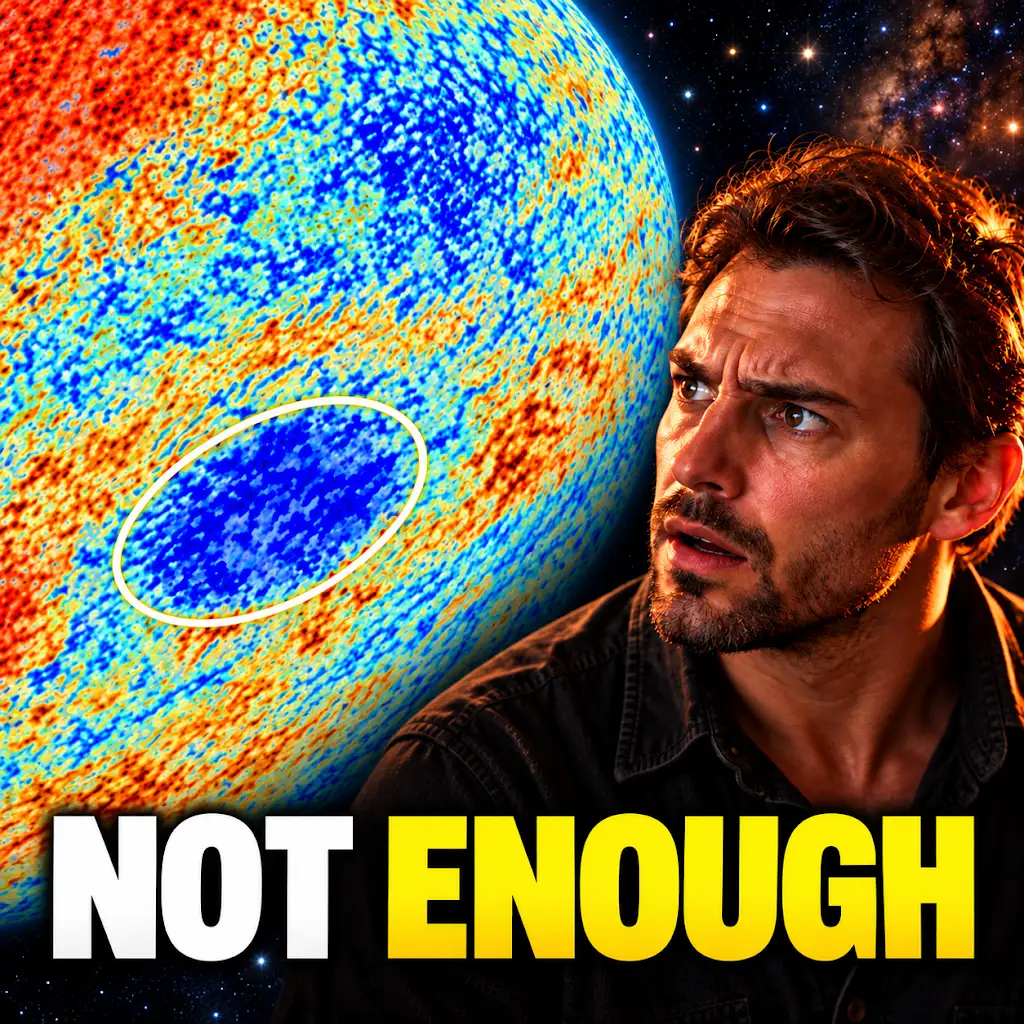
The Universe’s Cold Spot Has an Explanation. It’s Not Enough.
FAQs
What is a primordial fluctuation cold spot?
A primordial fluctuation cold spot is a region in the cosmic microwave background radiation that appears colder than its surroundings. It is believed to be a remnant from the early universe and can provide valuable insights into the formation and evolution of the cosmos.
How are primordial fluctuation cold spots formed?
Primordial fluctuation cold spots are thought to arise from quantum fluctuations in the early universe, which led to variations in the density of matter. These density fluctuations eventually grew through gravitational instability, resulting in regions of higher and lower density, with cold spots representing areas of lower density.
What can primordial fluctuation cold spots tell us about the universe?
Studying primordial fluctuation cold spots can help scientists understand the initial conditions of the universe, such as the distribution of matter and energy shortly after the Big Bang. By analyzing these cold spots, researchers can gain insights into the processes that shaped the large-scale structure of the cosmos.
Are primordial fluctuation cold spots rare?
Primordial fluctuation cold spots are relatively rare compared to other features in the cosmic microwave background radiation. They are considered to be significant anomalies that can provide important clues about the early universe and the mechanisms driving its evolution.
How do scientists detect primordial fluctuation cold spots?
Scientists use telescopes and specialized instruments to observe the cosmic microwave background radiation and identify primordial fluctuation cold spots. By analyzing the temperature variations in the radiation, researchers can pinpoint regions that exhibit colder temperatures, indicating the presence of these unique features.