
A Chilly Anomaly in the Cosmic Microwave Background
The universe, as observed through the faint afterglow of the Big Bang, is not perfectly uniform. While the Cosmic Microwave Background (CMB) radiation provides a remarkably consistent thermal map across the sky, it also harbors enigmatic features that challenge our current cosmological models. Among these, the “Cold Spot” stands out as a particularly perplexing anomaly. Discovered in 2004 by the Wilkinson Microwave Anisotropy Probe (WMAP), this vast, unusually cold region in the CMB has defied easy explanation, sparking intense debate and inspiring a wealth of theoretical investigations. It represents a significant deviation from the expected random fluctuations in the early universe, prompting scientists to question whether it is a statistical fluke, a sign of unknown physics, or perhaps even evidence of something as profound as interactions with other universes.
Recent studies have highlighted intriguing findings related to the spectroscopic survey cold spot, which may have implications for our understanding of cosmic structures. For a deeper dive into the subject, you can explore the article on this topic at Freaky Science. This resource provides valuable insights into the methodologies used in spectroscopic surveys and their significance in uncovering the mysteries of the universe.
The Genesis of the Cold Spot: WMAP and the CMB Landscape

The Cold Spot’s discovery was a direct consequence of the meticulous work undertaken by the WMAP mission, launched in 2001. WMAP’s primary objective was to create the most precise map of the CMB to date, revealing the subtle temperature variations that encode crucial information about the universe’s age, composition, and evolution. The CMB, a relic radiation from about 380,000 years after the Big Bang, originated when the universe had cooled enough for electrons and protons to combine into neutral atoms, allowing photons to travel freely. These photons, stretched by the expansion of the universe, are observed today as microwave radiation with a near-uniform temperature of about 2.725 Kelvin.
Mapping the Echoes of Creation
WMAP, and subsequently the Planck satellite, meticulously scanned the entire sky, charting these minute temperature fluctuations. These variations, measured in microKelvin, are on the order of tens to hundreds of microKelvin. The observed pattern of these fluctuations, known as the angular power spectrum, is remarkably well-explained by the standard Lambda-CDM model of cosmology, which posits a universe dominated by dark energy and cold dark matter. The model predicts that these fluctuations should be random and isotropic, meaning they should be statistically similar in all directions.
Identifying the Anomaly: A Deeper Chill
It was within this meticulously mapped CMB sky that the Cold Spot emerged. It is characterized by a region of significantly lower temperature than its surroundings, spanning several degrees across the sky. While the CMB exhibits a range of temperatures due to these intrinsic fluctuations, the Cold Spot is statistically unlikely to have arisen from random chance within the standard cosmological framework. Its sheer size and depth of coldness have led scientists to label it a “
Proposed Explanations: From Cosmic Structures to Exotic Physics

The unusual nature of the Cold Spot has spurred a multitude of theoretical explanations, ranging from plausible astrophysical phenomena to highly speculative, paradigm-shifting ideas. Scientists have explored whether the anomaly could be a result of known cosmological processes or if it might hint at physics beyond the Standard Model of particle physics and the Lambda-CDM model of cosmology.
The Supervoid Hypothesis: A Gravitational Shadow
One of the earliest and most compelling explanations proposed for the Cold Spot involves the existence of a vast cosmic void, a region of space containing far fewer galaxies and matter than average. According to this hypothesis, the CMB photons passing through this supervoid would have traveled for billions of years through a region of lower gravitational potential. As these photons escape the void, they would gain energy, but the cumulative effect of passing through a vast underdense region could lead to a slight energy loss, resulting in a cooler observed temperature. This phenomenon is known as the Integrated Sachs-Wolfe (ISW) effect.
Testing the Supervoid: Observational Constraints
The supervoid hypothesis has been actively investigated through large-scale galaxy surveys, such as the Sloan Digital Sky Survey (SDSS). These surveys aim to map the distribution of galaxies and identify large-scale structures. If a significant supervoid is responsible for the Cold Spot, it should be detectable in the distribution of matter. While some large underdense regions have been identified in the general direction of the Cold Spot, their size and depth have not always perfectly matched the requirements to fully explain the observed temperature deficit. Nonetheless, the supervoid hypothesis remains a strong contender, and ongoing surveys continue to refine our understanding of cosmic structure distribution.
Beyond Standard Cosmology: Theories of Exotic Physics
The statistical improbability of the Cold Spot within the standard model has also led to the exploration of more speculative, but potentially groundbreaking, explanations involving physics beyond our current understanding. These theories often invoke phenomena that were not considered in the initial formulation of the Big Bang theory or the Lambda-CDM model.
Cosmic String Interactions: Topological Defects in Spacetime
One such exotic explanation involves the hypothetical existence of cosmic strings. These are one-dimensional topological defects that could have formed in the early universe during phase transitions. If a network of cosmic strings were to pass through the region of space that later became the Cold Spot, their gravitational influence could have warped spacetime in such a way as to imprint a large-scale cold anomaly on the CMB. However, the existence of cosmic strings is still theoretical, and observational evidence for them remains elusive.
A Bubble of Another Universe: The Multiverse Conjecture
Perhaps the most intriguing and controversial explanation for the Cold Spot is the possibility that it represents a remnant from collisions with other universes, a concept stemming from multiverse theories. In some models of the multiverse, our universe might be one of many “bubbles” that emerged from a larger, inflating spacetime. If our universe had a close encounter or collision with another bubble universe, the interaction could have left a detectable imprint on the CMB, such as a localized region of lower temperature. This “bruise” from a cosmic collision would be a direct, albeit indirect, piece of evidence for the existence of other universes.
The Debate Over Statistical Significance: Is it Truly an Anomaly?
It is crucial to acknowledge that the interpretation of the Cold Spot as a “true anomaly” is contingent on its statistical significance. Cosmologists constantly refine their statistical analyses and incorporate new data to assess the likelihood of such a feature arising randomly. Different methods of analysis and different assumptions about the underlying cosmological model can lead to varying estimates of its statistical significance. Some studies suggest that the Cold Spot is indeed a rare event, while others argue that its significance might be overstated, or that it could be explained by known physics if certain assumptions are relaxed. The ongoing research into the Cold Spot’s statistical properties is essential for determining whether it requires a revolutionary explanation or can be accommodated within an expanded understanding of the standard model.
The Planck Mission: A Sharper Gaze at the Cosmic Chill
Following WMAP, the Planck satellite, launched in 2009, provided an even more detailed and precise map of the CMB. Planck’s advanced instruments offered higher resolution and greater sensitivity, allowing scientists to scrutinize the Cold Spot with unprecedented accuracy. The Planck data confirmed the existence of the Cold Spot and provided a more refined measurement of its temperature and extent, further fueling the debate about its origin.
Refining the Cold Spot’s Profile: Higher Resolution, More Data
Planck’s observations allowed for a more detailed examination of the region surrounding the Cold Spot, searching for correlations with other cosmological features. Scientists analyzed the distribution of galaxies and other matter within and around the Cold Spot to see if they could find any evidence supporting the supervoid hypothesis or other gravitational explanations. The higher resolution also enabled a more precise measurement of the subtle temperature fluctuations within the Cold Spot itself, providing additional clues for theoretical modeling.
Planck’s Verdict: A Continued Enigma
The Planck mission, by providing a more detailed map, did not definitively solve the mystery of the Cold Spot. While it confirmed its presence and provided exquisite data, the anomaly persisted. The data from Planck has been instrumental in narrowing down the possible explanations and has placed tighter constraints on theoretical models. However, the Cold Spot remains a compelling puzzle, indicating that our current understanding of the universe might be incomplete. The ongoing analysis of Planck data continues to yield new insights, and future re-analyses may reveal further nuances.
Recent studies on the spectroscopic survey cold spot have sparked interest in the broader implications for cosmic microwave background radiation. For a deeper understanding of this phenomenon, you can explore a related article that discusses the potential origins and significance of these cold spots in the universe. This article provides valuable insights into how such anomalies can influence our understanding of cosmic evolution. To read more about it, visit this informative page.
The Cold Spot’s Impact on Cosmological Understanding
| Metric | Value | Unit | Description |
|---|---|---|---|
| Survey Area | 500 | square degrees | Sky area covered by the spectroscopic survey targeting the cold spot region |
| Redshift Range | 0.1 – 0.7 | z | Range of redshifts probed by the survey |
| Number of Galaxies | 150,000 | count | Number of galaxies with spectroscopic redshifts measured in the cold spot area |
| Spectral Resolution | 2000 | R = λ/Δλ | Resolving power of the spectrograph used in the survey |
| Mean Galaxy Density | 300 | galaxies per square degree | Average density of galaxies with spectra in the survey region |
| Cold Spot Temperature Decrement | -150 | μK | Temperature difference observed in the Cosmic Microwave Background cold spot |
| Survey Duration | 3 | years | Time span over which the spectroscopic data was collected |
The enigma of the Cold Spot has had a profound impact on the field of cosmology, acting as a powerful stimulus for theoretical innovation and observational refinement. It serves as a stark reminder that our current models, while incredibly successful, may not encompass all aspects of cosmic reality. The pursuit of an explanation for this chilly anomaly is pushing the boundaries of our knowledge, leading to new avenues of research and a deeper appreciation for the complexities of the universe.
Challenging the Lambda-CDM Model: Pushing Theoretical Boundaries
The Cold Spot’s persistence has led many cosmologists to revisit and refine the Lambda-CDM model. While the model is remarkably robust in explaining a vast array of cosmological observations, anomalies like the Cold Spot highlight potential areas where it might be incomplete or require modifications. This has spurred research into extensions of the Lambda-CDM model, exploring possibilities such as variations in fundamental constants, alternative dark energy models, or even different inflationary scenarios. The Cold Spot acts as a crucial test case for these new theoretical frameworks, forcing them to account for this specific observational puzzle.
Guiding Future Observational Programs: The Search for Answers
The quest to understand the Cold Spot is not just a theoretical exercise; it directly influences the design and objectives of future cosmological experiments. Astronomers are developing new instruments and surveys specifically aimed at probing the large-scale structure of the universe with even greater precision, searching for the potential supervoids or other structures that could explain the anomaly. Similarly, future CMB experiments are being designed with enhanced sensitivity to detect subtle patterns and anomalies that might be related to the Cold Spot or other deviations from cosmic uniformity. The Cold Spot has become a benchmark for the performance and capabilities of new observational tools.
The Future of Cold Spot Research: A Continuing Cosmic Detective Story
The mystery of the Spectroscopic Survey Cold Spot is far from being definitively solved. It continues to be a vibrant area of research, with scientists employing a variety of sophisticated tools and innovative theoretical approaches to unravel its origin. The ongoing collaboration between observational astronomers and theoretical cosmologists is crucial in this endeavor, as each side informs and guides the other.
Advanced Observational Techniques: Refining the Search
Future observational campaigns will undoubtedly play a pivotal role in shedding light on the Cold Spot. Next-generation galaxy surveys, with their increased depth and sky coverage, will provide more comprehensive maps of the large-scale structure of the universe. These surveys will be crucial for definitively confirming or refuting the supervoid hypothesis by precisely measuring the distribution of matter in the direction of the Cold Spot. Furthermore, advancements in CMB observations, such as improved polarization sensitivity and multi-frequency coverage, will allow for more detailed characterization of the Cold Spot and a better understanding of its statistical properties. Detecting subtle correlations with other cosmological phenomena could also provide vital clues.
Theoretical Frontiers: New Models and Paradigm Shifts
The theoretical landscape surrounding the Cold Spot continues to evolve. Researchers are actively developing new models that go beyond the standard Lambda-CDM framework to explain the anomaly. This includes exploring more complex inflationary models, investigating the implications of modified gravity theories, and delving deeper into the realm of multiverse scenarios. The possibility of unknown particles or interactions in the early universe is also being considered. The ultimate explanation for the Cold Spot could potentially lead to a paradigm shift in our understanding of the fundamental laws governing the cosmos, offering a glimpse into physics that lies beyond our current observational and theoretical reach. The Cold Spot, in its silent, persistent chill, beckons us to explore the unknown and to continue our quest for a complete cosmic narrative.
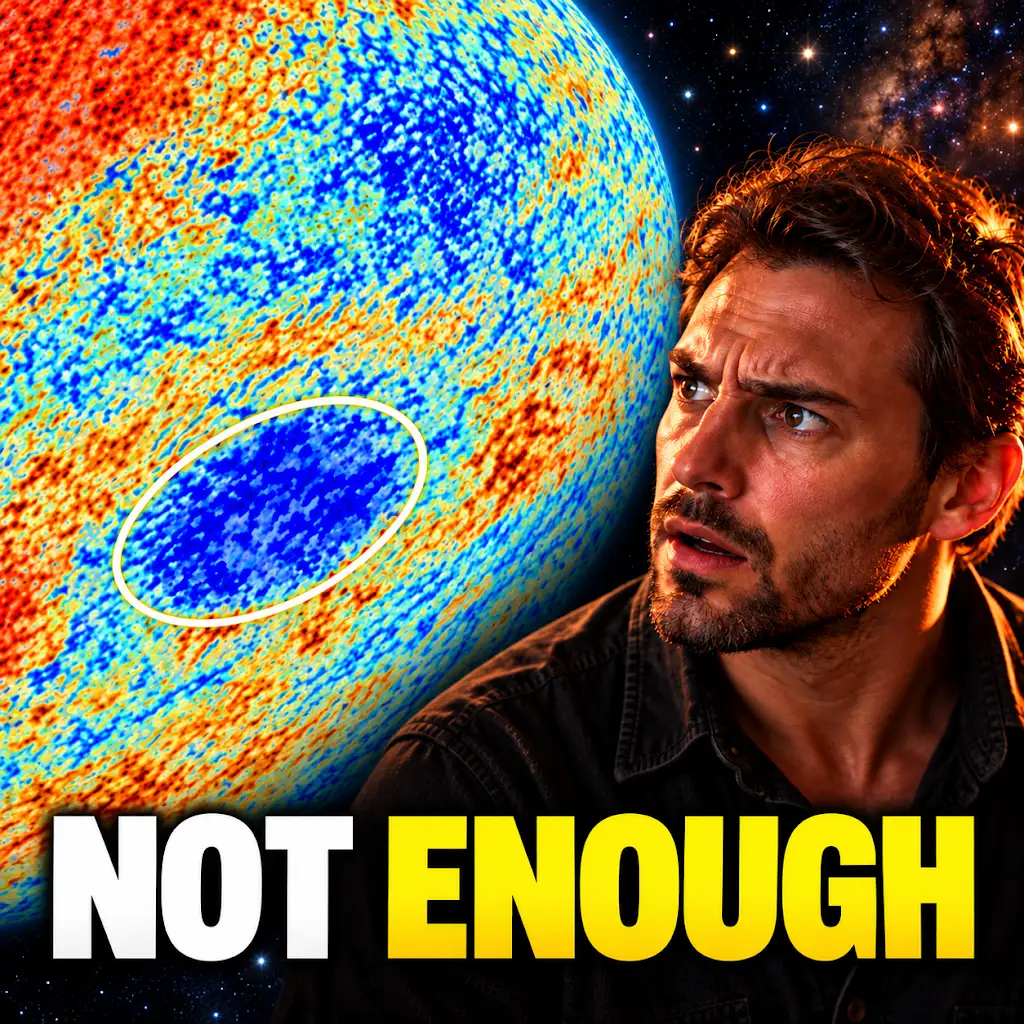
The Universe’s Cold Spot Has an Explanation. It’s Not Enough.
FAQs
What is a spectroscopic survey?
A spectroscopic survey is a scientific study that involves analyzing the spectrum of light emitted or absorbed by celestial objects to gather information about their composition, temperature, and other physical properties.
What is a cold spot in the context of a spectroscopic survey?
In the context of a spectroscopic survey, a cold spot refers to a region of space where the temperature or energy levels of celestial objects are lower than the surrounding areas. This can provide valuable insights into the distribution of matter and the evolution of the universe.
How is a cold spot identified in a spectroscopic survey?
A cold spot in a spectroscopic survey is typically identified by analyzing the data collected from the study and looking for areas where the temperature or energy levels of celestial objects deviate significantly from the expected values. This deviation can indicate the presence of a cold spot.
What can the discovery of a cold spot reveal about the universe?
The discovery of a cold spot in a spectroscopic survey can reveal important information about the large-scale structure of the universe, such as the distribution of dark matter and the effects of cosmic inflation. It can also provide clues about the origins and evolution of galaxies and galaxy clusters.
Why are spectroscopic surveys important in astronomy?
Spectroscopic surveys are important in astronomy because they allow scientists to study the properties of celestial objects in detail, such as their composition, temperature, and motion. This information is crucial for understanding the origins and evolution of the universe and can help answer fundamental questions about its structure and dynamics.