The vast expanse of the cosmos, as observed through the lens of scientific inquiry, presents a constant stream of enigmatic phenomena. Among these, the “Cold Spot” within the Cosmic Microwave Background (CMB) radiation stands out as a particularly perplexing anomaly. Detected in the early 2000s by the Wilkinson Microwave Anisotropy Probe (WMAP) and subsequently confirmed by the Planck satellite, this region exhibits a statistically significant lower temperature than its surrounding areas. Its existence challenges some of our most fundamental cosmological models, prompting intense research and speculation. This article delves into the intricacies of the Gravitational Lensing Cold Spot, exploring its observational evidence, theoretical explanations, and the ongoing quest to unravel its mysteries.
The Observational Genesis of the Cosmic Cold Spot
The Cosmic Microwave Background (CMB) is the afterglow of the Big Bang, a faint bath of radiation that permeates the entire universe. It represents a snapshot of the universe when it was only about 380,000 years old, a time when the cosmos cooled enough for protons and electrons to combine, forming neutral atoms and allowing photons to travel freely. This primordial light, stretched to microwave wavelengths by the expansion of the universe, carries an immense wealth of information about the early cosmos, including its composition, structure, and evolution.
Mapping the Primordial Echoes
The discovery of the CMB’s anisotropies – tiny temperature fluctuations – by the COBE satellite in the early 1990s revolutionized cosmology. These fluctuations, though minuscule (on the order of microkelvins), are the seeds from which all cosmic structures, from galaxies to galaxy clusters, eventually grew. Subsequent missions like WMAP and Planck have provided increasingly precise maps of these fluctuations, revealing an intricate tapestry of hot and cold spots across the sky.
The Anomalous Zone: A Statistical Outlier
The Cold Spot, officially designated as the CMB cold spot, is an unusually large and cold region in the constellation Eridanus. It appears as a circular area of slightly reduced CMB temperature, approximately 2.5 to 3 sigma lower than the average temperature of the CMB. While statistical fluctuations are expected in any random distribution, the sheer size and depth of the Cold Spot have led many cosmologists to question whether it is merely a statistical fluke or a genuine indicator of something more profound. Its angular diameter is estimated to be several degrees across, a significant fraction of the entire sky.
Gravitational Lensing: A Key Observational Tool
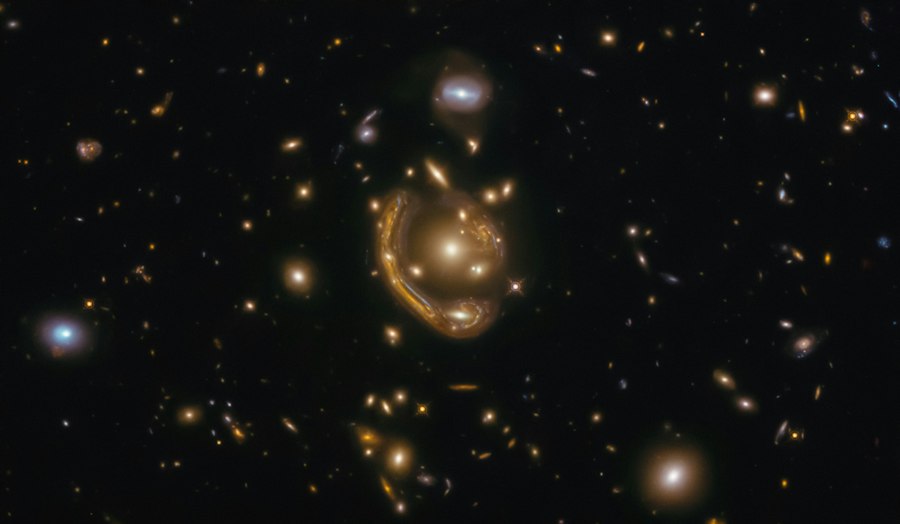
To understand the Cold Spot, it’s crucial to understand the phenomenon of gravitational lensing. According to Einstein’s theory of General Relativity, massive objects warp the fabric of spacetime. Light, in its journey across the universe, follows the curvature of spacetime. When light from distant sources passes near massive objects like galaxies or galaxy clusters, its path is bent. This bending of light acts like a cosmic lens, distorting, magnifying, or even creating multiple images of the background sources. In the context of the CMB, the gravitational pull of intervening structures between us and the surface of last scattering can alter the paths of CMB photons, leading to observable changes in their temperature and polarization.
Gravitational lensing is a fascinating phenomenon that occurs when massive objects, like galaxies or clusters of galaxies, bend the light from objects behind them, creating distorted images. One intriguing aspect of this is the gravitational lensing cold spot, which has sparked discussions about the nature of dark matter and the large-scale structure of the universe. For more insights into this topic, you can read a related article that delves deeper into the implications of gravitational lensing and its connection to cosmic mysteries at Freaky Science.
Theoretical Investigations into the Cold Spot’s Origin
The existence of the Cold Spot has spurred a torrent of theoretical investigations, with scientists proposing a variety of explanations, ranging from mundane to the truly exotic. These explanations generally fall into two broad categories: those that attempt to explain the Cold Spot within the standard cosmological model (Lambda-CDM) and those that invoke physics beyond the standard model.
Within the Standard Cosmological Framework
The standard Lambda-CDM model, which describes a universe dominated by dark energy and cold dark matter, has been remarkably successful in explaining many cosmological observations. However, the Cold Spot presents a challenge to this model.
Statistical Fluctuations: The Simplest Explanation
The most straightforward explanation is that the Cold Spot is simply a large, statistically improbable fluctuation within the expected random distribution of CMB anisotropies. While statistically unlikely, such an event cannot be entirely ruled out, especially given the vastness of the observable universe. The universe is a very large place, and even rare events can occur. However, the statistical significance of the Cold Spot makes this explanation less satisfying for many researchers.
Supervoids and Large-Scale Structures
One of the leading within-model explanations involves the concept of a “supervoid.” A supervoid is a vast region of space that contains significantly less matter than average. If the Cold Spot is located in the direction of a massive supervoid, then the CMB photons passing through this region would have traveled through less gravitational potential. This would lead to a phenomenon known as the Integrated Sachs-Wolfe (ISW) effect, where photons gain energy as they fall into gravitational potentials and lose energy as they climb out. In a supervoid, photons would experience a net energy loss, resulting in a colder observed temperature. Evidence for a supervoid in the direction of the Cold Spot has been sought and, to some extent, found through galaxy surveys. However, the size and depth of the void required to fully explain the Cold Spot remain a subject of debate.
Gravitational Lensing by Massive Structures
Another explanation within the Lambda-CDM framework involves gravitational lensing by extremely massive structures that might not be readily apparent through other observational means. While galaxy clusters are known to cause lensing effects, it is hypothesized that a particularly large and diffuse cluster, or a collection of smaller structures, could be responsible for the observed dimming of the CMB. The gravitational pull of these intervening masses would effectively stretch the spacetime, causing CMB photons to lose energy as they pass through. However, finding such a structure with the precise characteristics needed to explain the Cold Spot has proven challenging.
Gravitational lensing is a fascinating phenomenon that has led to numerous discoveries in astrophysics, including the intriguing cold spot in the cosmic microwave background. This cold spot has sparked debates about its origins, with some theories suggesting it could be a result of gravitational lensing effects. For those interested in exploring more about this topic, a related article can be found at Freaky Science, which delves into the implications of gravitational lensing and its connection to the cold spot, providing deeper insights into the mysteries of our universe.
Beyond the Standard Model: Exotic Possibilities
When explanations within the established framework fall short, scientists naturally turn to more speculative theories, pushing the boundaries of our understanding of physics.
Cosmic String Interactions
Cosmic strings are hypothetical one-dimensional topological defects that may have formed in the early universe. These incredibly dense and thin structures, if they exist, could interact with CMB photons and gravitational fields in ways that might create localized cold spots. The gravitational influence of a cosmic string network could, in theory, create the kind of temperature anomaly observed. However, direct observational evidence for cosmic strings remains elusive, and their formation mechanisms and cosmological impact are still areas of active research.
Collisions with Other Universes
Perhaps the most speculative, yet intriguing, explanation suggests that the Cold Spot could be the imprint of a collision between our universe and another, parallel universe. According to some theories of cosmic inflation and the multiverse, our universe might be just one bubble in a much larger cosmic foam. If another bubble universe with different physical properties had brushed past ours in the distant past, the gravitational interaction could have left a detectable signature in the CMB, such as the Cold Spot. While a fascinating idea, this hypothesis is exceedingly difficult to test and currently resides firmly in the realm of theoretical speculation.
Primordial Black Holes
Another exotic possibility involves the presence of a significant population of primordial black holes in the region of the Cold Spot. These black holes, formed in the very early universe, could exert a gravitational influence, bending spacetime and affecting CMB photons. If a large enough concentration of such objects were present, they could potentially create a gravitational lensing effect that would manifest as a cold spot. However, the existence and abundance of primordial black holes are still subjects of ongoing investigation.
Gravitational Lensing as a Unifying Mechanism
While the origin of the Cold Spot remains a topic of intense debate, gravitational lensing plays a crucial role in many of the proposed explanations, either as the primary cause or as a contributing factor. Understanding how gravitational lensing works in this context is key to deciphering the anomaly.
The Cosmic Lens Effect on CMB Photons
The CMB photons are traveling towards us from all directions in the sky, originating from the surface of last scattering, approximately 13.8 billion years ago. Intervening matter, such as galaxies, galaxy clusters, and even hypothetical cosmic strings, possesses mass and therefore warps spacetime. When CMB photons traverse these regions of warped spacetime, their trajectories are bent. This bending can lead to several observable effects on the CMB.
Lensing by Large-Scale Structures
The most widely accepted within-model explanation for the Cold Spot involves lensing by a massive, underdense region – a supervoid – or a very large, diffuse galaxy cluster. As CMB photons from behind the void travel towards us, they are less affected by gravity than photons from surrounding regions. This results in a subtle shift in their energy, causing them to appear cooler. Conversely, if the Cold Spot is caused by a massive structure, the lensing effect would be more direct, with the mass bending the paths of the photons and potentially altering their perceived temperature.
The Sunyaev-Zel’dovich Effect
While not directly responsible for the primordial coldness of the Cold Spot, the Sunyaev-Zel’dovich (SZ) effect is another form of gravitational lensing that can affect CMB measurements. This effect occurs when CMB photons scatter off the hot, ionized gas within galaxy clusters. The scattering can cause a slight decrease in the CMB temperature in the direction of the cluster (the thermal SZ effect) or an increase (the kinetic SZ effect). While the primary Cold Spot anomaly is thought to be a more fundamental phenomenon, the SZ effect from any intervening clusters could contribute to or mimic a colder region. Researchers are careful to distinguish between these effects.
Detecting the Lensing Signature
Scientists employ various techniques to detect and characterize the gravitational lensing effects associated with the Cold Spot.
CMB Polarization Measurements
The polarization of the CMB is particularly sensitive to gravitational lensing. As photons pass through warped spacetime, their polarization can be rotated. By studying the patterns of CMB polarization, astronomers can map the distribution of intervening matter and infer the extent and strength of gravitational lensing. Both WMAP and Planck have provided valuable polarization data that have helped to refine our understanding of the Cold Spot and the structures that might be responsible for it.
Galaxy Surveys and Redshift Information
To identify the intervening matter responsible for lensing, astronomers conduct extensive galaxy surveys. By measuring the redshifts of galaxies, they can determine their distances and map the three-dimensional distribution of matter in the universe. If a large supervoid or a massive cluster is located in the direction of the Cold Spot, galaxy surveys should reveal a region with a lower density of galaxies compared to its surroundings.
The Ongoing Scientific Quest and Future Prospects
The Cold Spot, despite its enigmatic nature, has become a focal point for cosmological research. The quest to understand its origin is driving advancements in observational techniques, theoretical modeling, and our fundamental understanding of the universe.
Refining Observational Data
The precision of CMB observations has been steadily increasing. Future missions, such as the proposed LiteBIRD satellite, aim to provide even higher-resolution maps of the CMB, including its polarization. Such data will be crucial for confirming or refuting existing explanations for the Cold Spot and potentially revealing new clues. Furthermore, ongoing and future large-scale galaxy surveys will provide more detailed maps of the large-scale structure of the universe, helping to identify any supervoids or massive structures that might be responsible for the observed anomaly.
Advanced Theoretical Modeling
Theoretical cosmologists are continuously developing and refining their models to account for the Cold Spot. This includes exploring new physics beyond the standard Lambda-CDM model and developing more sophisticated simulations of cosmic structure formation and gravitational lensing. The Cold Spot serves as a powerful test case for these models, forcing them to confront observational reality and potentially leading to new theoretical breakthroughs.
The Implications for Cosmology
The resolution of the Cold Spot mystery could have profound implications for our understanding of cosmology. If it is found to be a statistical fluctuation, it will reinforce the validity of the standard Lambda-CDM model. However, if it points to new physics, such as the existence of cosmic strings, parallel universes, or an unexpected feature of dark matter, it could revolutionize our understanding of the universe and its fundamental constituents. The Cold Spot is a reminder that even in the well-established fields of physics and astronomy, there are still profound mysteries waiting to be unveiled, pushing the boundaries of human knowledge ever further into the unknown. The ongoing investigation into this cosmic anomaly exemplifies the relentless pursuit of understanding that characterizes the scientific endeavor.
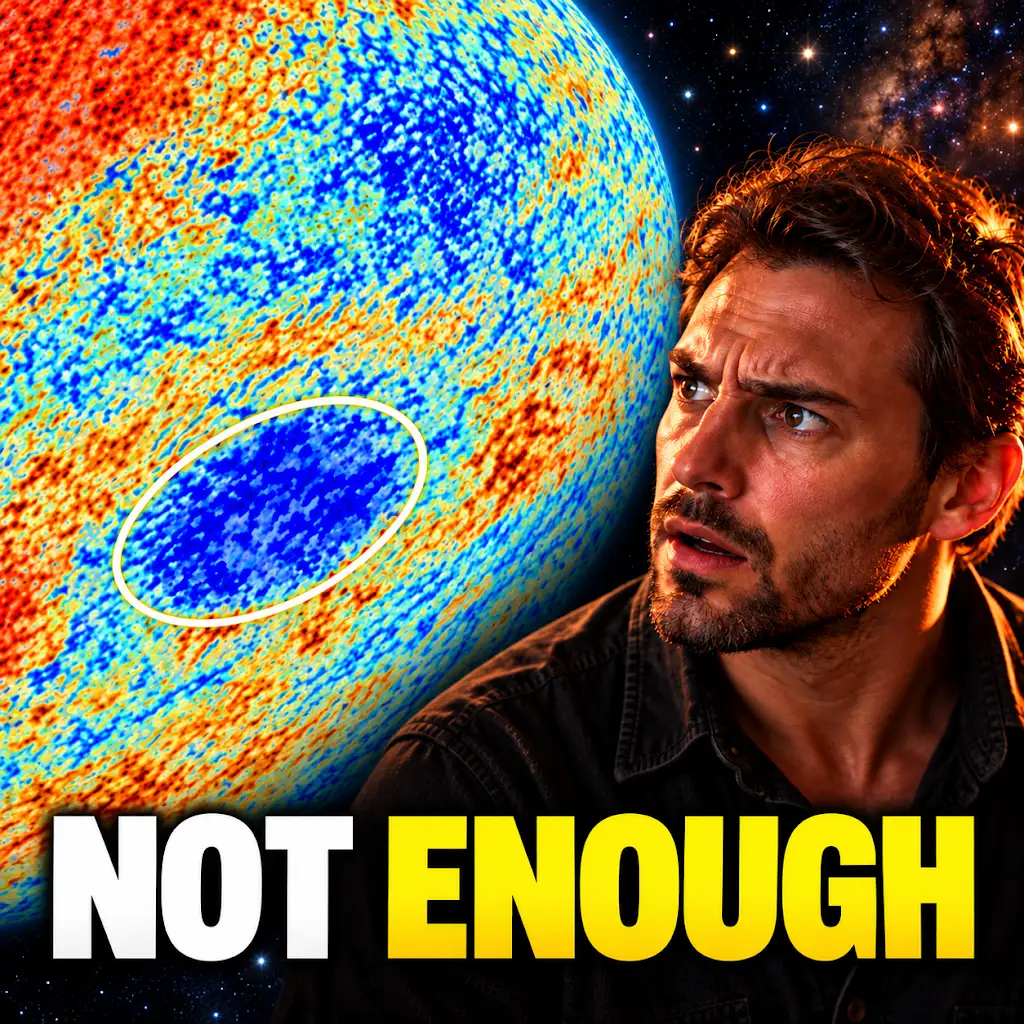
The Universe’s Cold Spot Has an Explanation. It’s Not Enough.
FAQs
What is gravitational lensing cold spot?
Gravitational lensing cold spot refers to a region in the cosmic microwave background radiation where the temperature is lower than the surrounding areas. This phenomenon is believed to be caused by the gravitational lensing effect of massive galaxy clusters.
How does gravitational lensing cold spot occur?
Gravitational lensing cold spot occurs when the gravitational pull of a massive galaxy cluster bends and distorts the light coming from the cosmic microwave background radiation. This bending causes a cooling effect in the observed temperature of the radiation in that particular region.
What is the significance of gravitational lensing cold spot?
Studying gravitational lensing cold spots can provide valuable insights into the distribution of dark matter in the universe and the formation of large-scale structures. It can also help astronomers better understand the effects of gravitational lensing on the cosmic microwave background radiation.
How do astronomers detect gravitational lensing cold spots?
Astronomers detect gravitational lensing cold spots by analyzing the temperature fluctuations in the cosmic microwave background radiation using telescopes and specialized instruments. They look for regions where the temperature is significantly lower than expected based on the surrounding areas.
Are there any ongoing research or studies related to gravitational lensing cold spots?
Yes, astronomers are actively conducting research and studies to further investigate gravitational lensing cold spots and their implications for cosmology. Ongoing observations and simulations are being carried out to better understand the nature and origins of these cold spots in the cosmic microwave background radiation.