
The vast expanse of the universe, teeming with galaxies, nebulae, and the unseen forces of dark matter and dark energy, has long been a canvas for scientific inquiry. Among the most profound and enigmatic features observed are anomalies in the cosmic microwave background (CMB) radiation, the faint afterglow of the Big Bang. Two such anomalies, the “Cold Spot” and the “Hot Ring,” have particularly captured the attention of cosmologists, presenting puzzles that challenge our current understanding of the universe’s structure and evolution. These celestial curiosities, detected through meticulous observation and analysis of the CMB, offer tantalizing glimpses into phenomena that may lie beyond the Standard Model of cosmology.
The Cosmic Microwave Background: A Relic of Creation
The CMB is a ubiquitous bath of microwave radiation that permeates the entire universe. It is essentially a snapshot of the universe when it was only about 380,000 years old, a period known as recombination. At this epoch, the universe had cooled enough for electrons and protons to combine and form neutral atoms. This event made the universe transparent to light, allowing photons to travel freely for the first time. These photons, stretched and cooled by the expansion of the universe over billions of years, are what we observe today as the CMB. The temperature of the CMB is remarkably uniform, averaging about 2.7 Kelvin. However, it is not perfectly uniform; there are tiny temperature fluctuations, on the order of microkelvins, which represent density variations in the early universe. These variations are the seeds from which all the large-scale structures we see today, like galaxies and galaxy clusters, eventually formed. Studying these fluctuations is akin to examining the fingerprints of the Big Bang, providing invaluable data for understanding the universe’s origin, composition, and evolution.
Measuring the Unseen Universe
The study of the CMB is a testament to human ingenuity, relying on sophisticated instruments and meticulous data analysis. Space-based telescopes like the WMAP (Wilkinson Microwave Anisotropy Probe) and the Planck satellite have provided increasingly precise maps of the CMB. These missions have charted the subtle temperature variations across the sky with unprecedented detail. The data collected by these instruments are not simply raw images; they are complex datasets that require advanced statistical techniques to extract meaningful cosmological information. Scientists analyze the statistical properties of these fluctuations, such as their power spectrum, which describes the amplitude of fluctuations at different angular scales. This analysis allows them to constrain fundamental cosmological parameters, including the density of ordinary matter, dark matter, and dark energy, as well as the age and expansion rate of the universe. The precision achieved by these missions has solidified the Lambda-CDM model, our current best description of the universe, but it has also highlighted discrepancies, leading to the exploration of exotic explanations for phenomena like the Cold Spot and the Hot Ring.
The Significance of Fluctuations
The seemingly random distribution of temperature fluctuations in the CMB is not random at all from a scientific perspective. These variations are directly related to the quantum fluctuations present in the universe at its earliest moments, amplified by inflation. Regions with slightly higher density in the early universe eventually attracted more matter, growing into the galaxies and clusters we observe today. Conversely, regions with slightly lower density became the vast voids that separate these structures. The pattern and amplitude of these fluctuations provide crucial information about the physical processes that occurred during the Big Bang and the subsequent evolution of the universe. For instance, the ratio of the heights of the peaks in the CMB power spectrum reveals the relative proportions of baryonic matter and dark matter. The characteristic angular scale of the largest fluctuations, known as the angular diameter of the sound horizon at recombination, provides a standard ruler to measure distances in the universe and constrain its geometry.
In exploring the intriguing phenomenon of cold spots and hot rings, one can gain further insights by reading a related article that delves into the science behind temperature variations in different environments. This article provides a comprehensive overview of how these temperature discrepancies can affect various systems and processes. For more information, you can check out the article here: Cold Spot and Hot Ring Explained.
The Enigma of the Cold Spot

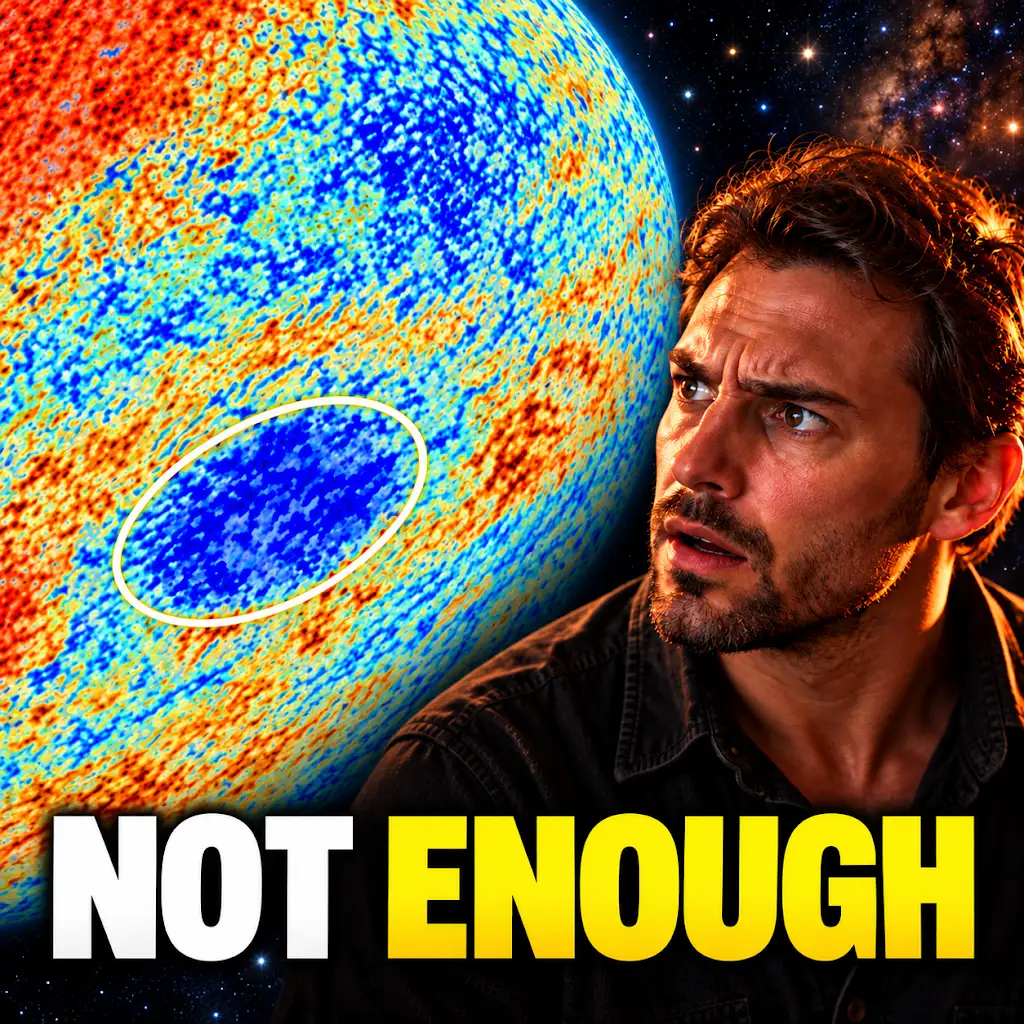
The CMB Cold Spot, first identified in maps from the WMAP satellite and later confirmed with greater detail by Planck, is a region of the sky where the CMB temperature is anomalously lower than expected. It spans a significant portion of the sky, about 5 degrees in diameter, and its temperature is about 100 microkelvins colder than the average CMB temperature. This is a substantial deviation, statistically unlikely to have occurred by chance within the framework of the standard cosmological model. The significance of this anomaly lies in its challenge to the fundamental assumption of cosmic homogeneity and isotropy on the largest scales – the cosmological principle.
Proposed Explanations and Their Implications
The existence of such a vast and cold region has spurred a wealth of theoretical investigations. One of the most popular explanations involves a supervoid, a colossal region of space that is largely devoid of matter. According to this hypothesis, the CMB photons passing through this supervoid would have lost energy due to the gravitational pull of surrounding matter, a phenomenon known as the Integrated Sachs-Wolfe (ISW) effect. However, detailed mapping of the large-scale structure around the Cold Spot has not provided conclusive evidence for a supervoid of sufficient size and emptiness to fully account for the observed temperature deficit.
Another intriguing, though more speculative, explanation suggests the Cold Spot could be a signature of a collision between our universe and another universe in a multiverse scenario. If our universe is one of many, a violent interaction with another early universe could have left a lasting imprint as a cold patch in the CMB. While fascinating, this idea remains firmly in the realm of theoretical physics and is extremely difficult to verify.
Less conventional explanations include modifications to the inflationary epoch, the period of rapid expansion in the universe’s infancy, or the presence of exotic forms of matter or energy. Each proposed solution carries significant implications, potentially demanding a revision of our understanding of fundamental physics, the nature of dark energy, or even the very structure of spacetime. The scientific community continues to scrutinize observational data and refine theoretical models to either confirm or refute these hypotheses.
Challenges and Counterarguments
Despite the allure of exotic explanations, the scientific community remains cautiously optimistic about finding a conventional explanation. The statistical significance of the Cold Spot, while high, does not entirely rule out the possibility of a rare, but not impossible, statistical fluctuation within the standard model. Furthermore, uncertainties in the precise measurements of the CMB and the distribution of matter in foreground regions can influence the interpretation of the anomaly. Some studies have suggested that the observed coldness might be an artifact of data processing or foreground contamination. Ongoing efforts to improve the accuracy of CMB maps and the understanding of foreground effects are crucial for definitively resolving the nature of the Cold Spot. The possibility that it is simply an unusual but naturally occurring feature within the standard cosmological model cannot be dismissed without rigorous examination.
The Enigmatic Hot Ring

In stark contrast to the Cold Spot, the CMB “Hot Ring” is another perplexing feature observed in the CMB data, most notably from the Planck satellite. This anomaly manifests as a ring-like structure in the CMB temperature map, characterized by a slight but statistically significant increase in temperature along its circumference compared to the surrounding regions. Unlike the Cold Spot, which appears as a single, large anomaly, the Hot Ring is more diffuse and presents a more complex pattern. Its detection has added another layer of complexity to the mysteries of the CMB.
Recent studies have shed light on the intriguing phenomenon of cold spots and hot rings in various scientific contexts. For instance, an article on Freaky Science delves into the implications of these temperature anomalies in both astrophysics and climate science. If you’re curious to explore this topic further, you can read more about it in this insightful piece on Freaky Science, which discusses how these temperature variations can influence our understanding of the universe and the environment.
Observing and Characterizing the Hot Ring
The Hot Ring’s detection was a significant finding from the Planck mission, which provided the most detailed map of the CMB to date. Scientists identified a series of statistically significant correlations between points separated by about 30 degrees on the sky, forming a nearly circular pattern. These correlations indicate that the temperature in these regions is slightly higher than predicted by the standard cosmological model. The statistical significance of this finding has been debated, with some researchers suggesting it could be a manifestation of an unusual alignment of large-scale structures in the early universe, or even an indication of a violation of the cosmological principle.
Potential Astrophysical Explanations
Several astrophysical explanations have been proposed to account for the Hot Ring. One prominent hypothesis suggests that the Hot Ring could be a residual effect from the process of reionization, when the first stars and galaxies began to emit ultraviolet radiation that stripped electrons from neutral hydrogen atoms. This process could have created a large-scale pattern of slightly warmer regions in the CMB. Another possibility is that the Hot Ring is related to the distribution of massive structures, such as galaxy clusters, in the foreground. The gravitational influence of these structures could subtly distort the CMB photons, leading to the observed temperature variations.
Exotic Cosmological Scenarios
Beyond conventional astrophysical explanations, the Hot Ring has also fueled speculation about more exotic cosmological scenarios. Some researchers have explored the possibility that the Hot Ring could be a signature of topological defects, such as cosmic strings, which are hypothetical one-dimensional structures that might have formed in the early universe. If cosmic strings exist and have certain properties, they could leave a distinct imprint on the CMB, potentially in the form of a ring-like anomaly. Other, even more speculative, ideas involve the possibility of interactions with other universes or violations of fundamental symmetries in the early universe. These ideas, while intriguing, are difficult to test with current observational capabilities.
The Interplay and Significance of CMB Anomalies
The presence of both a Cold Spot and a Hot Ring, along with other less prominent anomalies, suggests that our current cosmological model might be incomplete. These features, while individually puzzling, might be connected or provide complementary clues to a deeper understanding of the universe. The simultaneous existence of both cold and hot anomalies, particularly if they exhibit some correlation or shared characteristics, could point towards a single underlying phenomenon or a set of phenomena that are not accounted for by the standard Lambda-CDM model. Scientists are actively investigating whether these anomalies are independent curiosities or part of a larger, interconnected cosmic puzzle.
Implications for the Standard Cosmological Model
The persistent presence of these anomalies challenges the fundamental assumptions of the standard cosmological model, particularly the cosmological principle, which states that the universe is homogeneous and isotropic on large scales. If these anomalies are not statistical fluctuations or observational artifacts, they would necessitate a revision or extension of our current understanding. This could involve introducing new fundamental particles, forces, or modifying our theories of gravity or the early universe. The quest to explain the Cold Spot and the Hot Ring is thus a crucial driver for exploring new avenues in theoretical physics and cosmology.
Future Observational and Theoretical Pursuits
The ongoing pursuit of answers to these CMB enigmas relies on both enhanced observational capabilities and sophisticated theoretical frameworks. Future missions, with even greater sensitivity and resolution, will provide more detailed maps of the CMB and the large-scale structure of the universe, potentially shedding light on the origins of these anomalies. Simultaneously, theoretical cosmologists are developing new models and refining existing ones to accommodate these unexpected observations. The collaborative effort between observers and theorists is essential to unravel the mysteries presented by the Cold Spot and the Hot Ring, pushing the boundaries of our cosmic knowledge and potentially revealing the universe in a new and surprising light. The journey to understand these celestial puzzles is far from over, promising further insights into the grand narrative of cosmic evolution.
The Universe’s Cold Spot Has an Explanation. It’s Not Enough.
FAQs
What is a cold spot hot ring?
A cold spot hot ring is a phenomenon where a specific area in a room or space feels significantly colder than the surrounding areas, while at the same time emitting a ring of heat.
What causes a cold spot hot ring?
A cold spot hot ring can be caused by various factors such as poor insulation, air leaks, HVAC system issues, or even paranormal activity according to some beliefs.
How can you identify a cold spot hot ring?
You can identify a cold spot hot ring by using a thermometer to measure the temperature difference between the cold spot and its surroundings, as well as feeling the temperature change with your hand.
Can a cold spot hot ring be harmful?
In most cases, a cold spot hot ring is not harmful and is simply a result of temperature variations in a space. However, if it is caused by a malfunctioning HVAC system or poor insulation, it can lead to energy inefficiency and discomfort.
How can you address a cold spot hot ring?
To address a cold spot hot ring, you can try improving insulation, sealing air leaks, adjusting your HVAC system, or consulting a professional to identify and fix any underlying issues causing the temperature imbalance.