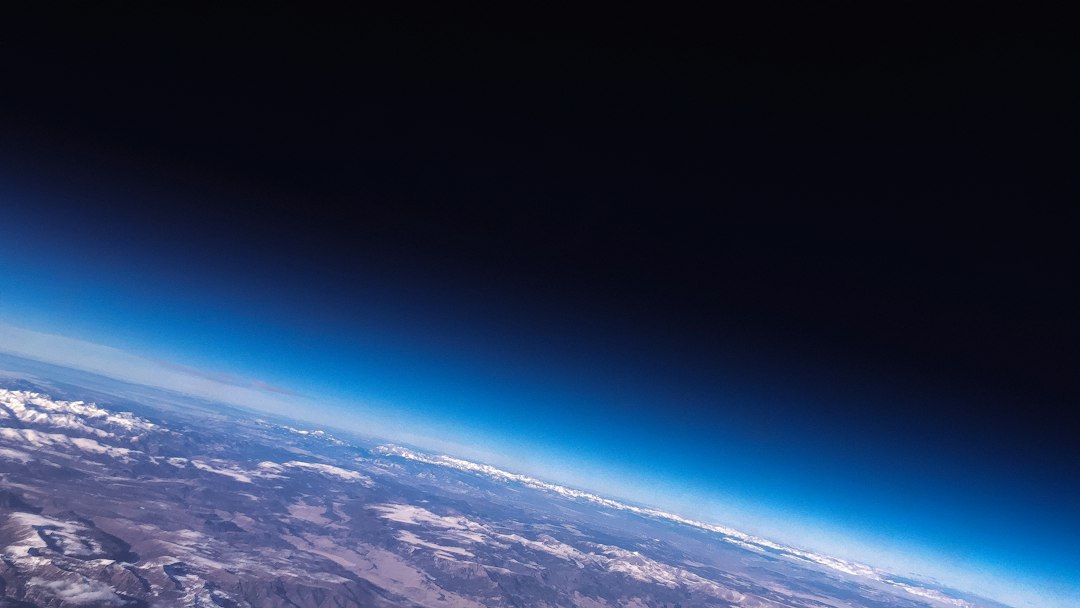
The cosmos, a realm of unfathomable scale and bewildering phenomena, continues to captivate and challenge human understanding. From the twinkling lights in our night sky to the vast, invisible forces that shape galaxies, space is an endless frontier of discovery. This exploration delves into some of the most mind-blowing facts about the universe, offering a glimpse into its profound mysteries and awe-inspiring wonders. Prepare to have your perception of reality stretched and your imagination ignited as we journey through the cosmic expanse.
The Immense Scale of Cosmic Distances
One of the most fundamental and often overwhelming aspects of space is its sheer size. The distances involved are so colossal that they defy our everyday intuition. Our minds are accustomed to measuring things in meters, kilometers, or miles, but in the universe, these units become laughably inadequate.
Understanding the Light-Year
To grasp cosmic distances, astronomers employ a unit called the light-year. A light-year is not a measure of time, but rather the distance light travels in one Earth year. Since light travels at an incredible speed of approximately 299,792 kilometers per second (about 186,282 miles per second), a single light-year is an enormous distance: roughly 9.46 trillion kilometers (or 5.88 trillion miles).
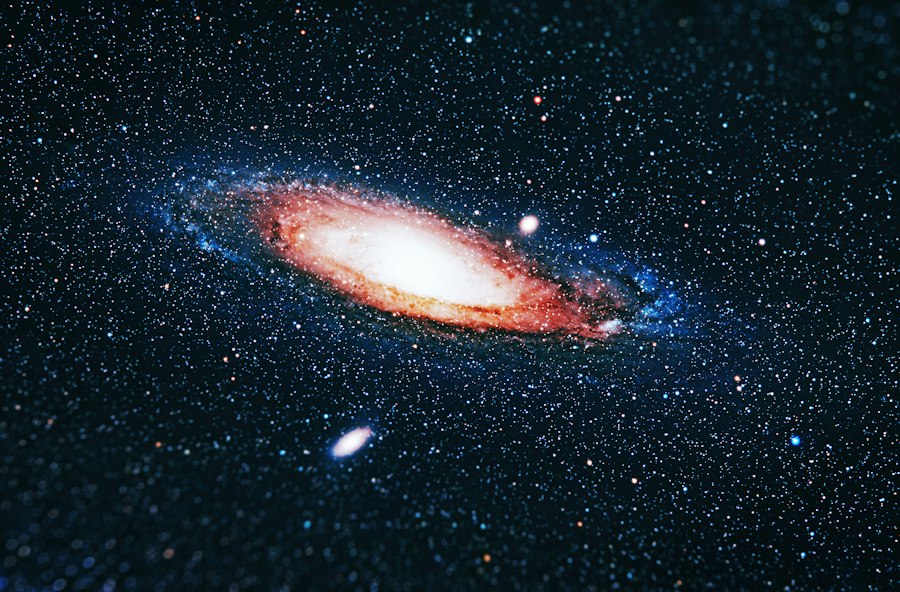
The nearest star to our Sun, Proxima Centauri, is about 4.24 light-years away. This means that the light we see from Proxima Centauri today left that star over four years ago. For objects further out, the numbers become even more staggering. The Andromeda Galaxy, our nearest major galactic neighbor, is approximately 2.5 million light-years away. The light from Andromeda that reaches us today began its journey when early hominids were just beginning to use tools. Imagine the vastness that lies between us and even the closest celestial bodies. This sheer scale underscores our minuscule presence within the grand cosmic tapestry.
The Observable Universe and Its Limits
When we speak of the universe, we often refer to the “observable universe.” This is the portion of the universe from which light has had time to reach us since the Big Bang. Due to the finite speed of light and the age of the universe (estimated to be around 13.8 billion years), there are regions of space so distant that their light has not yet arrived.
The observable universe is estimated to be about 93 billion light-years in diameter. This implies that the actual universe is likely much larger, possibly even infinite. The expansion of the universe further complicates matters. Space itself is stretching, meaning that objects that were once relatively close to us are now receding at incredible speeds, some even faster than the speed of light (though this doesn’t violate Einstein’s theory, as it’s the space between them that is expanding). The concept of an observable limit highlights both the vastness of what we can see and the even greater unknown that lies beyond our current observational reach.
If you’re fascinated by the wonders of the universe, you might enjoy exploring more mind-blowing space facts in this intriguing article. It delves into the mysteries of black holes, the vastness of galaxies, and the potential for extraterrestrial life. To read more about these captivating topics, check out the article at Freaky Science.
The Astonishing Diversity of Celestial Objects

The universe is not a homogenous void; it is populated by an astonishing array of celestial objects, each with its own unique characteristics and fascinating properties. From the familiar planets in our solar system to exotic phenomena like black holes and neutron stars, the diversity is a testament to the complex physical processes at play in the cosmos.
Planets: From Rocky Worlds to Gas Giants
Our solar system offers a microcosm of planetary diversity. Mercury, the smallest planet, is a scorched, rocky world orbiting extremely close to the Sun. Venus, often called Earth’s “sister planet” due to its similar size, is a hellish landscape with a runaway greenhouse effect, making its surface hotter than Mercury. Earth, our home, is a unique oasis, supporting liquid water and an abundance of life. Mars, the “Red Planet,” is a cold, dusty desert with evidence of past liquid water, making it a prime candidate for future exploration and potential habitability.
Beyond the inner, rocky planets lie the gas giants: Jupiter, Saturn, Uranus, and Neptune. Jupiter, the largest planet, is a swirling vortex of hydrogen and helium, with a storm called the Great Red Spot that has raged for centuries. Saturn is renowned for its magnificent ring system, composed of ice particles and dust. Uranus and Neptune, the ice giants, are frigid worlds with atmospheres rich in methane, giving them their blue hues.
The universe, however, teems with exoplanets – planets orbiting stars other than our Sun. Astronomers have discovered thousands of exoplanets, ranging from super-Earths and mini-Neptunes to planets orbiting distant red dwarfs. The quest to find Earth-like planets, potentially harboring life, is a driving force in modern astronomy.
Stars: Cosmic Furnaces and Stellar Evolution
Stars are the fundamental building blocks of galaxies, the vast cosmic furnaces that forge heavier elements through nuclear fusion. Our Sun is a G-type main-sequence star, a relatively common type, but the universe hosts a spectrum of stellar sizes, temperatures, and lifespans.
Massive stars are hotter, brighter, and have shorter lifespans, burning through their nuclear fuel rapidly. They end their lives in spectacular supernova explosions, seeding the universe with heavy elements essential for the formation of planets and life. Smaller stars, like red dwarfs, are much cooler and can live for trillions of years, far longer than the current age of the universe.
The life cycle of a star is a cosmic drama. Born from nebulae of gas and dust, stars spend most of their lives on the main sequence, fusing hydrogen into helium. As they exhaust their fuel, they evolve into red giants, then white dwarfs, neutron stars, or even black holes, depending on their initial mass. These stellar endpoints are some of the most extreme and fascinating objects in the universe.
Galaxies: Islands of Stars in the Cosmic Ocean
Galaxies are colossal collections of stars, gas, dust, and dark matter, bound together by gravity. Our own Milky Way galaxy is a barred spiral galaxy, estimated to contain 100 to 400 billion stars. It’s a breathtaking spectacle, though from within, we only see a fraction of its grandeur.
The universe is filled with galaxies of all shapes and sizes: spiral galaxies, elliptical galaxies, and irregular galaxies. They are not static entities; they interact, collide, and merge, a slow-motion dance that reshapes the cosmic landscape over billions of years. The Andromeda Galaxy, for instance, is on a collision course with the Milky Way, a cosmic encounter that will occur in about 4.5 billion years, eventually forming a larger, elliptical galaxy.
On the largest scales, galaxies are organized into clusters and superclusters, vast structures that span hundreds of millions of light-years. These cosmic webs, interspersed with immense voids, reveal the large-scale structure of the universe and provide clues about its formation and evolution.
The Mysteries of Dark Matter and Dark Energy
Our current understanding of the universe is incomplete. Observations reveal that the visible matter, the stars, planets, and gas we can detect, makes up only a small fraction of the universe’s total mass-energy content. The vast majority is comprised of mysterious entities known as dark matter and dark energy.
The Invisible Hand of Dark Matter
Dark matter is a hypothetical form of matter that does not interact with light or other electromagnetic radiation, making it invisible to telescopes. Its existence is inferred from its gravitational effects on visible matter. Galaxies rotate much faster than they should based on the amount of visible matter they contain, suggesting that an unseen mass is providing the extra gravitational pull.
Observations of galaxy clusters and gravitational lensing – the bending of light by mass – also strongly support the existence of dark matter. It is estimated that dark matter constitutes about 27% of the universe’s total mass-energy. Scientists are actively searching for the fundamental particles that make up dark matter, with theories ranging from weakly interacting massive particles (WIMPs) to axions. Unraveling the nature of dark matter is one of the most pressing challenges in modern physics.
The Accelerating Expansion Driven by Dark Energy
Even more enigmatic is dark energy. This mysterious force is responsible for the observed accelerating expansion of the universe. For a long time, cosmologists expected the expansion to be slowing down due to gravity. However, observations of distant supernovae in the late 1990s revealed the opposite: the universe’s expansion is speeding up.
Dark energy is thought to be a property of space itself, a form of anti-gravity that pushes galaxies apart. It is estimated to make up about 68% of the universe’s total mass-energy. While its existence is well-established by observational evidence, its fundamental nature remains unknown. Cosmological models propose various explanations, such as a cosmological constant (Einstein’s idea) or a dynamic field called quintessence, but a definitive answer is still elusive. The implications of dark energy are profound, suggesting that the future of the universe may be one of ever-increasing emptiness and isolation.
Extreme Phenomena: Black Holes and Neutron Stars
The universe is a laboratory for extreme physics, where conditions far beyond anything we experience on Earth can be found. Among the most fascinating and extreme objects are black holes and neutron stars, the remnants of massive stellar explosions.
Black Holes: The Ultimate Gravitational Wells
Black holes are regions of spacetime where gravity is so strong that nothing, not even light, can escape. They are formed when massive stars collapse under their own gravity at the end of their lives. At the heart of every black hole lies a singularity, a point of infinite density and zero volume, where the known laws of physics break down.
Surrounding the singularity is the event horizon, the point of no return. Once an object crosses the event horizon, it is inexorably pulled towards the singularity. While we cannot directly observe the interior of a black hole, their presence is revealed by their gravitational influence on surrounding matter. We can detect the accretion disks of gas and dust swirling around black holes, heated to extreme temperatures and emitting powerful X-rays.
Supermassive black holes, millions to billions of times the mass of our Sun, are found at the centers of most galaxies, including our own Milky Way. Their role in galaxy formation and evolution is a subject of intense research. The concept of black holes, once purely theoretical, has become a cornerstone of modern astrophysics, challenging our understanding of gravity and spacetime.
Neutron Stars: Dense Remnants of Supernovae
Neutron stars are the incredibly dense remnants of supernova explosions of stars that are not massive enough to form black holes. They are composed almost entirely of neutrons, packed together with extreme density. A teaspoon of neutron star material would weigh billions of tons.
Neutron stars are typically only about 20 kilometers (12 miles) in diameter, yet they contain more mass than our Sun. Many neutron stars rotate incredibly rapidly, emitting beams of radio waves and other radiation that sweep across space like a lighthouse. These rapidly rotating neutron stars are known as pulsars.
Some neutron stars possess extremely strong magnetic fields, making them magnetars. These magnetars can unleash colossal flares of energy, the most powerful magnetic events known in the universe. The extreme conditions within neutron stars make them invaluable laboratories for studying nuclear physics and the behavior of matter under immense pressure.
If you’re fascinated by the wonders of the universe, you might enjoy exploring more about mind-blowing space facts. One intriguing article that delves into the mysteries of our cosmos can be found at Freaky Science. This piece highlights astonishing discoveries and phenomena that challenge our understanding of space, making it a must-read for any astronomy enthusiast.
The Search for Extraterrestrial Life
| Fact | Metric/Value | Description |
|---|---|---|
| Age of the Universe | 13.8 billion years | The estimated time since the Big Bang occurred, marking the beginning of the universe. |
| Speed of Light | 299,792 km/s | The maximum speed at which all energy, matter, and information in the universe can travel. |
| Number of Stars in the Milky Way | 100-400 billion | Estimated count of stars within our galaxy. |
| Size of the Observable Universe | 93 billion light-years | The diameter of the part of the universe we can observe from Earth. |
| Black Hole Density | Infinite (Singularity) | Black holes contain a singularity where density is thought to be infinite. |
| Temperature of the Sun’s Core | 15 million °C | The extremely high temperature at the center of the Sun where nuclear fusion occurs. |
| Number of Galaxies in the Observable Universe | 2 trillion | Estimated total galaxies within the observable universe. |
| Length of a Day on Venus | 243 Earth days | Venus takes longer to rotate once on its axis than it does to orbit the Sun. |
| Distance to the Moon | 384,400 km | The average distance from Earth to its natural satellite, the Moon. |
| Number of Moons in the Solar System | 214+ | Confirmed moons orbiting planets and dwarf planets in our solar system. |
The vastness and diversity of the universe naturally lead to a profound question: are we alone? The search for extraterrestrial life, or the field of astrobiology, is one of the most exciting and enduring scientific endeavors.
The Ingredients for Life
Life as we know it on Earth requires several key ingredients: liquid water, a source of energy, and a stable environment with the necessary chemical elements. While Earth might be unique in its precise combination of these factors, the discovery of exoplanets, some in the “habitable zones” of their stars where liquid water could exist on the surface, has significantly boosted the possibility of life elsewhere.
Water is now known to exist in various forms throughout our solar system, in subsurface oceans on moons like Europa and Enceladus, and potentially in ancient riverbeds on Mars. The chemical building blocks of life – carbon, hydrogen, oxygen, nitrogen, phosphorus, and sulfur – are abundant throughout the universe, forged in stars and dispersed by supernovae.
Methods of Detection and the Fermi Paradox
Scientists employ various methods to search for signs of life beyond Earth. Radio telescopes are used to listen for artificial signals from other civilizations, a concept known as SETI (Search for Extraterrestrial Intelligence). Missions to Mars and icy moons are looking for biosignatures – chemical or geological evidence of past or present life.
The Drake equation, a probabilistic argument, attempts to estimate the number of active, communicative extraterrestrial civilizations in our galaxy. While the values for its variables are highly uncertain, it highlights the sheer number of stars and potential planets that could harbor life.
However, despite the immense size of the universe and the apparent abundance of the ingredients for life, we have yet to find definitive evidence of extraterrestrial life. This apparent contradiction is known as the Fermi Paradox, which asks: if extraterrestrial civilizations are likely, where are they? Various hypotheses attempt to explain this silence, from the idea that life is extremely rare, to civilizations being too far apart, or perhaps they simply do not wish to communicate. The quest to answer this question continues to drive exploration and scientific inquiry.
The universe is a tapestry of wonders, a place of both immense beauty and profound mystery. From the mind-boggling scale of cosmic distances to the exotic nature of black holes and the tantalizing possibility of life elsewhere, each new discovery only deepens our sense of awe and our desire to understand our place within this grand, cosmic narrative. The journey of exploration is far from over; indeed, it has only just begun.
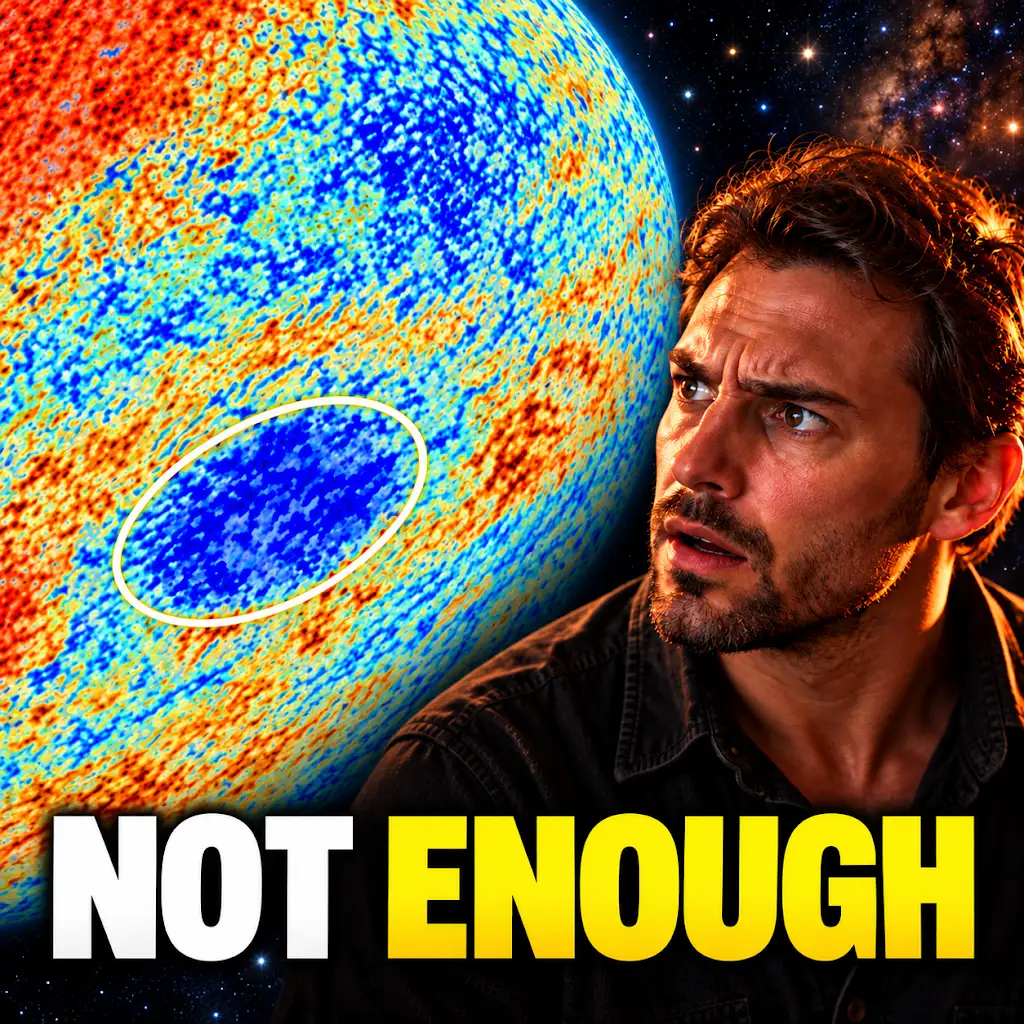
The Universe’s Cold Spot Has an Explanation. It’s Not Enough.
FAQs
What are some mind-blowing space facts?
– The universe is estimated to be around 13.8 billion years old.
– There are more stars in the universe than grains of sand on all the beaches on Earth.
– The largest volcano in the solar system is Olympus Mons on Mars, which is about 13.6 miles high.
– The coldest place in the universe is the Boomerang Nebula, with a temperature of -272 degrees Celsius.
– The Sun makes up 99.86% of the mass in our solar system.
How big is the universe?
– The observable universe is estimated to be about 93 billion light-years in diameter.
– The universe is constantly expanding, with galaxies moving away from each other at incredible speeds.
– The exact size of the universe is still unknown, as it continues to grow and evolve.
What is a black hole?
– A black hole is a region in space where the gravitational pull is so strong that nothing, not even light, can escape.
– Black holes are formed when massive stars collapse in on themselves at the end of their life cycle.
– There are different types of black holes, including stellar black holes, supermassive black holes, and intermediate black holes.
How many planets are in our solar system?
– There are eight planets in our solar system: Mercury, Venus, Earth, Mars, Jupiter, Saturn, Uranus, and Neptune.
– Pluto was reclassified as a dwarf planet in 2006 by the International Astronomical Union.
– Each planet in our solar system has unique characteristics and features, making them fascinating objects of study.
What is a supernova?
– A supernova is a powerful and luminous stellar explosion that occurs at the end of a star’s life cycle.
– Supernovae can outshine entire galaxies for a brief period of time.
– These explosions are crucial for the formation of elements heavier than iron and play a significant role in the evolution of galaxies.