
The vast, inky blackness of space is a concept that often conjures images of twinkling stars and distant galaxies. Yet, beneath this celestial beauty lies a fundamental truth: space is extraordinarily cold. This isn’t a subjective observation, but a consequence of fundamental physics that governs the universe. The absence of a tangible medium to trap and transfer heat, coupled with the immense distances between celestial bodies, results in temperatures that would be unfathomable on Earth. Understanding why space is so cold requires delving into the nature of heat, radiation, and the vacuum itself.
The Absence of Heat: Why Vacuum Matters
The most significant factor contributing to the extreme cold of space is the pervasive vacuum. On Earth, we are enveloped in an atmosphere – a blanket of gases composed of nitrogen, oxygen, and other trace elements. This atmosphere plays a crucial role in regulating temperature. Gases are excellent conductors of heat; they can absorb energy from the Sun, from the Earth’s surface, and from other sources, and then distribute that energy through convection and conduction. Convection involves the movement of heated fluids (in this case, air) carrying thermal energy, while conduction is the direct transfer of heat through molecular collisions. Our atmosphere acts like a giant insulator, preventing the Earth from becoming frigid overnight and moderating the extreme temperature fluctuations we would otherwise experience.
What is Heat and How is it Transferred?
To truly grasp why space is cold, one must first understand what heat is. Scientifically, heat is a form of energy that is transferred between systems or objects due to a temperature difference. It’s the internal energy of a substance associated with the random motion of its atoms and molecules. The faster these particles move, the higher the temperature and the more thermal energy the substance possesses.
There are three primary mechanisms by which heat is transferred: conduction, convection, and radiation. Conduction, as mentioned, is the transfer of heat through direct contact. Imagine touching a hot stove; heat is conducted from the stove to your hand. Convection occurs in fluids (liquids and gases) where warmer, less dense material rises and cooler, denser material sinks, creating currents that circulate heat. This is how a radiator heats a room. Radiation, however, is different. It’s the transfer of energy through electromagnetic waves, and it doesn’t require a medium. The Sun’s energy travels across the vacuum of space to reach Earth as infrared radiation, visible light, and ultraviolet radiation. This is the only way heat can travel through the vacuum of space.
The Vacuum’s Inability to Hold Heat
In the vacuum of space, there are virtually no particles to facilitate conduction or convection. Imagine trying to boil water in a vacuum; without the surrounding air molecules to transfer heat, the water wouldn’t heat up effectively. Similarly, the sparse particles in space, spread out over vast distances, cannot effectively absorb and retain thermal energy. Any heat gained by an object in space, perhaps from direct sunlight, is quickly lost to the surrounding void because there’s nothing to hold onto it or transfer it efficiently. This lack of a medium for heat exchange is the fundamental reason space feels so cold. Even an object bathed in direct sunlight will only be warm on the side facing the Sun; the shaded side, receiving no direct radiation, will rapidly cool down.
Space is often perceived as an empty vacuum, but it is actually a vast expanse filled with fascinating phenomena, including extreme cold. The temperature in space can drop to near absolute zero, which is around -273.15 degrees Celsius. This chilling environment is primarily due to the lack of matter to retain heat and the vast distances between celestial bodies. For a deeper understanding of why space is cold and the science behind it, you can read more in this related article on Freaky Science: Why Space is Cold.
The Reach of Radiation: The Sun’s Influence and Its Limits

While space is largely a vacuum, it is not entirely devoid of energy. The Sun, our nearest star, is a colossal source of energy that radiates heat and light across the solar system. However, the effect of this radiation is highly dependent on proximity and shielding. For objects directly exposed to the Sun’s rays, temperatures can become surprisingly high. Astronauts on the sunlit side of the International Space Station, for instance, can experience temperatures exceeding 120 degrees Celsius (250 degrees Fahrenheit). Yet, this intense heat is a localized phenomenon, confined to the surface directly absorbing the solar radiation.
Sunlight as a Source of Heat in Space
The Sun emits a broad spectrum of electromagnetic radiation, including visible light, infrared radiation (which we perceive as heat), and ultraviolet radiation. When these photons strike an object in space, their energy is absorbed, increasing the kinetic energy of the object’s atoms and molecules, thus raising its temperature. This is the primary mechanism by which objects in space gain heat. However, this transfer is a one-way street. The object absorbs energy, but it also continuously radiates energy back out into the vacuum.
The Inverse Square Law and Declining Intensity
The intensity of solar radiation, and therefore its heating potential, decreases rapidly with distance. This follows the inverse square law, which states that the intensity of radiation from a point source is inversely proportional to the square of the distance from that source. So, if you double the distance from the Sun, the intensity of sunlight you receive drops to one-fourth. This is why planets further out in the solar system, like Neptune and Pluto, are significantly colder than Earth. Beyond the immediate vicinity of stars, the amount of radiant energy available to warm an object becomes vanishingly small.
The Cosmic Microwave Background: A Universal Chill
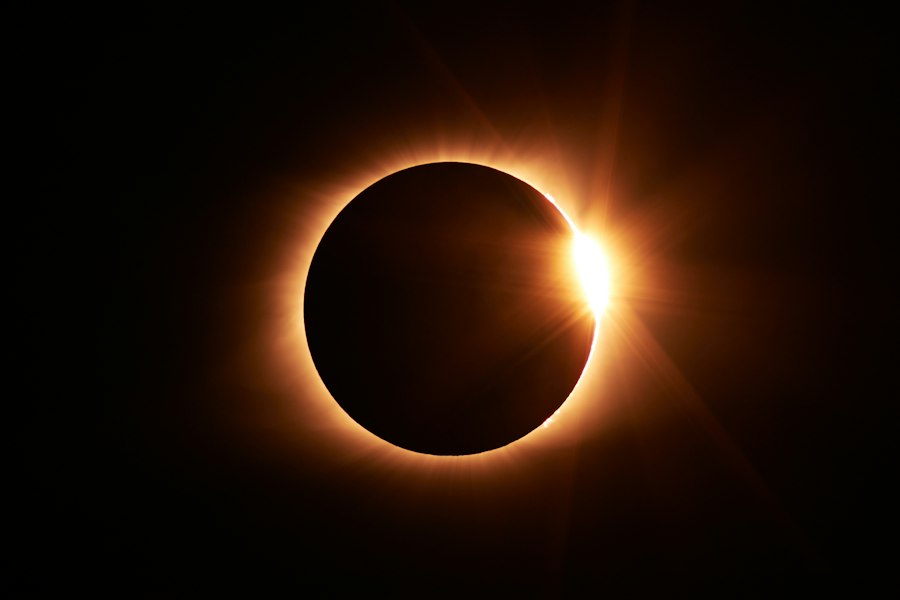
Even in the deepest reaches of space, far from any star, there exists a faint, pervasive glow of radiation: the Cosmic Microwave Background (CMB). This relic of the Big Bang is a uniform bath of microwave radiation that permeates the entire universe. While it carries energy, its temperature is extremely low, just about 2.7 Kelvin (-270.45 degrees Celsius or -454.81 degrees Fahrenheit). This means that even in the absolute coldest, darkest corners of the universe, an object will be constantly bathed in this low-level radiation, which will tend to cool it down towards this equilibrium temperature.
Tracing the Origins of the CMB
The CMB is a crucial piece of evidence supporting the Big Bang theory. It represents the afterglow of the universe when it was only about 380,000 years old and had cooled enough for electrons and protons to combine into neutral atoms. Before this epoch, the universe was an opaque plasma, and photons were constantly scattering off charged particles. As the universe expanded and cooled, this plasma transitioned into a neutral gas, allowing photons to travel freely. These photons, stretched by the expansion of the universe over billions of years, are what we observe today as the CMB.
The CMB as a Universal Thermometer
The CMB acts as a universal thermostat, defining the lowest temperature an object can reach in the absence of other heat sources. Any object in intergalactic space, isolated from stars and galaxies, will eventually radiate away its internal heat until its temperature equilibrates with the CMB. While this temperature is far colder than anything experienced on Earth, it’s not absolute zero. Absolute zero, the theoretical point at which all molecular motion ceases, is 0 Kelvin. The CMB is remarkably close, providing a baseline chill for the entire cosmos.
Thermal Equilibrium and the Constant Battle for Heat
Objects in space are constantly engaged in a delicate dance between gaining and losing heat. For any object not actively generating its own heat (like a star or a planet with internal geothermal activity), its temperature is determined by the balance between the energy it absorbs from its surroundings and the energy it radiates away. In the vacuum of space, the primary sources of heat are radiation from nearby stars, and sometimes, residual heat from its own formation or internal processes. The primary mechanism for heat loss is radiation into the vast, cold void.
Radiative Cooling: Losing Heat to the Void
All objects with a temperature above absolute zero emit thermal radiation. The rate at which an object radiates heat depends on its temperature, its surface area, and its emissivity (a measure of how effectively it radiates energy). In the vacuum of space, with minimal incoming radiation, an object will continuously radiate its thermal energy outwards. This process of radiative cooling is relentless. Without a continuous influx of energy, an object will inevitably cool down. This is why equipment left in space for extended periods without active heating or cooling systems will eventually reach extremely low temperatures.
The Role of Albedo and Emissivity
The properties of an object’s surface play a significant role in how it interacts with radiation and, consequently, its temperature in space. Albedo refers to the reflectivity of a surface. A highly reflective surface, like polished metal, will reflect most of the incoming solar radiation, absorbing less heat and remaining cooler. A dark, matte surface, on the other hand, will absorb more radiation and become hotter. Emissivity, as mentioned earlier, determines how effectively a surface radiates heat. Materials with high emissivity radiate heat more efficiently, causing them to cool down faster. Spacecraft are meticulously designed with materials and coatings that have carefully chosen albedo and emissivity values to manage their thermal environment.
Space is often perceived as an empty void, but its coldness is a fascinating topic that has intrigued scientists for years. The vast distances between celestial bodies contribute to the frigid temperatures, as there is no atmosphere to retain heat. For a deeper understanding of this phenomenon, you can explore a related article that discusses the reasons behind the coldness of space. This article provides insights into how the lack of air and the expansive nature of the universe play crucial roles in maintaining these low temperatures. To read more about it, visit this informative piece.
Extreme Examples: The Deep Freeze of Interstellar Space
| Factor | Description | Impact on Temperature |
|---|---|---|
| Vacuum of Space | Space is nearly a perfect vacuum with very few particles. | Minimal matter to transfer heat, leading to very low temperatures. |
| Lack of Atmosphere | No atmosphere to trap heat or conduct thermal energy. | Heat cannot be retained, causing rapid cooling. |
| Absence of Conduction and Convection | Heat transfer by conduction and convection requires matter, which is absent. | Only radiation can transfer heat, which is less efficient. |
| Cosmic Microwave Background Radiation | Background radiation temperature is about 2.7 Kelvin. | Sets a baseline temperature close to absolute zero. |
| Distance from Stars | Space far from stars receives very little radiant heat. | Regions away from stars remain extremely cold. |
To truly comprehend the chilling reality of space, consider the conditions in the vast regions between stars. Interstellar space is the region of space between stars within a galaxy. While it’s not completely empty, the density of matter is incredibly low, typically only a few atoms per cubic centimeter. The temperature in these regions, influenced primarily by the diffuse CMB and the faint starlight from distant galaxies, can plummet to just a few degrees above absolute zero.
The Coldest Known Places in the Universe
The coldest known places in the universe are not necessarily the furthest from stars, but rather regions shielded from any significant radiation. For instance, clouds of gas and dust in the outer reaches of galaxies can become exceptionally cold. These nebulae, where stars are born, can have temperatures as low as 10 Kelvin. The presence of molecules within these clouds can also facilitate the emission of infrared radiation, further contributing to cooling. Beyond galaxies, in the voids between them, the CMB dominates, setting the baseline temperature to around 2.7 Kelvin. Even within these voids, pockets of extremely cold gas and dust can exist, sustained by their own internal cooling mechanisms.
Life’s Struggle Against the Cosmic Chill
The extreme cold of space poses a formidable challenge to the existence of life as we know it. Life on Earth relies on liquid water, a relatively narrow range of temperatures, and a protective atmosphere. In space, the absence of atmosphere means direct exposure to vacuum, extreme temperature fluctuations, and harmful radiation. While some extremophile organisms on Earth can survive in incredibly harsh conditions, the sustained frigidity of space, combined with the vacuum and radiation, makes the spontaneous origin and survival of life an even more profound mystery. Future endeavors to explore and potentially colonize other celestial bodies will require ingenious technological solutions to overcome this fundamental cosmic cold. The silence and stillness of space, while awe-inspiring, are a constant reminder of its profound and unforgiving frigidity.
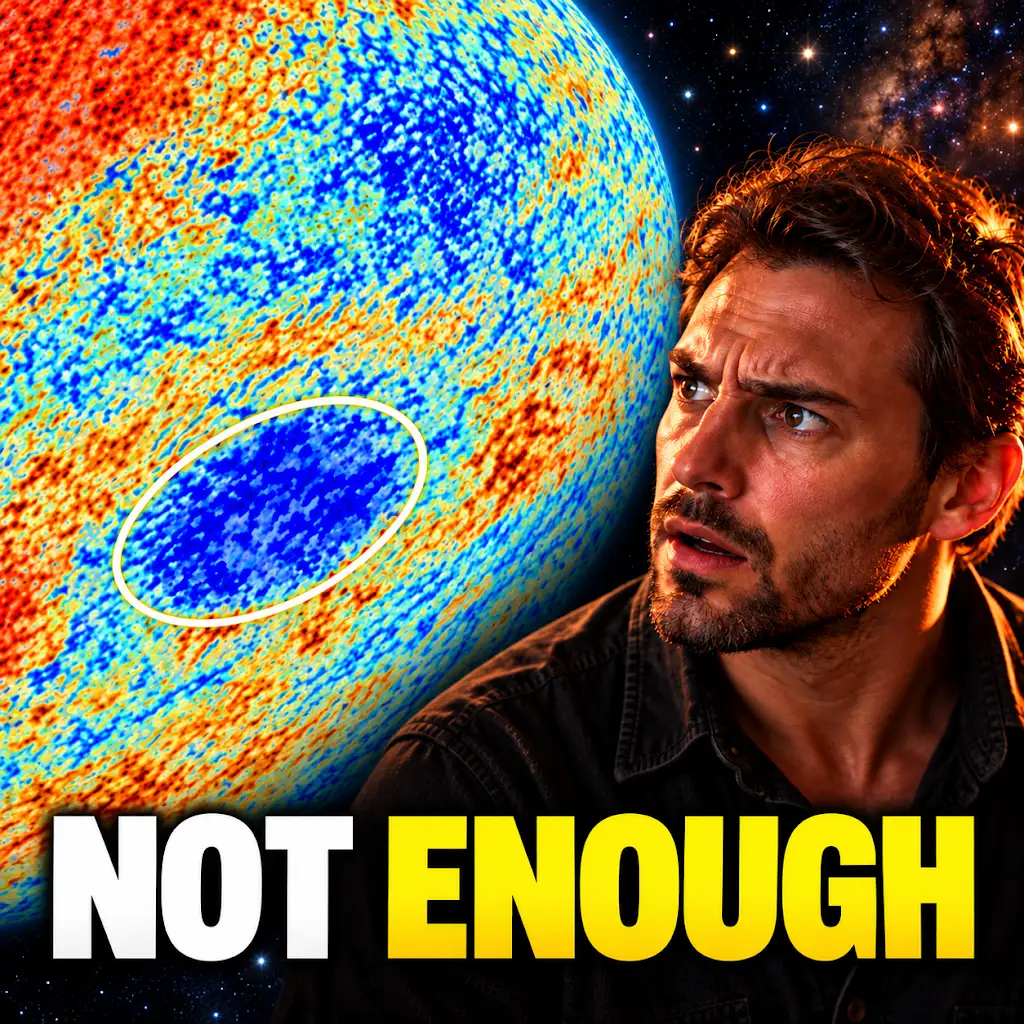
The Universe’s Cold Spot Has an Explanation. It’s Not Enough.
FAQs
What is the temperature in space?
In outer space, the temperature can vary greatly depending on the location and proximity to a heat source. On average, the temperature in space is around -454 degrees Fahrenheit (-270 degrees Celsius).
Why is space so cold?
Space is cold because it is a vacuum, meaning there is no atmosphere to trap heat or insulate objects. Without any molecules to transfer heat, objects in space lose heat rapidly, resulting in extremely low temperatures.
Can anything survive in the cold of space?
Some extremophiles, such as certain types of bacteria and tardigrades, are known to survive in extreme conditions, including the cold of space. However, most living organisms would not be able to survive the harsh temperatures and lack of atmosphere in space.
How do astronauts stay warm in space?
Astronauts in space rely on their spacesuits and spacecraft to regulate their body temperature. Spacesuits are equipped with heating elements to keep astronauts warm, while spacecraft are insulated to maintain a comfortable temperature inside.
Does the sun provide any warmth in space?
While the sun emits heat and light, objects in space do not receive warmth directly from the sun unless they are in close proximity. In the vacuum of space, heat is only transferred through radiation, which is why space remains cold despite the sun’s presence.