
The cosmos, in its breathtaking immensity, presents humanity with a profound set of enigmas. For centuries, astronomers and physicists have peered into the celestial tapestry, unraveling its secrets with increasing precision. Yet, despite monumental leaps in our understanding, vast swathes of the universe remain shrouded in mystery, defying our current models and pushing the boundaries of scientific inquiry. Three such profound puzzles, intricately linked and fundamental to the universe’s very existence and evolution, are dark matter, dark energy, and cosmic inflation. These invisible forces and processes orchestrate the grand cosmic ballet, shaping galaxies, dictating the expansion of space, and dictating the earliest moments of creation.
The Unseen Architect: The Enigma of Dark Matter
The first major chasm in our comprehension of the universe lies in the pervasive and yet utterly elusive substance known as dark matter. Its existence is not directly observed, but inferred from its gravitational influence on visible matter. The concept emerged in the early 20th century when astronomers noticed discrepancies between the observed orbital speeds of stars within galaxies and those predicted by the visible mass alone. Fritz Zwicky, in the 1930s, observed the Coma Cluster of galaxies and noted that the galaxies were moving far too quickly to remain gravitationally bound by the visible matter. He posited the existence of “dark matter,” a substance that provided the extra gravitational pull needed to hold the cluster together.
Galactic Rotation Curves: A Smoking Gun
The most compelling evidence for dark matter comes from the study of galactic rotation curves. When astronomers measure the speed at which stars orbit the center of spiral galaxies, they find a peculiar pattern. According to Kepler’s laws of planetary motion and our understanding of gravity, stars further from the galactic center should orbit more slowly, much like planets in our solar system. However, observations consistently show that stars in the outer regions of galaxies orbit at nearly the same speed as those closer to the center. This flat or even rising rotation curve suggests that there is significantly more mass present than what is accounted for by stars, gas, and dust. This unseen mass, distributed in a halo around galaxies, is what we call dark matter.
Gravitational Lensing: Bending Light and Revealing Mass
Another powerful line of evidence for dark matter arises from the phenomenon of gravitational lensing. Einstein’s theory of general relativity predicts that massive objects warp spacetime, causing light to bend as it passes by. This bending effect, analogous to how a glass lens focuses light, can distort and magnify the images of distant galaxies. By studying the degree of distortion in the light from background galaxies, astronomers can map the distribution of mass in intervening galaxy clusters. These maps consistently reveal far more mass than can be attributed to visible matter, with the excess mass aligning perfectly with the distribution expected for dark matter halos. This effect provides a direct, albeit indirect, measurement of the gravitational influence of dark matter.
The Cosmic Microwave Background: Echoes of the Early Universe
The cosmic microwave background (CMB) radiation, a faint afterglow from the Big Bang, offers further compelling evidence for dark matter. The subtle temperature fluctuations within the CMB map represent density variations in the early universe, the seeds from which large-scale structures like galaxies and galaxy clusters eventually formed. The precise pattern of these fluctuations, as measured by missions like WMAP and Planck, is exquisitely sensitive to the composition of the early universe. Cosmological models that include a significant component of dark matter provide an almost perfect match to the observed CMB anisotropies, while models without it fail to reproduce the data. This suggests that dark matter played a crucial role in the gravitational clumping of matter in the primordial universe.
What is Dark Matter Made Of? The Particle Physics Puzzle
Despite the overwhelming evidence for its existence, the nature of dark matter remains one of the greatest unsolved mysteries in physics. Current observations indicate that dark matter is not composed of ordinary baryonic matter – the protons, neutrons, and electrons that make up stars, planets, and ourselves. This is supported by measurements of the abundance of light elements formed during Big Bang nucleosynthesis, which constrain the amount of baryonic matter in the universe. Therefore, dark matter must be composed of exotic, non-baryonic particles that interact very weakly with ordinary matter and light, hence its “dark” nature. Numerous theoretical candidates have been proposed, including Weakly Interacting Massive Particles (WIMPs), axions, and sterile neutrinos, but no definitive detection has yet been made. The ongoing search for these elusive particles, through direct detection experiments deep underground, indirect detection of annihilation products, and production at particle colliders, is a paramount goal in modern physics.
The universe is filled with unsolved mysteries that continue to baffle scientists and enthusiasts alike. From the enigma of dark matter to the perplexing nature of black holes, these phenomena challenge our understanding of physics and the cosmos. For a deeper exploration of some of these intriguing topics, you can read a related article that delves into the unknown aspects of our universe. Check it out here: Freaky Science.
The Accelerating Cosmos: The Puzzling Dominance of Dark Energy

If dark matter is the invisible glue holding galaxies together, then dark energy is the mysterious force driving the universe apart at an ever-increasing rate. For decades, cosmologists believed that the expansion of the universe, initiated by the Big Bang, was gradually slowing down due to the gravitational pull of all the matter within it. However, in the late 1990s, two independent teams of astronomers studying distant supernovae made a startling discovery: the expansion of the universe is not only continuing, but accelerating. This revolutionary finding implied the existence of a repulsive force, a form of energy inherent to space itself, pushing galaxies away from each other with increasing vigor. This unknown entity was dubbed dark energy.
Type Ia Supernovae: Cosmic Yardsticks
The key to the discovery of cosmic acceleration lay in the use of Type Ia supernovae as “standard candles.” These are a specific type of exploding star that, under certain conditions, have a remarkably consistent intrinsic brightness. By observing the apparent brightness of these supernovae in distant galaxies, astronomers can determine their distance. When they compared these distances with the redshift of the supernovae’s light (which indicates how fast they are receding from us due to the expansion of the universe), they found that the distant supernovae were fainter than expected. This indicated that they were further away than predicted by a decelerating universe, and thus, the universe’s expansion must have sped up over time.
The Cosmological Constant: Einstein’s Ghostly Idea
The simplest explanation for dark energy is the cosmological constant, a term originally introduced by Albert Einstein in his equations of general relativity. Einstein added this constant to achieve a static universe, a notion that was later overturned by Hubble’s discovery of cosmic expansion. However, with the discovery of acceleration, the cosmological constant has been resurrected as a potential candidate for dark energy. It represents a constant energy density inherent to empty space itself, a vacuum energy that exerts a negative pressure, causing repulsion. While mathematically simple, the theoretical value for this vacuum energy predicted by quantum field theory is vastly larger than what is observed, a discrepancy known as the “cosmological constant problem” or “vacuum catastrophe,” one of the most significant challenges in theoretical physics.
Beyond the Cosmological Constant: Alternative Models
While the cosmological constant remains a leading candidate, the discrepancies and theoretical challenges have spurred the development of alternative models for dark energy. These include “quintessence,” a dynamic scalar field that changes over time and space, and “modified gravity” theories, which propose that our understanding of gravity itself is incomplete on cosmic scales. These models attempt to explain the observed acceleration without invoking a constant vacuum energy, offering different mechanisms for the repulsive force. Distinguishing between these models requires ever more precise cosmological observations.
The Future of the Universe: A Matter of Dark Energy’s Fate
The nature and behavior of dark energy are crucial for determining the ultimate fate of the universe. If dark energy is indeed a cosmological constant, then the universe will continue to expand at an accelerating rate, leading to a scenario known as the “Big Freeze” or “Heat Death,” where galaxies will become increasingly isolated, and the universe will become cold, dark, and dilute. If dark energy’s strength varies over time, other scenarios are possible, such as a “Big Rip,” where the expansion becomes so strong it tears apart galaxies, stars, and even atoms. Understanding dark energy is thus fundamental to predicting our cosmic destiny.
The Dawn of Everything: The Mystery of Cosmic Inflation

The third profound mystery, intimately linked to the others, concerns the earliest moments of the universe: cosmic inflation. This hypothetical period of extremely rapid expansion, occurring a fraction of a second after the Big Bang, is a cornerstone of modern cosmology, proposed to solve several perplexing features of the standard Big Bang model that are otherwise difficult to explain.
The Flatness Problem: A Universe Too Smooth
One of the key problems addressed by inflation is the “flatness problem.” Observations of the CMB reveal that the universe is remarkably geometrically flat. In the standard Big Bang model, even a slight deviation from perfect flatness in the early universe would have been amplified over billions of years, resulting in a highly curved universe today. The fact that our universe is so close to flat implies that its initial curvature must have been incredibly finely tuned to a specific value, a level of fine-tuning that most physicists find unsatisfactory. Inflation elegantly resolves this by stretching any initial curvature to near-perfect flatness, much like inflating a balloon smooths out wrinkles on its surface.
The Horizon Problem: A Universe Too Uniform
Another puzzle that inflation explains is the “horizon problem.” The CMB exhibits a remarkable uniformity in temperature across the entire sky, despite the fact that regions of the sky separated by large angles would not have had time to interact and reach thermal equilibrium in the standard Big Bang model. Inflation proposes that in the earliest moments, the observable universe was a tiny, causally connected region. This region then underwent a period of exponential expansion, stretching these initially uniform regions to enormous scales, thus explaining the observed uniformity of the CMB.
The Monopole Problem: Missing Magnetic Monopoles
The “monopole problem” is another puzzle addressed by inflation. Grand unified theories (GUTs), which attempt to unify fundamental forces at very high energies, predict the existence of stable, heavy magnetic monopoles. If these monopoles were produced in the early universe, they should be abundant today, but no such particles have ever been detected. Inflation dilutes the density of any such exotic particles to such an incredibly low level that they are effectively absent from the observable universe.
Seeds of Structure: Quantum Fluctuations Amplified
Crucially, inflation also provides an explanation for the origin of the large-scale structures we observe in the universe today, such as galaxies and galaxy clusters. During the inflationary epoch, tiny quantum fluctuations in the energy density of the vacuum were stretched to macroscopic scales. These amplified fluctuations acted as the initial density perturbations, the “seeds” that, over billions of years, gravitationally attracted surrounding matter, leading to the formation of the cosmic web. The statistical properties of these primordial fluctuations, as imprinted on the CMB, are consistent with predictions from inflationary models.
The Interconnectedness of Cosmic Puzzles
It is crucial to recognize that these three profound mysteries are not isolated phenomena but are deeply interconnected. The existence and properties of dark matter played a vital role in the formation of structures that inflation seeded. The accelerated expansion driven by dark energy will shape the future evolution of the universe, influencing how we will eventually study the remnants of the inflationary epoch and the distribution of dark matter. Our understanding of the universe’s composition, dominated by dark matter and dark energy, is directly tied to our cosmological models, which are themselves informed by the inflationary paradigm.
The Standard Cosmological Model: A Darkly Dominated Picture
Current cosmological models, often referred to as the Lambda-CDM model (Lambda representing the cosmological constant for dark energy, and CDM for Cold Dark Matter), are remarkably successful at describing a vast array of observational data, including the CMB, large-scale structure, and supernova observations. This model posits a universe composed of approximately 5% ordinary baryonic matter, 27% dark matter, and 68% dark energy. While this model provides a coherent framework, it relies heavily on the existence of these unknown components and the theoretical framework of inflation.
Future Observational Frontiers: Probing the Unknowns
The quest to unravel these cosmic enigmas is an ongoing endeavor, pushing the boundaries of observational astronomy and experimental particle physics. Future telescopes, both ground-based and space-based, are designed to map the distribution of dark matter with unprecedented detail through advanced gravitational lensing techniques and to probe the properties of dark energy with greater precision by observing larger samples of distant supernovae and other cosmological probes. Particle accelerators will continue to search for direct evidence of dark matter particles, while sophisticated underground detectors aim to capture rare interactions.
Theoretical Advancements: Refining Our Understanding
The theoretical landscape is equally vibrant, with physicists exploring modifications to general relativity, developing new candidates for dark matter, and seeking a deeper understanding of the fundamental nature of vacuum energy. The pursuit of a unified theory of quantum gravity may hold clues to the very beginnings of inflation and the origin of the universe’s fundamental constituents. The interplay between theoretical predictions and observational results is the engine of progress in cosmology.
The universe is filled with countless enigmas that continue to baffle scientists and enthusiasts alike, from the nature of dark matter to the possibility of extraterrestrial life. For those intrigued by these unsolved mysteries, a fascinating article can be found at Freaky Science, which delves into some of the most perplexing questions that remain unanswered. Exploring these topics not only ignites curiosity but also encourages us to ponder the vastness of our existence and the secrets that lie beyond our current understanding.
The Enduring Allure of the Unknown
| Mystery | Description | Current Understanding | Key Questions |
|---|---|---|---|
| Dark Matter | Matter that does not emit light or energy, making it invisible and detectable only via gravitational effects. | Estimated to make up about 27% of the universe’s mass-energy content. | What is dark matter made of? How can it be directly detected? |
| Dark Energy | A mysterious force causing the accelerated expansion of the universe. | Accounts for approximately 68% of the universe’s total energy. | What is the nature of dark energy? Why is the expansion accelerating? |
| Black Hole Information Paradox | Question of whether information that falls into a black hole is lost forever. | Hawking radiation suggests black holes can evaporate, but fate of information remains unclear. | Is information truly lost or preserved in some form? |
| Origin of Cosmic Inflation | Rapid expansion of the universe fractions of a second after the Big Bang. | Inflation theory explains uniformity of cosmic microwave background but origin mechanism unknown. | What caused inflation? What field or particle drove it? |
| Nature of Time | Understanding what time fundamentally is and why it flows in one direction. | Time is a dimension in relativity, but its true nature and arrow remain debated. | Why does time have a direction? Is time fundamental or emergent? |
The mysteries of dark matter, dark energy, and cosmic inflation represent not failures of science, but rather the very frontiers of our knowledge. They are luminous beacons, guiding our exploration into the deepest recesses of space and time, challenging our assumptions, and inspiring generations of scientists. The universe, in its silent, enigmatic grandeur, continues to beckon, promising revelations that will undoubtedly reshape our understanding of existence itself. The journey to comprehend these profound cosmic riddles is a testament to humanity’s insatiable curiosity and our unwavering drive to decipher the universe’s ultimate secrets. The answers, when they come, will likely be as revolutionary as the questions themselves.
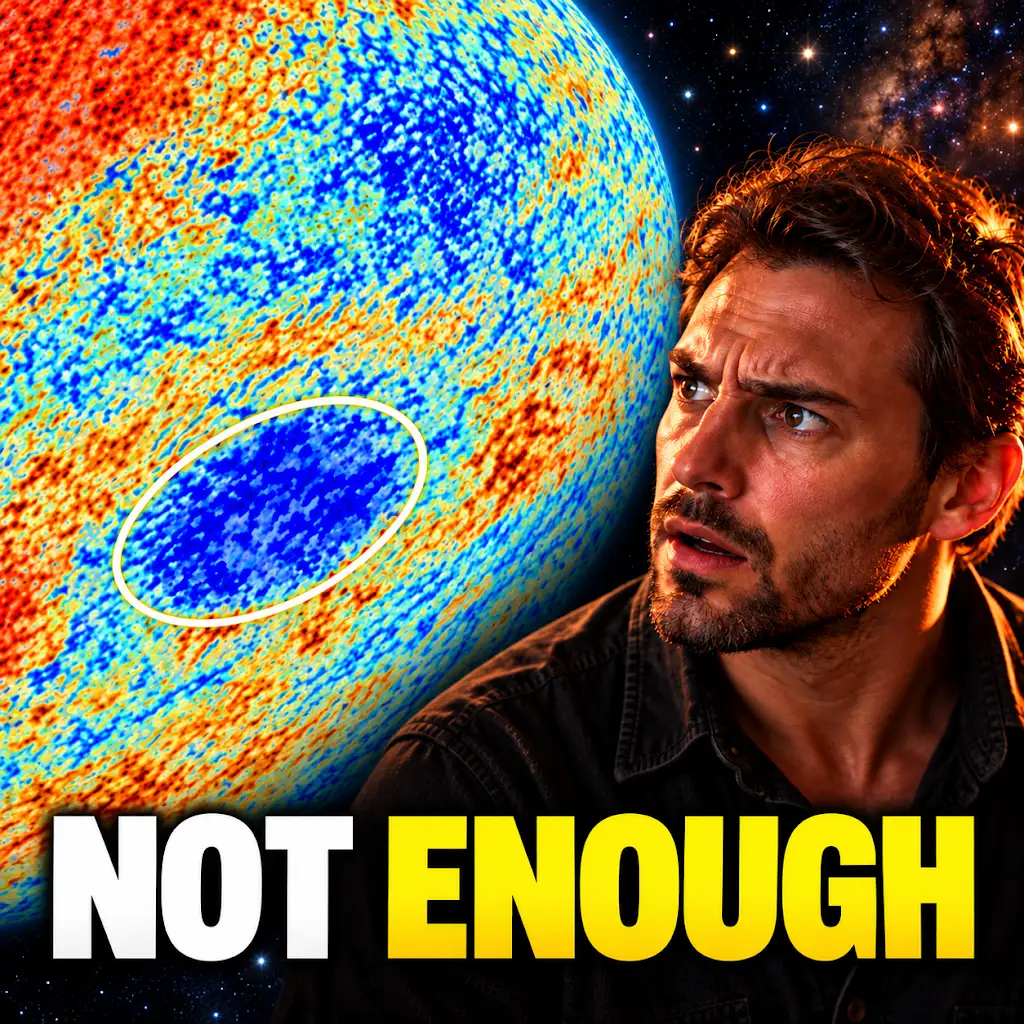
The Universe’s Cold Spot Has an Explanation. It’s Not Enough.
FAQs
What are some of the unsolved mysteries of the universe?
Some of the unsolved mysteries of the universe include dark matter, dark energy, the origin of cosmic rays, the nature of black holes, and the existence of parallel universes.
What is dark matter?
Dark matter is a mysterious substance that makes up about 27% of the universe. It does not emit, absorb, or reflect light, making it invisible and difficult to detect. Its presence is inferred by its gravitational effects on visible matter.
What is dark energy?
Dark energy is a mysterious force that makes up about 68% of the universe. It is responsible for the accelerated expansion of the universe. The nature of dark energy is not well understood, and it remains one of the biggest mysteries in cosmology.
What are cosmic rays and where do they come from?
Cosmic rays are high-energy particles that originate from sources outside the solar system. Their exact origins are still unknown, but they are believed to come from sources such as supernovae, black holes, and active galactic nuclei.
What is the nature of black holes?
Black holes are regions in space where gravity is so strong that nothing, not even light, can escape. The exact nature of black holes, including what happens beyond the event horizon and how they interact with the fabric of spacetime, remains a mystery in astrophysics.