The allure of the unknown has always captivated humanity. From the celestial ballet of stars to the mysteries of the human mind, we are driven by an insatiable curiosity to explore what lies beyond our immediate grasp. Yet, perhaps the most profound and least understood frontier lies not in the vastness of space, but deep within the very planet we inhabit. Twelve kilometers below Earth’s surface represents a journey into an alien world, a realm of unimaginable pressure, searing heat, and geological forces that dwarf any human endeavor. This is not a realm of soft soils and familiar caverns, but a landscape sculpted by processes that have unfolded over billions of years, a testament to the dynamic and often violent nature of our planet. Embarking on such an exploration is a feat of engineering and scientific ingenuity that pushes the boundaries of what we thought possible, offering unparalleled insights into the origins of our world and the potential for life in extreme environments.
To truly comprehend the challenges of descending 12 kilometers into Earth’s crust, one must first confront the overwhelming force of pressure. Imagine the weight of a mountain range pressing down on a single point – this is the closest analogy one can draw to the immense lithostatic pressure encountered at such depths. For every meter descended, the overlying rock exerts a steadily increasing force. At 12 kilometers, this pressure is roughly equivalent to that experienced at the bottom of the deepest ocean trenches, multiplied by several orders of magnitude.
Understanding Lithostatic Pressure
Lithostatic pressure, also known as hydrostatic pressure in fluid environments, is the force exerted by the weight of overlying rock. As depth increases, so does the density and volume of the rock, leading to a proportional increase in pressure. This relentless squeezing can deform and crush materials that we consider solid and unyielding at the surface.
The Compositional Factor
The composition of the rock plays a crucial role in determining the magnitude of lithostatic pressure. Denser rocks, such as basalts and gabbros found in the lower crust and upper mantle, will exert greater pressure than lighter granitic rocks found closer to the surface. Understanding the geological stratigraphy is therefore essential for predicting the pressure profile of any given descent.
The Role of Fluids
While often discussed in terms of solid rock, the presence and movement of fluids, particularly water and molten rock (magma), can significantly influence pressure dynamics. In some geological settings, superheated fluids can exist under high pressure, creating a complex interplay of forces that can contribute to seismic activity and geothermal energy.
Engineering Against the Squeeze
The design of any submersible or drilling apparatus capable of reaching these depths is a testament to human ingenuity in materials science and engineering. Traditional materials would be instantly pulverized.
Advanced Material Science
New alloys, ceramics, and composite materials are required to withstand these extreme pressures. These materials must possess exceptional tensile strength, compressive strength, and resistance to fatigue. Researchers are constantly exploring novel combinations and manufacturing techniques to create structures that can maintain their integrity under such duress.
Structural Integrity and Redundancy
The very shape of the vessel or drilling shaft is optimized to distribute the immense pressure evenly, minimizing stress concentrations. Multiple layers of reinforcement and redundant safety systems are paramount to ensure that any single point of failure does not lead to catastrophic collapse.
The comparison of 12 kilometers to Earth’s radius provides an interesting perspective on our planet’s vastness. While 12 kilometers may seem like a significant distance in everyday terms, it is merely a fraction of Earth’s average radius, which is approximately 6,371 kilometers. This stark difference highlights the scale of our planet and the challenges associated with exploring its depths. For more insights into the wonders of science and the universe, you can read a related article at Freaky Science.
The Inferno Within: Unbearable Heat
As if the crushing pressure were not enough, the descent into Earth’s interior also brings an encounter with an inferno. The geothermal gradient dictates that temperature increases with depth, and at 12 kilometers, this heat is formidable.
The Geothermal Gradient Explained
The geothermal gradient is the rate at which temperature increases with increasing depth in the Earth. While it varies significantly depending on geological location and tectonic activity, it averages around 25 degrees Celsius per kilometer in the continental crust.
Variations in the Gradient
In regions with volcanic activity or areas of thin crust, the geothermal gradient can be much steeper, with temperatures rising hundreds of degrees per kilometer. Conversely, in stable continental interiors, the gradient may be less pronounced.
Primordial Heat and Radioactive Decay
The heat within the Earth originates from two primary sources: primordial heat, a remnant of the planet’s formation through accretion and gravitational differentiation, and radiogenic heat, produced by the decay of radioactive isotopes such as uranium, thorium, and potassium.
Designing for Extreme Temperatures
Surviving and operating at temperatures that can exceed several hundred degrees Celsius requires specialized cooling systems and heat-resistant components.
Thermal Insulation and Shielding
Advanced insulation materials are crucial to protect sensitive equipment and any potential human occupants from the intense heat. These might include multi-layered reflective materials, vacuum-sealed compartments, and advanced ceramic composites.
Active Cooling Systems
Active cooling systems, far more sophisticated than those found in everyday electronics, are necessary to dissipate the heat generated by both the environment and the operational machinery. These systems might involve sophisticated heat exchangers, circulating refrigerants, and even thermoelectric cooling devices.
The Unseen Landscape: Geological Formations and Minerals
The geological formations encountered at 12 kilometers below the surface are vastly different from anything seen at the Earth’s surface. We are no longer dealing with sedimentary layers or surface weathering, but with the deep crust and potentially the uppermost mantle.
The Deep Crustal Environment
The continental crust at these depths is typically composed of metamorphic and igneous rocks that have been subjected to immense pressure and heat over geological timescales.
Metamorphic Rock Assemblages
Rocks like granulites, eclogites, and high-grade schists, formed under conditions of high temperature and pressure, would dominate the geological landscape. These rocks often exhibit distinct mineral assemblages and foliation patterns reflecting their intense deformation.
Igneous Intrusions and Magmatic Activity
The possibility of encountering deep-seated igneous intrusions, remnants of past volcanic activity, or even active magma chambers cannot be ruled out. These environments would be characterized by molten rock, volatile gases, and unique mineral crystallization processes.
Minerals Under Pressure
The extreme conditions can lead to the formation of exotic mineral phases that are not stable at the surface.
High-Pressure Polymorphs
Many common minerals transform into denser, high-pressure polymorphs under these conditions. For example, olivine, a common mineral in the mantle, can transform into phases like wadsleyite and ringwoodite.
Novel Mineral Discoveries
The exploration of such depths offers the tantalizing prospect of discovering entirely new mineral species, providing invaluable data on the Earth’s internal chemistry and the processes that govern mineral formation.
Probing the Unknown: Scientific Aims and Discoveries

The primary motivation for venturing to such depths is rooted in fundamental scientific inquiry. Understanding the Earth’s interior is crucial for deciphering its past, present, and future.
Understanding Plate Tectonics
The mechanics of plate tectonics, the driving force behind earthquakes, volcanic eruptions, and mountain formation, are deeply rooted in the processes occurring in the Earth’s mantle.
The Moho Discontinuity
Reaching depths of 12 kilometers may bring us close to or even past the Mohorovičić discontinuity (Moho), the boundary between the Earth’s crust and the upper mantle. Studying the transition zone at the Moho provides crucial insights into the composition and dynamics of these distinct layers.
Mantle Convection
Direct observation or sampling from the upper mantle could provide invaluable data on the slow, viscous movement of mantle rock that drives plate tectonics. This could refine our models of mantle convection and its influence on surface geological phenomena.
The Search for Life in Extreme Environments
While the conditions at 12 kilometers are incredibly harsh, the discovery of extremophiles in deep-sea vents and subterranean environments has opened up the possibility of life existing in even more challenging conditions.
Subsurface Biosphere Research
The exploration could uncover unique microbial ecosystems adapted to high pressure, high temperature, and potentially chemosynthetic energy sources. These findings would expand our understanding of the limits of life and the potential for life on other planets.
Geochemical Signatures of Life
Detecting specific organic molecules or isotopic ratios associated with biological processes could serve as biosignatures, even in the absence of observable organisms.
The comparison of 12 kilometers to the Earth’s radius provides an interesting perspective on our planet’s vastness. While 12 kilometers may seem like a significant distance, it is just a tiny fraction of the Earth’s total radius, which is approximately 6,371 kilometers. This relationship highlights how small our explorations are in the grand scheme of the planet’s size. For a deeper understanding of Earth’s dimensions and related scientific concepts, you can check out this informative article on Freaky Science.
The Technological Frontier: Tools and Techniques
| Metric | Value | Comparison to Earth’s Radius |
|---|---|---|
| Distance | 12 kilometers | Approximately 0.19% of Earth’s radius |
| Earth’s Average Radius | 6,371 kilometers | Baseline (100%) |
| Ratio (12 km / Earth’s radius) | 0.00188 | 0.188% |
| Equivalent in meters | 12,000 meters | — |
| Comparison to Earth’s Diameter | 12 km vs 12,742 km | ~0.094% of Earth’s diameter |
Achieving a sustained and scientifically productive presence 12 kilometers below Earth’s surface requires a suite of advanced technologies that are at the cutting edge of human innovation.
Advanced Drilling and Excavation
Conventional drilling methods are insufficient for navigating the extreme pressures and temperatures.
Plasma and Laser Drilling
Researchers are exploring technologies like plasma torches and high-powered lasers that can vaporize or melt rock, allowing for more efficient penetration of the deep crust.
Self-Healing Materials for Boreholes
Developing materials that can self-seal or adapt to the immense pressures within boreholes is crucial for maintaining structural integrity and preventing blowouts.
Instrumentation and Data Acquisition
The instruments used must be robust enough to withstand the extreme environment while providing high-resolution data.
High-Pressure and High-Temperature Sensors
Specialized sensors are needed to accurately measure parameters like temperature, pressure, seismic activity, and fluid composition. These sensors must be hermetically sealed and constructed from pressure-resistant materials.
In-Situ Analysis Techniques
Developing compact laboratories that can perform real-time chemical and mineralogical analysis directly within the borehole is essential for maximizing the scientific return of each mission. This might include advanced spectroscopy and mass spectrometry techniques.
Communication and Navigation
Establishing reliable communication channels and precise navigation systems in such a remote and challenging environment presents significant hurdles.
Acoustic and Seismic Communication
Given the inability of electromagnetic waves to penetrate deep into the Earth, acoustic and seismic waves may be employed for communication, albeit with significant limitations in bandwidth and range.
Inertial Navigation Systems
Sophisticated inertial navigation systems, coupled with geological mapping and correlation, would be necessary to maintain an accurate understanding of position within the Earth’s interior.
The journey to 12 kilometers below Earth’s surface is not merely a feat of engineering; it is a profound exploration into the very essence of our planet. It is a testament to humanity’s enduring spirit of discovery, a quest to understand the forces that shape our world and the potential for life in its most extreme manifestations. While the challenges are immense, the rewards—a deeper understanding of our planet’s origins, its dynamic processes, and perhaps even the fundamental nature of life itself—are immeasurable. This endeavor pushes the boundaries of our knowledge and our capabilities, promising a future where the depths of our own world are as familiar as the stars above.
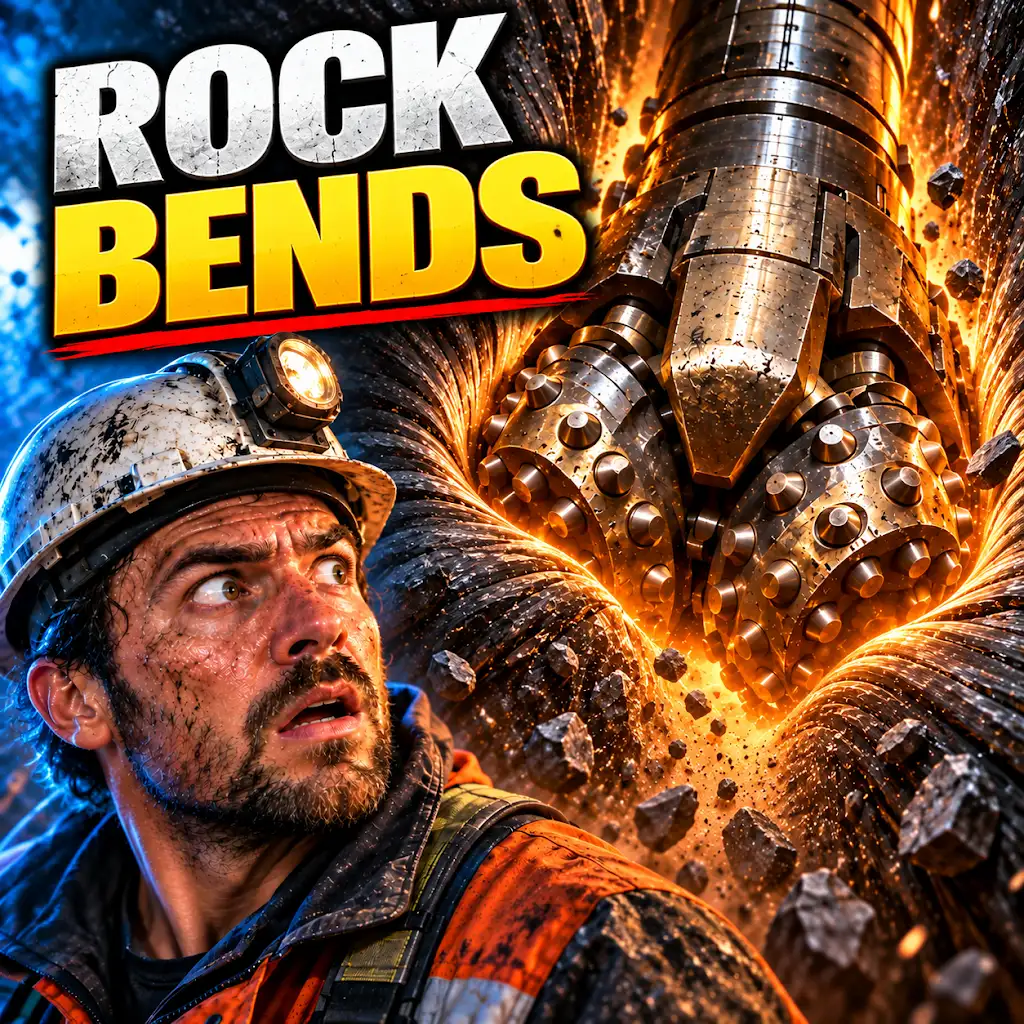
We Drilled 12 KM Into Earth—Then the Rock Started Bending
FAQs
1. What is the significance of 12 kilometers compared to Earth’s radius?
12 kilometers is approximately the distance from the Earth’s surface to the stratosphere, which is the second major layer of Earth’s atmosphere.
2. How does 12 kilometers compare to the Earth’s radius?
The Earth’s radius is about 6,371 kilometers, so 12 kilometers is a very small fraction of the Earth’s total radius.
3. What can be found at 12 kilometers above the Earth’s surface?
At 12 kilometers above the Earth’s surface, one would be in the lower portion of the stratosphere, where the ozone layer is located.
4. How does the atmosphere change at 12 kilometers above the Earth?
At 12 kilometers above the Earth, the atmosphere is thinner and the air pressure is significantly lower compared to the surface.
5. What is the significance of understanding the distance of 12 kilometers compared to Earth’s radius?
Understanding the distance of 12 kilometers compared to Earth’s radius helps provide perspective on the scale of the Earth and the different layers of the atmosphere.