
The Kola Peninsula, a vast, rugged expanse in the far north of Russia, might seem like an unlikely cradle for groundbreaking scientific discovery. Dominated by tundra, taiga, and a stark, windswept coastline, it offers a harsh beauty that has long captivated explorers and geologists. Yet, beneath this imposing natural canvas lies a testament to human curiosity and a relentless pursuit of knowledge: the Kola Superdeep Borehole. This ambitious, decades-long drilling experiment, initiated during the Soviet era, was not merely an endeavor to extract resources; it was a daring expedition into the very heart of our planet, aiming to unravel the Earth’s deepest secrets.
The idea of probing the Earth’s interior had long fascinated scientists, but the technological and financial hurdles were immense. The Soviet Union, however, with its strong emphasis on scientific advancement and a willingness to commit vast resources to ambitious projects, saw an opportunity. The Kola Peninsula was chosen for several key reasons, making it an ideal location for such an unprecedented undertaking.
Strategic Location and Scientific Rationale
The peninsula offered a unique geological setting. Its ancient Archean craton, a stable and relatively undeformed part of the Earth’s continental crust, provided a more accessible window into deeper geological layers compared to younger, more tectonically active regions. Scientists theorized that by drilling here, they could bypass the complex sedimentary layers often found in other parts of the world and reach the pristine metamorphic rocks of the lower crust and potentially even the upper mantle. The primary scientific goal was to understand the composition, structure, and physical properties of the Earth’s crust at depths previously only accessible through theoretical models and indirect geophysical measurements. This wasn’t about oil or gas; it was about fundamental geology.
Political Ambition and the Space Race Analogy
The Kola Superdeep Borehole can also be seen as a product of its time, a period of intense geopolitical rivalry between the United States and the Soviet Union. While the Space Race captured the public imagination, the Soviets also sought to dominate in other scientific arenas. Deep drilling represented a terrestrial “race to the center,” a demonstration of technological prowess and scientific ambition that would rival any extraterrestrial achievement. The project was a flagship endeavor, intended to showcase Soviet engineering capabilities and scientific leadership on a global scale. It was a project imbued with national pride and a desire to push the boundaries of human exploration.
The Kola Peninsula deep drilling experiment, which aimed to explore the Earth’s crust and gather valuable geological data, has drawn significant attention in the scientific community. For those interested in learning more about similar groundbreaking research, you can read an insightful article on the topic at Freaky Science, where various scientific endeavors are discussed, highlighting the importance of deep drilling projects in understanding our planet’s structure and history.
The Herculean Task of Drilling
The sheer scale of the Kola Superdeep Borehole project was staggering. It was not simply a matter of digging a hole; it involved overcoming immense engineering challenges, developing specialized equipment, and maintaining operations in an unforgiving environment for an extended period. The process was a marathon, not a sprint, demanding innovation at every stage.
Technological Innovations and Adaptations
Drilling to extreme depths presented unprecedented technical hurdles. Standard drilling techniques were insufficient, and Soviet engineers had to innovate and adapt existing technologies. The immense pressure and temperature at depth, coupled with the abrasive nature of the rock, placed extraordinary stress on drilling equipment. Specialized drill bits, made from advanced alloys and designed to withstand extreme wear, were developed. The muds used to lubricate the drill bit and flush out cuttings also had to be formulated to perform under high temperatures and pressures, a significant challenge in itself. The logistics of transporting equipment and personnel to the remote site, and then maintaining a constant supply chain, were also considerable feats of engineering and planning.
The Squeezing Reality of Pressure and Temperature
As the drill bit descended, so did the ambient conditions. The deeper the hole, the more intense the pressure and temperature became. At the final depth, the rocks were subjected to pressures equivalent to those found miles beneath the ocean, and temperatures that could melt lead. These conditions not only tested the equipment but also warped the borehole itself. The immense pressure caused the borehole walls to squeeze inwards, leading to significant borehole closure. This phenomenon required continuous monitoring and interventions to keep the borehole open, often involving repeated drilling and casing operations. The rocks themselves, under these extreme conditions, behaved in ways that were not always predictable, presenting ongoing challenges for the drilling teams.
Unearthing Unexpected Discoveries
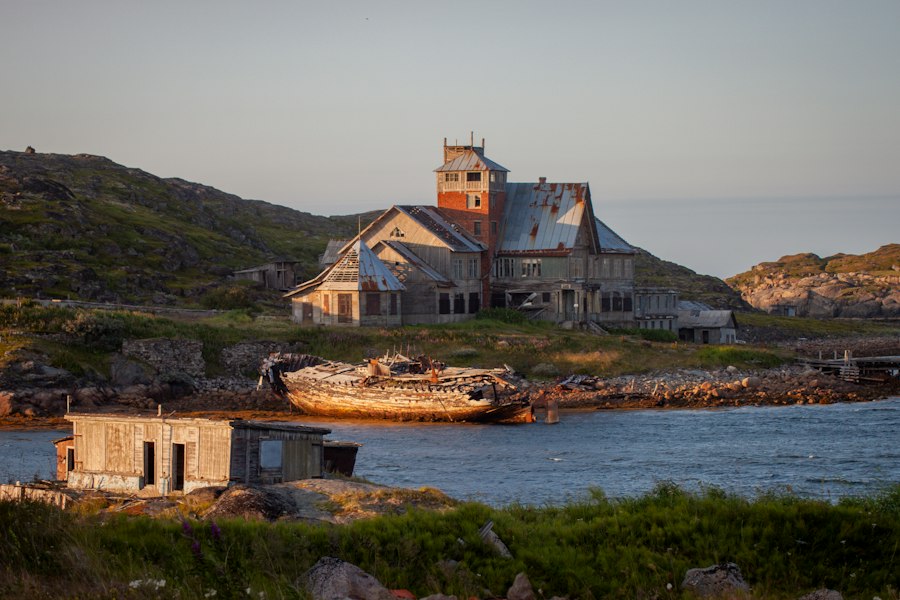
The deeper the Kola Superdeep Borehole went, the more it challenged existing geological theories. The data gathered, though sometimes difficult to interpret, provided a wealth of information that fundamentally altered our understanding of the Earth’s crust.
The Nature of the Lower Crust
Perhaps the most surprising discovery was the composition of the lower crust. Geologists had long assumed that as they drilled deeper, they would encounter increasingly dense and mafic rocks, akin to basalt. However, at Kola, the deep crust was found to be composed of metamorphosed sedimentary rocks, similar to those found at shallower depths, but significantly altered by heat and pressure. This indicated that the processes of crustal formation and modification were far more complex and dynamic than previously understood. The presence of these seemingly “out-of-place” rocks at such depths suggested a history of tectonic events and material transport that reshaped the crust over geological time.
The Revelation of Ancient Life
Another astonishing finding was the discovery of fossilized microorganisms at depths previously thought to be sterile. Microscopic plankton, dating back hundreds of millions of years, were found embedded in the rock layers. This discovery was profound, suggesting that life could persist in environments far more extreme than previously imagined, and that the Earth’s deep biosphere was a far more extensive and ancient entity. These findings challenged the conventional view of life being confined to the surface and shallow subsurface, opening up new avenues of research into extremophiles and the potential for life in extraterrestrial subsurface environments.
The Puzzle of Seismic Discontinuities
The Kola Borehole also provided crucial data for understanding seismic discontinuities, the boundaries within the Earth where seismic wave speeds change abruptly. The famous Mohorovičić discontinuity (Moho), marking the boundary between the crust and the mantle, was probed. While the Moho was reached, its depth and characteristics were not entirely consistent with geophysical models based on seismic wave propagation alone. The borehole data offered a more direct, albeit complex, picture of the transition zone, revealing the intricate geological fabric that underlies the seemingly homogenous seismic boundaries. This direct sampling provided a crucial calibration point for interpreting seismic surveys globally.
The Scientific Legacy and Ongoing Impact
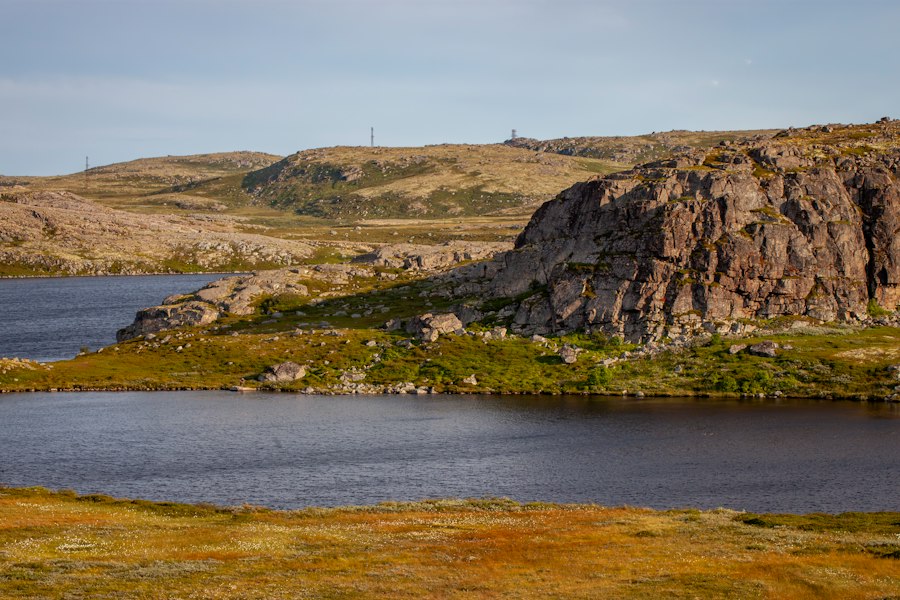
Although the drilling project officially ceased in the early 1990s, the scientific legacy of the Kola Superdeep Borehole continues to resonate within the geological community. The data collected and the insights gained have had a lasting impact on numerous scientific disciplines.
A Cornerstone for Crustal Studies
The Kola Superdeep Borehole remains a vital reference point for studies of continental crust. The rock samples retrieved from extreme depths provide an unparalleled archive of geological history and processes. These samples are still being analyzed, revealing new details about metamorphism, fluid circulation, and the long-term evolution of the Earth’s crust. The project set a new benchmark for deep crustal exploration, influencing the design and objectives of subsequent drilling projects worldwide. Its data has been integrated into global crustal models, enhancing our understanding of continental architecture and its formation.
Inspiring Future Explorations
The Kola experiment, despite its challenges and eventual cessation, serves as a powerful inspiration for future deep Earth exploration. It demonstrated that with sufficient ingenuity and commitment, humanity can indeed penetrate the Earth’s hidden layers. The lessons learned in overcoming technical obstacles and interpreting complex data are invaluable for planning future, even more ambitious, drilling projects. Scientists are now considering new approaches and technologies to further probe the Earth’s mantle, building upon the foundational work laid at Kola. The quest to understand our planet’s interior is far from over, and the Kola Superdeep Borehole has charted a course for that ongoing journey.
The Kola Peninsula deep drilling experiment has provided invaluable insights into the Earth’s crust and its geological processes. For those interested in exploring more about the implications of such deep drilling projects, a related article discusses the potential for discovering ancient microbial life and the challenges faced during these extreme explorations. You can read more about it in this fascinating piece here.
The Enduring Mystery of the Deep Earth
| Parameter | Value | Unit | Notes |
|---|---|---|---|
| Location | Kola Peninsula, Russia | – | Site of the deep drilling experiment |
| Maximum Depth Reached | 12,262 | meters | Deepest artificial point on Earth |
| Start Year | 1970 | – | Drilling commencement |
| End Year | 1994 | – | Drilling stopped due to temperature and technical issues |
| Maximum Temperature Recorded | 180 | °C | Higher than expected temperature at depth |
| Drilling Purpose | Scientific Research | – | Study of Earth’s crust composition and properties |
| Rock Types Encountered | Granite, Gneiss, Amphibolite | – | Varied metamorphic and igneous rocks |
| Core Sample Length | 7,500 | meters | Length of continuous core samples retrieved |
| Scientific Discoveries | Microfossils, High Porosity Rocks | – | Unexpected findings at great depth |
The Kola Superdeep Borehole, though no longer actively drilling, has left an indelible mark on our understanding of the planet. It has shown us that the Earth’s interior is not a static, inert mass, but a dynamic and complex system that continues to hold profound mysteries. The experiment serves as a potent reminder that even in the most familiar of realms, the depths of our own planet, there remain secrets waiting to be unraveled.
The Unfinished Symphony of Geology
The journey to the Earth’s center is far from complete. While Kola provided an unprecedented glimpse into the lower crust, the mantle and core remain largely enigmatic. The questions raised by the Kola findings, such as the precise mechanisms of crustal formation and the extent of subsurface life, continue to drive scientific inquiry. Future endeavors, perhaps employing novel drilling technologies or advanced remote sensing techniques, will undoubtedly build upon the pioneering work at Kola, pushing the boundaries of our knowledge even further into the Earth’s enigmatic depths. The pursuit of understanding the Earth is a continuous process, an unfinished symphony of geological discovery, and the Kola Peninsula project was a pivotal movement in that grand composition.

We Drilled 12 KM Into Earth—Then the Rock Started Bending
FAQs
What is the Kola Peninsula deep drilling experiment?
The Kola Peninsula deep drilling experiment was a scientific project conducted in Russia in the 1970s and 1980s to drill deep into the Earth’s crust.
How deep did the Kola Peninsula drilling reach?
The Kola Peninsula drilling reached a depth of 12,262 meters (40,230 feet), making it the deepest hole ever drilled by humans.
What was the purpose of the Kola Peninsula deep drilling experiment?
The main purpose of the Kola Peninsula deep drilling experiment was to study the Earth’s crust and its composition at great depths, as well as to explore the possibility of drilling even deeper in the future.
What were some of the scientific discoveries made during the Kola Peninsula drilling experiment?
During the drilling, scientists discovered unexpected high temperatures and pressures at depths much shallower than predicted, as well as encountering unexpected geological formations.
What impact did the Kola Peninsula deep drilling experiment have on the scientific community?
The Kola Peninsula deep drilling experiment provided valuable insights into the Earth’s crust and geology, leading to advancements in our understanding of the planet’s structure and processes.