
The tantalizing mystery of what lies beneath our feet has captivated humanity for centuries. From ancient myths of subterranean realms to modern scientific endeavors to probe the planet’s deepest recesses, the allure of the Earth’s core remains a powerful draw. This article embarks on a conceptual journey, not through a physical descent, but through an exploration of our current scientific understanding of this enigmatic inner sanctum. We will peel back the layers of our planet, examining the distinct regions that constitute its structure, and delve into the processes that shape its dynamic interior.
Our planet is not a homogeneous ball of rock. Instead, it is a complex, stratified system, much like an onion, with distinct layers that differ in composition, temperature, and physical properties. Scientists have pieced together this intricate architecture through indirect methods, primarily by studying seismic waves generated by earthquakes. These waves travel through the Earth, their speed and direction changing as they encounter different materials, providing crucial clues about the planet’s internal makeup.
The Crust: Our Familiar, Yet Diverse Surface
The outermost layer, the crust, is the thinnest and most familiar part of the Earth. It is here that we live, build our cities, and cultivate our food. However, even this relatively thin shell is far from uniform.
Continental Crust: The Stable Continents
Continental crust, which forms the landmasses, is thicker and less dense than oceanic crust. It is predominantly composed of granite and other felsic rocks. Its age varies significantly, with some portions dating back billions of years, bearing witness to the Earth’s early history. The tectonic plates, which are responsible for earthquakes and volcanic activity, are essentially rafts of lithosphere, including the crust and the uppermost part of the mantle, floating on the more fluid asthenosphere below.
Oceanic Crust: The Dynamic Ocean Floors
Oceanic crust, found beneath the oceans, is thinner, denser, and younger than its continental counterpart. It is primarily composed of basalt. This type of crust is constantly being created at mid-ocean ridges, where magma rises from the mantle, solidifies, and spreads outwards. Conversely, it is subducted, or pulled back into the mantle, at ocean trenches, a key process in plate tectonics.
The Mantle: The Vast Majority of Earth’s Volume
Beneath the crust lies the mantle, a colossal layer that makes up about 84% of the Earth’s volume. It is a region of extremely hot, dense rock, though its exact composition and behavior have been the subject of much scientific inquiry. The mantle is not a single, uniform entity but rather exhibits significant variations in its physical state.
The Lithosphere: The Rigid Outer Shell
The lithosphere, as mentioned earlier, encompasses the crust and the rigid, uppermost portion of the mantle. It is this rigid layer that is broken into tectonic plates. The thickness of the lithosphere varies, being thinner under oceanic crust and thicker under continental crust.
The Asthenosphere: The Flowing Foundation
Below the lithosphere lies the asthenosphere, a semi-fluid layer within the upper mantle. This is where the “plastic flow” occurs, allowing the tectonic plates to move. The rock here is hot enough to deform and flow very slowly over geological timescales, though it remains solid. This slow convection within the asthenosphere is the primary driver of plate tectonics.
The Transition Zone and Lower Mantle: Deeper Transformations
As we descend further into the mantle, the pressure and temperature increase dramatically. The transition zone, located between approximately 410 and 660 kilometers depth, witnesses significant mineralogical changes as olivine, the dominant mineral in the upper mantle, transforms into denser polymorphs under increasing pressure. The lower mantle, extending to the core-mantle boundary, is the largest section of the mantle. While still predominantly silicate rock, its composition and mineral structures are subjected to immense pressures, leading to unique crystalline forms.
Drilling deep into the Earth reveals fascinating insights about our planet’s structure and composition, but it also poses significant challenges and risks. For an in-depth exploration of what happens when we attempt to penetrate the Earth’s crust, you can read a related article on Freaky Science that discusses the scientific endeavors and the unexpected findings from deep drilling projects. To learn more, visit Freaky Science.
The Heart of the Planet: The Earth’s Core
At the very center of our planet lies the Earth’s core, a realm of extreme temperatures and pressures, composed primarily of iron and nickel. It is the engine that drives many of the Earth’s most important phenomena, including its magnetic field.
The Outer Core: The Dynamo in Motion
The outer core is a liquid layer, approximately 2,400 kilometers thick, situated between the mantle and the inner core. The immense heat within this layer, generated by the residual heat from Earth’s formation and the radioactive decay of elements, causes the iron and nickel to melt and churn.
The Convection Engine: Generating the Magnetic Field
The vigorous convection currents within the liquid outer core, driven by thermal and compositional differences, are believed to be the source of Earth’s magnetic field. This process, known as the geodynamo, generates electrical currents that, in turn, produce a global magnetic field. This field shields the Earth from harmful solar radiation and is essential for life as we know it. The complex and dynamic nature of these currents is responsible for the observed variations and occasional reversals of the Earth’s magnetic poles.
Compositional Insights: A Metallic Sea
Geochemical models and seismic data suggest that the outer core is primarily composed of iron (about 85%) and nickel (about 5%), with smaller amounts of lighter elements like sulfur, oxygen, and silicon. The precise composition of these lighter elements is a subject of ongoing research, as they play a crucial role in determining the physical properties of the outer core and its ability to generate a magnetic field.
The Inner Core: A Solid Sphere of Iron
The innermost part of the Earth is the inner core, a solid sphere with a radius of about 1,220 kilometers. Despite being hotter than the outer core, the immense pressure at this depth prevents the iron and nickel from melting.
Extreme Conditions: Unimaginable Heat and Pressure
Temperatures in the inner core are estimated to be around 5,200 degrees Celsius, comparable to the surface of the Sun. The pressure is equally staggering, exceeding 3.6 million atmospheres. These extreme conditions make direct study of the inner core impossible, and our understanding relies on sophisticated modeling and indirect evidence.
Growth and Evolution: A Continuous Process
The inner core is not static; it is believed to be slowly growing as the outer core cools and solidifies at the inner core boundary. This process of solidification releases latent heat, contributing to the convection in the outer core. The exact mechanism of this growth and its implications for Earth’s evolution are areas of active research.
Unveiling the Depths: Methods of Exploration
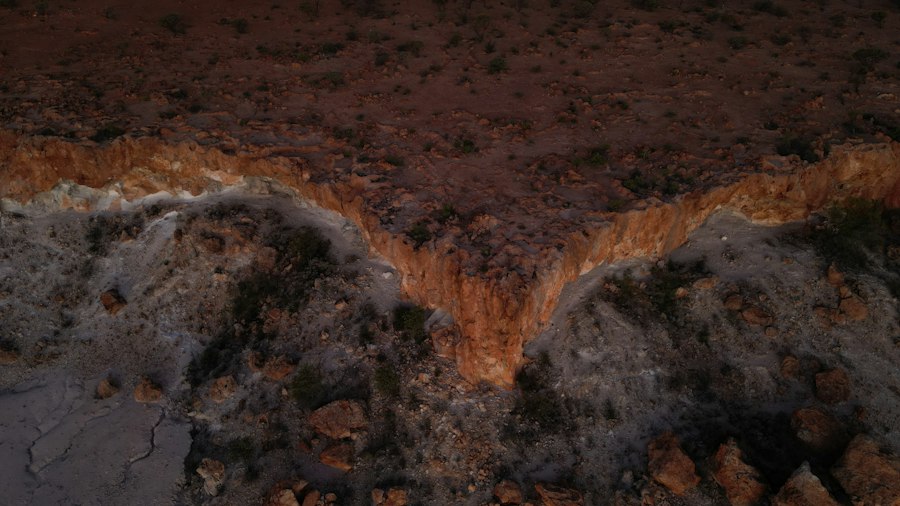
Since direct physical access to the Earth’s core is currently impossible, scientists rely on a variety of ingenious indirect methods to glean information about its composition, structure, and dynamics.
Seismology: Listening to Earthquakes
Seismology is arguably the most powerful tool for understanding Earth’s interior. By analyzing the behavior of seismic waves generated by earthquakes, scientists can create detailed maps of the planet’s internal structure.
P-waves and S-waves: Seismic Wave Detectives
There are two main types of seismic waves: P-waves (primary waves) and S-waves (secondary waves). P-waves are compressional waves that can travel through solids, liquids, and gases, while S-waves are shear waves that can only travel through solids. The way these waves refract (bend) and reflect off different layers within the Earth, as well as their varying speeds, provides crucial information about the density and physical state of each region. The “shadow zones” where S-waves cannot be detected, for instance, clearly indicate the presence of a liquid outer core.
Seismic Tomography: 3D Imaging of the Earth’s Interior
Similar to medical CT scans, seismic tomography uses a vast network of seismometers to record seismic waves from numerous earthquakes. By analyzing the travel times of these waves through different paths, scientists can create three-dimensional images of the Earth’s interior, revealing variations in density and temperature that correspond to different geological structures and processes.
Geophysics: Measuring Earth’s Properties
Beyond seismology, various geophysical methods provide further insights into Earth’s interior.
Gravity Measurements: Detecting Density Variations
Subtle variations in Earth’s gravitational field, measured by satellites and ground-based instruments, can reveal the presence of denser or less dense materials beneath the surface. These variations can help map out geological features and understand the distribution of mass within the Earth.
Magnetic Field Studies: The Geodynamo’s Signature
The study of Earth’s magnetic field, its strength, direction, and historical variations, provides direct evidence for the processes occurring in the outer core. Paleomagnetism, the study of the Earth’s past magnetic field recorded in rocks, allows scientists to reconstruct past magnetic field configurations and understand how the geodynamo has evolved over geological time.
Laboratory Experiments and Theoretical Modeling: Simulating Extreme Conditions
To complement observational data, scientists conduct high-pressure and high-temperature experiments in laboratories to recreate the conditions found deep within the Earth.
Diamond Anvil Cells: Recreating Core Pressures
Diamond anvil cells are specialized devices that can generate pressures millions of times greater than atmospheric pressure, allowing researchers to study the behavior of minerals under conditions similar to those in the Earth’s core.
Computational Modeling: Numerical Simulations of Earth’s Processes
Advanced computational models are used to simulate the complex processes of convection in the mantle and outer core, the formation and evolution of the magnetic field, and the behavior of materials under extreme pressure and temperature. These models help test hypotheses and predict the behavior of Earth’s interior.
The Engine of Change: Processes Shaping the Interior
The Earth’s interior is not a static entity; it is a dynamic system where heat and material are constantly in motion, driving the geological processes that shape our planet’s surface.
Mantle Convection: The Slow Dance of Rock
The most significant process driving geological change is mantle convection. Heat from the Earth’s core, along with heat generated by radioactive decay within the mantle itself, creates convection currents. Hotter, less dense material rises, while cooler, denser material sinks.
Plumes and Superplumes: Upwellings from the Deep
These convection currents can manifest as plumes of hot rock rising from the deep mantle. Large-scale upwellings, known as superplumes, are thought to be responsible for massive volcanic events like the Deccan Traps, which occurred millions of years ago.
Subduction Zones: The Return Journey
At the other end of the convection cycle, dense oceanic plates sink back into the mantle at subduction zones, carrying material from the surface back into the Earth’s interior. This continuous cycle of upwelling and downwelling is fundamental to plate tectonics.
Core-Mantle Interactions: A Crucial Boundary
The boundary between the mantle and the outer core is a region of intense interaction and exchange.
Thermal and Chemical Exchange: Driving Forces
Heat flows from the core into the mantle, influencing mantle convection. Conversely, material from the mantle can sink and interact with the core, potentially altering its composition and dynamics. The D” layer, a complex region just above the core-mantle boundary, is thought to be a site of significant thermal and chemical exchange.
Influence on Magnetic Field: A Symbiotic Relationship
The thermal regime at the core-mantle boundary is crucial for sustaining the geodynamo. Variations in heat flow from the core can influence the convection patterns in the outer core, thereby affecting the Earth’s magnetic field.
The Geodynamo: Earth’s Protective Shield
As discussed, the geodynamo, operating within the liquid outer core, generates Earth’s magnetic field. This field is not constant; it fluctuates in strength and direction over time.
Magnetic Field Reversals: A Natural Phenomenon
Geological records show that Earth’s magnetic field has reversed its polarity numerous times throughout history. These reversals, while not fully understood, are thought to be a natural consequence of the complex and chaotic nature of the fluid motion in the outer core.
Implications for Life: Protection and Navigation
The magnetic field shields life on Earth from the damaging effects of solar wind and cosmic rays. It also plays a vital role in navigation for many species, including humans. Understanding the dynamics of the geodynamo is crucial for predicting future changes in our planet’s protective shield.
Drilling deep into the Earth reveals fascinating insights about our planet’s structure and composition. As scientists explore the depths, they uncover valuable information about geological processes, the formation of minerals, and even the potential for geothermal energy. For a deeper understanding of the implications and discoveries associated with such endeavors, you can read more in this informative article on Freaky Science. This exploration not only enhances our knowledge of Earth’s inner workings but also raises questions about the environmental impact of deep drilling activities.
The Enduring Enigma: Future Directions and Unanswered Questions
| Depth (km) | Temperature (°C) | Pressure (MPa) | Rock Type | Notable Effects |
|---|---|---|---|---|
| 0 – 1 | 15 – 40 | 0 – 10 | Soil, Sedimentary Rocks | Normal surface conditions, breathable air |
| 1 – 5 | 40 – 150 | 10 – 50 | Sedimentary to Metamorphic Rocks | Increased heat, rock becomes harder |
| 5 – 10 | 150 – 300 | 50 – 100 | Metamorphic Rocks | Rock plasticity increases, drilling becomes difficult |
| 10 – 20 | 300 – 500 | 100 – 200 | Upper Mantle Rocks (Peridotite) | Extreme heat and pressure, rock partially melts |
| 20 – 40 | 500 – 900 | 200 – 400 | Lower Mantle Rocks | Rock behaves plastically, drilling nearly impossible |
| 40+ | 900+ | 400+ | Outer Core (Liquid Iron and Nickel) | Molten metal, no solid rock, extreme conditions |
Despite significant advances in our understanding, the Earth’s core and interior remain subjects of intense scientific inquiry. Many fundamental questions still await definitive answers.
The Precise Composition of the Core: Lighter Elements and Beyond
While we know the core is largely iron and nickel, the exact proportion and identity of lighter elements within the outer and inner core continue to be debated. These lighter elements significantly influence the core’s melting point, density, and magnetic properties. Understanding their presence is crucial for refining our models of the geodynamo and core evolution.
The Anisotropy of the Inner Core: A Structured Heart?
Recent seismic studies suggest that the inner core might not be perfectly uniform but could exhibit anisotropy, meaning its seismic wave propagation properties vary with direction. This could indicate a degree of internal structure, possibly related to the alignment of iron crystals under immense pressure, or the presence of lighter solid alloys. The exact nature and origin of this anisotropy are key areas of research.
The Mechanism of Magnetic Field Reversals: Unraveling the Chaos
While we acknowledge that magnetic field reversals occur, the precise mechanisms that trigger these reversals and the time scales involved are still not fully understood. Detailed modeling and analysis of paleomagnetic data are crucial for unraveling this complex phenomenon.
The Role of Deep Mantle Reservoirs: Storage and Release of Material
The existence and influence of deep mantle reservoirs, such as large low-shear-velocity provinces (LLSVPs) that are denser than surrounding mantle material, are still being investigated. Their potential role in storing and releasing material, influencing mantle plumes, and even impacting the core-mantle boundary warrants further exploration.
The Interplay of Core, Mantle, and Surface: A Connected System
Ultimately, the ultimate goal of studying Earth’s interior is to understand how the processes occurring deep within the planet influence the geological activity we observe on the surface, from volcanic eruptions and earthquakes to the long-term evolution of continents and oceans. The journey to understanding the Earth’s core is an ongoing testament to human curiosity and our persistent quest to unravel the mysteries of our own planet. As technology advances and our analytical capabilities improve, we move closer to a comprehensive understanding of what lies beneath, a realm that is as vital to our existence as the air we breathe.

We Drilled 12 KM Into Earth—Then the Rock Started Bending
FAQs
What is the deepest hole ever drilled into the Earth?
The Kola Superdeep Borehole in Russia holds the record for the deepest hole ever drilled into the Earth, reaching a depth of about 7.5 miles (12 kilometers).
What happens when you drill deep into the Earth?
As you drill deeper into the Earth, the temperature and pressure increase significantly. The rock formations become more dense and solid, making it harder to continue drilling.
Can drilling deep into the Earth cause earthquakes?
Drilling deep into the Earth can potentially trigger small earthquakes, especially if the drilling process disrupts the natural stress and pressure within the rock formations.
What are the main challenges of drilling deep into the Earth?
Some of the main challenges of drilling deep into the Earth include high temperatures, high pressures, hard rock formations, and the risk of encountering unexpected geological features.
What are the benefits of drilling deep into the Earth?
Drilling deep into the Earth allows scientists to study the Earth’s crust, mantle, and even the Earth’s core. It also provides valuable information about the Earth’s history, geology, and natural resources.