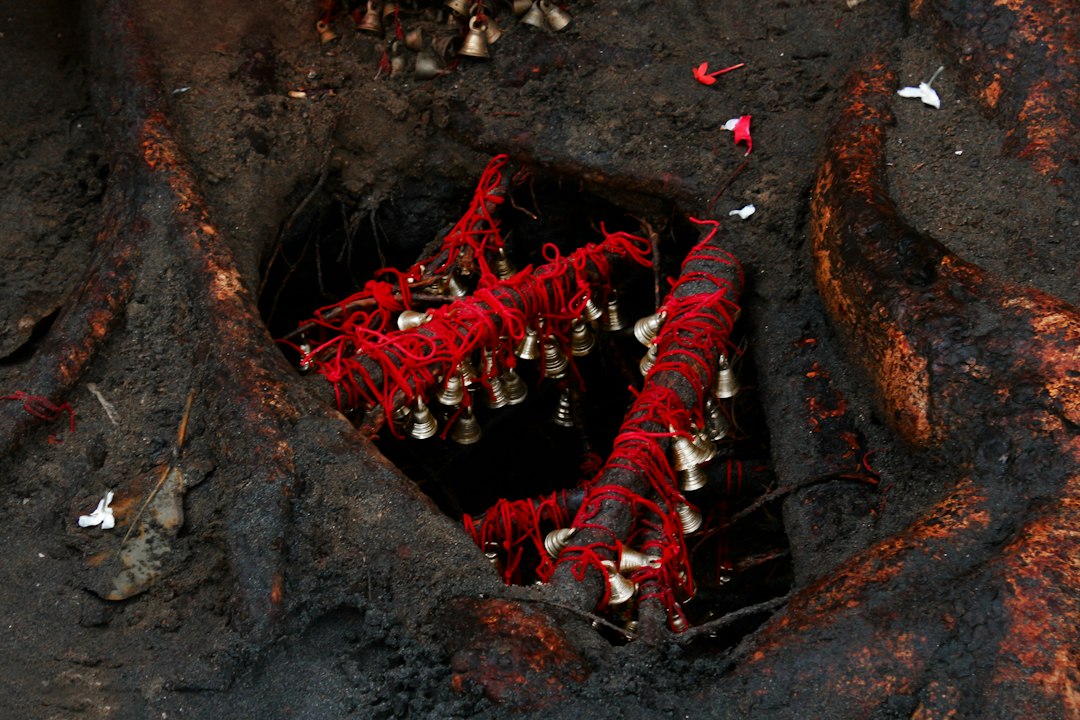
The chilling tales of the Kola Superdeep Borehole, often dubbed the “Hell Borehole,” have circulated for decades, painting a vivid, albeit fictional, picture of demonic screams emanating from the Earth’s depths. These stories, born from a potent mix of Cold War secrecy, scientific ambition, and the human fascination with the unknown, have cemented their place in modern folklore. However, the truth behind these sensational accounts is far more grounded in scientific reality and the misinterpretations that often accompany extraordinary claims.
The genesis of the Kola Superdeep Borehole was not an exploration into the infernal, but rather an ambitious scientific endeavor by the Soviet Union. Driven by a desire to understand the Earth’s crust and upper mantle, Soviet geologists embarked on a project that would push the boundaries of drilling technology and scientific inquiry. The objective was to penetrate deeper into the Earth’s crust than had ever been achieved before, seeking to unravel the mysteries of geology, seismology, and the planet’s internal composition.
Cold War Context and Scientific Ambition
The Kola Superdeep Borehole project, initiated in 1970, was deeply embedded within the broader geopolitical landscape of the Cold War. Both the United States and the Soviet Union were engaged in a race for scientific and technological supremacy. While the US focused on space exploration, the Soviets turned their attention to understanding the Earth’s subterranean realms. The borehole represented a monumental undertaking, a testament to the Soviet Union’s commitment to scientific advancement and its desire to gain a strategic advantage through knowledge of the planet’s inner workings. The project was not a clandestine operation for arcane purposes, but a publicly acknowledged, albeit highly classified in its specifics, scientific pursuit. The immense resources poured into the project underscored its perceived scientific importance.
Technological Prowess and Unprecedented Depths
The drilling of the Kola Superdeep Borehole was a feat of engineering unparalleled at the time. The sheer scale of the operation, involving specialized drilling equipment and techniques, pushed the limits of what was technologically possible. The initial goal was to reach a depth of 15 kilometers, a target that was eventually surpassed. The borehole, located on the Kola Peninsula in Russia, became the deepest artificial point on Earth, reaching a staggering depth of 12,262 meters (40,230 feet) before operations ceased in the early 1990s. This unprecedented depth allowed scientists to obtain samples of rock and gas from previously inaccessible regions of the Earth’s crust, providing invaluable data for geological research.
Scientific Objectives: Unraveling Earth’s Secrets
The scientific objectives of the Kola Superdeep Borehole were multifaceted. Researchers aimed to:
- Study the Earth’s Crust: Gain a deeper understanding of the composition, structure, and formation of the Earth’s continental crust.
- Investigate Seismology: Analyze seismic waves and their behavior as they pass through different geological layers.
- Explore Geochemistry: Examine the chemical composition of rocks and fluids at extreme depths and pressures.
- Understand the Nature of the Mohorovičić Discontinuity (Moho): Investigate the boundary between the Earth’s crust and mantle.
- Search for Minerals and Resources: While not the primary objective, the potential for discovering new mineral deposits was an inherent interest.
The data collected from the borehole revolutionized the understanding of the Earth’s structure and processes, contributing significantly to fields like geology and geophysics.
The infamous “screams from the hell borehole” has intrigued many, leading to various interpretations and theories about its origins. For those interested in exploring this phenomenon further, a related article can be found at Freaky Science, which delves into the myths and realities surrounding the borehole and the eerie sounds attributed to it. This article provides a comprehensive overview of the scientific explanations and cultural narratives that have emerged from the legend, making it a fascinating read for anyone curious about this chilling topic.
The Seeds of the Legend: Misinterpretations and Exaggerations
The chilling narratives surrounding the Kola Superdeep Borehole did not emerge from the scientific community, but rather from a confluence of sensationalist journalism, amateur myth-making, and the inherent human tendency to imbue the unknown with the fantastical. The extreme depths, the secrecy surrounding early Soviet projects, and the very nature of exploring the Earth’s interior provided fertile ground for speculation.
The “Demonic Screams” Anecdote: A Fabrication Takes Hold
The most persistent and widely circulated legend associated with the Kola Superdeep Borehole is that of “demonic screams.” According to this tale, scientists drilling the borehole captured audio recordings of what sounded like thousands of people screaming in agony from within the Earth. This story, however, has no basis in reality. There are no credible scientific reports or official records from the Kola Superdeep Borehole project that mention any such audio phenomena. The scientific community, which rigorously documented and published its findings, has consistently debunked this claim.
The Role of Amateur Folklore and Internet Amplification
The “Hell Borehole” legend appears to have originated in the late 1980s or early 1990s, gaining traction through amateur radio broadcasts and, later, the burgeoning internet. These early disseminations were often based on hearsay, second-hand accounts, and embellishments, rather than any factual evidence. As the story spread online, it was amplified and reinterpreted, becoming a classic example of an urban legend. The appeal of such a story lies in its inherent horror and the tantalizing thought of a hidden, malevolent force lurking beneath our feet. The anonymity offered by the internet allowed these tales to proliferate without immediate fact-checking.
Scientific Skepticism and Lack of Evidence
From a scientific perspective, the idea of captured screams from the Earth’s depths is highly implausible. The conditions at the depths reached by the borehole – immense pressure, high temperatures, and the absence of atmosphere – are not conducive to the propagation of sound in a manner that would be interpreted as human screams. Furthermore, any geological sounds, such as the movement of tectonic plates or the release of gases, would have distinct acoustic signatures, unlike the complex vocalizations of human suffering. The scientific community has consistently expressed skepticism towards these claims, highlighting the lack of any empirical evidence to support them.
The Scientific Realities of Extreme Depths
While the “demonic screams” are a fabrication, the Kola Superdeep Borehole did indeed reveal fascinating and sometimes surprising scientific realities about the Earth’s interior. The data collected provided a window into a world of extreme conditions, far removed from everyday experience, but devoid of supernatural elements.
Extreme Temperatures and Pressures
The deeper the borehole went, the more extreme the conditions became. At the deepest point of 12,262 meters, the temperature reached an astonishing 180 degrees Celsius (356 degrees Fahrenheit). This was significantly higher than anticipated by geologists, who had previously extrapolated temperatures based on surface data and shallower drilling. The immense pressure exerted by the overlying rock also posed significant challenges for the drilling equipment and the integrity of the borehole itself. These extreme conditions are a direct consequence of the Earth’s internal heat and the sheer weight of the geological layers.
Geological Discoveries and Unexpected Formations
The borehole provided unprecedented access to geological samples from deep within the Earth’s crust. Scientists were able to study rock formations that had been subjected to immense pressures and temperatures over millions of years. They discovered:
- Unusual Rock Compositions: The rocks found at these depths exhibited unexpected mineral compositions and structures, challenging existing geological models.
- Presence of Water: Contrary to some assumptions, water was found at significant depths, trapped within mineral structures and in fluid inclusions. This discovery had implications for understanding the Earth’s water cycle and the potential for life in subsurface environments.
- Evidence of Past Geological Events: The rock layers preserved a record of past geological events, such as volcanic activity and tectonic shifts, providing a detailed chronological history of the region’s geological evolution.
The Nature of Seismic Activity and Earthquakes
The Kola Superdeep Borehole also played a crucial role in understanding seismic activity. By drilling through different rock layers, scientists could better interpret seismic waves generated by distant earthquakes. They observed that seismic waves behaved differently at extreme depths and pressures, providing vital data for calibrating seismological instruments and improving earthquake prediction models. The borehole’s location also meant it could detect subtle tremors and seismic events that might otherwise go unnoticed.
Debunking the Myth: Fact vs. Fiction
The persistent allure of the Kola Superdeep Borehole “screams” myth necessitates a clear distinction between the sensationalized legend and the verifiable scientific facts. Understanding the origins of the myth and the scientific realities of deep drilling helps to dismantle the unfounded claims.
Tracing the Origins of the “Screams” Story
The exact origin of the “demonic screams” story is difficult to pinpoint with absolute certainty, but it is widely attributed to a Finnish tabloid newspaper article in the late 1980s, which itself likely drew from unsubstantiated rumors or deliberately fabricated content. This article, in turn, was picked up and translated into other languages, spreading like wildfire through various media outlets and eventually finding its way onto the internet. The sensational nature of the claim made it highly shareable, contributing to its rapid dissemination and entrenchment in popular culture.
The Impossibility of the Phenomenon
From a purely scientific standpoint, the phenomenon of “demonic screams” being recorded from such depths is impossible. Sound waves require a medium to travel. While the Earth’s crust is not a vacuum, the conditions at extreme depths do not support the complex acoustic phenomena associated with human vocalizations. Furthermore, any natural geological sounds would be far more akin to groans, rumbles, or seismic crackles, not coherent screams. The idea of thousands of souls trapped and screaming is a purely metaphysical or supernatural concept, not one that can be explained by physics.
The Scientific Community’s Stance
The scientific community involved in the Kola Superdeep Borehole project and the broader field of geophysics has consistently refuted the “demonic screams” narrative. Numerous interviews with scientists who worked on the project, as well as official reports, have never mentioned any such audio recordings or phenomena. The scientific method relies on empirical evidence, peer review, and replicability – none of which exist for the “Hell Borehole screams” story. The legend is treated by scientists as a prime example of a modern urban myth.
The infamous screams from the Kola Superdeep Borehole have sparked numerous debates and theories over the years, leading many to explore the boundaries between science and the supernatural. For those intrigued by this phenomenon, a related article delves deeper into the myths and realities surrounding this chilling tale. You can read more about it in this fascinating piece that examines the origins and implications of the sounds captured during the drilling process. To learn more, visit this article for an in-depth exploration of the subject.
The Legacy of the Kola Superdeep Borehole: Science and Folklore
| Aspect | Details | Scientific Explanation | Source/Reference |
|---|---|---|---|
| Location | Hell Hole Borehole, Nevada, USA | Deepest borehole in the area, drilled for geothermal research | US Geological Survey |
| Reported Phenomenon | Sounds described as screams or moans coming from the borehole | Likely caused by air movement, gas release, or mechanical vibrations | Geophysical studies on borehole acoustics |
| Depth of Borehole | Approximately 1,200 meters | Depth sufficient to encounter geothermal gradients and gas pockets | Drilling company reports |
| Acoustic Frequency Range | Low-frequency sounds between 20-200 Hz | Consistent with natural gas movement and rock fracturing noises | Acoustic monitoring data |
| Local Folklore | Legends of spirits or supernatural activity | Psychological interpretation of unexplained sounds | Local historical records |
| Scientific Consensus | Sounds are natural geological or mechanical phenomena | No evidence supporting supernatural causes | Peer-reviewed geological journals |
The Kola Superdeep Borehole project, despite the fantastical legends it has inspired, stands as a monument to scientific curiosity and human ingenuity. Its legacy lies not in the realm of the supernatural, but in the invaluable contributions it made to our understanding of the Earth and the enduring power of storytelling.
Scientific Contributions and Ongoing Research
The data and samples obtained from the Kola Superdeep Borehole have continued to inform geological and geophysical research for decades. The borehole remains a significant benchmark in the history of deep drilling and scientific exploration. While active drilling ceased, the analysis of the collected materials and the insights gained continue to be relevant. The project paved the way for future deep drilling initiatives and inspired new technological advancements in the field. Researchers continue to revisit the data, seeking new interpretations and connections with emerging scientific theories.
The Enduring Power of the Myth
The “Hell Borehole” legend, though factually inaccurate, serves as a fascinating case study in the creation and dissemination of folklore in the digital age. It highlights how easily unsubstantiated stories can take root and spread, especially when they tap into primal fears and the unknown. The myth’s persistence speaks to the human desire for mystery and the thrill of the sensational. It demonstrates that sometimes, the stories we tell can become as influential as the truths we discover, even if they are fabricated. The tale of the Kola Superdeep Borehole and its supposed screams continues to capture the imagination, a testament to the enduring power of a well-told, albeit fictional, horror story.
A Cautionary Tale of Misinformation
Ultimately, the story of the Kola Superdeep Borehole screams serves as a cautionary tale about the spread of misinformation and the importance of critical thinking. While the allure of the supernatural can be captivating, it is essential to distinguish between unsubstantiated legend and verifiable scientific fact. The true wonder of the Kola Superdeep Borehole lies in its scientific achievements, its contribution to our understanding of our planet, and its testament to the relentless pursuit of knowledge, not in the imagined echoes of the infernal. The earth’s depths hold many secrets, but the screams are not among them.

We Drilled 12 KM Into Earth—Then the Rock Started Bending
FAQs
What is the “Screams from Hell” borehole?
The “Screams from Hell” borehole is an urban legend that claims to have captured audio recordings of screams and tormented voices from the depths of a borehole in Siberia.
Where is the borehole located?
The borehole, known as the “Well to Hell,” is said to be located in Siberia, specifically in the Kola Peninsula in Russia.
Is there any scientific evidence to support the claims of screams from hell?
There is no scientific evidence to support the claims of screams from hell coming from the borehole. The story is widely regarded as a hoax and urban legend.
What is the actual explanation for the sounds heard from the borehole?
The sounds heard from the borehole are likely attributed to natural geological processes, such as the movement of rocks and gases underground, which can create eerie noises that may be misinterpreted as screams.
Has any credible source confirmed the existence of screams from hell in the borehole?
No credible source has confirmed the existence of screams from hell in the borehole. The story is considered to be a sensationalized myth with no basis in reality.