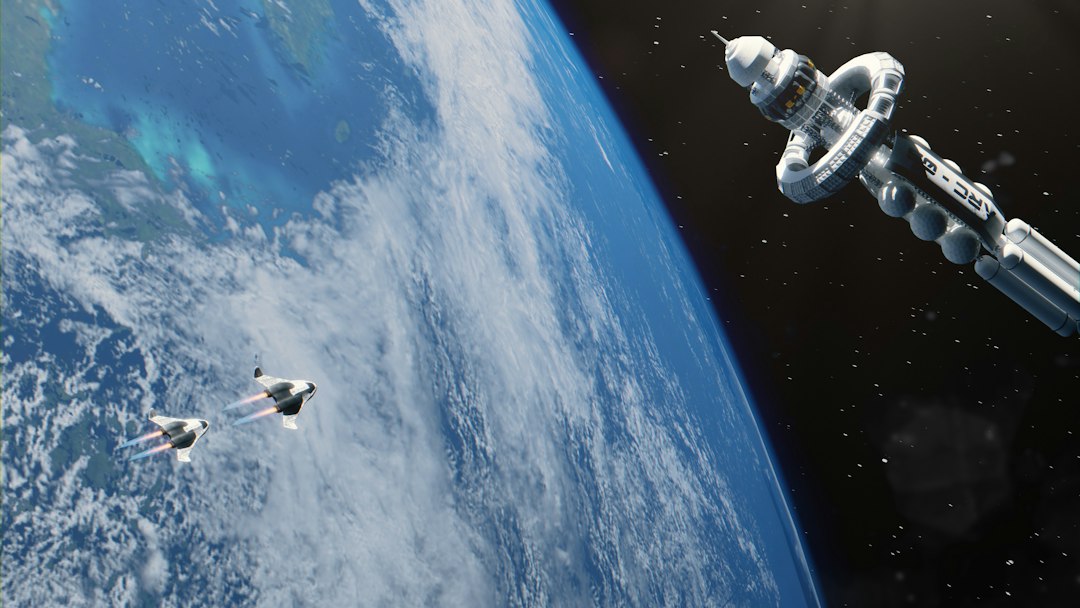
Navigating the vast, silent expanse of space presents a unique set of challenges, vastly different from the familiar principles that govern flight on Earth. Without the dense atmosphere to provide lift and control surfaces like wings and rudders, spacecraft must employ entirely different methods to move, steer, and stabilize themselves. This article delves into the ingenious ways engineers have devised to make these celestial vessels dance through the vacuum, exploring the fundamental physics and the sophisticated technologies that allow them to navigate the cosmos.
The most striking contrast between terrestrial and extraterrestrial navigation lies in the fundamental nature of the environment. On Earth, air, with its inherent properties of density and flow, is the medium through which aircraft interact. Wings, with their carefully sculpted aerodynamic profiles, generate lift by creating a pressure difference as air flows over and under them. Control surfaces – ailerons, elevators, and rudders – alter airflow to induce rotations and translations, allowing pilots to guide their machines with precision.
The Tyranny of the Vacuum
Space, however, is a near-perfect vacuum. The incredibly low density of particles means there is virtually no medium for conventional aerodynamic forces to act upon. Wings would be utterly useless. Similarly, attempting to “steer” by pushing against nonexistent air is futile. This absence of resistance necessitates a complete rethinking of propulsion and control. Instead of pushing against something external, spacecraft must rely on internal forces or the interaction with fundamental forces of nature to achieve their objectives.
Newton’s Third Law: The Universal Engine
The bedrock principle that underpins all spacecraft maneuvering is Newton’s Third Law of Motion: “For every action, there is an equal and opposite reaction.” This law, famously illustrated by a rocket expelling gas, is the primary mechanism by which spacecraft generate thrust. By expelling mass in one direction, the spacecraft is propelled in the opposite direction. This is not about “pushing off” anything, but rather about the internal exchange of momentum. The more mass ejected, and the faster it is ejected, the greater the resulting thrust.
The Concept of Impulse
The effect of thrust over time is known as impulse. Impulse is the change in momentum of an object. For a spacecraft, this means that by firing its engines for a specific duration and at a specific rate, engineers can precisely control the change in the spacecraft’s velocity. This controlled change in velocity is the fundamental way a spacecraft alters its course, speed, and orientation.
Spacecraft maneuver in the vacuum of space using a variety of methods that do not rely on traditional wings, which are ineffective in the absence of an atmosphere. Instead, they utilize thrusters and reaction wheels to change their orientation and trajectory. For a deeper understanding of the principles behind spacecraft steering and the technology involved, you can read more in this related article: How Spacecraft Steer Without Wings. This article provides insights into the engineering challenges and solutions that enable spacecraft to navigate the vastness of space.
Propulsion Systems: The Driving Force
The heart of any spacecraft’s ability to maneuver lies in its propulsion systems. These systems are designed to generate the necessary thrust, either for major orbital changes or for fine-tuning its position and attitude. The diversity of these systems reflects the varied demands placed upon spacecraft, from long-duration interplanetary journeys to precise station-keeping.
Chemical Propulsion: The Workhorse
The most common type of propulsion used in spacecraft is chemical propulsion. This involves the controlled combustion of propellants, typically a fuel and an oxidizer, to produce hot gases that are expelled through a nozzle. The rapid expansion and acceleration of these gases generate thrust.
Solid Rocket Motors
Solid rocket motors are essentially large fireworks. They contain a pre-mixed solid propellant that burns from the inside out when ignited. Once ignited, they cannot be throttled or shut off, making them ideal for initial boosts or large, short-duration burns, such as those used in the initial stages of launch vehicles.
Liquid Rocket Engines
Liquid rocket engines offer greater control. They store fuel and oxidizer in separate tanks and pump them into a combustion chamber where they are ignited. By controlling the flow rates of these propellants, engineers can precisely throttle the engine, shut it down, and restart it. This flexibility is crucial for orbital maneuvers and complex trajectory adjustments.
Monopropellant Systems
A simpler form of liquid propulsion, monopropellant systems use a single propellant that decomposes when it passes over a catalyst. While less powerful than bipropellant systems, they are simpler, lighter, and more reliable, making them ideal for attitude control and small orbital corrections. Hydrazine is a common monopropellant.
Bipropellant Systems
Bipropellant systems use two separate propellants – a fuel and an oxidizer – which react vigorously when mixed and ignited. These systems are more complex but generate significantly higher thrust and exhaust velocities, making them suitable for larger orbital changes and spacecraft main engines.
Electric Propulsion: Efficiency Over Raw Power
While chemical rockets provide high thrust for rapid maneuvers, they are relatively inefficient in terms of propellant usage, especially for long missions. Electric propulsion systems, on the other hand, offer much higher specific impulse (a measure of propellant efficiency) at the cost of lower thrust. This makes them ideal for long-duration missions where small, continuous accelerations can achieve significant velocity changes over time.
Ion Thrusters
Ion thrusters work by ionizing a propellant, typically xenon gas, and then accelerating these ions using electric and magnetic fields. The high exhaust velocity of these ions generates thrust. While the thrust is very low (comparable to the weight of a piece of paper), their extreme efficiency allows them to gradually increase a spacecraft’s velocity over months or even years, enabling missions to distant planets with significantly less propellant.
Hall Effect Thrusters
Similar to ion thrusters, Hall effect thrusters also use electric and magnetic fields to accelerate ions. However, they use a different mechanism for ionization and acceleration, often resulting in higher thrust densities than traditional ion thrusters, while still maintaining high efficiency.
Cold Gas Thrusters
The simplest form of propulsion, cold gas thrusters simply expel a pressurized inert gas, such as nitrogen. They provide very low thrust and are typically used for precise attitude control and very small trajectory adjustments, where high efficiency is not a primary concern and simplicity is valued.
Attitude Control: Steering and Stabilization
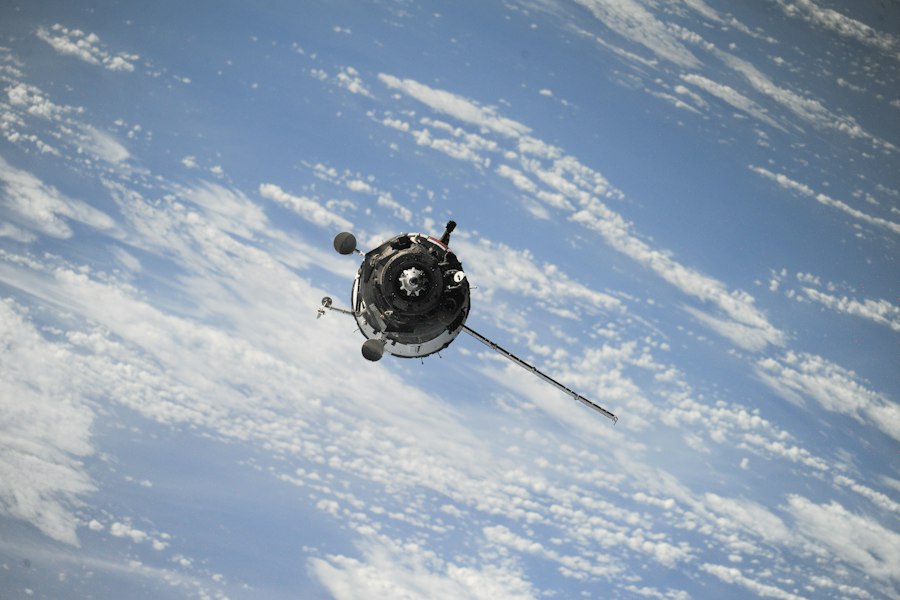
Beyond simply moving from one point to another, spacecraft must be able to control their orientation, or attitude. This is essential for pointing instruments at targets, orienting solar panels towards the sun, and maintaining stable communication links.
Reaction Wheels: The Gyroscopic Ballet
Reaction wheels are one of the most important tools for attitude control. These are essentially flywheels that can be spun up or down electronically. According to the principle of conservation of angular momentum, when a reaction wheel spins in one direction, the spacecraft itself will rotate in the opposite direction.
The Principle of Conservation of Angular Momentum
When the reaction wheel’s speed is increased, it gains angular momentum. To conserve the total angular momentum of the spacecraft-wheel system, the spacecraft must gain an equal and opposite amount of angular momentum, causing it to rotate. Conversely, slowing down the wheel imparts angular momentum to the spacecraft in the direction of the wheel’s original rotation.
Momentum Dumping
Over time, reaction wheels can become saturated, meaning they have spun up to their maximum speed in a particular direction. To desaturate them, spacecraft often use thrusters to counteract the accumulated momentum, effectively “dumping” the excess angular momentum into space.
Control Moment Gyroscopes (CMGs)
Control Moment Gyroscopes are a more powerful version of reaction wheels. Instead of spinning the wheel itself, the CMG spins a large, massive flywheel at a constant high speed. The spacecraft then uses actuators to tilt the axis of this spinning flywheel. This tilting action, due to gyroscopic precession, imparts a significant torque on the spacecraft, allowing for much larger and faster attitude changes than with reaction wheels. CMGs are commonly used on the International Space Station and large satellites for precise attitude control.
Thrusters for Attitude Control
While reaction wheels and CMGs are often the primary means of attitude control for fine adjustments and stabilization, small thrusters are indispensable for larger or faster attitude maneuvers, as well as for desaturation of reaction wheels. These are typically the same chemical thrusters used for orbital maneuvering, but operated at much lower thrust levels and for very short durations.
Magnetic Torquers: Earth’s Magnetic Embrace
For spacecraft in Earth orbit, magnetic torquers provide an ingenious and propellant-free method of attitude control. These devices are essentially electromagnets. By generating a magnetic field that interacts with Earth’s own magnetic field, they create a torque that can rotate the spacecraft. This method is limited to orbits within Earth’s magnetosphere and is most effective for slower, deliberate attitude changes.
Navigation and Guidance: Knowing Where You Are and Where You’re Going
Maneuvering a spacecraft effectively requires precise knowledge of its current position and velocity (navigation) and the ability to calculate and execute the commands to reach a desired destination (guidance).
Inertial Navigation Systems (INS): The Internal Compass
Inertial navigation systems rely on accelerometers and gyroscopes to track the spacecraft’s motion. Accelerometers measure changes in velocity, while gyroscopes measure changes in orientation. By continuously integrating these measurements, an INS can estimate the spacecraft’s position, velocity, and attitude relative to a known starting point.
Accelerometers and Gyroscopes
- Accelerometers: These devices detect acceleration along one or more axes. By measuring the acceleration experienced by the spacecraft, engineers can infer changes in its velocity and, by integration, its position.
- Gyroscopes: These instruments measure angular velocity. By tracking how the spacecraft rotates, gyroscopes help maintain a stable reference frame and detect any unintended rotations.
Drift and the Need for Updates
A primary challenge with INS is the accumulation of errors over time, a phenomenon known as “drift.” Tiny inaccuracies in the sensors can lead to significant deviations in the estimated position and velocity over long periods. Therefore, INS data must be periodically corrected using external references.
Global Navigation Satellite Systems (GNSS): Space-Based Beacons
For spacecraft operating in Earth orbit, GNSS receivers, such as the Global Positioning System (GPS), provide precise positional information. By receiving signals from multiple satellites, the spacecraft can triangulate its position with high accuracy, effectively correcting any drift from its INS.
Star Trackers: Celestial Landmarks
Star trackers are optical instruments that observe the patterns of stars in the sky. By comparing these patterns to an internal star catalog, the spacecraft can determine its precise orientation with remarkable accuracy. This is crucial for deep space missions where GNSS is unavailable.
Ground-Based Tracking and Command
Throughout a mission, ground stations continuously track spacecraft using radar and telemetry. This data is used to refine the spacecraft’s trajectory, update its onboard navigation systems, and send commands for maneuvers.
Spacecraft maneuver through the vacuum of space using a variety of methods that do not rely on traditional wings, which are ineffective in the absence of an atmosphere. Instead, they utilize thrusters and reaction wheels to change their orientation and trajectory. For a deeper understanding of the innovative technologies that enable these spacecraft to navigate the cosmos, you can explore this fascinating article on spacecraft steering mechanisms. This resource provides insights into the principles of propulsion and control that allow these vehicles to operate efficiently in the vastness of space.
Orbital Mechanics: The Rules of the Cosmic Dance
| Metric | Description | Typical Values |
|---|---|---|
| Reaction Control System (RCS) Thrusters | Small rocket engines used to control spacecraft orientation by producing torque. | Thrust: 0.1 – 500 N Impulse: milliseconds to seconds |
| Momentum Wheels / Reaction Wheels | Flywheels spun at varying speeds to change spacecraft attitude without expelling mass. | Angular momentum: 0.1 – 100 N·m·s Max torque: 0.01 – 0.1 N·m |
| Control Moment Gyroscopes (CMGs) | Gyroscopes that produce torque by changing the orientation of spinning rotors. | Torque output: up to 100 N·m Angular momentum: up to 200 N·m·s |
| Thruster Firing Duration | Time thrusters are fired to adjust spacecraft orientation. | Typically 0.1 – 10 seconds per maneuver |
| Attitude Control Accuracy | Precision of spacecraft orientation control. | Typically within 0.01° to 0.1° |
| Fuel Consumption for Steering | Amount of propellant used by thrusters for attitude adjustments. | Varies widely; often less than 1% of total mission fuel budget |
| Steering Without Wings | Spacecraft rely on thrusters, reaction wheels, and gyroscopes instead of aerodynamic surfaces. | Effective in vacuum where aerodynamic forces are negligible |
Ultimately, all spacecraft maneuvers are governed by the laws of orbital mechanics, the principles that describe how objects move under the influence of gravity. Understanding these principles is crucial for planning and executing effective maneuvers.
Gravity: The Invisible Hand
Gravity is the fundamental force that dictates the motion of celestial bodies. For spacecraft, gravity from planets, moons, and stars exerts a constant pull, shaping their trajectories. Maneuvering in space often involves either counteracting or utilizing these gravitational forces.
Orbital Elements: Describing a Path
An orbit is mathematically described by a set of orbital elements, such as semi-major axis, eccentricity, and inclination. These elements define the shape, size, and orientation of the spacecraft’s path around a celestial body.
Hohmann Transfer Orbits: The Energy-Efficient Path
A Hohmann transfer orbit is an elliptical orbit used to transfer a spacecraft between two circular orbits of different radii in the same plane. It is the most fuel-efficient way to achieve such a transfer, involving two engine burns: one to leave the initial orbit and enter the transfer ellipse, and another to enter the final circular orbit.
Delta-v: The Language of Maneuvers
In orbital mechanics, “delta-v” (Δv) represents the change in velocity required to perform a specific maneuver. It is the fundamental metric used to quantify the propellant requirements for any given trajectory change. Engineers meticulously calculate the Δv needed for each maneuver to ensure sufficient propellant is carried for the mission.
Gravity Assists: Borrowing Cosmic Momentum
Gravity assists, or “slingshot maneuvers,” are a sophisticated technique used to alter a spacecraft’s speed and trajectory by flying close to a planet or moon. As the spacecraft passes by, it gains or loses momentum from the celestial body’s gravitational pull, effectively “borrowing” its orbital energy. This allows spacecraft to reach distant destinations with significantly less propellant than would otherwise be required.
In conclusion, navigating space without wings is a testament to human ingenuity. By harnessing the fundamental principles of physics, particularly Newton’s Third Law, and developing sophisticated propulsion, attitude control, and navigation systems, engineers have enabled spacecraft to traverse the vast distances of our solar system and beyond. The absence of atmosphere, far from being a hindrance, has led to the development of elegant and efficient solutions that allow these robotic emissaries to perform their vital scientific and exploratory missions.

There’s Only One Safe Way Back to Earth From the Moon
FAQs
1. How do spacecraft steer without wings?
Spacecraft use thrusters to steer and maneuver in space. These thrusters expel gas in a specific direction to create thrust, allowing the spacecraft to change its trajectory.
2. What are the different types of thrusters used for steering spacecraft?
There are various types of thrusters used for spacecraft maneuvering, including chemical thrusters, electric propulsion systems, and reaction control systems (RCS). Each type has its own advantages and is used for different purposes.
3. How do spacecraft maintain stability and control without wings?
Spacecraft use onboard computers and sensors to monitor their orientation and make adjustments using thrusters. By carefully controlling the thrust from the thrusters, spacecraft can maintain stability and control without the need for wings.
4. Can spacecraft change direction in space?
Yes, spacecraft can change direction in space by firing their thrusters in specific directions. By adjusting the timing and duration of thruster firings, spacecraft can perform complex maneuvers such as orbit changes, docking with other spacecraft, and avoiding space debris.
5. Are there any limitations to how spacecraft can steer without wings?
While spacecraft can maneuver effectively using thrusters, there are limitations to how quickly they can change direction and how much fuel they can carry for propulsion. These limitations must be carefully considered in mission planning to ensure successful navigation in space.