Apollo’s Return: The Journey Back from the Moon
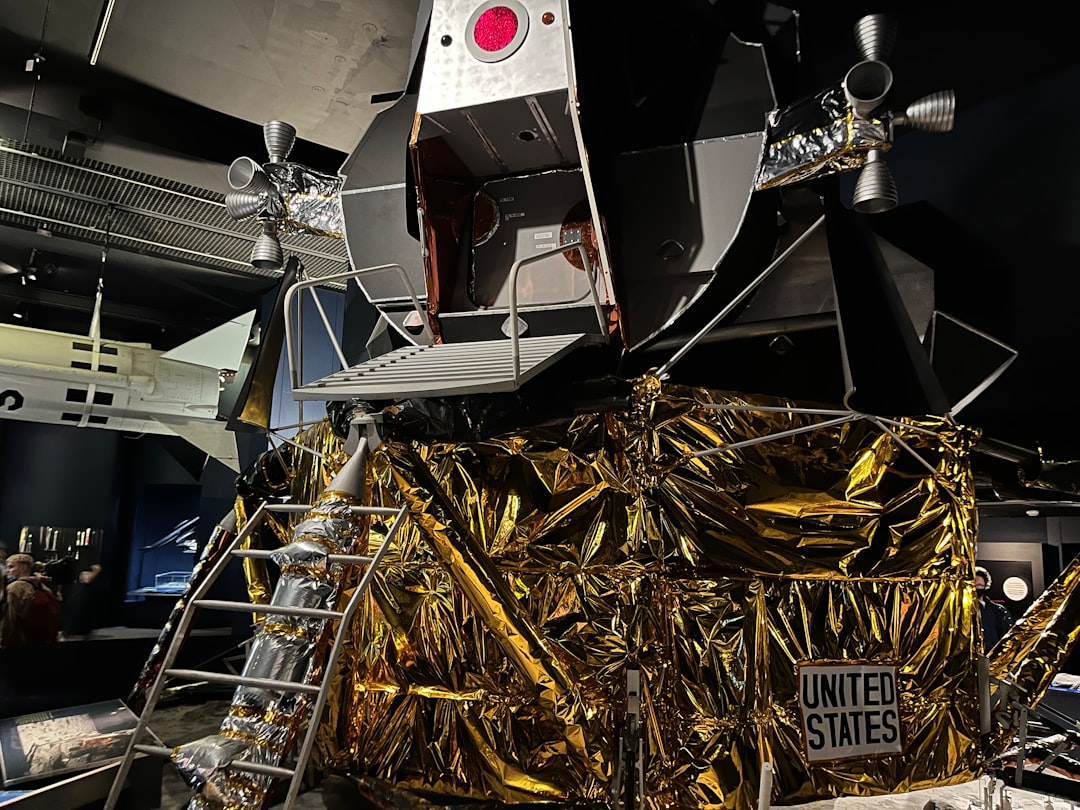
The descent into Earth’s atmosphere was a fiery ballet, a controlled burn that screamed of reentry. For the three astronauts aboard Apollo 11, this was the culmination of a monumental endeavor. After touching the lunar surface, walking on alien soil, and collecting precious samples, the arduous journey back home began. It was a testament to human ingenuity, courage, and the relentless pursuit of the unknown. This was not merely a return; it was the triumphant conclusion of humanity’s first foray beyond its terrestrial cradle, a feat that would forever alter our perspective of ourselves and our place in the cosmos. The Lunar Module, named “Eagle,” had successfully lifted off from the Sea of Tranquility, leaving behind the footprints that would endure for eons, a silent testament to their presence. Now, the Command Module, “Columbia,” carrying Commander Neil Armstrong, Lunar Module Pilot Buzz Aldrin, and Command Module Pilot Michael Collins, was on its own celestial highway, charting a course for the blue marble suspended in the inky blackness.
The dust settled on Tranquility Base. The silence, once broken by the crackle of radio transmissions and the crunch of boots on regolith, returned. The American flag, planted firmly in the lunar soil, stood as a solitary sentinel, a symbol of achievement and exploration. Inside the Eagle, Armstrong and Aldrin prepared for the most critical phase of their lunar excursion: the ascent. This was no simple launch; it was a liftoff from a celestial body with no atmosphere, a feat requiring precise calculations and unwavering trust in the machinery.
The Eagle Ascends
The ascent engine of the Lunar Module, a marvel of engineering, ignited with a powerful roar. The Eagle, carrying the dreams of a nation and the hopes of humanity, rose from the lunar surface. The vibrations were palpable, a reassuring rumble that confirmed the success of this unprecedented maneuver. As they ascended, Armstrong and Aldrin witnessed a spectacle few had ever seen: the Earth, a vibrant jewel of blue and white, hanging in the stark blackness of space. It was a breathtaking panorama, a stark reminder of the distance they had traversed and the home they were yearning to return to. The images they captured, the words they spoke, would resonate through history, painting a picture of this extraordinary moment.
Rendezvous and Docking: A Delicate Dance
Their mission was not yet complete. The Eagle had to rendezvous with the Command Module, Columbia, piloted by Michael Collins, who had been orbiting the Moon alone. This was a delicate dance in the vacuum of space, a precise ballet of orbital mechanics. Collins, a silent guardian in the orbiting spacecraft, had been patiently waiting, his gaze fixed on the approaching Eagle. The docking procedure was fraught with tension, a few centimeters separating life and death. The successful connection of the two spacecraft was a triumph of precision engineering and human skill, a testament to the rigorous training and unwavering focus of the Apollo astronauts. The transfer of Armstrong and Aldrin, along with the lunar samples, back into Columbia marked the final chapter of their lunar sojourn. The Eagle, its mission accomplished, was then jettisoned, a silent sacrifice in the vastness of space, its purpose fulfilled.
The historic Apollo missions not only marked humanity’s first steps on the lunar surface but also showcased the incredible engineering and teamwork required to return safely to Earth. For a deeper understanding of the challenges faced during the Apollo missions and the technological innovations that made the lunar return possible, you can read a related article on this topic at Freaky Science. This resource delves into the intricacies of the mission’s design and execution, providing insights into the legacy of space exploration.
The Trans-Earth Injection: Homeward Bound
With all three astronauts safely back in Columbia, the engines were fired once more, this time to break free from lunar orbit and set a course for Earth. This maneuver, known as the Trans-Earth Injection (TEI), was the definitive step in their journey home. The anticipation in Mission Control was palpable, a mixture of relief and focused determination. Every calculation, every burn, had to be perfect.
The Course is Set
The engine firing was smooth, a gentle push that propelled Columbia away from the Moon and onto its trajectory towards home. The vast expanse of space stretched before them, a familiar yet still awe-inspiring vista. The Earth, once a distant dream, now grew larger with each passing moment, a beacon of hope and familiarity. The astronauts, having achieved the seemingly impossible, now focused on the final leg of their incredible journey. The science experiments were secured, the lunar samples carefully stowed, and the astronauts began to prepare for their re-entry into Earth’s embrace.
The Long Voyage
The journey back was not instantaneous. It was a voyage measured in hours, an extended period of transit through the silent void. During this time, the astronauts reflected on their experiences, the magnitude of their achievement beginning to sink in. They shared their observations, their feelings, and the profound sense of accomplishment that permeated the small spacecraft. The Earth, now a dominant presence in their windows, served as a constant reminder of their destination, a beautiful and welcoming sight after their time in the stark lunar landscape.
Reentry: A Fiery Embrace
As Columbia approached Earth, the focus shifted to the most perilous phase of the mission: reentry. This was the ultimate test of the spacecraft’s heat shield and the astronauts’ courage. The atmosphere, a thin veil of protection for Earth, would become a furnace as Columbia sliced through it.
The Sacrifice of the Service Module
Before reentry, the Service Module, which had provided propulsion and life support during the mission, was jettisoned. This crucial component, having served its purpose, was no longer needed and would burn up in the atmosphere. The Command Module, with its robust heat shield, was the only part designed to withstand the intense heat and deceleration of atmospheric entry. This separation was a critical step, ensuring that only the habitable capsule made its way back to Earth.
The Atmospheric Inferno
The initial entry was marked by a blinding flash as the spacecraft encountered the upper atmosphere. The friction generated immense heat, causing the heat shield to glow incandescently. The spacecraft began to decelerate rapidly, the G-forces pressing the astronauts into their seats. Radio communications were momentarily lost due to the ionized plasma surrounding the capsule, a period of silence that always amplified the tension for Mission Control. Inside Columbia, the astronauts endured the intense heat and pressure, their faith in the spacecraft and their training unwavering. They were riding a meteor, a controlled descent through a celestial inferno, their eyes fixed on the rapidly approaching Earth.
Parachutes and Splashdown: The Final Descent
With the worst of the reentry behind them, the next critical step was the deployment of the parachutes. These fabric behemoths would further slow Columbia’s descent, ensuring a relatively gentle landing.
The Unfurling Giants
As Columbia descended through the atmosphere, at the designated altitude, the drogue chutes were deployed, followed by the main parachutes. These massive parachutes, unfurling like giant flowers, dramatically slowed the capsule’s velocity. The sight of the parachutes, bright against the blue sky, was a profound relief to both the astronauts and the anxious observers on Earth. The controlled descent was a visual confirmation that the mission was nearing its successful conclusion.
A Gentle Return to the Ocean
The final moments were spent descending towards the vast expanse of the Pacific Ocean. The splashdown, though a controlled impact, was still a significant jolt. The capsule, bobbing in the waves, signaled the successful completion of Apollo 11’s journey. The recovery forces, a fleet of ships and helicopters, were already on standby, ready to retrieve the astronauts and their precious cargo. The sound of the splashdown echoed across the water, a triumphant announcement of humanity’s return from the Moon.
The historic Apollo missions not only marked humanity’s first steps on the Moon but also showcased the incredible engineering and teamwork required for such an endeavor. After the astronauts completed their lunar exploration, they faced the critical task of returning safely to Earth, which involved complex maneuvers and precise calculations. For a deeper understanding of the challenges and triumphs of these missions, you can read more in this insightful article about the Apollo program’s legacy at Freaky Science.
The Heroes’ Welcome: A World Transformed
| Metric | Value | Unit | Description |
|---|---|---|---|
| Return Velocity from Moon | 2.38 | km/s | Velocity needed to leave lunar orbit and head back to Earth |
| Earth Re-entry Speed | 11.0 | km/s | Speed of Apollo Command Module entering Earth’s atmosphere |
| Command Module Mass | 5,560 | kg | Mass of the Apollo Command Module during re-entry |
| Heat Shield Temperature | 2,760 | °C | Maximum temperature experienced by the heat shield during re-entry |
| Re-entry Angle | 6.5 | degrees | Angle of descent into Earth’s atmosphere to ensure safe re-entry |
| Time from Lunar Orbit to Earth Splashdown | 3 | days | Duration of return trip from Moon orbit to Earth splashdown |
| Parachute Deployment Altitude | 6,000 | meters | Altitude at which parachutes were deployed for final descent |
| Landing Site | Pacific Ocean | – | Location of Apollo Command Module splashdown on Earth |
The return of Apollo 11 was not just a scientific achievement; it was a global event that captured the imagination of billions. The astronauts, heroes of unprecedented scale, were greeted with parades, accolades, and a profound sense of gratitude.
Quarantine and Debriefing: A Precarious Transition
Upon returning to Earth, the astronauts were placed in quarantine. This was a precautionary measure, a safeguard against the potential introduction of lunar pathogens into Earth’s biosphere. While in isolation, they underwent extensive debriefings, sharing their experiences, observations, and the invaluable data they had collected. This period, though isolating, was crucial for understanding the full scope of their mission and its implications.
A New Era of Exploration
The success of Apollo 11 and the safe return of its crew ushered in a new era of space exploration. The journey back from the Moon was more than just a return of people and samples; it was a return of knowledge, of inspiration, and of a profound realization of humanity’s potential. The footprints left on the Moon served as a constant reminder of what could be achieved when courage, innovation, and collective will converged. The journey back was the final act of a grand drama, a closing chapter that opened the door to countless new possibilities, forever changing our understanding of the cosmos and our place within it. The echoes of their footsteps on the lunar surface reverberated across the globe, inspiring future generations to look up at the night sky and dream of what lies beyond.

There’s Only One Safe Way Back to Earth From the Moon
FAQs
1. How many Apollo missions successfully landed on the Moon?
Apollo missions successfully landed on the Moon.
2. How did Apollo astronauts return to Earth from the Moon?
Apollo astronauts returned to Earth from the Moon by launching from the lunar surface in the Lunar Module and docking with the Command Module in lunar orbit.
3. What was the re-entry process like for the Apollo spacecraft returning from the Moon?
The re-entry process for the Apollo spacecraft returning from the Moon involved the Command Module re-entering Earth’s atmosphere at high speeds, protected by a heat shield to withstand the intense heat generated by friction with the atmosphere.
4. How did the Apollo astronauts splash down in the ocean upon returning from the Moon?
Apollo astronauts splashed down in the ocean upon returning from the Moon as the Command Module descended under parachutes and landed in the designated splashdown area where recovery teams were waiting to retrieve the astronauts.
5. What safety measures were in place for the return journey of the Apollo astronauts from the Moon?
Safety measures for the return journey of the Apollo astronauts from the Moon included redundant systems, extensive training for the astronauts, mission control monitoring, and recovery teams stationed in the splashdown area to assist in the safe return of the astronauts.