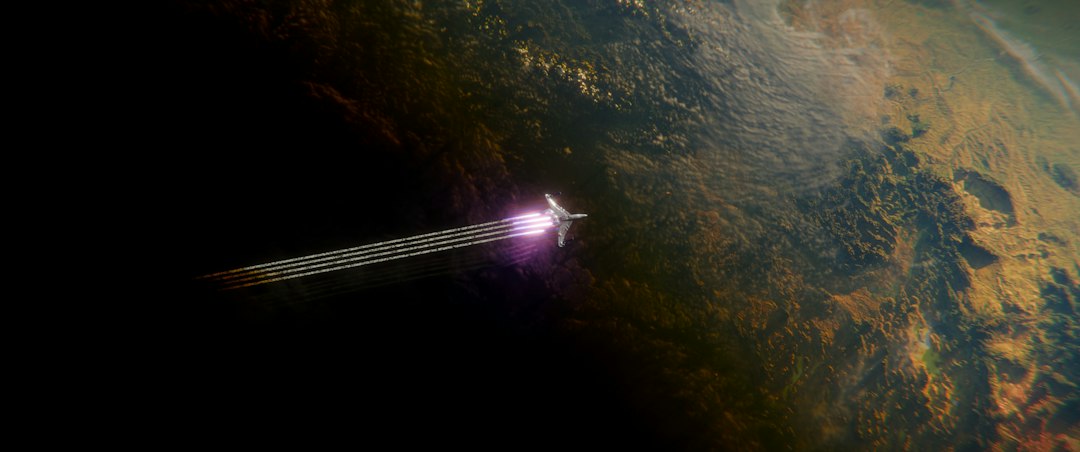
The fiery descent through Earth’s atmosphere is one of the most critical and visually dramatic phases of any space mission. Far from simply being a passive tumble back to Earth, reentry is a precisely controlled deceleration process. Spacecraft, hurtling through the vacuum at speeds exceeding 17,000 miles per hour, must shed an incredible amount of kinetic energy to safely return their crews and payloads. This is not an act of gentle braking, but rather a masterful interplay of physics, engineering, and sheer willpower. The process, often referred to as atmospheric reentry, is a delicate dance with the very air that can both destroy and save.
The fundamental challenge of reentry lies in the sheer velocity of a returning spacecraft. Objects entering Earth’s atmosphere from orbital or interplanetary trajectories possess enormous kinetic energy. This energy must be dissipated somehow. Without a robust mechanism for deceleration, this energy would manifest as destructive heat and overwhelming forces, leading to the disintegration of the spacecraft and its occupants. Imagine a bullet fired from a gun; its immense speed makes it destructive. Now, multiply that speed by a factor of dozens, and you begin to grasp the energy involved in orbital reentry.
Understanding Kinetic Energy
Kinetic energy, the energy of motion, is directly proportional to the mass of an object and the square of its velocity ($KE = \frac{1}{2}mv^2$). This relationship is crucial. Even a small increase in velocity results in a disproportionately larger increase in kinetic energy. For a spacecraft returning from orbit, velocities are so high that the kinetic energy is staggering. For instance, the International Space Station orbits Earth at approximately 17,500 miles per hour (28,000 kilometers per hour). Shedding this kind of energy requires immense forces and sophisticated technologies.
The Physics of Atmospheric Drag
The primary tool for decelerating a spacecraft is atmospheric drag, also known as air resistance. As the spacecraft plunges into the denser layers of the atmosphere, it collides with countless air molecules. Each collision transfers momentum from the spacecraft to the air, effectively slowing the spacecraft down. This process converts the spacecraft’s kinetic energy into heat. While drag is the engine of deceleration, it is also the primary source of the intense heat experienced during reentry. The denser the atmosphere and the faster the spacecraft, the greater the drag force and the more heat is generated.
The Spectacle of Fire
The incandescent glow that accompanies a reentering spacecraft is a testament to the extreme temperatures involved. The rapid compression of air in front of the vehicle, combined with friction, heats the air to thousands of degrees Fahrenheit. This superheated plasma then envelops the spacecraft, radiating light and heat. Understanding and managing this heat is paramount to survivability. Without adequate thermal protection, the spacecraft would melt and burn up.
Understanding how spacecraft slow down during reentry is crucial for ensuring the safety of astronauts and the integrity of the spacecraft. The process involves complex physics, including aerodynamic drag and heat management, which are essential for a successful landing. For a deeper dive into the mechanics of reentry and the technologies involved, you can check out this related article: Freaky Science: The Science of Spacecraft Reentry.
Ablative Heat Shields: The First Line of Defense
The most iconic component of a reentering spacecraft is its heat shield. For many missions, particularly those involving capsules like Apollo, Soyuz, and Dragon, this heat shield is designed to be ablative. Ablation is a process where the material of the heat shield is designed to char, melt, and vaporize. This vaporization is not a failure, but a deliberate mechanism for dissipating heat.
The Science of Ablation
As the heat shield is subjected to the extreme temperatures of reentry, its outer layers begin to break down. This breakdown absorbs a significant amount of thermal energy. The vaporized material then forms a protective layer, or plume, around the spacecraft, which carries away heat and further reduces the direct impact of the hot plasma. Think of it like sweating: when the body heats up, it produces sweat, which then evaporates, taking heat with it. Ablative heat shields perform a similar function on a much grander scale.
Materials Matter: From Cork to Advanced Composites
The materials used in ablative heat shields have evolved significantly over the decades. Early spacecraft, like those in the Mercury and Apollo programs, often used cork-based materials. While effective for their time, these materials had limitations. Modern heat shields utilize advanced composites, such as phenolic resins reinforced with carbon fibers, or specialized ceramic materials. These materials are engineered to withstand specific temperature ranges and ablation rates, providing optimal protection for the duration of reentry. The composition and thickness of the heat shield are carefully calculated based on the spacecraft’s trajectory, mass, and expected reentry conditions.
The Sacrifice: A Necessary Loss
It is important to understand that ablative heat shields are designed to be consumed during reentry. They are a sacrificial layer, intended to protect the spacecraft’s structure and its occupants. After a mission, the heat shield will have significantly eroded, often by several inches. This is a testament to its successful performance. For reusable spacecraft like the Space Shuttle or SpaceX’s Dragon, different thermal protection systems are employed, often involving tiles that can be inspected and reused.
Aerodynamic Deceleration: Shaping the Descent

Beyond the heat shield, the very shape of a spacecraft plays a crucial role in its deceleration. The design of a capsule, with its blunt, rounded profile, is not accidental. This aerodynamic configuration is optimized to maximize drag and manage the forces exerted by the atmosphere.
The Blunt Body Advantage
A blunt-faced spacecraft presents a large surface area to the oncoming airflow. This creates a significant amount of drag, which is essential for slowing the vehicle down. While a more streamlined shape might be more efficient for flight within the atmosphere at lower speeds, the blunt shape is superior for shedding the immense kinetic energy of reentry. The bluntness also helps to create a shock wave that stands off from the vehicle, pushing the hottest plasma away from the surface and further protecting the spacecraft.
Control Surfaces and Stability
Some spacecraft are equipped with control surfaces, such as fins or reaction control thrusters, that can be used to further refine the reentry trajectory and maintain stability. These systems are vital for guiding the spacecraft towards its landing zone and preventing it from tumbling uncontrollably. For capsule-style vehicles, attitude control during reentry is critical to ensure the heat shield faces the direction of travel and that the vehicle remains stable.
The Role of Ballistic Coefficient
The aerodynamic efficiency of a spacecraft is often described by its ballistic coefficient. This is a measure of how effectively an object is slowed by drag. Objects with a low ballistic coefficient (like a blunt capsule) are slowed down more rapidly by drag than objects with a high ballistic coefficient (like a streamlined bullet). Therefore, spacecraft designed for reentry are intentionally engineered to have a low ballistic coefficient.
Parachutes: The Final Slowdown
Once the most intense phase of atmospheric heating has passed and the spacecraft’s velocity has been significantly reduced by drag, parachutes deploy to bring the vehicle to a safe landing speed. This is a critical, multi-stage process that requires precise timing and robust engineering.
The Stages of Deployment
Parachute deployment is typically a phased event. First, a small drogue parachute is released. This parachute is designed to stabilize the spacecraft and further reduce its speed. It is smaller and stronger than the main parachutes, designed to withstand the initial shock of deployment at higher speeds. Once the spacecraft has slowed to a more manageable velocity, the main parachutes, much larger and designed to provide the bulk of the final deceleration, are deployed.
The Forces at Play
Deploying a parachute at high speeds generates immense forces. The parachute canopy must be constructed from incredibly strong materials, and the lines connecting it to the spacecraft must be able to withstand significant tension. The shock of parachute deployment can be felt by occupants of crewed spacecraft, highlighting the power of this final deceleration mechanism.
Different Landing Scenarios
The type of landing dictates the parachute system. For land landings, such as those used by the Soyuz and Dragon spacecraft, parachutes are the primary means of slowing the vehicle to a soft touchdown. For splashdowns, like those of the Apollo capsules or the Orion spacecraft, parachutes also bring the vehicle to a safe speed for impact with the water.
As spacecraft approach Earth for reentry, they must slow down significantly to ensure a safe landing, a process that involves intricate engineering and physics. The heat generated by friction with the atmosphere is immense, requiring advanced thermal protection systems to prevent damage. For a deeper understanding of the science behind these reentry dynamics, you can explore a related article that delves into the various methods used to decelerate spacecraft safely. Check it out here to learn more about the fascinating challenges faced during this critical phase of space travel.
Active Braking: Rocket Power for Precision
| Method | Description | Typical Deceleration (g) | Altitude Range (km) | Key Factors |
|---|---|---|---|---|
| Atmospheric Drag | Spacecraft uses Earth’s atmosphere to slow down by friction and air resistance. | 3 to 8 g | 120 to 40 | Shape of heat shield, velocity, atmospheric density |
| Heat Shield Ablation | Heat shield material burns away, absorbing and dissipating heat generated by friction. | Not directly deceleration but critical for thermal protection | 120 to 40 | Material composition, thickness, reentry angle |
| Parachute Deployment | Parachutes deploy at lower altitudes to further reduce speed for landing. | 0.5 to 2 g | 10 to 5 | Parachute size, deployment timing, atmospheric conditions |
| Retro Rockets / Thrusters | Small rockets fire opposite to velocity to reduce speed before landing. | Variable, up to 5 g | Below 5 | Fuel amount, timing, thrust vectoring |
| Lift Generation (Lifting Reentry) | Spacecraft uses aerodynamic lift to control descent and reduce peak deceleration. | 2 to 5 g | 120 to 40 | Vehicle shape, angle of attack, control surfaces |
While atmospheric drag is the primary method of deceleration, some missions may utilize rocket engines for additional braking or for precise trajectory adjustments during reentry. This is particularly true for spacecraft that need to land in very specific locations or for vehicles that have less reliance on ablative heat shields.
Deorbit Burns
Before a spacecraft even begins its atmospheric reentry, it often performs a “deorbit burn.” This involves firing its engines to reduce its orbital velocity, effectively lowering its orbit and initiating the descent. While not strictly an atmospheric deceleration, it’s a crucial step in preparing for reentry.
Mid-Reentry Corrections
In some cases, small thrusters can be fired during reentry to make minor corrections to the trajectory or attitude. This can be important for maintaining stability or for steering the spacecraft towards its designated landing zone, especially in challenging atmospheric conditions or if unexpected events occur.
Reusable Thermal Protection Systems
For reusable spacecraft like the Space Shuttle or SpaceX’s Starship, which are designed to land like aircraft, different deceleration strategies are employed. These vehicles often use their engines to help slow their descent and fly a controlled approach to a runway. While still relying on aerodynamic forces, the role of engine power is more significant in achieving a controlled landing. These vehicles also utilize robust, reusable thermal protection tiles instead of ablative materials.
Testing and Simulation: Ensuring a Safe Return
The complexity and criticality of reentry necessitate extensive testing and simulation. Engineers spend years meticulously analyzing every aspect of the descent, from the aerodynamic forces to the thermal loads and the performance of the deceleration systems.
Wind Tunnel Testing
Wind tunnels are invaluable tools for studying the aerodynamic behavior of spacecraft during reentry. Scale models are subjected to high-speed airflow to measure drag, lift, and the formation of shock waves. This data helps to refine the spacecraft’s design and predict its performance.
Thermal Analysis and Testing
Predicting and managing the extreme heat of reentry is a monumental task. Sophisticated computer models are used to simulate the thermal environment, and ground-based testing facilities can replicate some of the conditions of reentry to evaluate the performance of heat shield materials and thermal protection systems.
Flight Simulations
Before a spacecraft ever flies, its reentry trajectory is simulated thousands of times. These simulations allow engineers to identify potential failure points, optimize procedures, and ensure that the spacecraft can safely return under a wide range of conditions. Crewed missions also undergo extensive simulator training for their astronauts, so they are prepared for every contingency during reentry.
Flight Data Analysis
After each mission, the data from the reentry phase is meticulously analyzed. This data provides invaluable feedback for improving future designs and procedures. The successful return of every crewed mission is a testament to the rigorous testing and validation that precedes it. The lessons learned from decades of spaceflight have refined our understanding of reentry physics and engineering, making the fiery descent a predictable and, most importantly, survivable event. The dance with atmospheric deceleration is a triumph of human ingenuity, transforming the destructive potential of Earth’s atmosphere into the mechanism for a safe return.

There’s Only One Safe Way Back to Earth From the Moon
FAQs
1. How do spacecraft slow down during reentry?
Spacecraft slow down during reentry by utilizing a combination of aerodynamic drag and heat shields. The spacecraft’s heat shield protects it from the intense heat generated during reentry, while the shape of the spacecraft helps create drag, slowing it down.
2. What role does the atmosphere play in slowing down spacecraft during reentry?
The Earth’s atmosphere plays a crucial role in slowing down spacecraft during reentry. As the spacecraft enters the atmosphere at high speeds, it encounters air resistance, which creates drag and slows down the spacecraft. This process is known as aerobraking.
3. How does the heat shield help in slowing down spacecraft during reentry?
The heat shield on a spacecraft is designed to withstand the extreme heat generated during reentry. As the spacecraft travels through the Earth’s atmosphere, the heat shield absorbs and dissipates the heat, protecting the spacecraft and helping to slow it down by creating drag.
4. What are some techniques used to ensure a safe reentry and landing for spacecraft?
To ensure a safe reentry and landing for spacecraft, engineers use a combination of heat shields, parachutes, and thrusters. Heat shields protect the spacecraft from the intense heat of reentry, parachutes help slow down the spacecraft further as it nears the ground, and thrusters can be used for additional braking and steering during the descent.
5. Why is it important for spacecraft to slow down during reentry?
Slowing down during reentry is crucial for spacecraft to safely return to Earth without burning up or experiencing excessive forces. By slowing down, the spacecraft can dissipate the intense heat generated during reentry and reduce the impact forces upon landing, ensuring a safe return for astronauts and valuable scientific data.