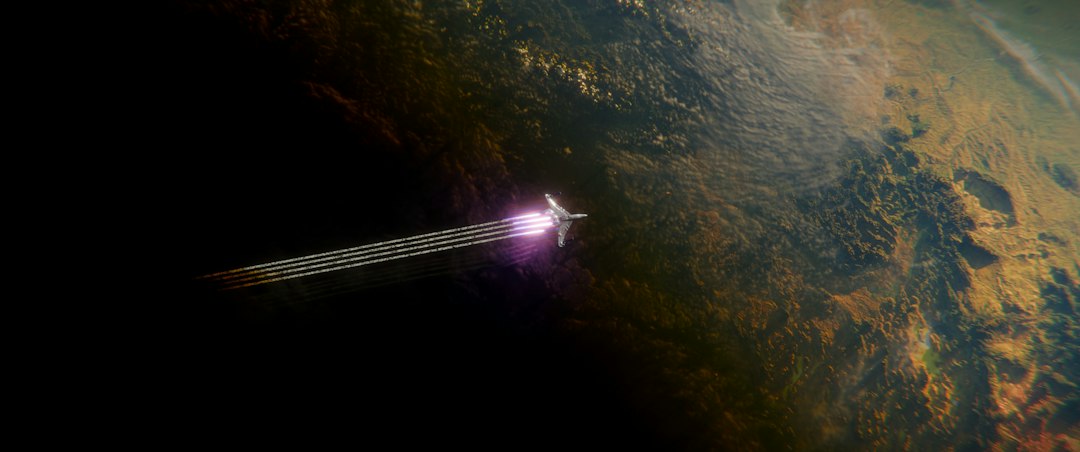
The fiery descent of a spacecraft through Earth’s atmosphere is a spectacle of controlled destruction, a moment where the immense forces of physics are harnessed for a safe return. For minutes, the capsule and its precious cargo vanish from all forms of communication, a phenomenon known as the “reentry blackout.” This enigmatic period, shrouded in plasma and heat, is a critical phase of any space mission, demanding meticulous engineering and a profound understanding of atmospheric physics.
The reentry blackout isn’t an accidental loss of signal; it’s a direct consequence of the extreme conditions generated as a spacecraft plunges into the atmosphere at orbital velocities. As the spacecraft decelerates, friction with the air molecules creates an incandescent cocoon of plasma around it. This ionized gas, a superheated state of matter where electrons are stripped from atoms, acts as an impenetrable barrier to radio waves, effectively silencing communication between the spacecraft and mission control.
The Physics of Plasma: More Than Just Pretty Lights
To grasp the reentry blackout, one must first understand the nature of plasma. Plasma is often referred to as the fourth state of matter, distinct from solid, liquid, and gas. It’s essentially an electrically charged gas, composed of ions and free electrons. At temperatures experienced during reentry, which can reach thousands of degrees Celsius, the atmospheric gases are sufficiently energized to undergo ionization. The intense heat generated by the aerodynamic friction forces molecules apart, liberating electrons and creating a conductive plasma sheath. This plasma conducts electricity and, crucially, absorbs and refracts radio waves, preventing them from propagating through it.
Ionization Thresholds: When Air Becomes a Shield
The degree of ionization required to cause a communication blackout is a critical factor. Not all ionized gases are dense enough or hot enough to completely block radio signals. However, during reentry, the sheer velocity of the spacecraft ensures that the atmospheric compression ahead of it leads to extreme heating and thus significant ionization. The threshold for blackout depends on several factors, including the frequency of the radio waves used, the density of the plasma, and the spacecraft’s trajectory. Lower frequency radio waves are generally more susceptible to absorption by plasma than higher frequencies.
The Role of Heat Shield: A Double-Edged Sword
The heat shield, an indispensable component of any reentry system, is the primary reason for the intense plasma formation. Its material composition and ablative properties are designed to absorb and dissipate the colossal thermal energy generated by atmospheric friction. As the heat shield material burns away, it releases gases that contribute to the plasma sheath. While this ablation is essential for protecting the spacecraft and its occupants from incineration, it directly causes the communication blackout. The very process that ensures survival simultaneously severs the link to Earth.
Ablative Materials: Sacrificial Protection
Ablative heat shields are engineered to char, melt, and vaporize under extreme heat. This sacrificial process draws thermal energy away from the underlying spacecraft structure. Materials like PICA (Phenolic Impregnated Carbon Ablator) or Avcoat have been used in various space programs. The vaporized material forms a boundary layer of gas that separates the superheated plasma from the spacecraft’s surface. This layer, while protecting the craft, also contributes to the plasma’s density and its ability to absorb radio signals. The design and thickness of the heat shield are crucial calculations, balancing the need for sufficient protection against the duration and severity of the blackout.
Altitude and Velocity: The Key Reentry Parameters
The altitude at which reentry occurs and the spacecraft’s velocity are the primary drivers of the plasma formation and, consequently, the blackout. As the spacecraft descends from the vacuum of space, it initially encounters very thin atmospheric layers. However, as it accelerates through these layers, the density of the air increases, leading to a dramatic rise in frictional heating. Orbital velocities, typically around 7.8 kilometers per second (approximately 17,500 miles per hour), are more than sufficient to generate the extreme temperatures required for significant ionization.
The Deorbit Burn: Initiating the Descent
Before reentry can even begin, a precisely timed “deorbit burn” is executed. This maneuver uses onboard thrusters to reduce the spacecraft’s orbital velocity, causing it to begin its descent towards Earth. The duration and intensity of this burn are critical, dictating the entry angle and the subsequent heating rate. A shallower entry angle might lead to longer periods of atmospheric friction and potentially a more prolonged blackout, while a steeper angle could result in higher peak heating rates.
The phenomenon of reentry blackout experienced by NASA spacecraft is a fascinating topic that highlights the challenges of atmospheric reentry. During this critical phase, communication with the spacecraft is temporarily lost due to the intense heat and ionization of the surrounding air. For a deeper understanding of this subject, you can read a related article that explores the science behind reentry blackout and its implications for future space missions. Check it out here: Freaky Science.
Navigating the Silence: Communication Strategies During Blackout
The reentry blackout, though an unavoidable consequence of atmospheric entry, is not a period of complete helplessness. Engineers have developed ingenious strategies to mitigate the risks associated with this communication void and to ensure that critical data is still collected and that the spacecraft’s trajectory can be monitored, albeit indirectly.
Telemetry Through the Plasma: Indirect Monitoring
While direct radio communication is impossible, mission control can still glean valuable information about the spacecraft’s status through other means. Telemetry data collected by onboard sensors can be stored and transmitted once the plasma dissipates. More importantly, ground-based radar systems can track the spacecraft’s trajectory, providing essential information about its altitude, velocity, and orientation. This radar tracking allows controllers to monitor the progress of the reentry and to ensure that the spacecraft is following its planned path.
Radar Tracking: The Eyes in the Sky
Ground-based radar stations are strategically positioned around the globe to monitor spacecraft during their descent. These powerful radar systems emit radio waves that can penetrate the plasma sheath to a certain extent, allowing them to track the physical location and movement of the spacecraft. By analyzing the reflected signals, controllers can deduce the spacecraft’s speed, altitude, and trajectory. This information is vital for confirming that the spacecraft is performing as expected and for making any necessary course corrections, even when direct communication is impossible.
Pre-programmed Trajectories and Autonomous Systems: The Brains of the Operation
Given the uncertainty during the blackout period, spacecraft are equipped with sophisticated pre-programmed trajectories and autonomous systems. These systems are designed to execute critical maneuvers based on pre-calculated parameters and sensor inputs. The onboard computers are essentially “blind” to external commands during the blackout but are programmed to perform the necessary actions for a safe reentry, such as adjusting control surfaces or firing thrusters at specific intervals.
Onboard Computers: The Silent Pilots
The flight computers onboard a spacecraft are incredibly robust and capable. During reentry, they are responsible for managing the vehicle’s attitude, controlling its descent rate, and ensuring the integrity of the heat shield. They rely on internal sensors to measure acceleration, orientation, and atmospheric pressure, and they use this data to execute the pre-defined reentry profile. This autonomy is a testament to the reliability and precision engineering that goes into space missions.
Post-Blackout Communication: The Crucial Handover
Once the spacecraft has passed through the densest part of the atmosphere and the plasma sheath begins to dissipate, communication is re-established. This moment is often met with a collective sigh of relief at mission control. The stored telemetry data can then be downloaded, providing a detailed account of the reentry phase. This data is crucial for post-mission analysis, identifying any anomalies, and informing future mission designs.
Data Recovery: The Treasure Trove of Information
The information gathered during and immediately after reentry is invaluable. It allows engineers to verify the performance of the heat shield, the effectiveness of the guidance and control systems, and the overall integrity of the spacecraft. Any deviations from the expected parameters can be analyzed to understand the underlying causes and to implement improvements for future missions. This iterative process of learning and refinement is central to the advancement of space exploration.
The Science Behind the Silence: Plasma Physics in Action
The reentry blackout is a direct manifestation of plasma physics, a field of science that studies the behavior of ionized gases. The intense heat generated by atmospheric friction causes the air molecules to become ionized, creating a plasma that effectively shields the spacecraft from radio waves. Understanding these phenomena is crucial for designing safe and reliable reentry systems.
Electromagnetic Wave Propagation in Plasma: The Absorption Spectrum
Plasma’s interaction with electromagnetic waves is complex and depends on the wave’s frequency and the plasma’s properties, such as its electron density and temperature. During reentry, the plasma sheath around the spacecraft typically operates within a frequency range where radio waves are strongly absorbed. This absorption occurs because the oscillating electric field of the radio wave can excite the free electrons in the plasma, causing them to absorb energy from the wave and re-emit it in different directions or dissipate it as heat.
Plasma Frequency: The Critical Barrier
A key concept in understanding this interaction is the “plasma frequency.” This is a fundamental property of a plasma, representing the natural frequency at which its electrons oscillate. If the frequency of an electromagnetic wave is below the plasma frequency, the wave can penetrate the plasma. However, if the wave frequency is above the plasma frequency, the plasma acts as a reflective barrier, preventing the wave from passing through. During reentry, the plasma generated is often dense enough and energetic enough to have a plasma frequency that is higher than the frequencies used for typical spacecraft communications.
Ionization Mechanisms: From Friction to Sparks
The ionization of atmospheric gases during reentry is primarily driven by thermal energy. The immense kinetic energy of the spacecraft is converted into heat through collisions with air molecules. This heat is so intense that it breaks the chemical bonds of the gas molecules and strips electrons from their atoms. Other ionization mechanisms, such as impact ionization by energetic electrons and ions, also contribute to the plasma’s formation. The combination of these processes creates a dense, highly conductive plasma.
Molecular Dissociation and Ionization: A Cascade of Energy
As the spacecraft enters the atmosphere, the air molecules in front of it are compressed and heated. This initial heating causes molecular dissociation, where molecules like oxygen and nitrogen break apart into individual atoms. Further heating leads to ionization, where the atoms lose electrons. This process is not instantaneous but occurs in stages, with increasing temperature leading to higher degrees of ionization. At the peak heating phase of reentry, the plasma can be highly ionized, meaning a significant fraction of the atmospheric particles are in an ionic state.
Engineering for the Void: Designing Reentry Systems
The challenge of the reentry blackout has spurred significant innovation in spacecraft design. Engineers must account for this period of communication loss, ensuring that the spacecraft can navigate the treacherous descent and land safely without real-time guidance. This involves a robust combination of materials science, aerodynamics, and sophisticated control systems.
Heat Shield Materials: The First Line of Defense
The choice of heat shield material is paramount. These materials must be able to withstand extreme temperatures and pressures while protecting the spacecraft from ablation. The ablative process not only dissipates heat but also creates a boundary layer of gas that further insulates the spacecraft. The design of the heat shield also considers its shape, which influences the airflow and the distribution of heat across its surface.
Thermal Protection Systems (TPS): A Variety of Solutions
Different spacecraft missions employ various types of Thermal Protection Systems (TPS). For example, the Space Shuttle used reinforced carbon-carbon for its leading edges and ceramic tiles for its underside. The Apollo missions utilized an ablative heat shield made of a phenolic resin composite. Modern capsules like SpaceX’s Dragon and Boeing’s Starliner also use advanced ablative materials. The selection of TPS depends on the specific mission requirements, including the reentry velocity, the expected heat flux, and the duration of the entry.
Aerodynamic Design: Controlling the Descent
The shape of the spacecraft plays a crucial role in managing the forces experienced during reentry. A blunt-shaped capsule, for instance, creates a strong bow shock wave that pushes much of the hot plasma away from the spacecraft’s surface, reducing direct heat transfer. Conversely, a more aerodynamic shape might experience higher surface temperatures. The balance between aerodynamic stability and thermal management is a key consideration in spacecraft design.
Stability and Control Surfaces: Guiding the Fall
During reentry, the spacecraft’s attitude and trajectory need to be precisely controlled. This is achieved through a combination of aerodynamic surfaces (if present) and reaction control thrusters. These systems work in concert to maintain the desired orientation and to make small adjustments to the trajectory as needed. The control systems are designed to be highly responsive and to react to changes in atmospheric conditions and the spacecraft’s motion.
NASA’s spacecraft reentry blackout is a fascinating topic that highlights the challenges faced during the intense heat and pressure of atmospheric reentry. For those interested in learning more about the science behind this phenomenon, you can explore a related article that delves into the complexities of thermal protection systems and the engineering feats required to ensure a safe return to Earth. To read more about these intriguing aspects of space travel, visit this article.
The Future of Reentry: Innovations and Challenges
| Parameter | Description | Typical Values | Impact on Communication |
|---|---|---|---|
| Reentry Altitude | Altitude range where blackout occurs during reentry | 60 km to 120 km | Signal attenuation begins, leading to blackout |
| Plasma Frequency | Frequency of electron oscillations in plasma sheath | Up to several GHz | Blocks radio waves below plasma frequency |
| Blackout Duration | Time period of communication loss during reentry | Up to 3-5 minutes | Complete loss of telemetry and voice signals |
| Electron Density | Density of free electrons in plasma sheath | 10^11 to 10^13 electrons/cm³ | Determines plasma frequency and signal attenuation |
| Frequency Bands Affected | Radio frequency bands impacted by blackout | VHF, UHF, S-band (up to ~3 GHz) | Signal absorption and reflection causing blackout |
| Mitigation Techniques | Methods to reduce or avoid blackout | Use of higher frequency bands, relay satellites, plasma control | Improves communication reliability during reentry |
As humanity pushes further into space, the challenges and opportunities associated with reentry continue to evolve. Innovations in materials science, advanced propulsion, and intelligent control systems promise to make future reentries even safer and more efficient. However, new frontiers in space exploration also present unique reentry scenarios that will require further scientific and engineering advancements.
Reentry from Beyond Earth Orbit: New Frontiers
Missions to the Moon, Mars, and beyond present different reentry challenges compared to low Earth orbit. For example, reentering Earth’s atmosphere from a lunar trajectory involves higher velocities and potentially different atmospheric compositions. Martian reentry is even more complex due to the thin Martian atmosphere, which requires different aerodynamic and thermal protection strategies. Understanding the nuances of these diverse reentry environments is crucial for future interplanetary missions.
Hypersonic Aerodynamics: Pushing the Speed Limit
At the extreme speeds experienced during reentry, the flow of air around the spacecraft becomes hypersonic. This regime of fluid dynamics is characterized by complex shock waves, high temperatures, and significant chemical reactions within the airflow. Studying and modeling hypersonic phenomena is an active area of research, essential for designing spacecraft that can withstand these extreme conditions.
Advanced Materials and Technologies: Beyond Ablation?
While ablative heat shields have proven incredibly effective, researchers are exploring alternative and complementary technologies. These include reusable thermal protection systems, such as advanced ceramic tiles, and active cooling systems. The development of materials that can withstand repeated high-temperature exposure without significant degradation could revolutionize spacecraft design and reduce mission costs.
Computational Fluid Dynamics (CFD): Simulating the Inferno
Computational Fluid Dynamics (CFD) plays a vital role in simulating the complex airflow and heat transfer phenomena during reentry. These sophisticated computer models allow engineers to analyze different design concepts and to predict the performance of heat shields and aerodynamic surfaces under extreme conditions. CFD simulations are essential for optimizing spacecraft design and for ensuring safety during the critical reentry phase.
The Blackout as a Scientific Opportunity: Studying Plasma
While the reentry blackout is primarily viewed as a challenge to overcome, it also presents a unique opportunity for scientific study. The controlled generation of plasma during reentry can be used to conduct experiments and gather data that advance our understanding of plasma physics, particularly in extreme environments. This knowledge can then be applied to other fields, from fusion energy research to atmospheric science. The silence of reentry, though a temporary disconnect, is a window into fundamental scientific principles.

There’s Only One Safe Way Back to Earth From the Moon
FAQs
What is a reentry blackout?
A reentry blackout is a period during a spacecraft’s reentry into Earth’s atmosphere when communication with the spacecraft is lost due to the intense heat and plasma surrounding the vehicle.
Why does a reentry blackout occur?
During reentry, a spacecraft travels at high speeds through Earth’s atmosphere, causing the air in front of it to compress and heat up, creating a plasma sheath that blocks radio signals from reaching or leaving the spacecraft.
How long does a reentry blackout typically last?
A reentry blackout can last from a few seconds to several minutes, depending on the speed and angle of reentry, as well as the design of the spacecraft and its heat shield.
How does NASA deal with reentry blackout during spacecraft missions?
NASA uses a combination of pre-programmed commands and autonomous systems to ensure that the spacecraft can safely navigate through the blackout period and reestablish communication with mission control once it has passed through the intense heat of reentry.
Are there any risks associated with a reentry blackout?
While a reentry blackout can be a challenging phase of a spacecraft’s mission, NASA engineers and scientists work diligently to design spacecraft and communication systems that can withstand the extreme conditions of reentry and ensure a safe return to Earth.