
The Artemis II mission stands as a monumental leap forward in humanity’s quest to explore the cosmos, marking a significant step in the return of humans to the lunar surface and beyond. This ambitious endeavor, spearheaded by NASA, is not just a re-tread of past glories but a deliberate and carefully planned precursor to establishing a sustained human presence on the Moon, paving the way for future Martian expeditions. Artemis II represents the first crewed mission of NASA’s Artemis program, aiming to orbit the Moon and test critical technologies and systems essential for lunar landing missions. The crew of four highly skilled astronauts will embark on a journey that will push the boundaries of human spaceflight and gather invaluable data, all while inspiring a new generation of explorers.
The Artemis program, named after the Greek goddess of the hunt and twin sister to Apollo, is designed to be a multi-mission effort with the ultimate goal of landing the first woman and the next man on the Moon, establishing a long-term lunar presence, and then utilizing this experience to propel humanity towards Mars. Artemis II is the crucial initial crewed flight of this program, serving as a vital testbed for the hardware and operational procedures that will be essential for future lunar landings.
The Grand Vision of the Artemis Program
Artemis II: A Crucial Stepping Stone
The overarching objective of the Artemis program is to achieve a sustainable human presence on the Moon, not just for scientific discovery but also to develop the technologies and operational experience needed for human missions to Mars. This long-term vision encompasses various phases, with Artemis II playing a pivotal role in demonstrating the readiness of the Orion spacecraft and the Space Launch System (SLS) rocket for crewed deep-space operations.
Key Goals of the Artemis II Mission
Artemis II has several distinct and critical objectives that it must accomplish:
- Demonstrate Orion’s Life Support Systems: The mission will thoroughly test the environmental control and life support systems (ECLSS) within the Orion spacecraft under real deep-space conditions. This includes the performance of its oxygen supply, carbon dioxide removal, temperature control, and water management.
- Validate Navigation and Communication Capabilities: Astronauts will test Orion’s advanced navigation and communication systems, ensuring their reliability for missions beyond Earth orbit. This includes verifying the performance of the systems during translunar injection, lunar orbit, and Earth return.
- Assess Crew Performance and Health: A primary focus will be on monitoring the crew’s performance, psychological well-being, and physiological responses to extended periods in deep space. This will provide vital data for future long-duration missions.
- Execute a Lunar Flyby: The mission will perform a precisely calculated trajectory that will bring the crew in close proximity to the Moon, allowing for stunning views and valuable observations. This flyby is designed to simulate a critical maneuver for future lunar landings.
- Test Heat Shield Performance: During the high-speed re-entry into Earth’s atmosphere, the Orion spacecraft’s heat shield will undergo a rigorous test. This is a critical safety aspect, as the shield must withstand the extreme temperatures generated by atmospheric friction.
- Evaluate Ground Operations and Recovery: The mission will also test the end-to-end operational procedures, from launch to splashdown and recovery, involving the extensive support network of mission control and recovery teams.
The Artemis II Moon mission is set to be a groundbreaking step in humanity’s return to lunar exploration, and for those looking to dive deeper into the details of this ambitious project, a related article can provide valuable insights. You can read more about the mission’s objectives, the technology involved, and its significance for future space exploration in this informative piece. For further information, check out the article here: Artemis II Moon Mission Explained.
The Hardware: Orion and the Space Launch System
The success of Artemis II hinges on the robust capabilities of two primary pieces of hardware: the Orion spacecraft and the Space Launch System (SLS) rocket. These are cutting-edge technologies designed to carry humans farther into space than ever before.
The Orion Spacecraft: A Deep Space Habitat
The Orion spacecraft is the most advanced crewed spacecraft ever built, designed to transport astronauts to lunar orbit and beyond. It is a complex system comprising two main modules: the crew module and the service module.
The Crew Module
The crew module is the cylindrical capsule that houses the astronauts. It is equipped with advanced life support systems, crew accommodations, and state-of-the-art avionics. For Artemis II, the crew module will be equipped with updated displays and interfaces tailored for the mission’s specific objectives. It is designed to protect the crew from the harsh environment of space, including radiation and extreme temperatures. The crew module’s windows offer an unparalleled view of Earth and the Moon, providing astronauts with a unique perspective on our solar system.
The European Service Module (ESM)
The European Service Module, provided by the European Space Agency (ESA), is the powerhouse behind Orion. It provides propulsion, power, thermal control, and life support consumables to the crew module. The ESM is equipped with solar arrays that generate electricity, and its propulsion system is crucial for maneuvers such as lunar orbit insertion and departure. The ESM’s advanced design ensures that Orion can operate independently in deep space for extended periods.
The Space Launch System (SLS): The Most Powerful Rocket
The Space Launch System (SLS) is NASA’s super heavy-lift rocket, specifically designed to launch crewed missions to the Moon and eventually Mars. It is the most powerful rocket ever built, capable of lifting unprecedented payloads into orbit.
Core Stage and Solid Rocket Boosters
The SLS rocket consists of a massive core stage and two five-segment solid rocket boosters (SRBs). The core stage houses the primary engines that provide the initial thrust for launch, while the SRBs provide an additional boost during the ascent phase. The sheer power of the SLS is essential for propelling Orion and its crew out of Earth’s gravity and towards the Moon.
Upper Stage
The SLS rocket also features an upper stage, which provides the necessary thrust for translunar injection – the maneuver that sends Orion on its trajectory towards the Moon. The performance of the upper stage is critical for achieving the desired speed and trajectory for the mission.
The Crew: Four Pioneers for a New Era

The Artemis II mission will carry a crew of four astronauts, each bringing a unique set of skills and experiences to this historic undertaking. These individuals have undergone rigorous training to prepare them for the challenges of deep-space exploration.
Commander Reid Wiseman
Commander Reid Wiseman is a veteran astronaut with extensive experience in spaceflight. He has previously served on the International Space Station (ISS) and possesses a background in naval aviation and engineering. His leadership will be crucial in guiding the crew through the complexities of the mission.
Pilot Victor Glover
Pilot Victor Glover is another experienced astronaut, having also served on the ISS. His background in fighter aviation and test piloting makes him exceptionally qualified to manage the Orion spacecraft’s systems and maneuvers. His perspective as a Black astronaut on this groundbreaking mission also holds significant symbolic importance.
Mission Specialist Christina Koch
Mission Specialist Christina Koch is an accomplished astronaut who holds the record for the longest single spaceflight by a woman. Her expertise in science and engineering will be invaluable for collecting data and conducting experiments during the mission. Her participation also continues NASA’s commitment to advancing women in STEM and space exploration.
Mission Specialist Victor J. “Dom” Hoburg
Mission Specialist Victor J. “Dom” Hoburg is a relative newcomer to spaceflight but brings a unique skillset as an engineer and former Air Force pilot. His knowledge of advanced systems and his ability to adapt to new environments will be crucial for the mission’s success. He will also be responsible for monitoring the spacecraft’s systems and assisting the commander and pilot.
The Mission Trajectory: A Lunar Ballet
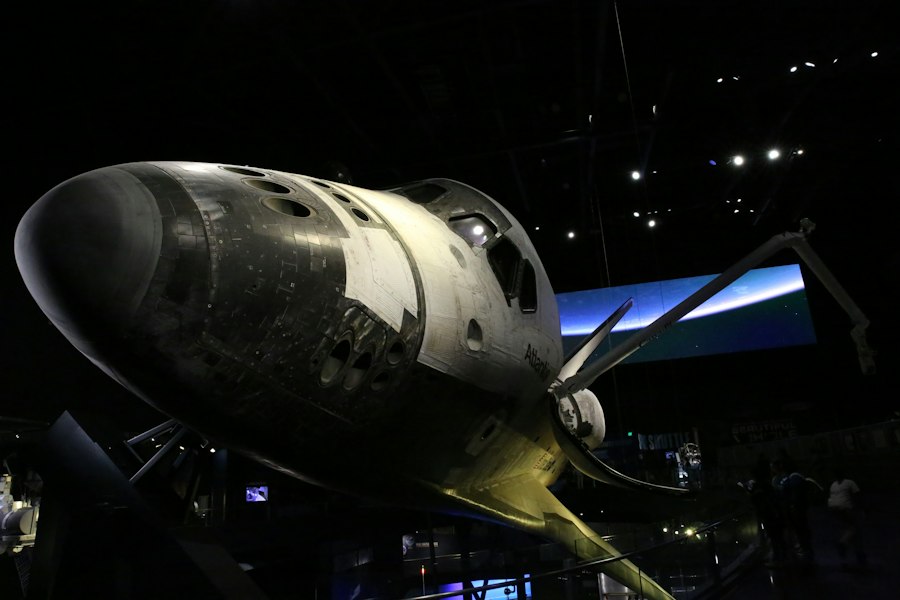
The Artemis II mission will follow a carefully orchestrated trajectory that will take the crew around the Moon and back to Earth. This complex ballet of orbital mechanics is designed to maximize scientific return while ensuring crew safety.
Launch and Translunar Injection (TLI)
The mission will begin with a powerful launch atop the SLS rocket from Kennedy Space Center in Florida. Following a successful ascent and staging, the upper stage of the SLS will ignite, performing the translunar injection burn that propels Orion out of Earth orbit and onto a path towards the Moon.
Lunar Flyby and Proximity Operations
Once Orion reaches the vicinity of the Moon, it will perform a series of burns to enter a distant retrograde orbit, a wide elliptical path around the Moon. During this phase, the crew will conduct several key activities:
High-Speed Lunar Orbit Traversal
The spacecraft will travel at high speeds around the Moon, allowing for observations and data collection. This will test the spacecraft’s ability to navigate and maintain its trajectory in the lunar gravitational field.
Close Approach to the Lunar Surface
While not landing, Artemis II will bring the crew closer to the lunar surface than any humans have been since the Apollo missions. This proximity will provide unparalleled opportunities for observing the lunar terrain and gathering data.
Communication and Navigation Tests
Throughout the lunar phase of the mission, extensive testing of Orion’s communication and navigation systems will be conducted. This includes verifying the accuracy of its positioning systems and the reliability of its communication links with Earth.
Trans-Earth Injection (TEI) and Re-entry
After completing its lunar flyby and conducting all planned activities, Orion will perform a trans-Earth injection burn to set it on a course back towards Earth. The final and perhaps most critical phase of the mission will be the atmospheric re-entry, where the spacecraft’s heat shield will be put to the ultimate test.
Heat Shield Performance Under Extreme Conditions
The Orion spacecraft’s ablative heat shield is designed to protect the crew from the intense heat generated by friction as it enters Earth’s atmosphere at incredibly high speeds. The data collected during this re-entry will be crucial for validating the shield’s performance and informing the design of future spacecraft.
Splashdown and Recovery
The mission will conclude with a splashdown in the Pacific Ocean, where recovery forces will be on standby to safely retrieve the Orion capsule and its crew. This marks the successful completion of the Artemis II mission and the return of humanity to the doorstep of the Moon.
The Artemis II Moon mission is set to be a groundbreaking step in humanity’s journey back to the lunar surface, and for those looking to understand its significance, a related article can provide valuable insights. This mission aims to carry astronauts around the Moon, paving the way for future lunar exploration and potential colonization. To delve deeper into the intricacies of this mission and its implications for space travel, you can read more in this informative piece on Freaky Science.
Scientific and Technological Advancements
| Metric | Details |
|---|---|
| Mission Name | Artemis II |
| Mission Type | Crewed lunar flyby |
| Launch Vehicle | Space Launch System (SLS) Block 1 |
| Crew Size | 4 astronauts |
| Spacecraft | Orion Multi-Purpose Crew Vehicle |
| Mission Duration | Approximately 10 days |
| Mission Objectives | Test Orion systems with crew, perform lunar flyby, validate deep space operations |
| Distance from Earth | Approximately 450,000 km (lunar distance) |
| Planned Launch Date | Late 2024 (subject to change) |
| Significance | First crewed mission beyond low Earth orbit since Apollo 17 (1972) |
Artemis II is not just about flying humans around the Moon; it is also about advancing scientific knowledge and pushing the boundaries of technological innovation. The mission will gather crucial data and test systems that will be vital for future lunar exploration.
Beyond the Horizon: New Scientific Discoveries
While the primary focus of Artemis II is to test the spacecraft and systems, the proximity to the Moon will allow for unique scientific observations.
Lunar Surface Observation
Even from orbit, the crew will be able to observe geological features and potential areas of scientific interest on the lunar surface. This could provide valuable insights into the Moon’s formation and evolution.
Space Environment Monitoring
The mission will also gather data on the space environment, including radiation levels and solar activity. This information is crucial for understanding the risks to astronauts on future long-duration missions.
Technological Leap Forward
The Artemis II mission will serve as a critical proving ground for a suite of advanced technologies.
Advanced Life Support Systems
The performance of Orion’s ECLSS will be meticulously monitored. Improvements in these systems are essential for ensuring crew safety and comfort on extended missions.
Navigation and Communication Systems
The mission will validate new navigation and communication technologies that are designed for deep-space operations. These advancements are vital for maintaining contact with spacecraft and guiding them accurately across vast distances.
In-Space Propulsion and Maneuvering
The successful execution of various orbital maneuvers, including lunar orbit insertion and trans-Earth injection, will demonstrate the reliability and capability of Orion’s propulsion systems. This experience is invaluable for future lunar landings and interplanetary travel.
The Artemis II mission represents a bold stride into a new era of space exploration. By successfully executing its objectives, it will not only demonstrate the readiness of NASA’s most advanced hardware but also pave the way for humanity’s sustained return to the Moon and, ultimately, to Mars. The courage and expertise of the Artemis II crew, combined with the groundbreaking engineering of the Orion spacecraft and the SLS rocket, promise a mission that will be etched in the annals of human achievement. This mission is more than just a journey; it is a testament to human curiosity, ingenuity, and the unyielding desire to explore the unknown.

There’s Only One Safe Way Back to Earth From the Moon
FAQs
What is the Artemis II Moon mission?
Artemis II is a planned mission by NASA under the Artemis program, which aims to land “the first woman and the next man” on the Moon by 2024. Artemis II will be an uncrewed test flight around the Moon to demonstrate NASA’s Orion spacecraft’s capabilities.
When is the Artemis II Moon mission scheduled to take place?
The Artemis II Moon mission is currently scheduled to take place in 2023. This mission will be a crucial step towards achieving the goal of landing astronauts on the Moon in 2024.
What is the purpose of the Artemis II Moon mission?
The primary purpose of the Artemis II Moon mission is to test the Orion spacecraft’s ability to carry astronauts on a mission around the Moon and back safely. This mission will help NASA gather essential data and insights to prepare for crewed missions to the Moon.
How will the Artemis II Moon mission contribute to the Artemis program?
Artemis II will play a significant role in advancing the Artemis program by testing the spacecraft’s systems, navigation, and communication capabilities in a deep space environment. The data and experience gained from this mission will inform and enhance future crewed missions to the Moon.
What are the key differences between Artemis II and other Artemis missions?
Artemis II is an uncrewed test flight around the Moon, while other Artemis missions, such as Artemis III, will involve landing astronauts on the lunar surface. Artemis II serves as a crucial stepping stone towards achieving the ultimate goal of landing humans on the Moon and establishing a sustainable presence there.