The vast, silent expanse of space, once a frontier to be merely explored, is now beckoning humanity back, not just for fleeting visits, but for sustained presence. NASA’s ambitious endeavor, the Artemis program, stands at the vanguard of this new era of lunar exploration, with a paramount objective: to bring astronauts back to the Moon and, crucially, to ensure their safe return to Earth. This monumental undertaking, a testament to human ingenuity and perseverance, represents a complex orchestration of cutting-edge technology, rigorous training, and an unwavering commitment to safety. The journey to achieving a successful lunar return is not a single, monolithic event, but rather a meticulously planned series of missions, each building upon the successes of the last, all culminating in the triumphant homecoming of intrepid spacefarers.
The desire to return to the Moon, after the iconic Apollo missions, has been a persistent undercurrent in space exploration discourse. Decades of robotic exploration have revealed a wealth of scientific knowledge about our celestial neighbor, but the call for human boots on lunar regolith has never truly faded. The Artemis program, formally initiated with the goal of landing the first woman and the first person of color on the Moon, is the embodiment of this renewed ambition. However, the scientific and exploratory objectives, while critical, are underpinned by a fundamental prerequisite: the safe and reliable return of astronauts to Earth. This return is not merely a logistical challenge; it is a profound statement about humanity’s capacity to conquer the most extreme environments and to bring its pioneers back to loved ones and the planet they call home. The lessons learned from the Apollo era, coupled with advancements in rocketry, life support, and spacecraft design, form the bedrock upon which this new generation of lunar missions is being built.
Historical Context: Lessons from Apollo
The Apollo program, a triumph of 20th-century engineering and human endeavor, stands as a historical benchmark for lunar exploration. Its successes were undeniable, but they were not without their inherent risks. The near-disastrous Apollo 13 mission, for instance, underscored the fragility of human life in space and the absolute necessity of robust contingency planning and rapid problem-solving. The lessons learned from Apollo, particularly regarding emergency procedures, spacecraft resilience, and the critical role of mission control, are being meticulously re-examined and integrated into the Artemis program. The design of the Orion spacecraft, for example, draws heavily on the modularity and redundancy principles that proved vital in the Apollo era, albeit with vastly superior computational power and material science. The understanding of the psychological toll of extended space missions, the challenges of lunar dust mitigation, and the intricacies of re-entry and landing are all areas where Apollo provided invaluable, albeit hard-won, insights.
The Strategic Imperative: Beyond Exploration
While the scientific discoveries promised by Artemis are immense, the strategic implications of a sustained lunar presence are equally compelling. Establishing a foothold on the Moon is seen by many as a crucial stepping stone for future deep-space missions, including the eventual journey to Mars. The Moon offers a unique platform for scientific research, resource utilization, and technological development in a relatively accessible environment. However, the true measure of success for any human spaceflight program lies not just in the outward journey, but in the secure return of those who venture into the void. The ability to bring astronauts home safely from the Moon is a testament to the robustness of the entire mission architecture and a critical factor in maintaining public support and political will for continued space exploration.
NASA’s meticulous planning and execution of lunar missions ensure that astronauts return safely from the Moon. The process involves a series of carefully coordinated maneuvers, including the use of the Lunar Module for landing and the ascent stage for returning to orbit. For a deeper understanding of the complexities involved in these missions, you can read a related article that explores the science behind space travel and the innovative technologies that make it possible. Check it out here: Freaky Science.
The Pillars of Return: Artemis Architecture
The Artemis program’s approach to bringing astronauts home is built upon a multi-layered architecture, each component designed with reliability and redundancy at its core. This intricate system ensures that from the moment astronauts depart lunar orbit to their touchdown on Earth, every stage of their return journey is meticulously managed and protected. The development of new spacecraft, advanced propulsion systems, and sophisticated ground support are all integral to this overarching strategy. The emphasis is on creating a seamless transition from the lunar surface to Earth, minimizing risk at every critical juncture.
The Orion Spacecraft: A New Generation Capsule
At the heart of NASA’s lunar return strategy is the Orion spacecraft. Designed to carry astronauts farther into space than ever before, Orion is a testament to modern aerospace engineering. Its advanced heat shield, robust life support systems, and sophisticated avionics are all engineered with the harsh realities of re-entry from lunar velocities in mind. The sheer energy involved in returning from beyond Earth’s orbit necessitates a re-entry system that can withstand extreme temperatures and pressures. Orion’s design incorporates lessons learned from previous human spaceflight programs, including the Space Shuttle and Apollo, but pushes the boundaries with cutting-edge materials and computational capabilities. Its spacious interior also allows for greater crew comfort and operational efficiency during long-duration missions.
Re-entry and Landing Systems: A Critical Descent
The return journey culminates in one of the most critical phases of any human spaceflight mission: re-entry into Earth’s atmosphere and subsequent landing. For Artemis, this process is particularly challenging due to the higher velocities involved in returning from lunar distances. Orion’s aeroshell, a sophisticated protective covering, is designed to dissipate the immense heat generated by friction with the atmosphere. Its advanced parachute system, deployed in stages, is crucial for slowing the capsule to a safe landing speed. The choice between splashdown in the ocean or a land landing is a significant decision, each with its own set of logistical and engineering considerations, but the ultimate goal remains the same: a safe and controlled return for the crew.
The Space Launch System (SLS): A Powerful Ascent
The vehicle responsible for launching Orion and its crew on their journey to the Moon and back is the Space Launch System (SLS), the most powerful rocket ever built. Its immense thrust is necessary to propel the Orion capsule and its associated mission elements out of Earth’s gravitational pull and towards the Moon. The SLS’s design prioritizes reliability and performance, ensuring that the astronauts have a safe and robust launch into space. The success of SLS launches is directly tied to the feasibility of the entire Artemis mission, including the safe return of the crew.
Launch Abort System: The Ultimate Safety Net
In the event of an anomaly during launch, the Orion spacecraft is equipped with a sophisticated launch abort system. This critical safety feature is designed to rapidly pull the capsule and its crew away from the ascending rocket, providing a last-resort escape route. The development and rigorous testing of this system are paramount, ensuring that in the most extreme scenarios, the lives of the astronauts are the highest priority. The ability to execute a safe abort, however improbable, is a cornerstone of NASA’s commitment to crew safety and a crucial element in the confidence required for a lunar return mission.
The Lunar Gateway: A Stepping Stone for Return
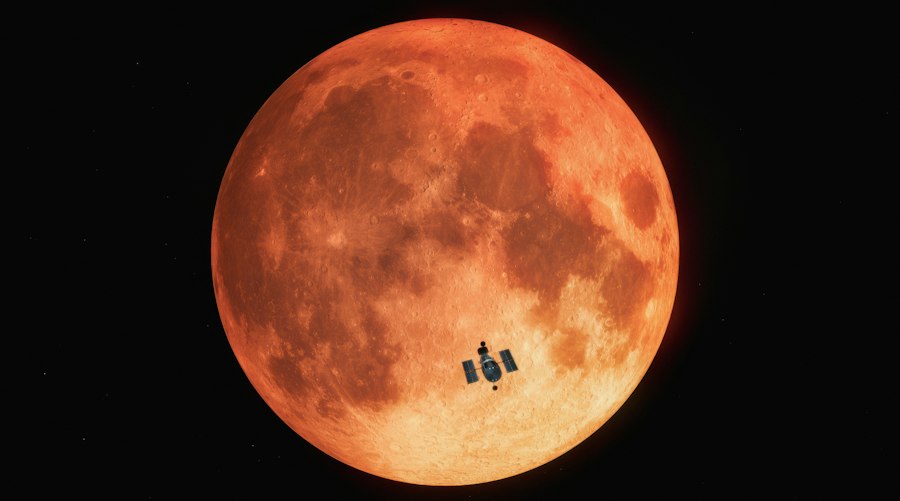
The Lunar Gateway, a planned orbital outpost around the Moon, plays a vital role in the Artemis program’s long-term strategy for lunar exploration and, importantly, for facilitating the return of astronauts. This orbiting station will serve as a crucial hub, enabling crewed missions to the lunar surface and providing a staging point for missions returning to Earth. Its existence streamlines operations and offers a more efficient and safer path for astronauts to transition from lunar exploration back to their journey home.
Docking and Transfer Operations: A Seamless Transition
The Gateway will act as a crucial waypoint for astronauts returning from the lunar surface. After completing their surface operations, astronauts will ascend from the Moon in a lander and dock with the Gateway. Here, they can transfer to the Orion spacecraft, which will then be positioned for its trans-Earth injection burn. This docking and transfer process is meticulously planned to ensure a smooth and safe transition, minimizing the time spent in potentially hazardous orbital configurations. The reliability of docking mechanisms and the precision of orbital maneuvers are critical for the success of these operations.
Resource Utilization and Refueling: Enabling Extended Stays
While not directly involved in the immediate return trajectory, the Gateway’s potential for resource utilization, such as the extraction and storage of water ice, can indirectly enhance the safety and efficiency of return missions. The ability to refuel spacecraft at the Gateway could reduce the need for massive fuel loads from Earth, potentially allowing for larger payloads or more robust systems. This enhanced capability contributes to the overall mission resilience, which in turn bolsters the assurance of a safe return for the astronauts.
Crew Training and Preparedness: Mastering the Return

The most advanced technology in the world is only as effective as the humans who operate it. Therefore, NASA’s commitment to bringing astronauts home safely is deeply intertwined with an extensive and rigorous training regimen. Astronauts selected for lunar missions undergo years of preparation, honing their skills in every conceivable scenario, with a particular focus on the challenges and contingencies associated with returning to Earth.
Emergency Procedures and Contingency Planning: Beyond the Expected
A significant portion of astronaut training is dedicated to mastering emergency procedures. This includes simulations of equipment failures, communication blackouts, and medical emergencies. For return missions, special emphasis is placed on procedures related to re-entry anomalies, parachute malfunctions, and off-nominal landing scenarios. The ability to react calmly and effectively under extreme pressure is a hallmark of a well-trained astronaut crew. Their deep understanding of the spacecraft’s systems and their ability to troubleshoot complex problems are paramount to ensuring their safe return.
Psychological Preparedness and Teamwork: The Human Element
The psychological toll of extended space missions, including the isolation and the inherent risks, is a critical consideration. Astronauts undergo extensive psychological evaluation and training to prepare them for the mental demands of lunar missions and the return journey. The emphasis on teamwork and effective communication within the crew is also crucial. A cohesive and well-coordinated crew can overcome challenges that might prove insurmountable for individuals working in isolation. Their ability to rely on each other and to execute pre-defined protocols under duress is a vital component of their safe homecoming.
NASA’s meticulous planning for lunar missions extends beyond just getting astronauts to the Moon; it also involves intricate strategies for safely bringing them home. The process includes a series of carefully coordinated maneuvers, such as the launch of the Lunar Module and the re-entry of the Command Module into Earth’s atmosphere. For a deeper understanding of these complex operations, you can explore a related article that delves into the various stages of lunar missions and the technology behind them. To learn more, visit this informative article that highlights the challenges and innovations involved in returning astronauts from the Moon.
The Final Frontier: Ensuring a Safe Touchdown
| Metric | Description | Value/Detail |
|---|---|---|
| Return Vehicle | Spacecraft used to bring astronauts from lunar orbit back to Earth | Orion Crew Module |
| Ascent Stage | Part of the Lunar Gateway or Lunar Lander that lifts astronauts from the Moon’s surface to lunar orbit | Lunar Ascent Module (part of Artemis program) |
| Distance from Moon to Earth | Average distance astronauts must travel to return home | 384,400 km (238,855 miles) |
| Re-entry Speed | Velocity at which the spacecraft re-enters Earth’s atmosphere | Approximately 11 km/s (25,000 mph) |
| Heat Shield | Protects astronauts from extreme heat during re-entry | Ablative heat shield on Orion capsule |
| Communication Delay | Time delay in communication signals between Earth and Moon | About 1.3 seconds one-way |
| Mission Duration | Typical time from lunar surface departure to Earth splashdown | Approximately 3 days |
| Landing Method | How astronauts return safely to Earth’s surface | Parachute-assisted splashdown in the ocean |
The culmination of the Artemis program’s efforts to bring astronauts home is the safe touchdown of the Orion capsule on Earth. This final act is a symphony of precision engineering, sophisticated control systems, and unwavering dedication to crew safety. The success of this phase is not just about a physical landing; it’s about bringing humanity’s emissaries back from the cosmos, a testament to our enduring spirit of exploration and our commitment to the well-being of those who venture beyond our planet.
Splashdown and Recovery Operations: Bringing Them Back to Earth
For the initial Artemis missions, splashdown in the Pacific Ocean is the planned recovery method. Once the capsule has landed, specialized recovery teams, including naval vessels and helicopters, are on standby to quickly reach the capsule, ensure its stability, and safely extract the astronauts. This rapid and efficient recovery operation is crucial to minimize the astronauts’ exposure to the elements and to begin their reintegration with Earth. The precision of the parachute deployment and the capsule’s stability are vital factors in the success of these recovery efforts.
Post-Landing Health Monitoring and Debriefing: The Journey Continues
Upon their return to Earth, astronauts undergo comprehensive medical evaluations to assess their physical and psychological well-being after their extended stay in microgravity and the rigors of re-entry. This monitoring is crucial for understanding the long-term effects of space travel and for informing future mission planning. Following medical checks, astronauts participate in extensive debriefings, sharing their experiences and insights. This invaluable feedback loop helps NASA refine its procedures, technologies, and training programs, ensuring that each subsequent mission, particularly those involving lunar returns, is even safer and more successful than the last. The journey home is not merely a physical one; it is also a transition back to the scientific and operational community, where their experiences contribute to the ongoing advancement of space exploration.

There’s Only One Safe Way Back to Earth From the Moon
FAQs
1. How does NASA bring astronauts home from the Moon?
NASA brings astronauts home from the Moon using a spacecraft called the Command Module. The Command Module is designed to re-enter Earth’s atmosphere and safely land in the ocean.
2. What is the process of re-entry for astronauts returning from the Moon?
The process of re-entry for astronauts returning from the Moon involves the Command Module entering Earth’s atmosphere at a high speed. The heat shield on the spacecraft protects it from the intense heat generated during re-entry.
3. How does NASA ensure the safety of astronauts during the journey back to Earth?
NASA ensures the safety of astronauts during the journey back to Earth by conducting thorough training, using advanced technology, and implementing strict safety protocols. The spacecraft is equipped with life support systems and emergency procedures to handle any unforeseen circumstances.
4. What happens after the Command Module lands in the ocean?
After the Command Module lands in the ocean, NASA recovery teams are deployed to retrieve the astronauts and the spacecraft. The astronauts are brought aboard a recovery ship where they undergo medical evaluations and debriefings.
5. How long does it take for astronauts to return from the Moon to Earth?
The journey from the Moon to Earth typically takes around 3 days. Once the astronauts are ready to return, the Command Module begins its journey back to Earth, re-enters the atmosphere, and lands in the ocean where they are safely recovered by NASA.