You’re standing in your kitchen, perhaps contemplating a new set of cookware, and you keep seeing this term: “induction.” It pops up in advertisements, kitchen appliance reviews, and even on the packaging of pots and pans. But what is induction cookware, and how does it differ from the gas or electric stovetops you’ve always known? This article is your guide to demystifying the world of induction cooking, so you can make informed decisions about your kitchen tools and understand the science behind this efficient and modern cooking method.
At its core, induction cooking relies on a fundamental principle of physics: electromagnetism. Unlike traditional stovetops that generate heat directly and then transfer it to your cookware, induction uses a magnetic field to directly heat the pan itself. This might sound a bit like magic, but it’s all about precise control and efficient energy transfer.
Understanding Electromagnetism
Before diving into how your cookware is heated, it’s essential to grasp the basics of electromagnetism. You’re likely familiar with magnets and how they attract or repel each other. Electricity and magnetism are intrinsically linked. When an electric current flows through a wire, it generates a magnetic field around that wire. Conversely, a changing magnetic field can induce an electric current in a nearby conductor. Induction cooktops harness this latter principle.
The Induction Cooktop: More Than Just a Flat Surface
The smooth, ceramic glass surface of your induction cooktop conceals a complex system designed to generate and control a powerful alternating magnetic field. Beneath the glass, you’ll find a copper coil. When you turn on the cooktop and select a heating level, an alternating electric current is sent through this copper coil.
The Role of Alternating Current
The key here is the alternating nature of the current. This means the direction of the electric flow is constantly changing, typically at a high frequency (around 20-50 kHz). This rapid change in current is what creates a rapidly fluctuating magnetic field above the coil.
The Inductor Coil: The Heart of the System
The copper coil acts as the inductor. Its design and the frequency of the alternating current are crucial for generating a strong and consistent magnetic field that can interact with your cookware. The closer the cookware is to the coil, the more efficient the energy transfer.
How the Magnetic Field Heats Your Pan
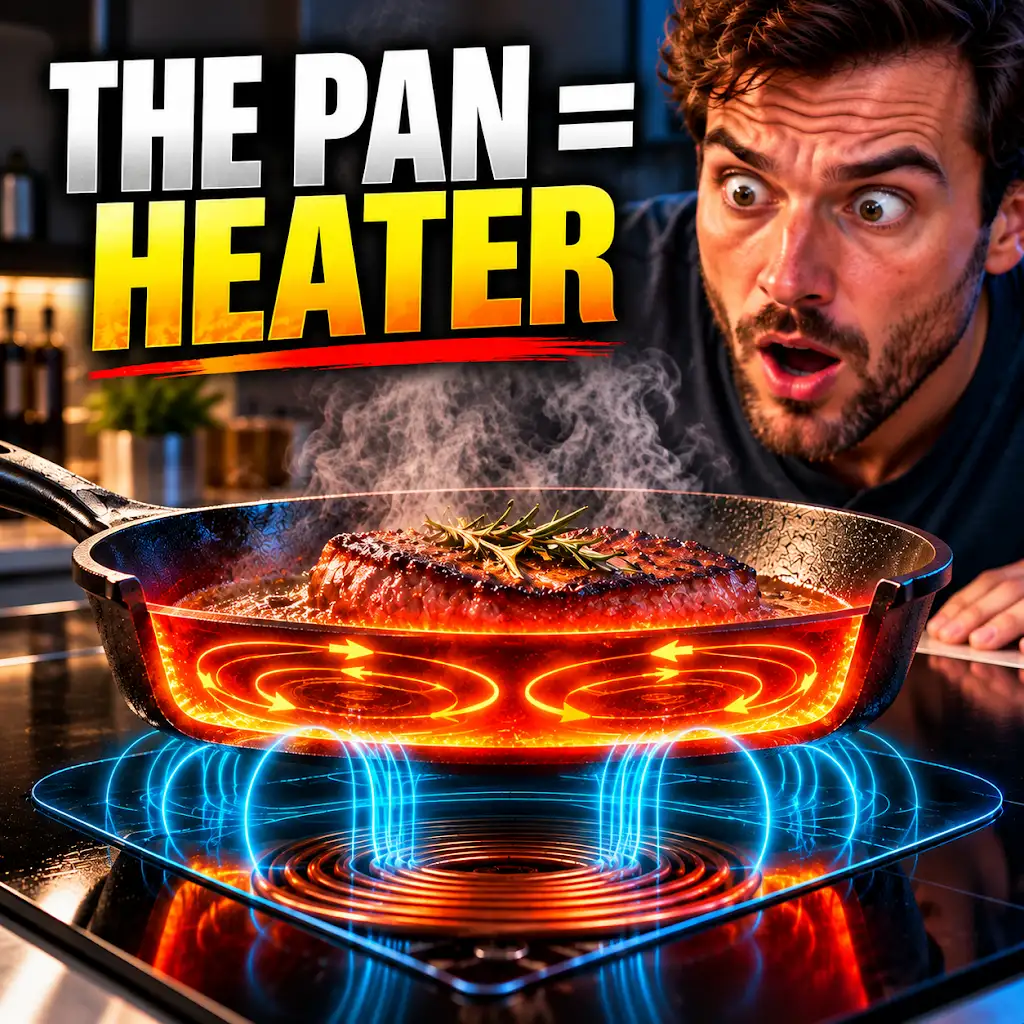
This is where the interaction with your cookware becomes critical. When an induction-compatible pot or pan is placed on the active cooktop, the fluctuating magnetic field penetrates the base of the cookware.
Eddy Currents: The Invisible Heat Generators
This penetrating magnetic field causes a phenomenon called “eddy currents” to form within the metallic base of the pan. Imagine tiny electrical currents swirling within the metal itself, like miniature whirlpools of electricity. These eddy currents are essentially a flow of electrons within the conductive material of your cookware.
Resistance Creates Heat
The metal in your cookware, while conductive, isn’t perfectly so. It has electrical resistance. As these eddy currents flow through the resistant metal, they encounter friction. This friction, just like rubbing your hands together vigorously, generates heat. The more intense the eddy currents and the higher the resistance of the cookware, the more heat is produced.
The Direct Heating Advantage
The genius of induction lies in this direct heating. The heat isn’t generated by the cooktop and then transferred. The cooktop’s magnetic field directly causes the heat to be generated within the cookware. This is a significant departure from traditional methods and leads to several key benefits.
Induction compatible cookware operates on the principle of electromagnetic induction, allowing for efficient and rapid heating when placed on an induction cooktop. The cookware must be made of ferrous materials, such as cast iron or certain stainless steels, to create a magnetic field that generates heat directly within the pot or pan. For a deeper understanding of this technology and its benefits, you can explore a related article on this topic at Freaky Science.
What Makes Cookware “Induction Compatible”?
Not all pots and pans will work on an induction cooktop. The magnetic foundation of induction cooking dictates specific material requirements for your cookware. This is the most crucial factor to understand when choosing new pots and pans for an induction stove.
The Magnetic Test: Your Simple Solution
The easiest way to determine if your current cookware is induction-compatible is to perform a simple magnet test. Grab a standard refrigerator magnet and see if it sticks firmly to the base of your pot or pan. If the magnet adheres strongly, the cookware is likely induction-compatible.
Why the Magnet Test Works
This test works because induction-compatible cookware must be made of ferromagnetic materials. Ferromagnetic materials are those that can be strongly attracted to magnets, meaning they can be easily magnetized themselves. This property is essential for the magnetic field generated by the cooktop to effectively induce eddy currents.
Ferromagnetic Materials: The Key Ingredient
The most common ferromagnetic materials used in cookware are:
Cast Iron
Cast iron is naturally ferromagnetic and an excellent choice for induction cooking. It heats evenly and retains heat well, making it ideal for searing and slow cooking. However, it can be heavy and requires proper seasoning and care to prevent rust.
Enameled Cast Iron
This is essentially cast iron with a porcelain enamel coating. The cast iron core remains ferromagnetic, so it works perfectly on induction. The enamel provides a non-reactive cooking surface and makes cleaning easier.
Stainless Steel (Magnetic Varieties)
Not all stainless steel is created equal when it comes to induction. Most common stainless steel cookware is made from austenitic stainless steel alloys, which are generally not magnetic. However, many manufacturers now produce stainless steel cookware with a magnetic core or base, often made from ferritic or martensitic stainless steel. This is where the magnet test is particularly important for stainless steel. Look for cookware specifically labeled as “induction compatible” or “induction ready.”
Non-Ferromagnetic Materials: The Ones to Avoid
Materials that do not contain ferromagnetic properties will not work on an induction cooktop because the magnetic field cannot induce eddy currents within them. These include:
Aluminum
While aluminum is an excellent conductor of heat and heats up quickly, it’s not magnetic. Therefore, plain aluminum pots and pans will not work on induction stovetops. However, some manufacturers clad aluminum with a magnetic layer on the base to make it induction compatible.
Copper
Similar to aluminum, pure copper is not ferromagnetic and won’t work on induction unless it has a magnetic base or is part of a layered construction.
Glass and Ceramic
These materials are neither magnetic nor good electrical conductors, so they cannot be directly heated by induction. You’ll need to use a separate magnetic plate (an induction disk) if you want to use glass or ceramic cookware on an induction stovetop.
Layered Cookware Construction: A Hybrid Approach
Many high-quality pots and pans designed for induction cooking utilize a layered construction. This involves sandwiching different materials together to achieve optimal performance.
The Magnetic Core
Typically, the innermost layer, the one that directly contacts the induction cooktop, will be made of a ferromagnetic material like stainless steel or cast iron.
Conductive Layers
Above the magnetic core, layers of highly conductive materials like aluminum or copper are often included. These layers help to distribute heat evenly across the bottom of the pan, preventing hot spots and ensuring consistent cooking.
The Cooking Surface
The uppermost layer, the one your food cooks on, is usually a non-reactive material like stainless steel or a non-stick coating, providing a desirable cooking surface.
Advantages of Induction Cooking: Why It’s Worth the Switch
The science behind induction might be complex, but the benefits for your cooking experience are remarkably straightforward. Induction offers a level of control, efficiency, and safety that often surpasses traditional cooking methods.
Unmatched Speed: Boiling Water in Minutes
One of the most striking advantages of induction is its speed. Because the heat is generated directly within the cookware, energy transfer is incredibly efficient.
Direct Heat Transfer
Imagine the difference between heating a kettle of water on a campfire versus using a magnifying glass to focus sunlight directly onto a single point on the kettle. Induction is more akin to the latter. The energy is delivered precisely where it’s needed.
Faster Heat-Up Times
This directness translates into significantly faster heat-up times. You’ll find that water boils much quicker on an induction cooktop, and pans reach their desired temperatures in a fraction of the time compared to gas or radiant electric stovetops.
Precise Temperature Control: From Simmer to Sear
Induction cooktops offer an unparalleled level of control over cooking temperatures. This precision is a game-changer for cooks who demand accuracy in their culinary endeavors.
Instantaneous Response
Unlike gas stovetops, where flame adjustment takes a moment to affect the pan, induction responds almost instantaneously to changes in setting. Turn the dial down, and the heat drops immediately. Turn it up, and the heat increases without delay.
Delicate Simmering and High-Heat Searing
This responsiveness allows for incredibly delicate simmering – perfect for sauces and custards that can easily scorch. It also enables rapid and efficient searing, creating that desirable crust on meats and vegetables.
Energy Efficiency: Saving You Money and the Planet
Induction cooking is one of the most energy-efficient cooking methods available. This translates into lower electricity bills and a reduced environmental impact.
Minimal Heat Waste
With traditional stovetops, a significant amount of heat is lost to the surrounding air. Gas burners release heat upwards and outwards, while radiant electric elements heat the air around the pan. Induction, however, directs nearly all of its energy into the cookware.
Reduced Ambient Heat
This means less wasted energy and a cooler kitchen environment, which can be a welcome relief during hot summer months.
Safety Features: Peace of Mind in Your Kitchen
Safety is a paramount concern in any kitchen, and induction technology offers several built-in features that enhance user safety.
No Open Flames
Unlike gas stoves, induction cooktops have no open flames, eliminating the risk of accidental fires.
Cool-to-Touch Surface
While the cookware itself gets hot, the induction cooktop surface remains relatively cool, especially when no cookware is present. This significantly reduces the risk of burns from accidentally touching the stovetop.
Automatic Shut-Off
Most induction cooktops are equipped with sensors that automatically shut off the heating element if no cookware is detected or if cookware is removed from the surface. This prevents energy wastage and potential hazards.
Pan Detection
The cooktop only activates the magnetic field when it detects a compatible pot or pan, further contributing to safety.
Types of Induction Cookware: What to Look For
When you’re out shopping for induction cookware, you’ll encounter a variety of materials and designs. Understanding these options will help you choose the best set for your needs and budget.
Material Composition: The Core of Compatibility
As discussed earlier, the most critical factor is the material’s ability to interact with a magnetic field.
Full Stainless Steel with Magnetic Base
Many manufacturers offer all-stainless steel cookware with a sandwich construction. The outer layers are typically magnetic stainless steel, while the core might be aluminum or copper for better heat conductivity. These are durable and offer good performance.
Cast Iron and Enameled Cast Iron
These are excellent choices for induction, offering superior heat retention and even heating. However, they can be heavier and require specific care.
Aluminum or Copper with Magnetic Cladding
This is a popular and often more affordable option. A layer of magnetic stainless steel is bonded to the base of aluminum or copper cookware. This allows the pan to be induction-compatible while still benefiting from the excellent heat conductivity of aluminum and copper.
Construction and Design: Beyond the Material
Beyond the raw materials, the way the cookware is constructed also plays a role in its performance.
Clad Construction
This refers to cookware made of multiple layers of metal bonded together. For induction, the crucial layer is the magnetic one at the base. Clad construction can offer excellent heat distribution and responsiveness.
Stamped Construction
This is a simpler and often less expensive method where a single sheet of metal is pressed into shape. While it can be induction-compatible if made from magnetic material, heat distribution might not be as even as with clad construction.
Pan Thickness
Thicker pan bases generally offer better heat distribution and are less prone to warping. This is especially important for induction, where the heat is concentrated at the base.
Specific Cookware Types: From Sauté to Stockpots
Induction technology is available across a wide range of cookware types, allowing you to outfit your kitchen completely.
Frying Pans and Skillets
Look for pans with a flat, magnetic base for optimal contact with the induction surface.
Saucepans and Stockpots
Ensure these have a thick, magnetic base for even heating of liquids.
Woks and Grill Pans
These specialized pans are also available in induction-compatible versions. For woks with rounded bottoms, you’ll need an induction wok ring to create a flat surface for contact.
Baking Sheets and Roasting Pans
While less common, some baking and roasting pans are designed with induction-compatible bases, particularly those with thick steel construction.
Induction compatible cookware operates on the principle of electromagnetic induction, allowing it to heat up quickly and efficiently when placed on an induction cooktop. This technology requires cookware made from ferrous materials, which can respond to the magnetic field generated by the cooktop. For a deeper understanding of how this innovative cooking method works, you can explore a related article that delves into the science behind induction cooking and its benefits. To learn more, check out this informative piece on Freaky Science.
Maintaining Your Induction Cookware: Longevity and Performance
| Metric | Description | Typical Value / Example |
|---|---|---|
| Magnetic Permeability | Ability of cookware material to support magnetic field generation necessary for induction heating | High (e.g., cast iron, stainless steel with magnetic base) |
| Material Composition | Type of metal used in cookware base affecting induction compatibility | Ferromagnetic metals like iron, magnetic stainless steel |
| Base Thickness | Thickness of the cookware base influencing heat distribution and induction efficiency | 2-5 mm typical |
| Induction Coil Frequency | Frequency of alternating current in induction cooktop coil generating magnetic field | 20-50 kHz |
| Heat Generation Mechanism | How heat is produced in cookware via induced eddy currents and magnetic hysteresis | Eddy currents in ferromagnetic base produce heat directly in cookware |
| Cookware Diameter Compatibility | Minimum and maximum diameter of cookware base for effective induction heating | Typically 12 cm minimum, up to 28 cm or more |
| Energy Efficiency | Percentage of electrical energy converted to heat in cookware | Approximately 80-90% |
| Cookware Surface Flatness | Flatness of base surface to ensure proper contact and magnetic coupling | Very flat base preferred for optimal induction heating |
Just like any kitchen investment, proper care and maintenance will ensure your induction cookware lasts for years and continues to perform at its best.
Cleaning Your Induction Cookware
The cleaning process for induction cookware is generally straightforward, but there are a few considerations to keep in mind.
Regular Cleaning
Wash your cookware after each use with warm, soapy water. Use a non-abrasive sponge or cloth to avoid scratching the surface.
Dealing with Stubborn Stains
For tougher stains, try a paste of baking soda and water. For more persistent marks on stainless steel, specialized stainless steel cleaners can be effective. Always follow the manufacturer’s instructions for your specific cookware.
Dishwasher Safety
Check the manufacturer’s guidelines. Many induction-compatible pots and pans are dishwasher safe, but handwashing is often recommended to preserve their finish and longevity.
Preventing Damage and Wear
Taking proactive steps can prevent common issues and keep your cookware looking and functioning like new.
Avoid Metal Utensils (on non-stick surfaces)
If your cookware has a non-stick coating, always use wooden, silicone, or plastic utensils to avoid scratching and damaging the surface.
Prevent Warping
Avoid extreme temperature changes, such as plunging a hot pan into cold water. This can cause warping, especially in thinner-bottomed pans.
Proper Storage
Store your cookware carefully to prevent scratches and dents. Using pan protectors or placing a cloth between stacked pans can be helpful.
Special Considerations for Specific Materials
Some materials require a bit of extra attention to maintain their performance.
Cast Iron Care
If you have traditional cast iron cookware, remember to season it regularly to prevent rust and maintain its non-stick properties. After washing, dry it thoroughly and apply a thin layer of cooking oil.
Enameled Cast Iron Maintenance
Avoid using abrasive cleaners or scouring pads on enameled cast iron, as this can damage the enamel. For burnt-on food, soak the pan in hot water and use a non-abrasive cleaner.
Addressing Common Issues
Even with the best care, you might encounter occasional issues.
Scratches
Minor scratches on stainless steel are often cosmetic and won’t affect performance. For non-stick surfaces, however, deep scratches can compromise the coating.
Stains
Food stains can often be removed with appropriate cleaning methods. Mineral deposits from water can also cause spotting, which can usually be addressed with vinegar or specialized cleaners.
By understanding how induction cookware works, what makes it compatible, and how to care for it, you’re well on your way to enjoying the many benefits of this advanced and efficient cooking technology. You’re not just buying pots and pans; you’re investing in a smarter, safer, and more enjoyable way to cook.
The Pan Is the Heater: How Induction Cooking Really Works
FAQs
What is induction compatible cookware?
Induction compatible cookware is specifically designed to work with induction cooktops. These cookware pieces are made from materials that are magnetic, such as stainless steel or cast iron, allowing them to heat up quickly and efficiently when placed on an induction cooktop.
How does induction cooking work?
Induction cooking uses electromagnetic energy to directly heat the cookware, bypassing the need for a traditional heating element. When the cookware is placed on the induction cooktop, an electric current creates a magnetic field that generates heat within the cookware itself.
Why do I need special cookware for induction cooking?
Regular cookware made from non-magnetic materials like aluminum or copper will not work on induction cooktops because they do not generate heat through electromagnetic energy. Induction compatible cookware is essential for efficient and effective cooking on induction stovetops.
What are the benefits of using induction compatible cookware?
Using induction compatible cookware offers several advantages, including faster heating times, precise temperature control, energy efficiency, and safety features like automatic shut-off when the cookware is removed from the cooktop.
Can I use induction compatible cookware on other types of stoves?
Yes, induction compatible cookware can be used on other types of stoves, such as gas or electric, without any issues. However, non-induction cookware cannot be used on induction cooktops due to their lack of magnetic properties.