Here’s an article explaining why copper doesn’t work on some induction cooktops, written in the second person.
You’ve likely admired them in magazines, on cooking shows, or perhaps even in your own kitchen. Copper cookware boasts an undeniable elegance, a timeless appeal that speaks to culinary artistry. Its reputation for exceptional heat conductivity is legendary, promising even cooking and precise temperature control. You might have invested in a stunning set, picturing yourself effortlessly searing scallops or delicately tempering chocolate. Then, you bring them home to your sleek, modern induction cooktop, eagerly place a pan on the burner, and… nothing. The burner remains stubbornly inert. A wave of confusion, and perhaps a pang of disappointment, washes over you. How can a material as esteemed as copper fail to ignite the magic of induction?
This isn’t a failure of your cooktop or a defect in your beautiful pans. It’s a matter of fundamental physics and the specific technology that powers induction cooking. While copper is a phenomenal conductor of heat, its magnetic properties are the crucial missing piece when it comes to interacting with an induction cooktop. Understanding this seemingly counterintuitive reality is key to navigating the world of induction-compatible cookware and ensuring your culinary aspirations are met, regardless of your pan material. This guide will demystify the science behind induction, explain why some copper cookware is a no-go, and help you identify the pieces that will work, so you can embrace the precision of induction without sacrificing your aesthetic preferences.
The Induction Revolution: How Your Cooktop Actually Works
To grasp why copper can be a gamble, you first need to understand the ingenious mechanism behind induction cooking. Forget the glowing red elements of traditional electric stoves or the open flames of gas. Induction is a direct heat generation system that relies on electromagnetism.
The Magnetic Foundation
At the heart of an induction cooktop lies an electromagnet, a coil of wire situated beneath the ceramic glass surface. When you turn on the cooktop and select a burner, an alternating electric current flows through this coil. This current, oscillating rapidly, generates a fluctuating magnetic field that extends upwards from the cooktop’s surface.
The Role of Alternating Current
The “alternating” aspect of the current is critical. Unlike a direct current (DC) that flows in one direction, an alternating current (AC) reverses its direction thousands of times per second. This constant switching is what causes the magnetic field to fluctuate and change its polarity, creating a dynamic magnetic environment above the cooktop.
Creating the Field
Think of the electromagnet as a powerful, invisible magnet that you can switch on and off, and whose poles are constantly flipping. This fluctuating magnetic field is the invisible engine that drives the entire cooking process. However, this field is only the potential for heat; it doesn’t directly heat the cooktop surface itself.
Copper cookware is often praised for its excellent heat conductivity, but it may not work effectively on some induction cooktops due to the nature of how induction technology operates. Induction cooktops require cookware made from ferromagnetic materials to generate the magnetic field necessary for heating. Since copper is not magnetic, it may not be suitable for induction cooking unless it has a magnetic base. For a deeper understanding of this topic, you can read more in the related article found here: Why Copper Does Not Work on Some Induction Cooktops.
The Crucial Element: Ferromagnetism and Eddy Currents
The magic of induction truly happens when a compatible pot or pan is placed within this fluctuating magnetic field. It’s not just about any material being present; it’s about the material’s specific magnetic properties.
The Ferrous Connection
For an induction cooktop to work, the cookware must be made of a material that is ferromagnetic. This means the material must be attracted to a magnet. The most common ferromagnetic materials used in cookware are iron and steel.
Why Magnets Stick to Induction Pans
This is why the simple magnet test is so effective. If a magnet sticks firmly to the base of your pot or pan, it’s a strong indicator that it will work on an induction cooktop. The magnetic field generated by the cooktop “grabs” onto the ferromagnetic material in the pan, initiating the heating process.
Beyond Simple Magnetism
While ferromagnetism is the primary requirement, it’s not the whole story. The way the magnetic field interacts with the metal is what generates heat.
The Birth of Eddy Currents
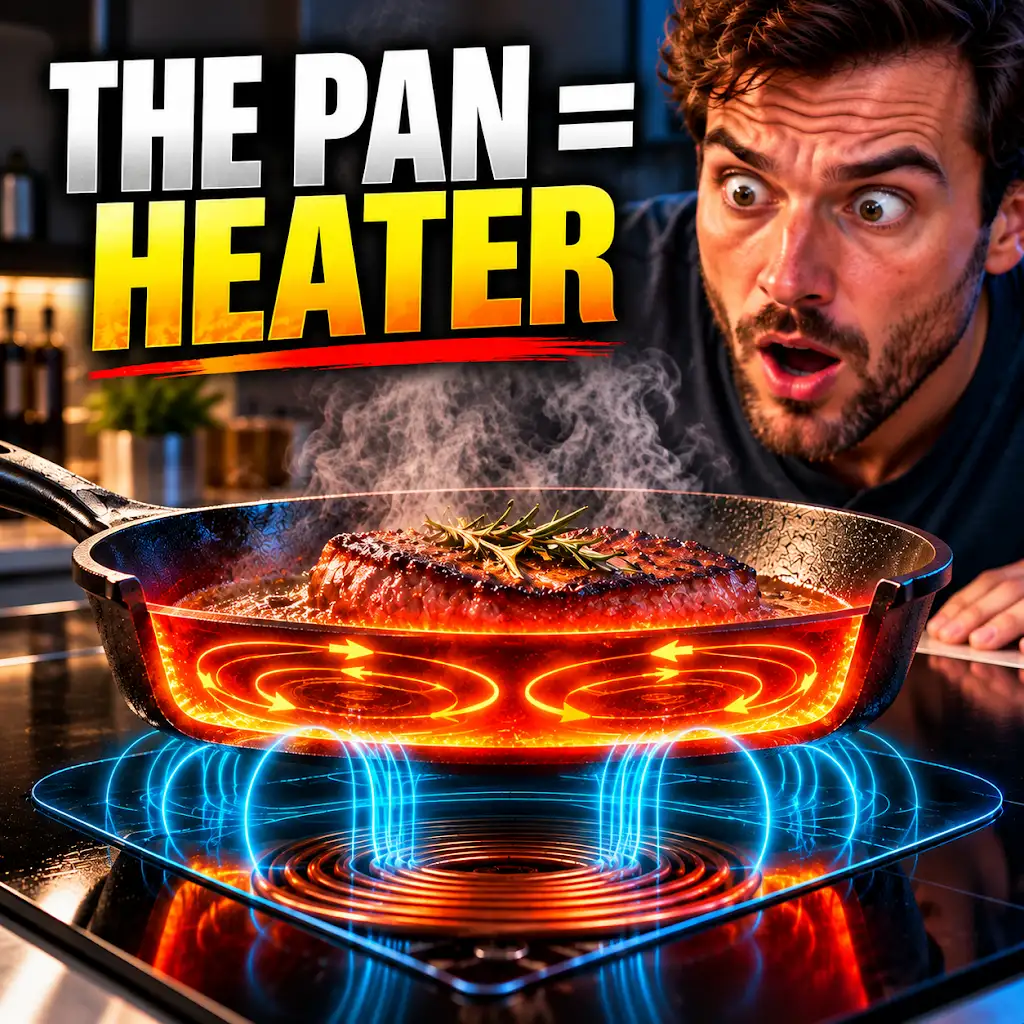
When a ferromagnetic pot or pan is placed on the active induction burner, the fluctuating magnetic field penetrates the metal. This changing magnetic flux induces tiny electrical currents within the base of the cookware. These induced currents are known as eddy currents.
Faraday’s Law in Action
This phenomenon is a direct application of Faraday’s Law of Induction. Essentially, a changing magnetic field passing through a conductor induces an electromotive force (EMF), which in turn drives these circulating electrical currents.
Resistance Generates Heat
Now, here’s where the heat is actually produced. The metal of the pot or pan, while a good conductor of electricity, also has electrical resistance. As these eddy currents flow through the metal, they encounter this resistance. The energy of the flowing electrons is converted into thermal energy, causing the base of the cookware to heat up. This is resistive heating, similar to how the heating element in a traditional electric stove works, but generated directly within the cookware itself.
Minimizing Heat Loss
A key advantage of induction is that the heat is generated in the pan, not on the cooktop. This means very little energy is lost to the surrounding air, making induction incredibly efficient and fast. The cooktop surface itself only gets warm from the residual heat of the pan.
Copper’s Magnetic Quandary: A Brilliant Conductor, a Magnetic Misfit
You might be thinking, “But copper is an excellent conductor! It’s renowned for its heat distribution. Why wouldn’t it work?” And you’re absolutely right about copper’s thermal properties. Copper is a superstar when it comes to efficiently transferring and distributing heat. However, its magnetic characteristics are where the induction compatibility story takes a turn.
The Non-Ferrous Nature of Pure Copper
Pure copper is a diamagnetic material. This means it is very weakly repelled by a magnetic field, rather than being attracted to it like ferromagnetic materials. When placed on an induction cooktop, the fluctuating magnetic field from the electromagnet will induce eddy currents in the copper pan. However, because copper is not ferromagnetic, the interaction is much weaker.
Weak Magnetic Interaction
The magnetic field generated by the cooktop has to “engage” with the material to create the eddy currents. With diamagnetic materials like copper, this engagement is minimal. The field doesn’t strongly “grip” the copper, resulting in a much weaker induction of eddy currents.
Insufficient Eddy Current Generation
While some eddy currents will be generated, they will not be strong enough to produce a significant amount of heat. The amount of heat generated is directly proportional to the strength of the eddy currents and the electrical resistance of the material. Since the eddy currents are weak in pure copper, the heat generated is negligible.
The Role of Stainless Steel Cladding
This is where the nuance comes in, and why you might see some copper pans advertised as induction-compatible. Many high-quality copper pans are constructed with a layered design. They feature a thick layer of copper on the exterior or interior for its superior thermal properties, but they are clad with a ferromagnetic material on the base.
The Ferromagnetic Sandwich
This cladding is typically a layer of stainless steel, often magnetic stainless steel. This layer acts as the interface between the induction cooktop and the copper. When you place the pan on the cooktop, it’s this stainless steel base that the magnetic field interacts with.
How the Cladding Works
The fluctuating magnetic field from the induction cooktop induces strong eddy currents in the ferromagnetic stainless steel layer. This layer heats up rapidly due to its electrical resistance, and because the copper is bonded to it, the heat is then efficiently transferred and distributed throughout the rest of the pan by the copper.
The Pure Copper Trap
So, if you have a beautiful, unadulterated, 100% pure copper pot or pan with no ferromagnetic base, it will, unfortunately, be incompatible with most induction cooktops. The heat generation relies on that magnetic interaction, and pure copper simply doesn’t have it.
Identifying Induction-Compatible Copper Cookware: The Buyer’s Guide
The good news is that you don’t have to abandon your love for copper entirely if you’re an induction cooktop owner. The key is to be a savvy shopper and know what to look for.
The Magnet Test: Your First Line of Defense
This is the simplest and most effective way to determine if a piece of cookware is induction-compatible.
How to Perform the Test
Before purchasing, or if you’re unsure about a piece you already own, grab a standard refrigerator magnet. Place it on the base of the pot or pan.
What to Look For
- Strong Attraction: If the magnet sticks firmly to the base, it’s highly likely to be induction-compatible. The stronger the attraction, the better the magnetic properties of the base.
- Weak Attraction or No Attraction: If the magnet barely sticks or doesn’t stick at all, the cookware is likely made of a non-ferrous material like pure copper, aluminum, or non-magnetic stainless steel, and will not work on an induction cooktop.
Decoding Product Descriptions and Labels
Manufacturers are aware of the confusion surrounding induction compatibility, so they often provide clear information.
“Induction Compatible” Labels
Look for explicit “induction compatible” labels or symbols on the packaging, on the cookware itself, or in the product description when shopping online. These labels are your assurance that the piece has been designed to work with induction.
Material Specifications
Pay attention to the material specifications. If a copper pan is induction-compatible, it will usually state that it has a “ferromagnetic base,” “induction-compatible base,” or is “clad with stainless steel” on the bottom.
The “Core” vs. The “Exterior”
Understand that the cooking surface might be copper for its excellent heat distribution, but the base that contacts the cooktop needs to be ferromagnetic. Many high-end copper pans will have a copper exterior for aesthetic appeal and heat distribution, but a stainless steel or aluminum induction-compatible base.
Understanding Cookware Construction
The way cookware is constructed plays a significant role in its induction compatibility.
Clad Construction
As mentioned earlier, clad cookware is made of multiple layers of different metals bonded together. For induction-compatible copper, this typically means a ferromagnetic layer (like magnetic stainless steel) on the bottom, with copper layers above or within.
Solid Copper Pans
Solid copper pans, meaning those made entirely of copper throughout, are generally not induction-compatible, unless they have a specially integrated ferromagnetic plate on the bottom.
Cast Iron and Magnetic Stainless Steel
While not copper, it’s worth noting that pure cast iron (which is ferromagnetic) and most magnetic stainless steel cookware are excellent choices for induction cooktops.
Induction cooktops have gained popularity for their efficiency and speed, but many users are often puzzled when they discover that certain cookware, particularly those made of copper, does not function properly on these appliances. This issue arises because induction cooktops rely on magnetic fields to generate heat, and copper lacks the necessary magnetic properties. For a deeper understanding of the science behind this phenomenon, you can explore a related article that delves into the intricacies of induction cooking and cookware compatibility. To learn more about this topic, visit Freaky Science.
When Copper Can Work: The Specialized Induction-Ready Designs
Don’t despair! There are ways to enjoy the benefits of copper’s superior heat conductivity on your induction cooktop. The solution lies in clever engineering and material science.
The Ferromagnetic Base Plate Integration
This is the most common and effective method for making copper cookware induction-compatible.
The Purpose of the Base Plate
A ferromagnetic base plate, typically made of magnetic stainless steel, is permanently attached to the underside of the copper pan. This plate is what directly interacts with the induction cooktop’s magnetic field.
How it Functions
When the cooktop is activated, the magnetic field induces eddy currents in the stainless steel base plate. This plate heats up rapidly, and because it’s securely bonded to the copper, the heat is efficiently transferred through the copper layers, ensuring excellent and even heat distribution throughout the entire pan.
Variations in Design
These base plates can be a thick, solid disk integrated into the base, or they can be a series of concentric rings or a full-clad layer. The key is that the ferromagnetic material is present where it needs to be to create the initial heat.
Induction-Ready Copper Alloys
While less common, some manufacturers are exploring specialized copper alloys that possess some ferromagnetic properties.
The Challenge of Alloying
Creating a copper alloy that is both an excellent thermal conductor and sufficiently ferromagnetic presents significant material science challenges. The addition of other metals to copper often alters its thermal conductivity, sometimes negatively.
Emerging Technologies
Research and development in this area are ongoing, and it’s possible that in the future, more novel copper-based materials that are inherently induction-compatible will become widely available.
The Hybrid Approach: Copper Exterior, Induction Base
Many premium cookware brands offer a hybrid approach that allows you to have your copper cake and eat it too, in an induction-compatible way.
The Best of Both Worlds
These pans feature the beautiful and highly conductive copper on the exterior of the pan, providing excellent heat distribution and responsiveness. However, the base of the pan is constructed with a layer of magnetic stainless steel, ensuring direct compatibility with induction cooktops.
How This Benefits You
This design allows you to experience the superb thermal performance of copper for even cooking and precise temperature control, while still being able to utilize the speed and efficiency of your induction cooktop. You get the aesthetic appeal and the functional benefits of copper without the magnetic incompatibility.
Troubleshooting Common Induction Cooktop and Copper Pan Issues
Even with the right cookware, you might encounter situations where your induction cooktop seems to be misbehaving. Here are some common issues and their solutions.
“Error Code” or No Heat
This is the most common symptom of using non-induction-compatible cookware.
The Magnet Test Revisited
If your cooktop displays an error code (often an “E” or a blinking light) and no heat is generated, the first step is to perform the magnet test on your cookware. If the magnet doesn’t stick, you’ve found your culprit.
Cookware Not Centered
Ensure that the pan is centered on the induction burner. Some cooktops have sensors that require the cookware to be within a specific zone.
Cookware Size and Shape
Induction cooktops work best with flat-bottomed cookware that makes good contact with the glass surface. Pans with significantly warped or concave bases might not make sufficient contact for the induction field to be effectively generated.
Residual Debris
Sometimes, a small piece of food debris or moisture between the pan and the cooktop can interfere with the magnetic field. Ensure both surfaces are clean and dry.
Slow Heating or Inconsistent Temperature
Even with induction-compatible copper, you might notice suboptimal performance if the cookware isn’t ideal.
Insufficient Magnetic Base
If your copper pan has a very thin or poorly designed ferromagnetic base, the magnetic interaction might be weaker, leading to slower heating. This is where the quality of the cladding matters.
Warped Base
A warped base means less surface area making contact with the cooktop, hindering efficient heat transfer.
Overlapping Pans
Avoid placing two pans on a single burner. This can confuse the cooktop’s sensors and lead to inconsistent heating.
Cooktop Surface Damage
While rare with proper use, it’s important to be aware of potential issues.
Sliding Cookware
Never slide or drag cookware across the ceramic glass surface of your induction cooktop. This can cause scratches. Always lift and place.
Metal Scrapers
Avoid using metal scrapers or abrasive cleaning pads on the cooktop surface, as they can scratch the glass. Use only manufacturer-recommended cleaning products and soft cloths.
Overheating Without Contents
Never heat an empty induction-compatible pan on high heat for extended periods. The rapid heating can cause the pan to overheat, potentially damaging it or even the cooktop. Always ensure there’s food or liquid in the pan.
Embracing Induction with Your Copper Collection: A Final Word
The world of induction cooking and copper cookware can seem like a complex puzzle at first. However, by understanding the fundamental principles of how induction works – its reliance on magnetism and eddy currents – you can confidently navigate your choices. Pure copper, while a magnificent conductor of heat, lacks the necessary magnetic properties to interact directly with an induction cooktop. This is why the simple magnet test is your most valuable tool.
The good news is that the cookware industry has responded to this challenge by developing innovative solutions. Induction-ready copper cookware, featuring a ferromagnetic base plate or integrated magnetic layers, allows you to enjoy the exquisite beauty and unparalleled thermal performance of copper while harnessing the speed, precision, and energy efficiency of your induction cooktop. So, don’t let the initial confusion deter you. With a little knowledge and careful selection, you can continue to create culinary masterpieces with your beloved copper pans, powered by the modern marvel of induction. Your kitchen adventures await!
The Pan Is the Heater: How Induction Cooking Really Works
FAQs
1. Why does copper not work on some induction cooktops?
Copper is not compatible with induction cooktops because it is not a magnetic material. Induction cooktops require magnetic materials like iron or stainless steel to generate heat through electromagnetic induction.
2. Can I use copper cookware on all induction cooktops?
No, not all induction cooktops are compatible with copper cookware. It is important to check the manufacturer’s guidelines to ensure that your specific induction cooktop supports the use of copper cookware.
3. Are there any alternatives to copper cookware for induction cooktops?
Yes, there are several alternatives to copper cookware that are compatible with induction cooktops. Some popular options include cast iron, stainless steel, and enameled cast iron cookware.
4. Will using copper cookware damage my induction cooktop?
Using copper cookware on an induction cooktop that is not compatible can potentially damage the cooktop. It is best to follow the manufacturer’s guidelines and use only cookware that is recommended for use with your specific induction cooktop.
5. How can I test if my copper cookware is compatible with my induction cooktop?
To test if your copper cookware is compatible with your induction cooktop, you can try using a magnet. If the magnet sticks to the bottom of the cookware, it is likely compatible. If the magnet does not stick, then the cookware is not suitable for use on an induction cooktop.