You’ve just invested in a shiny new induction cooktop, eager to experience its precision, speed, and energy efficiency. But then you look at your beloved collection of pots and pans, a lifetime of culinary companions, and a wave of doubt washes over you: will they work? The answer, unfortunately, isn’t a simple yes or no. Not all cookware is induction-compatible, and a quick glance at your existing collection might leave you feeling a bit lost. Fear not, aspiring induction chef! This comprehensive guide will equip you with the knowledge and practical steps to test your cookware for induction readiness, ensuring your transition to this cutting-edge cooking technology is as smooth and delicious as possible.
Before you start tapping your pots with magnets, it’s crucial to understand why your cookware needs to be induction-ready. Induction cooktops don’t generate heat directly. Instead, they use an electromagnetic field to create a magnetic flux. This flux induces an electric current within the base of your cookware, and it’s this current, through resistance, that generates heat. For this process to occur, your cookware needs a ferromagnetic material – essentially, something that a magnet will stick to.
The Science Behind the Spark: Electromagnetic Fields and Eddy Currents
Your induction cooktop houses a coil of copper wire. When you turn it on, an alternating electric current flows through this coil, generating a fluctuating magnetic field. As you place compatible cookware onto the cooktop’s surface, this magnetic field penetrates the base of the pan. This rapid change in the magnetic field induces electrical currents within the metal, known as eddy currents.
Resistance is Key: Generating Heat from Within
The base of your cookware is made of a material that has electrical resistance. As these eddy currents flow through the metal, they encounter this resistance, which converts the electrical energy into heat. The more resistant the material, the more heat is generated. This is why cast iron and certain stainless steels are excellent induction materials – they possess a good balance of magnetic properties and electrical resistance.
The Non-Magnetic Marauders: Why Some Cookware Fails
Materials like aluminum, copper, glass, and ceramic are not ferromagnetic. They don’t respond to the magnetic field in a way that allows for eddy current induction. While some of these materials might have excellent heat conductivity, they can’t generate heat themselves on an induction cooktop. This is why your old non-stick aluminum pan or your cherished copper saucepan will likely remain stubbornly cool if placed directly onto an induction surface.
When considering the best cookware for your induction cooktop, it’s essential to understand how to test your pots and pans for compatibility. A helpful resource on this topic can be found in the article titled “How to Test Cookware for Induction,” which provides practical tips and methods for determining whether your existing cookware will work effectively with induction heating. For more detailed information, you can read the article here: How to Test Cookware for Induction.
The Magnetic Method: Your First Line of Defense
This is the most straightforward and universally applicable test. If a magnet sticks firmly to the base of your cookware, there’s a very high chance it’s induction-compatible.
Gathering Your Magnetic Arsenal
You don’t need a powerful industrial magnet, just something readily available.
Common Household Magnets to the Rescue
Think about the magnets you have lying around:
- Refrigerator magnets: While some might be weak, a stronger decorative magnet could work.
- Craft magnets: Often found in hobby stores, these can be surprisingly effective.
- Toolbox magnets: If you have any magnetic screwdrivers or magnetic tool holders, these are usually quite strong.
- A dedicated induction magnet: You can purchase inexpensive induction testing magnets online or at kitchenware stores. These are specifically designed for this purpose and are usually quite potent.
The “Will-It-Stick?” Test
The process is simple:
- Ensure the cookware base is clean and dry. Any debris or moisture could interfere with the magnet’s adhesion.
- Firmly press the magnet against the bottom exterior of the pot or pan.
- Observe the adhesion. If the magnet sticks securely and you can feel a distinct pull, congratulations! Your cookware is likely induction-compatible. If the magnet slides off easily or doesn’t adhere at all, it’s probably not suitable for induction.
Interpreting the Results: A Sticky Situation or a Smooth Slide?
The strength of the magnetic pull can offer additional clues, though it’s not the sole determinant.
Strong Adhesion: A Promising Sign
A strong, immediate adhesion indicates a significant ferromagnetic content. This is precisely what induction cooktops need to generate heat efficiently.
Weak Adhesion: Proceed with Caution
Some cookware, particularly those with a layered or bonded base, might exhibit weak adhesion. This could mean they have a ferromagnetic core but are also made with other non-magnetic materials. While they might work, their performance might be less optimal, leading to slower heating or uneven cooking.
No Adhesion: A Clear Indicator
If the magnet refuses to stick, even with a firm press, you can be quite certain that the cookware is not induction-compatible. Trying to use it will result in disappointment, as the cooktop simply won’t be able to generate any heat.
The Cookware Label Locator: Reading the Fine Print

Many cookware manufacturers are aware of the transition to induction and are making it easier for consumers to identify compatible products.
Searching for the Induction Symbol
Look for specific symbols or text on the packaging or directly on the cookware itself.
The Induction Iconography
Common indicators include:
- A coil symbol: Often depicted as concentric circles with a wavy line through them, representing the electromagnetic field.
- “Induction Compatible” text: Clearly written on the product or its packaging.
- A magnet icon: Sometimes a simple graphic of a magnet indicating compatibility.
Beyond the Symbol: Manufacturer Websites and Product Descriptions
If you can’t find a symbol, don’t despair!
Digging Deeper: Online Research is Your Friend
If you know the brand and model of your cookware, a quick search on the manufacturer’s website or online retailers can often provide the answer. Product descriptions are usually very detailed about induction compatibility.
The Materials Matter: What to Look For
Understanding the materials used in your cookware’s construction will also help you assess its potential for induction.
Ferromagnetic Favorites: The Stars of Induction
- Cast Iron: Both raw and enameled cast iron are excellent for induction. Their inherent magnetic properties make them a natural fit.
- Carbon Steel: Similar to cast iron, carbon steel is highly magnetic and performs very well on induction.
- Magnetic Stainless Steel: Not all stainless steel is created equal. Look for stainless steel cookware that has a magnetic base, often achieved by layering it with a ferromagnetic material like iron or magnetic stainless steel. Plain stainless steel without a magnetic core will not work.
Non-Ferromagnetic No-Gos: The Induction Outsiders
- Aluminum: While excellent heat conductors, raw aluminum and most aluminum cookware (unless it has a bonded magnetic base) are not induction-compatible.
- Copper: Beautiful and an exceptional heat conductor, but copper is not magnetic and will not work on induction cooktops.
- Glass and Ceramic: These materials are purely decorative or for oven use; they cannot be heated by induction.
The “On-Cooktop” Performance Test: Putting it to the Real Test
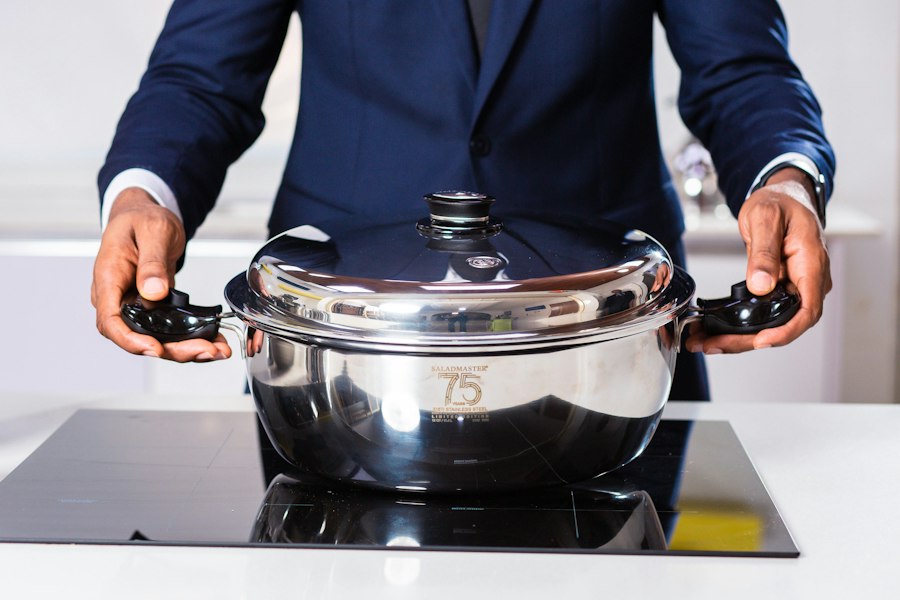
Once you’ve performed the magnetic test and checked labels, the ultimate confirmation is to try using the cookware on your induction cooktop.
The Initial Power-Up: A Gentle Introduction
Don’t immediately crank up the heat to maximum. Start with a lower setting to observe how the cookware interacts with the cooktop.
The “Click” and the “Hum”: Listening for Induction’s Signature
When you place compatible cookware on an induction cooktop, you might hear a faint “click” as the magnetic field engages. A low hum is also common as the cooktop generates heat.
The Visual Cue: Watch for Heat Distribution
As you begin to heat the pan, observe how the heat is distributed.
The Sizzle Test: Early Signs of Success
Place a small amount of oil or a drop of water in the pan. If it begins to heat up and sizzle relatively quickly, it’s a good sign.
The Water Boil Challenge: A Classic Benchmark
A simple and effective way to test heating efficiency is to see how quickly the cookware can boil water.
Water Volume and Heat Setting: Standardizing Your Test
To make your test consistent across different pots, use the same amount of water and the same heat setting.
A Liter of Truth: How Fast Can It Boil?
Fill a pot with, for example, 1 liter of cold water. Set your induction cooktop to a medium-high setting (e.g., 7 or 8 out of 9). Time how long it takes for the water to reach a rolling boil.
Comparing Your Results: What’s Fast, What’s Slow?
- Fast Boilers (under 5 minutes): These are likely excellent induction cookware.
- Moderate Boilers (5-8 minutes): These are probably compatible but might not be the most efficient.
- Slow Boilers (over 10 minutes) or No Boiling: If the water takes an exceptionally long time to boil or doesn’t boil at all, your cookware might not be suitable, or it’s a very inefficient match.
When considering the best cookware for induction cooking, it’s essential to understand how to test its compatibility effectively. One helpful resource that delves into this topic is an article on Freaky Science, which provides insights on various methods to determine if your cookware will work with induction cooktops. You can read more about it in their detailed guide on testing cookware for induction. This information can help ensure that you make informed decisions when upgrading your kitchen essentials.
The “Cooktop Scratch” Concern: Protecting Your Investment
| Test Method | Description | Required Tools | Expected Result for Induction Compatibility | Notes |
|---|---|---|---|---|
| Magnet Test | Place a magnet on the base of the cookware to check for magnetic attraction. | Small magnet | Magnet sticks firmly to the base. | Most induction-compatible cookware is magnetic; stainless steel and cast iron usually pass this test. |
| Induction Cooktop Test | Place cookware on an induction cooktop and turn it on to a low or medium setting. | Induction cooktop | Cookware heats up quickly and evenly. | Direct test of compatibility; cookware should respond immediately. |
| Cookware Label Check | Look for induction compatibility symbols or labels on the cookware packaging or base. | None | Presence of induction symbol or wording. | Reliable if from reputable manufacturers. |
| Conductivity Test | Use a conductivity meter to check if the base conducts electricity (induction requires magnetic conductivity). | Conductivity meter | High magnetic conductivity reading. | Less common method; more technical. |
One of the primary concerns with induction cooktops is the potential for scratching their delicate glass-ceramic surfaces. This is where the material of your cookware’s base becomes even more critical.
Base Surface Integrity: Smoothness is Key
The underside of your cookware should be smooth and free of any sharp edges or rough imperfections.
Rough Edges and Gritty Bases: A Recipe for Disaster
If the base of your pot or pan feels rough or has burrs, it can easily create scratches on the cooktop surface.
The Finger-Drag Test: Feeling for Imperfections
Gently run your finger across the underside of the cookware. If you feel any catches, snags, or sharp points, that cookware is a high risk for scratching.
The “Slide” vs. “Drag” Test: Observing Movement
How the cookware moves on the cooktop surface is also an indicator of potential scratching.
The Gentle Glide: A Good Sign
When you place compatible, smooth-bottomed cookware on the cooktop, it should glide easily when you gently nudge it.
The Grinding Grind: A Warning Signal
If the cookware feels like it’s grinding or catching when you try to slide it, it’s a strong indicator that it could scratch the cooktop. This is often due to rough bases or the presence of abrasive particles on the cookware.
Using Cookware Protectors: An Extra Layer of Security
If you have cookware that you suspect might be a bit rough on the bottom, or if you want to be extra cautious, consider using cookware protectors.
Fabric or Silicone Mats: The Protective Barrier
These are thin, circular mats made of fabric or silicone that you place between the cooktop and your cookware. They provide a cushion and prevent direct contact, significantly reducing the risk of scratches.
The Induction Adapter Plate: A Bridge for Your Beloved Cookware
What if you’ve tested your favorite pots and pans, and they just won’t work? Before you relegate them to a dusty corner of your kitchen, consider an induction adapter plate.
What is an Induction Adapter Plate?
An induction adapter plate is a disc-shaped metal plate, typically made of stainless steel, that you place on your induction cooktop. You then place your non-induction-compatible cookware on top of the adapter plate.
The Mechanism of Action: Converting Induction Heat
The adapter plate is induction-compatible. When you turn on the cooktop, the magnetic field heats the adapter plate. The adapter plate then transfers this heat to your non-induction cookware through direct contact, much like a traditional stovetop.
Choosing the Right Adapter Plate: Size and Thickness Matter
Not all adapter plates are created equal. Consider these factors when making your selection.
Size Considerations: Matching Your Cookware
The adapter plate should be at least as wide as the base of the cookware you intend to use with it. If the plate is too small, it won’t effectively transfer heat to the entire base of your pan.
Thickness and Material: Efficiency is Key
Thicker plates might be more durable but can sometimes lead to slower heat transfer. Look for plates made of high-quality, conductive materials for optimal performance.
The Pros and Cons of Using an Adapter Plate
While adapter plates offer a solution, they come with their own set of advantages and disadvantages.
Advantages:
- Preserves your existing cookware: You can continue to use your favorite pots and pans without buying new ones.
- Cost-effective: It’s generally less expensive to buy an adapter plate than to replace an entire set of cookware.
- Versatility: Allows you to use a wider range of cookware on your induction cooktop.
Disadvantages:
- Slightly reduced efficiency: Some heat will inevitably be lost during the transfer from the adapter plate to your cookware.
- Potential for uneven heating: If the adapter plate isn’t perfectly flat or if the cookware doesn’t make full contact, you might experience some hot spots.
- Additional step: It’s an extra piece to place and remove, adding a minor inconvenience to your cooking routine.
By following these steps, you can confidently test your cookware for induction compatibility. You’ll be able to identify which of your current pieces will perform beautifully on your new cooktop, and you’ll know when it’s time to consider an adapter plate or invest in new induction-ready cookware. Embrace the journey of induction cooking, and enjoy the delicious results!
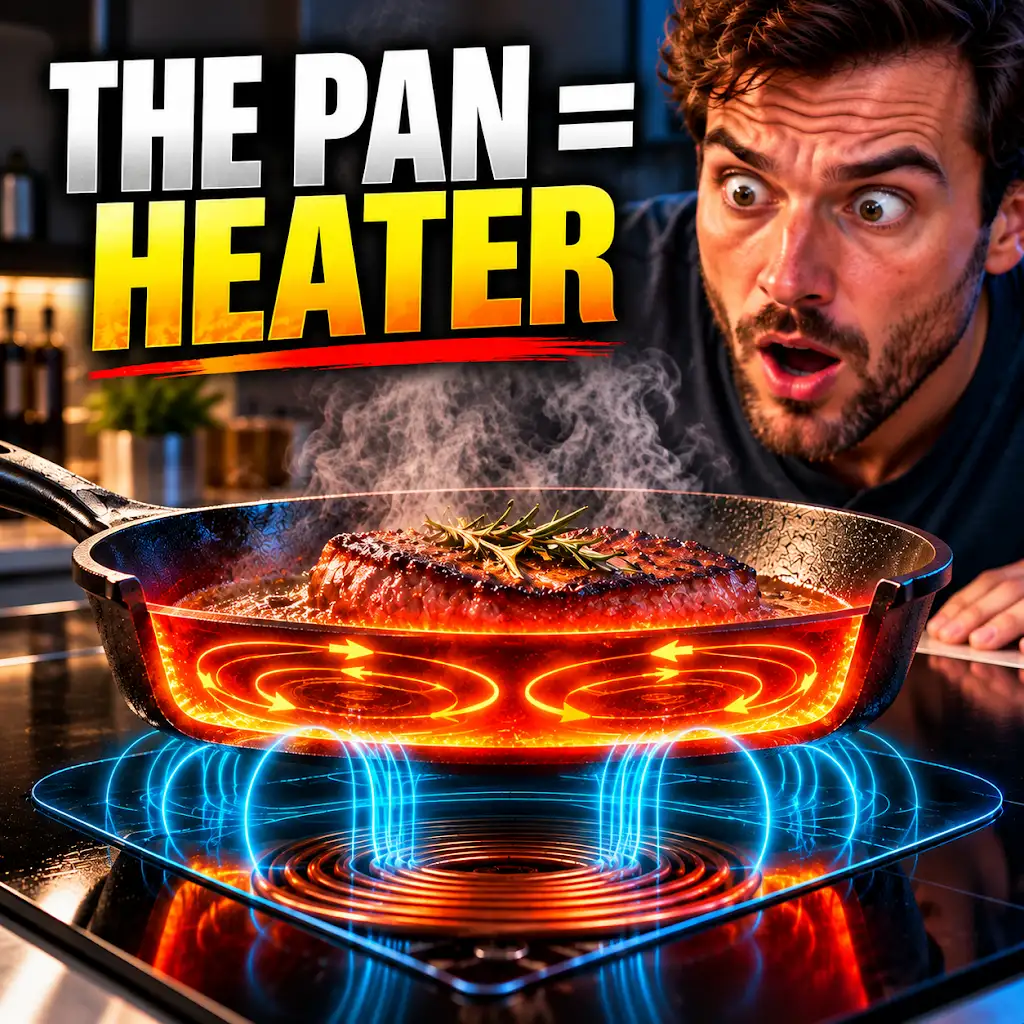
The Pan Is the Heater: How Induction Cooking Really Works
FAQs
What is induction cooking?
Induction cooking is a method of cooking that uses electromagnetic energy to heat cookware directly, rather than relying on a flame or electric heating element.
How can I test if my cookware is compatible with induction cooking?
To test if your cookware is compatible with induction cooking, simply place a magnet on the bottom of the cookware. If the magnet sticks, then the cookware is induction-compatible.
What types of cookware are suitable for induction cooking?
Cookware made from magnetic materials such as cast iron, stainless steel, and some types of aluminum are suitable for induction cooking.
Can non-magnetic cookware be used on an induction cooktop?
Non-magnetic cookware, such as copper or glass, will not work on an induction cooktop as they do not have the necessary magnetic properties to generate heat.
Are there any other ways to test cookware for induction compatibility?
Another way to test cookware for induction compatibility is to check the manufacturer’s label or packaging for information on whether the cookware is suitable for induction cooking.