
You stand at the precipice of a culinary revolution, a transformation so profound it will redefine your relationship with the kitchen. For generations, cooking has relied on the fundamental principles of heat transfer – conduction, convection, and radiation. You’ve mastered the delicate dance of flame, the slow embrace of simmering water, and the searing kiss of a hot pan. But what if there was a new maestro in town, a force that could orchestrate your ingredients with unprecedented precision and efficiency? This is the dawn of a new era, powered by the ingenious manipulation of magnetic fields for cooking. Forget everything you thought you knew about heat. You are about to witness the revolutionizing power of changing magnetic field induction.
You’re likely familiar with the stovetop that hums and heats up directly, the one where you can instantly adjust the flame or temperature. That’s traditional heating. Induction, however, is a different beast, a silent, unseen force that works its magic through the principles of electromagnetism. At its core, induction cooking harnesses the power of rapidly changing magnetic fields to directly heat your cookware. It’s not magic; it’s pure, applied physics, and understanding its underpinnings is the first step to appreciating its revolutionary potential.
The Electromagnetism Equation: From Current to Heat
The fundamental principle behind induction cooking lies in Faraday’s Law of Induction. You might recall this from your physics classes: a changing magnetic field induces an electromotive force (EMF) – essentially, an electrical voltage – in a conductor. In an induction cooktop, this is precisely what happens. Beneath the smooth ceramic glass surface, there’s a coil of copper wire. When you activate the cooktop, an alternating electrical current flows through this coil. This alternating current, by its very nature, generates a rapidly changing magnetic field.
This magnetic field extends upwards from the coil. When you place a compatible pot or pan on the cooktop, this changing magnetic field interacts with the metallic base of your cookware. The key here is that the cookware itself must be made of a ferromagnetic material – materials like cast iron or certain types of stainless steel that are strongly attracted to magnets. This ferromagnetic property allows the magnetic field to induce electrical currents, known as eddy currents, within the base of the pan.
Eddy Currents: The Unseen Heat Generators
These eddy currents are where the real heat generation happens. As these currents flow through the resistive material of your cookware’s base, they encounter resistance. And just like a resistor in an electrical circuit generates heat when current flows through it (think of a toaster’s heating element), these eddy currents generate heat directly within the pan itself. This phenomenon is described by Joule heating, or resistive heating. So, instead of the stovetop heating up and then transferring that heat to the pan through conduction, the pan itself becomes the heat source. It’s an incredibly direct and efficient process.
Magnetic Permeability and Resistivity: The Cookware Connection
Not all cookware will work with induction. The effectiveness of induction heating is directly related to the magnetic properties of your cookware. Specifically, two key properties are crucial: magnetic permeability and electrical resistivity.
Magnetic Permeability: The Magnet’s Grip
Magnetic permeability is a measure of how easily a material can be magnetized. Ferromagnetic materials, like those used in many cast iron and stainless steel pans, have high magnetic permeability. This means they readily accept and concentrate the magnetic field lines from the induction coil. Higher permeability leads to stronger eddy currents and thus more efficient heating. Materials like aluminum, copper, and glass have very low magnetic permeability and are not suitable for induction cooking on their own.
Electrical Resistivity: The Resistance to Flow
Electrical resistivity, on the other hand, measures how much a material resists the flow of electrical current. For effective induction heating, you want a material with a moderate level of electrical resistivity. If the resistivity is too low, the eddy currents will flow too freely, generating less heat. If it’s too high, the material might overheat and become damaged. The ideal cookware material strikes a balance, allowing for significant eddy current formation and subsequent heat generation. This is why many “induction-compatible” stainless steel pans have a layered construction, often incorporating a ferromagnetic core.
Recent advancements in induction cooking technology have sparked interest in the effects of changing magnetic fields on cooking efficiency and food quality. For a deeper understanding of this topic, you can explore a related article that discusses the principles behind induction cooking and its benefits. To read more, visit this article.
Revolutionizing Your Kitchen: The Advantages of Induction
You’ve grappled with the science, and now you’re ready for the payoff. The advantages of induction cooking are not just incremental improvements; they are genuine revolutions in how you can approach your culinary endeavors. Imagine a kitchen that is safer, cleaner, more efficient, and offers you unparalleled control. This is the promise of induction.
Unparalleled Precision and Control: The Chef’s Dream
This is where induction truly shines, transforming you from a cook into a culinary artist. The responsiveness of induction cooktops is unlike anything you’ve experienced before. When you turn the dial or touch the controls, the heat output changes almost instantaneously. There’s no lag time for the element to heat up or cool down.
Instantaneous Heat Adjustment
You can go from a gentle simmer to a rolling boil in seconds, and vice versa. This level of immediate feedback allows you to make fine-tuned adjustments as you cook, preventing overcooking or undercooking with a precision that was previously impossible with traditional stovetops. Think about melting chocolate without scorching it, or achieving that perfect sear on a steak without burning the edges. This granular control empowers you to execute complex techniques with confidence and consistency.
Consistent Temperature Distribution
Because the heat is generated directly within the base of the pan, induction cooking provides a remarkably even distribution of heat across the entire cooking surface. You won’t encounter hot spots or cold patches that plague other cooking methods, leading to more uniformly cooked food. This means your stir-fries will be perfectly cooked from edge to edge, and your pancakes will have an even golden-brown hue.
Superior Energy Efficiency: Saving Time and Money
You’re not just buying a new appliance; you’re investing in a more sustainable and cost-effective way of cooking. Induction technology is remarkably energy-efficient, leading to noticeable savings on your utility bills and a reduced environmental impact.
Minimizing Heat Loss
Unlike gas or electric coil stovetops, which heat the surrounding air and cooktop surface, induction cooking directs most of its energy directly to the cookware. This means significantly less wasted heat escaping into your kitchen. Imagine a cooler kitchen environment, even when you’re cooking up a storm. This efficiency translates into less energy consumption for the same amount of cooking.
Faster Cooking Times
Because the heat is generated so directly and efficiently within the pan, induction cooktops often cook food faster than traditional methods. This means you can prepare meals in less time, which is a welcome benefit in our increasingly fast-paced lives. Boiling water, for instance, can be up to 50% faster on an induction cooktop compared to a ceramic electric hob.
Enhanced Safety Features: Peace of Mind for Your Household
You can finally banish the nagging worry of leaving a burner on. Induction cooktops offer a range of safety features that make them a significantly safer option for your home, especially if you have children or pets.
Cool-Touch Surface
Since the heat is generated within the pan itself, the surface of the induction cooktop remains relatively cool. While it will get warm from residual heat from the pan, it doesn’t get searingly hot like a traditional electric coil or ceramic hob. This dramatically reduces the risk of accidental burns.
Automatic Shut-Off and Pan Detection
Most induction cooktops feature automatic shut-off mechanisms. If you remove a pan from the surface, or if the pan is not detected, the cooktop will automatically turn off, preventing unnecessary energy consumption and potential hazards. This built-in intelligence adds another layer of safety and convenience.
Exploring the Design and User Experience: A Seamless Integration
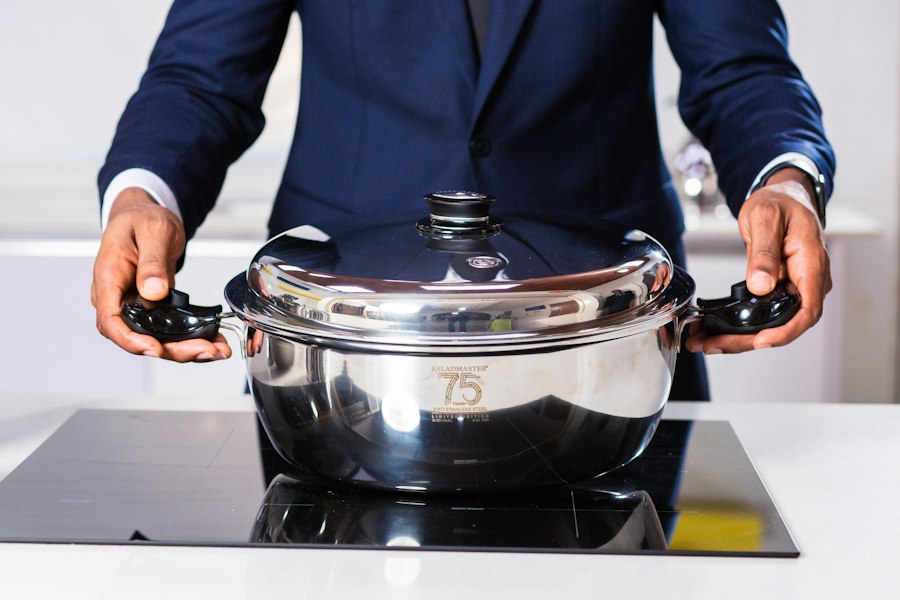
You’re not just buying a functional appliance; you’re inviting a piece of modern design into your kitchen. Induction cooktops have evolved significantly, offering sleek aesthetics and intuitive interfaces that enhance both your cooking experience and the overall ambiance of your culinary space.
The Sleek Aesthetics of Modern Kitchens
Induction cooktops are renowned for their minimalist and contemporary design. The flat, smooth ceramic glass surface not only looks sophisticated but also makes cleaning an absolute breeze. Say goodbye to stubborn food splatters caught in nooks and crannies.
Flat, Seamless Surfaces
The absence of raised burners or grates means you can effortlessly wipe down the entire cooking surface with a single cloth. This not only makes cleaning more efficient but also contributes to a cleaner, more hygienic kitchen environment. Your kitchen will feel more streamlined and open.
Integrated Controls and Displays
Many induction cooktops feature touch-sensitive controls integrated directly into the glass surface. This creates a clean, uncluttered look and often offers precise digital temperature settings and timers. The visual appeal is undeniable, and the user interface is typically designed for intuitive operation.
Intuitive User Interfaces: Cooking Made Simple
You don’t need to be a tech wizard to master induction cooking. The user interfaces are designed to be user-friendly and straightforward, allowing you to focus on the joy of cooking.
Digital Displays and Touch Controls
The digital displays provide clear visual feedback on power levels, temperatures, and timers, allowing for precise control. Touch controls are responsive and easy to operate, often offering a range of pre-set functions and customizable settings. Many models offer intuitive slider controls for seamless temperature adjustments.
Smart Features and Connectivity (Optional)
The evolution of induction technology has also brought about smart features. Some higher-end models offer Wi-Fi connectivity, allowing you to control your cooktop remotely via a smartphone app, receive notifications, and even access recipe guidance. While not essential for basic induction cooking, these features add a layer of modern convenience for those who embrace smart home technology.
The Evolution of Cookware: Adapting to the Induction Era

You’ve likely invested in cookware over the years, and the good news is that much of it might still be compatible with induction. However, understanding how cookware interacts with induction can help you make informed purchasing decisions and maximize your cooking efficiency.
Identifying Induction-Compatible Cookware: The Magnet Test
The simplest and most reliable way to determine if your existing cookware is induction-compatible is the magnet test.
The Power of the Magnet
Grab a regular refrigerator magnet. If it sticks firmly to the bottom of your pot or pan, it’s likely induction-compatible. This indicates that the cookware is made of a ferromagnetic material, which is essential for induction. If the magnet only weakly attaches or doesn’t attach at all, that particular piece of cookware will not work on an induction cooktop.
Specialized Cookware for Optimal Performance
While many standard pots and pans will work, there are also specialized induction cookware sets designed to offer the absolute best performance.
Multi-Ply Construction: The Key to Even Heating
Many induction-compatible pans feature a multi-ply construction. This typically involves layers of different metals bonded together. For example, a common construction might be a core of aluminum or copper for excellent heat conductivity, sandwiched between layers of stainless steel for durability and ferromagnetic properties. This combination ensures that the pan heats up quickly and evenly across its entire surface, further enhancing your cooking results.
Cast Iron and Enameled Cast Iron: Timeless Classics Reimagined
Your beloved cast iron skillet is often a perfect candidate for induction cooking. Its natural ferromagnetic properties make it ideal. Enameled cast iron also works well, as the enamel coating doesn’t interfere with the magnetic field. These pieces offer exceptional heat retention, making them perfect for slow cooking, searing, and braising.
Recent advancements in induction cooking technology have been significantly influenced by changes in magnetic field induction. This innovative approach not only enhances cooking efficiency but also improves energy consumption. For a deeper understanding of the science behind these developments, you can explore a related article that delves into the principles of magnetic fields and their applications in modern cooking methods. This insightful piece can be found at Freaky Science, where you can learn more about the fascinating intersection of science and culinary techniques.
Embracing the Future: Your Culinary Transformation
| Parameter | Typical Value | Unit | Description |
|---|---|---|---|
| Frequency of Magnetic Field | 20 – 100 | kHz | Operating frequency range for induction cooking |
| Magnetic Field Strength | 5 – 20 | mT (millitesla) | Magnetic flux density near the cooking surface |
| Power Output | 1000 – 3500 | W (watts) | Typical power range for induction cooktops |
| Induced Eddy Current Density | 10 – 100 | A/m² | Current density induced in the cookware base |
| Cookware Material | Ferromagnetic | N/A | Material type required for induction heating |
| Heating Efficiency | 80 – 90 | % | Energy transfer efficiency from coil to cookware |
| Coil Diameter | 10 – 20 | cm | Typical size of induction coil under the cooktop |
| Skin Depth in Cookware | 0.1 – 0.5 | mm | Depth at which induced currents penetrate the cookware |
You’ve journeyed through the science, explored the benefits, admired the design, and understood the cookware. Now, it’s time to embrace the change. The revolutionizing power of changing magnetic field induction is not a fleeting trend; it’s a fundamental shift in how you can interact with food and fire (or rather, the absence of it).
The Future of Your Kitchen: More Than Just a Stovetop
Induction cooking is more than just a new appliance; it’s an invitation to a more efficient, safer, and precise way of preparing meals. It empowers you to experiment, to refine your techniques, and to unlock new levels of culinary creativity. Imagine impressing your guests with perfectly cooked dishes, knowing you achieved them with unparalleled control and minimal effort.
Your Role as the Culinary Innovator
You are now equipped with the knowledge to make informed decisions about your kitchen. Whether you’re upgrading your existing cooktop or embarking on a kitchen renovation, consider the revolutionary potential of induction. You have the power to transform your everyday cooking into an art form. Step into the future, and let the power of changing magnetic fields revolutionize your culinary journey. Your kitchen, and your taste buds, will thank you.
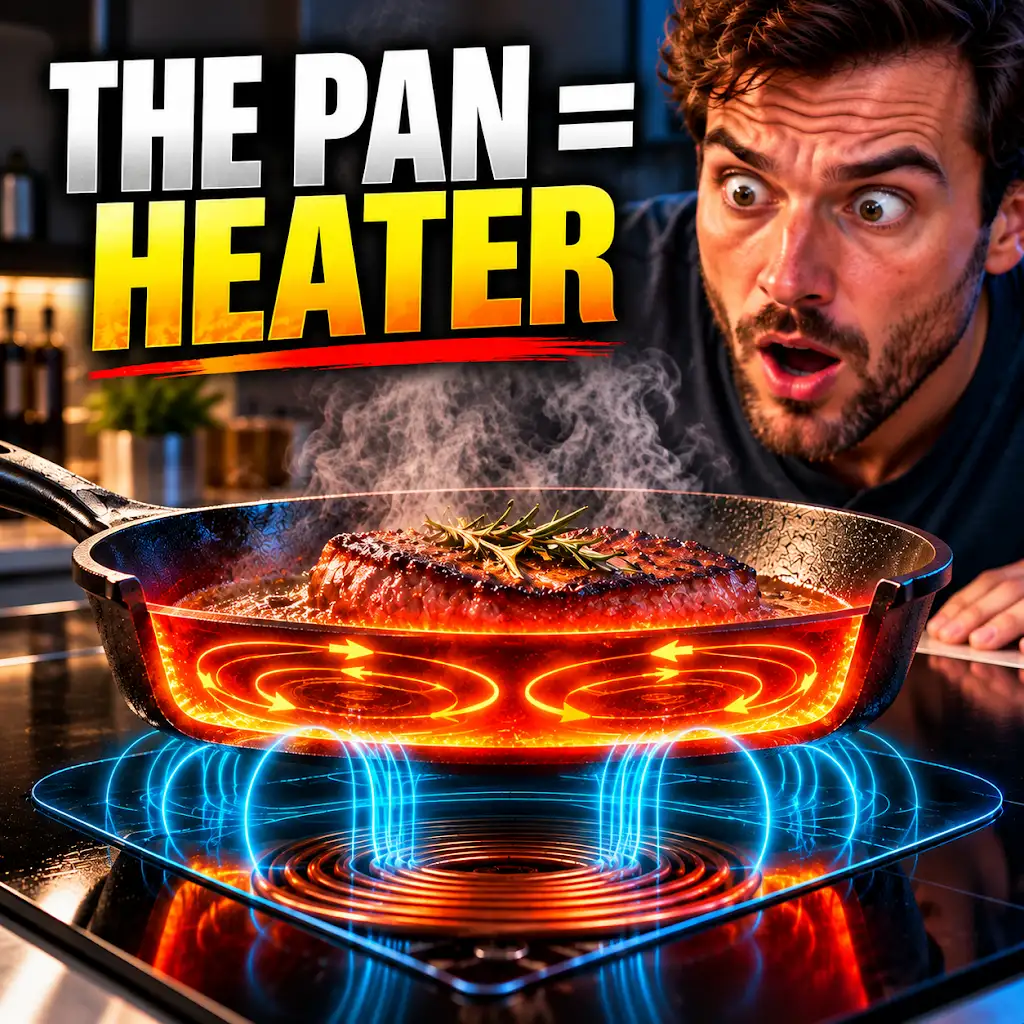
The Pan Is the Heater: How Induction Cooking Really Works
FAQs
What is changing magnetic field induction cooking?
Changing magnetic field induction cooking is a method of cooking that uses electromagnetic induction to heat cookware directly, without the need for a traditional heating element like a gas flame or electric coil.
How does changing magnetic field induction cooking work?
Changing magnetic field induction cooking works by creating a magnetic field that induces a current in the cookware, which in turn generates heat. This heat is then transferred to the food inside the cookware, allowing for efficient and precise cooking.
What are the advantages of changing magnetic field induction cooking?
Some advantages of changing magnetic field induction cooking include faster heating times, more precise temperature control, energy efficiency, and a cooler cooking surface compared to traditional methods.
Is special cookware required for changing magnetic field induction cooking?
Yes, special cookware with a magnetic bottom is required for changing magnetic field induction cooking to work effectively. Cookware made of materials like cast iron or magnetic stainless steel are typically recommended for use with induction cooktops.
Are there any safety concerns with changing magnetic field induction cooking?
While changing magnetic field induction cooking is generally considered safe, there are some safety concerns to be aware of. For example, the cookware and cooktop can get very hot during cooking, so it’s important to use caution and follow the manufacturer’s instructions to prevent burns or other accidents.