You’re standing in your workshop, a project laid out before you. You need to bend a piece of metal precisely, or perhaps you’re looking for a way to quickly and efficiently braze a joint. You’ve heard whispers of a technology called induction heating, and you’re curious. It sounds almost magical, this ability to heat metal from within, without a direct flame. But how does it actually work? Let’s dive in and demystify the fascinating world of induction heating, so you can understand its principles and consider its applications for your own endeavors.
At its core, induction heating is all about the powerful interplay between electricity and magnetism. You’re not dealing with a simple resistive heating element here; instead, you’re harnessing fundamental physics to generate heat directly within your conductive workpiece.
Generating the Magnetic Field: The Coil is Key
The heart of any induction heating system is the induction coil. Imagine a coil of conductive wire, often copper, through which you’re going to pass an alternating electric current. This alternating current, constantly changing its direction and magnitude, is the crucial ingredient. As this current flows through the coil, it generates a fluctuating magnetic field that surrounds and permeates the coil itself.
The Alternating Current’s Role
Think of it like this: as the current flows in one direction, it creates a magnetic field pointing in a particular direction. Then, as the current reverses, the magnetic field also reverses its direction. This continuous oscillation of the electric current translates directly into a rapidly changing, oscillating magnetic field. The frequency of this alternating current is a critical parameter that dictates how effectively the heat is generated and how deeply it penetrates the workpiece. Higher frequencies generally lead to shallower heating, ideal for surface hardening or brazing, while lower frequencies allow for deeper penetration, useful for through-heating or hardening.
The Strength of the Field
The strength of this magnetic field is directly proportional to the amount of current flowing through the coil and the number of turns in the coil. A more robust current and a more densely wound coil will produce a stronger magnetic field, capable of inducing more powerful currents in the workpiece. This is why induction heating systems are designed with specific power outputs and coil configurations tailored to the size and material of the object being heated.
The Magic of Induction: Eddy Currents Emerge
Now, here’s where the magic truly begins. When you place a conductive workpiece, such as a metal object, within the oscillating magnetic field generated by the coil, something remarkable happens. The changing magnetic field “induces” electrical currents within the workpiece itself. These are not just any currents; they are known as Eddy Currents.
Faraday’s Law of Induction in Action
This phenomenon is a direct consequence of Faraday’s Law of Induction, a cornerstone of electromagnetism. The law states that a changing magnetic field through a conductive loop will induce an electromotive force (EMF), which in turn drives an electric current. In your workpiece, the entire conductive mass is effectively acting as a multitude of tiny, interconnected conductive loops. As the magnetic field oscillates, it cuts across these loops, inducing these Eddy Currents to flow within the material.
The Path of the Eddy Currents
These Eddy Currents flow in closed loops within the workpiece, circulating around the lines of magnetic flux. They tend to flow perpendicular to the direction of the magnetic field. Imagine the magnetic field lines passing through your workpiece; the Eddy Currents are essentially swirling around these lines, trying to oppose the very change in magnetic flux that created them.
The Effect of Material Properties
The magnitude of these induced Eddy Currents is influenced by the electrical conductivity of the workpiece material. Highly conductive materials like copper and aluminum will readily support larger Eddy Currents. Conversely, less conductive materials will have weaker Eddy Currents. The shape and geometry of the workpiece also play a role, influencing how the Eddy Currents distribute themselves.
Induction heating is a fascinating process that utilizes electromagnetic fields to heat conductive materials without direct contact. For a deeper understanding of this technology and its applications, you can explore a related article that delves into the principles and mechanisms behind induction heating. To learn more, visit Freaky Science, where you will find insightful information and explanations that enhance your knowledge of this innovative heating method.
The Source of Heat: Resistance and Energy Conversion
So, you have these Eddy Currents flowing within your conductive workpiece. But how does this translate into heat? This is where the Joule heating effect, also known as resistive heating, comes into play.
Joule Heating: The Resistance Factor
Every conductive material, even a good conductor, has some inherent electrical resistance. As these Eddy Currents, driven by the changing magnetic field, are forced to flow through the material’s resistance, they encounter opposition. This opposition causes the electrical energy of the Eddy Currents to be converted into thermal energy – essentially, heat.
The Formula for Heat Generation
The amount of heat generated is described by Joule’s Law, which states that the heat produced (Q) is proportional to the square of the current (I), the resistance of the conductor (R), and the time (t) for which the current flows: Q = I²Rt. In the context of induction heating, the current (I) refers to the Eddy Currents induced within the workpiece, and the resistance (R) is the inherent resistance of the workpiece material.
The Power of Proportionality
The I² (current squared) term is particularly important. It means that even a small increase in the magnitude of the Eddy Currents can lead to a significantly larger increase in heat generation. This is why efficient induction heating systems are designed to maximize the induced Eddy Current density within the target area of the workpiece.
Hysteresis Losses: A Secondary Heating Mechanism
For ferromagnetic materials (like iron, steel, nickel, and cobalt), there’s an additional mechanism contributing to heat generation: hysteresis losses. This phenomenon is related to the magnetic domain structure of these materials.
Magnetic Domains and Their Alignment
Ferromagnetic materials are composed of tiny regions called magnetic domains, each with its own magnetic field. In the absence of an external magnetic field, these domains are randomly oriented, resulting in no net magnetism. However, when an external magnetic field is applied, these domains tend to align with the field.
The Work of Reorientation
As the alternating magnetic field from the induction coil oscillates, it constantly tries to reorient these magnetic domains within the ferromagnetic workpiece. This constant process of alignment and re-alignment, pushing and pulling the magnetic domains against their internal friction, requires energy. This energy is dissipated as heat.
Frequency and Hysteresis
Hysteresis losses are particularly significant at the frequencies typically used in induction heating. The faster the magnetic field reverses, the more work is done to reorient the domains, and consequently, more heat is generated. This makes hysteresis losses a valuable contributor to heating ferromagnetic materials, especially for achieving rapid temperature increases.
Controlling the Heat: Factors Influencing Induction Heating
The beauty of induction heating lies not only in its ability to generate heat but also in the remarkable control you have over the process. Several factors can be manipulated to achieve precise heating outcomes.
Frequency: The Depth of Heat Penetration
As touched upon earlier, the frequency of the alternating current is a critical parameter. It directly influences how deeply the induced Eddy Currents penetrate the workpiece.
Skin Effect: A Fundamental Concept
This phenomenon is known as the “skin effect.” At higher frequencies, Eddy Currents tend to concentrate on the surface of the conductor. At lower frequencies, they can penetrate much deeper into the material.
High-Frequency Applications
For surface hardening applications, where you want to heat only the outer layer of a metal part to create a hard, wear-resistant surface, high frequencies (hundreds of kilohertz to megahertz) are employed. This ensures that the heat is localized to the surface, leaving the core of the material relatively unaffected and tough.
Low-Frequency Applications
Conversely, for through-hardening or heating larger cross-sections, lower frequencies (tens to hundreds of hertz) are used. These lower frequencies allow the Eddy Currents to penetrate more deeply, leading to more uniform heating throughout the entire volume of the workpiece.
Power Output: The Rate of Heating
The power output of the induction heating system directly dictates the rate at which heat is generated. A higher power output means more current flowing through the coil, leading to stronger induced Eddy Currents and thus faster heating.
Matching Power to the Task
The required power output depends on the size and mass of the workpiece, the desired heating temperature, and the time frame in which you need to achieve it. For instance, heating a small workpiece for brazing will require significantly less power than heating a large steel billet for forging.
Power Regulation
Modern induction heating systems often incorporate sophisticated power regulation circuits that can precisely control the power delivered to the coil, ensuring consistent and repeatable heating cycles. This is vital for maintaining tight tolerances and achieving desired metallurgical properties.
Coil Design: Shaping the Magnetic Field
The design of the induction coil itself is paramount in directing and shaping the magnetic field, and consequently, the distribution of Eddy Currents within the workpiece.
Coil Geometry and Workpiece Interaction
The shape of the coil is carefully matched to the geometry of the workpiece to ensure optimal magnetic coupling and efficient energy transfer. For example, a cylindrical coil is ideal for heating cylindrical parts, while a more complex, custom-designed coil might be necessary for irregularly shaped objects.
Coil Inductance and Impedance Matching
The inductance of the coil, along with the impedance of the workpiece, influences the overall electrical circuit of the induction heating system. Proper impedance matching between the power supply, the coil, and the workpiece is crucial for maximizing power transfer and achieving efficient heating. This often involves using matching networks to ensure that the system operates at its peak efficiency.
Workpiece Material Properties: Conductivity and Permeability
The inherent properties of the workpiece material play a significant role in how effectively it can be heated by induction.
Electrical Conductivity
As mentioned earlier, materials with higher electrical conductivity will experience larger induced Eddy Currents. This means they will heat up more readily.
Magnetic Permeability
For ferromagnetic materials, magnetic permeability is another crucial factor. Permeability is a measure of how easily a material can be magnetized. Materials with high magnetic permeability will concentrate magnetic flux lines more effectively, leading to stronger induced Eddy Currents and hysteresis losses, and thus more efficient heating. Non-ferromagnetic materials like aluminum and copper, while conductive, have very low permeability.
Benefits of Induction Heating: Why Choose It?
With its unique operational principles, induction heating offers a compelling set of advantages that make it a preferred choice for a wide range of industrial and workshop applications.
Speed and Efficiency: Rapid Heating Cycles
One of the most significant advantages of induction heating is its speed. Because heat is generated directly within the workpiece, energy is not wasted heating surrounding air or a furnace. This leads to incredibly rapid heating cycles, allowing for faster production throughput.
Minimal Heat-Up Time
Unlike conventional heating methods that require a furnace to reach operating temperature, an induction heating system can be switched on and immediately begin heating the workpiece. This eliminates lengthy preheating times, saving valuable production time and energy.
Precise Temperature Control
The rapid response of induction heating systems allows for very precise control over the workpiece temperature. You can ramp up the temperature quickly to a specific point and then maintain it with minimal overshoot, ensuring consistent results.
Precision and Control: Targeted Heating
Induction heating offers exceptional precision in where and how the heat is applied. By carefully designing the coil and controlling the frequency and power, you can achieve highly localized heating.
Surface Hardening Excellence
This precision is particularly valuable for applications like surface hardening. You can selectively harden only the critical wear surfaces of a component, leaving the rest of the material with its original ductility and toughness. This optimized material property profile enhances the component’s performance and lifespan.
Brazing and Soldering Accuracy
For joining operations like brazing and soldering, induction heating allows for precise heating of the joint area without overheating adjacent sensitive components. This minimizes the risk of damage and ensures strong, reliable bonds.
Environmental Advantages: Clean and Safe Operation
Induction heating is an inherently clean and safe process, especially when compared to many traditional heating methods.
No Combustion Byproducts
Unlike flame-based heating, induction heating produces no combustion byproducts, eliminating the need for fume extraction systems in many cases and contributing to a healthier working environment.
Reduced Emissions
The efficiency of induction heating also translates to lower energy consumption, which in turn can lead to a reduction in greenhouse gas emissions compared to less efficient heating methods.
Operator Safety
The absence of open flames and extremely hot surfaces, combined with the contained nature of the process, significantly enhances operator safety. The induction coil itself typically remains relatively cool during operation, reducing the risk of burns.
Versatility: A Wide Range of Applications
The adaptability of induction heating makes it suitable for an astonishingly diverse array of applications across numerous industries.
Metalworking: Forging, Heat Treating, Brazing, Soldering
From the high-temperature demands of forging and heat-treating large metal components to the intricate precision required for brazing and soldering delicate electronic parts, induction heating excels.
Semiconductor Manufacturing
In the semiconductor industry, induction heating plays a vital role in processes like crystal growth and wafer processing, where extreme temperature control and purity are paramount.
Food Processing
Even in the food industry, specialized induction heating systems are used for sterilization and cooking applications.
Induction heating is a fascinating process that utilizes electromagnetic fields to generate heat within conductive materials, making it an efficient method for various applications such as cooking and metalworking. For a deeper understanding of the principles behind this technology, you can explore a related article that delves into the science of induction heating and its practical uses. This informative piece can be found here, providing insights that complement your knowledge of how induction heating operates.
Common Applications of Induction Heating
| Parameter | Description | Typical Values / Notes |
|---|---|---|
| Frequency | The alternating current frequency used to generate the magnetic field | 1 kHz to 1 MHz (commonly 10 kHz to 400 kHz) |
| Coil Type | Shape and material of the induction coil | Water-cooled copper coil, spiral or pancake shape |
| Power Input | Electrical power supplied to the induction coil | From a few hundred watts to several kilowatts |
| Workpiece Material | Material being heated by induction | Conductive metals like steel, iron, copper, aluminum |
| Skin Depth | Depth at which the induced current density falls to 1/e of its surface value | Depends on frequency and material; typically micrometers to millimeters |
| Heating Mechanism | How heat is generated in the workpiece | Induced eddy currents and hysteresis losses in ferromagnetic materials |
| Heating Time | Time required to reach desired temperature | Seconds to minutes depending on power and workpiece size |
| Temperature Range | Typical temperatures achievable by induction heating | Up to 1500°C or higher depending on application |
The principles of induction heating are not confined to specialized laboratories; they are actively employed in a multitude of practical scenarios that you might encounter or benefit from.
Metal Fabrication: Bending and Forming
When you need to bend metal tubing or rod to a specific shape, induction heating is an excellent solution.
Localized Softening for Bending
By applying heat directly to the bend area, the metal becomes more pliable, allowing for precise bending without kinking or damaging the material. This is far more controlled and less labor-intensive than traditional methods.
Reduced Springback
Induction heating can also help to reduce “springback,” the tendency of metal to return to its original shape after bending. This ensures that your bent components maintain their intended form.
Joining Metals: Brazing and Soldering
Creating strong, durable joints between metal components is a common requirement, and induction heating shines in this area.
Precise Joint Heating
Induction coils can be designed to heat only the joint area, ensuring that the filler material melts and flows effectively while leaving surrounding areas unaffected. This is crucial for sensitive electronics or components with other heat-treated sections.
Consistent and Repeatable Joins
The precise control offered by induction heating leads to highly consistent and repeatable brazed or soldered joints, which is essential for mass production and critical applications.
Surface Hardening: Enhancing Durability
Achieving a hard, wear-resistant surface on metal parts is vital for extending their lifespan and improving their performance.
Creating a Hardened Layer
By using high-frequency induction heating, you can selectively heat the surface of a component, followed by rapid quenching. This creates a hardened layer while keeping the core tough and ductile, a desirable combination of properties.
Applications in Automotive and Manufacturing
This technique is widely used in the automotive industry for hardening gears, shafts, and other critical components, as well as in general manufacturing for tools and wear parts.
Through-Hardening: Strengthening the Entire Component
For applications where the entire component needs to be hardened throughout its cross-section, induction heating can also be employed.
Uniform Heating for Through-Hardening
By using lower frequencies and appropriately designed coils, you can achieve uniform heating throughout the mass of the workpiece, enabling through-hardening. This process is essential for components that experience high stress and require maximum strength.
Annealing and Normalizing: Modifying Material Properties
Induction heating can also be used to modify the metallurgical properties of metals through annealing and normalizing processes.
Stress Relief and Ductility Improvement
Annealing involves heating a metal to a specific temperature and holding it there to relieve internal stresses, improve ductility, and refine the grain structure. Induction heating allows for rapid and precise execution of these processes.
Achieving Desired Microstructures
Normalizing, a similar process, refines the grain structure and improves the toughness and machinability of steels. Induction heating provides the precise temperature control needed for effective normalization.
Melting and Casting: Forging New Forms
In some specialized applications, induction heating is used for melting metals, particularly for smaller-scale or specialized casting operations.
Controlled Melting of Metals
The ability to precisely control the heating rate and temperature makes induction furnaces suitable for melting various metals, including precious metals and alloys, where purity and minimal contamination are critical.
By understanding the fundamental principles of electromagnetism, the mechanisms of heat generation, and the factors influencing the process, you can begin to appreciate the power and versatility of induction heating. Whether you’re a hobbyist looking to improve your metalworking skills or a professional seeking more efficient and precise heating solutions, the world of induction heating offers a compelling and effective approach. You’ve now gained a solid foundation for exploring its practical applications and how it can benefit your work.
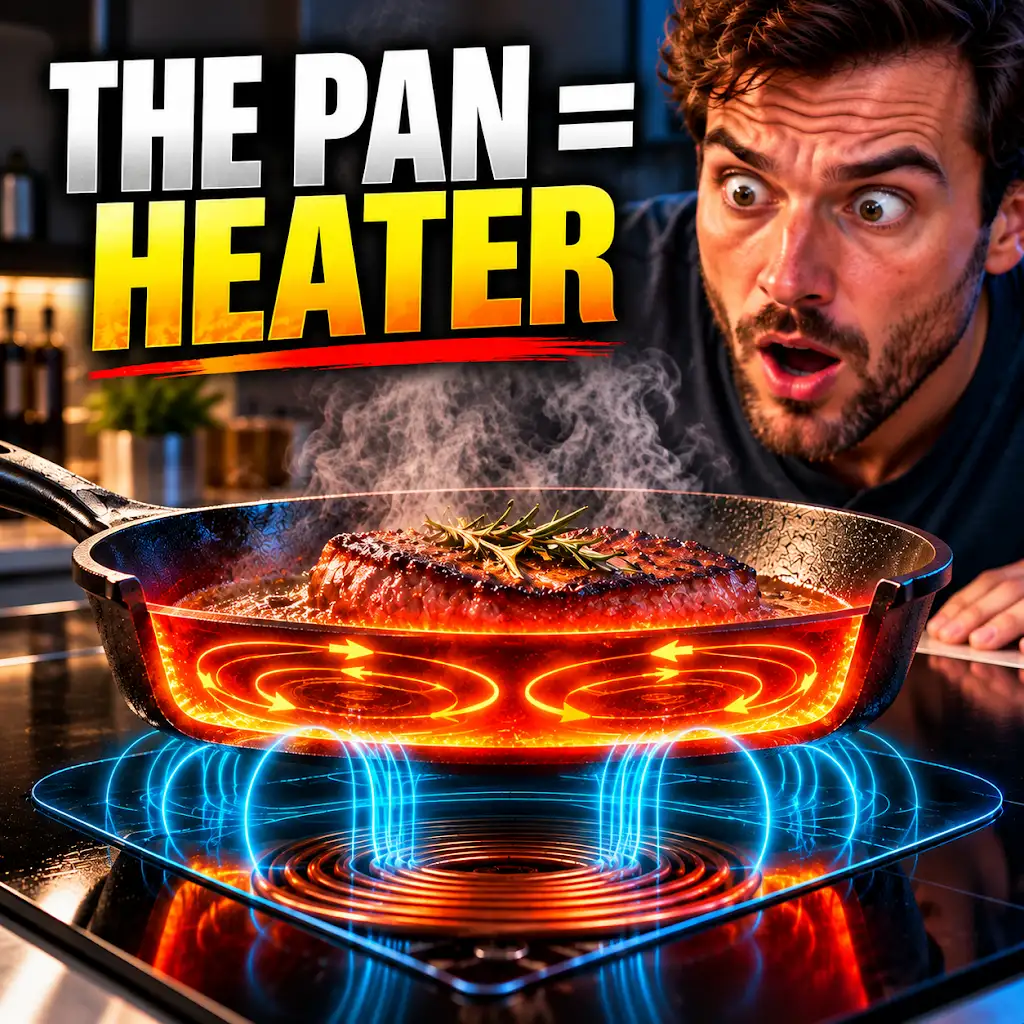
The Pan Is the Heater: How Induction Cooking Really Works
FAQs
What is induction heating?
Induction heating is a process where an electric current is passed through a conductive material to generate heat due to resistance.
How does induction heating work?
An alternating current is passed through a coil, creating a magnetic field. When a conductive material is placed within this field, eddy currents are induced, generating heat within the material.
What are the advantages of induction heating?
Induction heating is fast, efficient, and precise. It allows for localized heating, minimal heat loss, and can be automated for consistent results.
What are the applications of induction heating?
Induction heating is commonly used in metalworking for processes such as brazing, soldering, and heat treating. It is also used in industries like automotive, aerospace, and electronics.
Are there any limitations to induction heating?
Induction heating is limited to materials that are conductive, such as metals. Non-conductive materials like plastics or ceramics cannot be heated using this method. Additionally, the initial setup costs for induction heating equipment can be high.