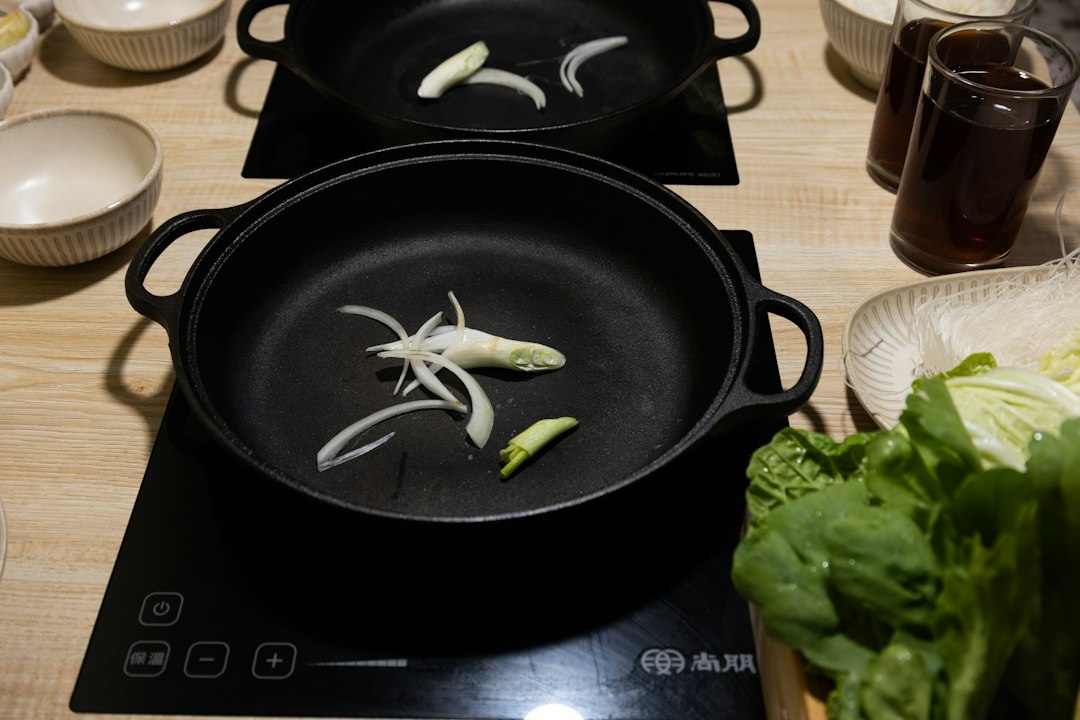
You’re standing in your kitchen, ready to whip up a culinary masterpiece. You flip a switch, and a radiant heat instantly blooms from the surface beneath your pot. Or perhaps, you’ve encountered a different kind of stovetop. You place your pan, hear a faint hum, and then, as if by magic, the pan itself begins to heat up. This isn’t sorcery; it’s the power of electromagnetic induction, a sophisticated technology that’s transforming how you cook. You might be a seasoned chef or a beginner baker, but understanding how this technology works will elevate your cooking experience and demystify the humming, heating surface beneath your cookware.
At its core, electromagnetic induction is a phenomenon that describes the creation of an electric current in a conductor when it is exposed to a changing magnetic field. This might sound like something out of a physics textbook, but it’s the very principle that allows your induction stove to heat your food so efficiently. To truly grasp how your induction cooktop works, you need to understand the interplay of magnetism and electricity.
Faraday’s Law: The Foundation of Induction
You’ve likely heard of Michael Faraday, a brilliant scientist whose experiments laid the groundwork for much of our modern electrical technology. His most crucial discovery in this context is Faraday’s Law of Induction. In simple terms, this law states that a voltage (and therefore a current, if there’s a complete circuit) is induced in a conductor whenever the magnetic flux through the area enclosed by the conductor changes. Imagine a loop of wire. If you move a magnet near that loop, or change the strength of the magnetic field around it, electrons within the wire will be nudged into motion, creating an electric current. This is the fundamental spark that ignites induction cooking.
Magnetic Flux: The Invisible Field
Magnetic flux is essentially a measure of the total magnetic field that passes through a given area. Think of it like the number of magnetic field lines piercing a surface. When this number changes, induction occurs. In an induction stove, the changing magnetic flux is generated by the stove itself.
Induced Electromotive Force (EMF)
The change in magnetic flux creates what’s known as an electromotive force (EMF). This EMF is essentially a voltage that drives the electric current. The faster the magnetic flux changes, the greater the EMF, and consequently, the stronger the induced current.
Ampere’s Law: The Inverse Relationship
While Faraday’s Law explains how a changing magnetic field creates an electric current, Ampere’s Law (specifically, Maxwell’s addition to it) reveals the reciprocal: an electric current creates a magnetic field. This bidirectional relationship is crucial. The induction stove uses electricity to generate a magnetic field, and this magnetic field then induces an electric current in your cookware.
Creating the Magnetic Field
The induction cooktop has a coil of wire beneath the ceramic glass surface. When you turn it on, an alternating electric current is passed through this coil. This alternating current constantly changes its direction and magnitude, which in turn creates a rapidly changing magnetic field that extends upwards through the ceramic glass.
The Role of Alternating Current (AC)
It’s essential that the current in the coil is alternating. A direct current (DC) would create a constant magnetic field, and as Faraday’s Law states, it’s the change in magnetic flux that induces a current. The high frequency of the alternating current (typically in the range of 20-50 kHz) is what makes the magnetic field fluctuate rapidly enough to induce a significant current in the cookware.
Electromagnetic induction stoves are becoming increasingly popular due to their efficiency and safety features. For a deeper understanding of how these stoves work and their advantages over traditional cooking methods, you can explore a related article on the topic. This article provides a comprehensive overview of electromagnetic induction technology and its applications in modern kitchens. To read more, visit Freaky Science.
The Induction Coil and the Electromagnetic Field
The heart of your induction stove lies beneath its sleek surface: the induction coil. This component is responsible for generating the powerful, fluctuating magnetic field that makes the magic happen. Understanding its construction and function is key to appreciating the efficiency of induction cooking.
Copper’s Conductivity: The Backbone of the Coil
The induction coil is typically made of thick copper wire. Copper is chosen for its excellent electrical conductivity, meaning it allows electric current to flow through it with minimal resistance. This is vital because high currents are needed to generate a strong magnetic field.
Minimizing Resistance
Even with copper, there’s still some resistance. However, the design of the coil aims to minimize this. Thicker wires and careful winding reduce the overall resistance, allowing for more efficient current flow and, therefore, a stronger magnetic field.
The Coil’s Geometry: Directing the Field
The way the copper wire is wound into a coil is not arbitrary. The specific geometry, often a flat spiral, is designed to create a concentrated and directed magnetic field that extends upwards, perpendicular to the cooking surface. This focused field is crucial for efficiently transferring energy to the cookware.
Flat Spiral Design
A flat spiral configuration ensures that the magnetic field lines are predominantly directed upwards through the ceramic glass, making contact with the base of the pot or pan placed on top.
Magnetic Field Lines
Imagine the magnetic field lines emanating from the coil. The design aims to create a pattern where these lines are dense and travel directly into the cookware, maximizing the interaction.
The Oscillating Magnetic Field: The Engine of Induction
As mentioned earlier, the alternating current flowing through the coil generates an oscillating magnetic field. This field isn’t static; it rapidly expands and collapses, reversing its polarity thousands of times per second. This constant flux is the catalyst for induction.
High Frequency Operation
The high frequency of the alternating current is what makes the magnetic field oscillate so rapidly. This rapid oscillation is the key to inducing significant eddy currents in the cookware.
Intensity of the Field
The strength of the magnetic field generated is also important. A stronger magnetic field will induce larger eddy currents, leading to more heat. The power setting on your induction stove effectively controls the intensity of this oscillating magnetic field.
Cookware Compatibility: The Key to Success
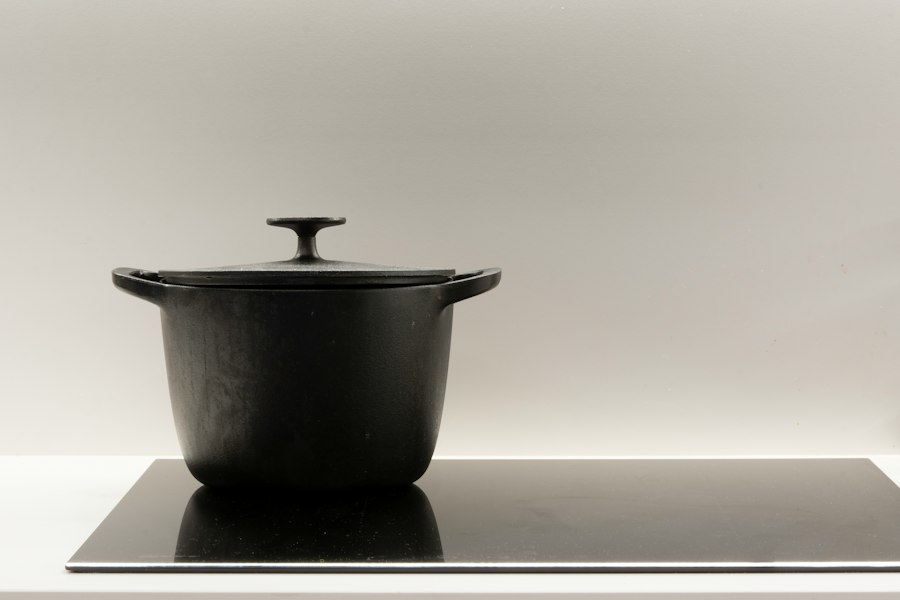
Not all pots and pans will work on an induction stove. This is a crucial point that often causes confusion for new users. The principle of electromagnetic induction dictates that only certain types of cookware can be heated by this technology.
Ferrous Materials: The Magnet’s Attraction
The fundamental requirement for induction cookware is that it must be made of a ferromagnetic material. This means the material must be attracted to a magnet. Iron and certain types of stainless steel are the most common examples.
The Magnetic Test
A simple way to check if your cookware is induction-compatible is to hold a magnet to its base. If the magnet sticks firmly, your cookware is likely suitable for induction.
Why Ferrous Materials?
Ferrous materials have a molecular structure that allows them to be easily magnetized. When exposed to the changing magnetic field of the induction stove, these materials readily develop strong induced currents, leading to efficient heating.
Non-Ferrous Materials: The Incompatibility
Aluminum, copper, and glass are examples of non-ferrous materials. While they are excellent conductors of heat, they are not ferromagnetic. This means they do not readily develop strong induced currents when exposed to the magnetic field of an induction stove, and therefore, will not heat up directly.
Aluminum and Copper
These metals are excellent conductors, but their atomic structure doesn’t lend itself to the creation of strong eddy currents in response to the induction stove’s magnetic field.
Glass and Ceramic
While some glass-ceramic cooktops are used for induction surfaces, the cookware itself needs to be induction-compatible. Pure glass or ceramic cookware will not work.
The Role of the Pan’s Base: Thickness and Material Distribution
Even within compatible cookware, the design of the pan’s base plays a role. A thicker base provides more material for eddy currents to form, leading to more even heating and less risk of warping. The material distribution is also important.
Even Heat Distribution
A well-designed base ensures that the induced currents are distributed evenly across the bottom of the pan, preventing hot spots and promoting uniform cooking.
Warping Prevention
Thicker, multi-layered bases can help to prevent the pan from warping under the intense, direct heat generated by induction.
The Induction Heating Process: From Field to Flame (Figuratively)

Once you’ve placed your compatible cookware on the induction cooktop, the real magic of heating begins. It’s a rapid and efficient process that relies on the principles of induction to generate heat directly within the pan.
Eddy Currents: The Tiny Whirlpools of Energy
When the oscillating magnetic field from the induction coil passes through the ferromagnetic base of your cookware, it induces circulating electric currents within the metal itself. These currents are called eddy currents, and they are the direct cause of heat generation.
Flow of Electrons
Imagine countless electrons within the metal of your pan being pushed and pulled by the changing magnetic field, creating swirling, circular pathways for current flow.
The Path of Least Resistance
These eddy currents flow in closed loops within the conductive material of the pan. Their path is dictated by the electrical properties of the metal.
Resistance and Joule Heating: Turning Current into Heat
Just like a wire passing an electric current, the metal of your cookware has electrical resistance. As these powerful eddy currents flow through this resistance, they generate heat. This phenomenon is known as Joule heating, or resistive heating.
Electrical Resistance
Every conductor has some degree of electrical resistance. The more resistance, the more heat is generated for a given current. Ferromagnetic materials have a suitable level of resistance for efficient heat generation.
Power Output and Heat Intensity
The intensity of the heat generated in your cookware is directly proportional to the square of the eddy current and the resistance of the material. This is why higher power settings on your induction stove result in faster heating.
Direct Heating: Efficiency Redefined
Unlike traditional electric resistance stovetops or gas burners, induction heating generates heat directly within the base of the cookware itself. This means there’s no wasted energy heating the air or the stovetop surface.
Eliminating Intermediaries
Traditional stovetops rely on heating an element (like a coil or burner) which then transfers heat to the cookware. Induction bypasses this intermediary, leading to significantly less energy loss.
Rapid Temperature Rise
Because the heat is generated directly where it’s needed, induction cooktops can bring pots and pans to temperature much faster than other methods.
Electromagnetic induction stoves have gained popularity for their efficiency and safety features, making them an attractive option for modern kitchens. If you’re interested in learning more about the science behind this innovative cooking technology, you can check out a related article that delves into the principles of electromagnetic induction and its applications in cooking. For further insights, visit this article to explore how these stoves work and their benefits compared to traditional cooking methods.
Advantages and Considerations: Why Induction Stands Out
| Metric | Description | Typical Value / Range | Unit |
|---|---|---|---|
| Operating Frequency | Frequency of the alternating current used to generate the magnetic field | 20 – 50 | kHz |
| Power Output | Maximum power delivered to the cookware | 1000 – 3500 | Watts |
| Efficiency | Percentage of electrical energy converted to heat in the cookware | 80 – 90 | % |
| Cookware Material | Type of material compatible with induction heating | Ferromagnetic (e.g., cast iron, stainless steel) | N/A |
| Heating Mechanism | How heat is generated in the cookware | Induced eddy currents and hysteresis losses | N/A |
| Temperature Control | Method of regulating heat output | Electronic control with sensors and feedback | N/A |
| Safety Features | Mechanisms to prevent accidents and overheating | Auto shut-off, pan detection, overheat protection | N/A |
| Power Supply | Electrical input requirements | 120 – 240 | Volts AC |
The efficiency and control offered by induction technology have made it increasingly popular in modern kitchens. However, like any technology, it comes with its own set of advantages and considerations you should be aware of.
Superior Efficiency: Saving Energy and Time
One of the most significant advantages of induction cooking is its remarkable energy efficiency. Because heat is generated directly in the cookware, very little energy is lost to the surrounding environment.
Reduced Heat Loss
Traditional stovetops lose a substantial amount of heat through convection and radiation into the kitchen. Induction minimizes these losses, directing almost all the energy into the food.
Faster Cooking Times
The direct and rapid heating capabilities of induction translate into shorter cooking times for many dishes, saving you valuable time in the kitchen.
Precise Temperature Control: Culinary Precision
Induction cooktops offer an unparalleled level of control over cooking temperatures. The electronic regulation allows for very fine adjustments, mimicking the responsiveness of gas.
Instantaneous Response
When you adjust the heat setting, the induction stove reacts almost immediately, allowing you to precisely manage delicate cooking processes like simmering or searing.
Consistent Heat
The technology ensures that the heat delivered to the cookware remains consistent, preventing fluctuations that can lead to uneven cooking or burning.
Safety Features: A Cooler Kitchen
Induction cooktops are inherently safer than many other cooking methods. The surface itself does not get as hot as traditional electric elements, reducing the risk of burns.
Cool-to-Touch Surface
While the cookware gets hot, the ceramic glass surface surrounding it remains relatively cool, as it is only heated by residual heat from the pan.
Automatic Shut-off
Many induction stoves feature automatic shut-off functions if no cookware is detected or if the pan is removed, adding another layer of safety.
Considerations for the User: Adapting to the Technology
While the benefits are numerous, there are a few points to consider when adopting induction cooking.
Cookware Investment
As discussed, you’ll need to ensure your cookware is induction-compatible. This might mean investing in a new set of pots and pans, which can be an initial cost.
Learning Curve
While intuitive, there can be a slight learning curve to mastering the precise temperature controls. Understanding how the different power levels translate to cooking actions is key.
Noise Levels
Some induction cooktops can produce a faint humming or buzzing sound during operation. This is a normal characteristic of the technology and is generally not disruptive.
Power Requirements
High-powered induction cooktops may require dedicated electrical circuits, so it’s worth checking your home’s electrical capacity before installation.
By understanding these fundamental principles, you can unlock the full potential of your induction cooktop, transforming your cooking experience into one of efficiency, precision, and culinary delight. The next time you place a pan on that seemingly cool surface and witness it heat up with such speed and control, you’ll know it’s not magic, but the elegant power of electromagnetism at work.
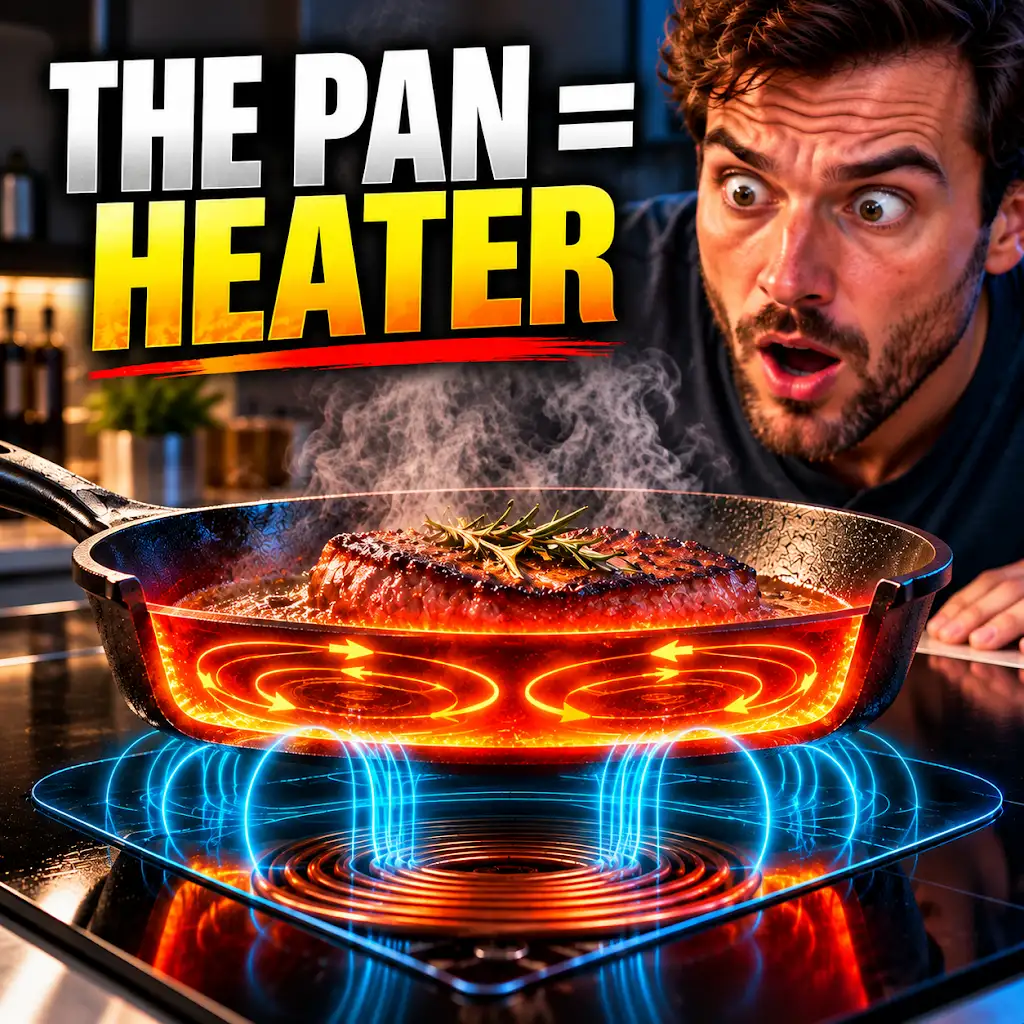
The Pan Is the Heater: How Induction Cooking Really Works
FAQs
What is an electromagnetic induction stove?
An electromagnetic induction stove is a type of cooktop that uses electromagnetic induction to heat cookware directly, without the need for a traditional heating element like gas or electric coils.
How does an electromagnetic induction stove work?
An electromagnetic induction stove works by generating an electromagnetic field when a compatible cookware with a ferrous metal base is placed on the stove. The magnetic field induces a current in the cookware, which in turn generates heat to cook food.
What are the advantages of using an electromagnetic induction stove?
Some advantages of using an electromagnetic induction stove include faster heating times, precise temperature control, energy efficiency, and safety features such as automatic shut-off when cookware is removed.
What types of cookware can be used on an electromagnetic induction stove?
Cookware that is compatible with an electromagnetic induction stove must have a ferrous metal base, such as cast iron or magnetic stainless steel. Non-magnetic cookware, such as aluminum or copper, will not work on an induction stove.
Are there any limitations to using an electromagnetic induction stove?
One limitation of using an electromagnetic induction stove is that it requires compatible cookware with a ferrous metal base. Additionally, induction stoves may produce a slight humming sound during operation, and they may be more expensive upfront compared to traditional gas or electric stoves.