
You’re standing in your kitchen, a new induction cooktop gleaming under the lights. You’ve heard the buzz: it’s faster, more precise, and incredibly energy-efficient. But how, exactly, does this magic happen? It’s not the familiar glow of electric coils or the mesmerizing dance of flames. Induction cooking operates on a principle that’s both ingenious and, frankly, a little bit like science fiction made real. Forget about heating the air around your pan, or relying on infrared radiation to transfer heat. Induction bypasses all that, directly energizing your cookware itself. You’re about to discover the fascinating physics behind this culinary revolution, understanding how a seemingly inert glass surface can transform into a powerful heating element, all thanks to the invisible forces of electromagnetism.
When you think of cooking, you probably picture heat being generated and then transferred. With gas, it’s the combustion of fuel. With traditional electric, it’s a resistive element that gets hot. Induction cooking, however, takes a fundamentally different approach. Instead of heating the stovetop and then transferring that heat to your pan, induction creates heat within the pan itself. This is achieved through a clever application of electromagnetism. You’re not dealing with direct heat from the cooktop; you’re dealing with induced currents that generate heat. It’s a more direct, and therefore more efficient, method of getting your food cooked.
Understanding the Basics: Magnets and Electricity
At its core, induction cooking relies on the fundamental relationship between electricity and magnetism. You’ve likely experienced this yourself. When an electric current flows through a wire, it generates a magnetic field around that wire. Conversely, if you move a magnet near a wire, or change the magnetic field around a wire, you can induce an electric current within that wire. This phenomenon is known as electromagnetic induction, and it’s the principle that powers everything from electric generators to radio waves. For induction cooking, we’re harnessing the former: using electricity to create a changing magnetic field, which then, in turn, creates electric currents in your cookware.
The Role of the Coil
Beneath the smooth glass surface of your induction cooktop lies a carefully designed copper coil. When you turn on the cooktop and place a compatible pan on it, an alternating current (AC) is sent through this coil. This AC current is crucial. It’s not a steady flow; it’s constantly changing direction and magnitude. As this current surges back and forth through the coil, it generates a rapidly changing magnetic field that extends upwards, through the glass and into your pan. This is the invisible engine of induction.
The Invisible Dance of the Magnetic Field
Imagine the magnetic field lines emanating from the coil like invisible threads. Because the current in the coil is alternating, these magnetic field lines are also constantly expanding, contracting, and reversing their direction. This fluctuating magnetic field is the key to inducing currents in your cookware. It’s not a static force; it’s dynamic and responsive, actively interacting with the material of your pan.
The Requirement of Ferromagnetic Cookware
It’s important to understand that not just any pot or pan will work on an induction cooktop. You need cookware made of ferromagnetic materials. Think of iron and steel. This is because these materials are easily magnetized. When the changing magnetic field from the coil passes through the base of your ferromagnetic pan, it causes the free electrons within the metal to move. This movement of electrons, driven by the changing magnetic field, constitutes an electric current.
What Makes a Material Ferromagnetic?
Ferromagnetic materials possess a property called magnetic susceptibility. This means they can be strongly magnetized by an external magnetic field. In simpler terms, they “like” to become magnets. When the fluctuating magnetic field from the induction coil interacts with the iron or steel in your pan, it aligns the tiny magnetic domains within the metal, causing them to generate their own magnetic field. This alignment process is what allows the magnetic field to effectively induce currents.
The “Magnet Test”
You’ve probably seen or heard about the “magnet test.” It’s a simple and effective way to determine if your cookware is induction-compatible. If a magnet sticks firmly to the bottom of your pan, it’s very likely made of a ferromagnetic material and will work on an induction cooktop. If the magnet barely clings or doesn’t stick at all, you’ll probably need to invest in new cookware. This test directly relates to the material’s ability to interact with the magnetic field.
Induction cooking is a fascinating technology that heats a pan directly through electromagnetic energy, making it both efficient and precise. For those interested in exploring this topic further, a related article can be found at Freaky Science, where the principles of induction cooking are explained in detail, along with comparisons to traditional cooking methods. This resource provides valuable insights into how induction cooktops work and their advantages in modern kitchens.
Generating Heat Through Eddy Currents
The magic of induction cooking lies in its ability to generate heat directly within the pan itself. This isn’t through radiant heat or convection from the cooktop; it’s through a phenomenon called eddy currents. These are circular currents of electricity that are induced within a conductor by a changing magnetic field. And when these currents flow through the resistance of the pan’s metal, they generate heat.
The Mechanism of Eddy Currents
As the alternating magnetic field from the induction coil sweeps through the base of your ferromagnetic pan, it forces electrons in the metal to move in circular paths. Imagine these electrons being pushed and pulled by the magnetic field, creating tiny, swirling currents within the metal. These are the eddy currents. They flow in closed loops, and their circulation is dictated by the direction and strength of the changing magnetic field.
Lenz’s Law in Action
The direction of these eddy currents is governed by Lenz’s Law, a fundamental principle of electromagnetism. Lenz’s Law states that the direction of an induced current is such that it opposes the change in magnetic flux that produced it. So, as the magnetic field from the coil changes, the eddy currents generated in the pan create their own magnetic field that attempts to counteract this change. This push and pull is what drives the circulation of the eddy currents.
The Resistance Factor
The amount of heat generated by these eddy currents depends on two key factors: the strength of the induced currents and the electrical resistance of the pan material. The alternating current in the coil is designed to create strong eddy currents. However, the metal of the pan itself has a certain amount of electrical resistance. As the eddy currents flow through this resistance, electrical energy is converted into thermal energy. This is precisely how your pan gets hot.
Joule Heating: The Source of the Heat
The principle at play here is known as Joule heating, or resistive heating. It’s the same phenomenon that causes a toaster element to glow red-hot or a traditional electric stovetop burner to heat up. In induction, however, the heat is generated within the pan, not by the cooktop itself. The eddy currents, as they encounter the resistance of the pan’s metal, dissipate energy as heat. The more resistance and the stronger the eddy currents, the more heat is produced.
Power and Resistance
The power dissipated as heat is directly proportional to the square of the current and the resistance of the material (P = I²R). This means that even a small amount of resistance, when combined with strong eddy currents, can generate a significant amount of heat. The design of the induction system and the cookware is optimized to maximize this heat generation efficiently.
Minimizing Waste Heat
Because the heat is generated directly within the pan, there’s very little waste heat compared to other cooking methods. The cooktop surface itself doesn’t get significantly hot, only the pan does. This means that a much larger percentage of the energy consumed by the cooktop is transferred directly to your food.
The Efficiency Advantage: Why Induction is So Green

You’ve likely noticed that induction cooktops are often advertised as being energy-efficient. This isn’t just marketing hype; it’s a direct consequence of how induction cooking works. By heating the pan directly, induction eliminates many of the energy losses that plague other cooking methods, making it a much more sustainable choice for your kitchen.
Direct Energy Transfer
The most significant factor contributing to induction’s efficiency is the direct transfer of energy to the cookware. Unlike gas stoves, where a significant portion of the heat escapes around the sides of the pan and into the surrounding air, induction focuses the heat precisely where it’s needed: the base of the pan. This means less energy is wasted heating up your kitchen.
Convection Losses on Gas Stoves
Gas stoves, while offering immediate heat, are notoriously inefficient. The flame heats the air around it, and this hot air then heats the pan. A substantial amount of this heat dissipates into the atmosphere through convection, especially if the pan isn’t perfectly sized for the burner. You’re essentially heating your kitchen along with your food.
Radiant Losses from Electric Coil Stoves
Traditional electric coil stoves also suffer from inefficiencies. The coil heats up and then radiates heat upwards. This radiated heat needs to be absorbed by the pan. However, some of this radiant heat will also escape upwards, and the coil itself takes time to heat up and cool down, leading to energy waste during temperature adjustments.
Minimal Heat Loss to the Environment
Because the glass-ceramic surface of an induction cooktop doesn’t get as hot as the heating elements of other cooktops, there is significantly less heat loss to the surrounding environment. The cooktop surface might feel warm to the touch after use, but it’s nowhere near the temperatures reached by electric coils or the radiant heat from a gas burner. This containment of heat is a key to its efficiency.
The Role of the Glass Surface
The glass-ceramic surface acts as an insulator, preventing excessive heat from escaping downwards or to the sides. While it does get warm from contact with the hot pan, its primary function is to protect the induction coils and to provide a smooth, easy-to-clean cooking surface. The heat is predominantly directed upwards, into the pan.
Faster Heating = Less Wasted Time
Induction’s speed also contributes to its efficiency. Because heat is generated so quickly and directly, pans reach their desired temperature much faster. This means less time is spent with the cooktop actively drawing power, leading to overall energy savings. You’re not waiting for a coil to heat up or for a gas flame to stabilize; you’re cooking almost immediately.
The Superior Control and Precision of Induction
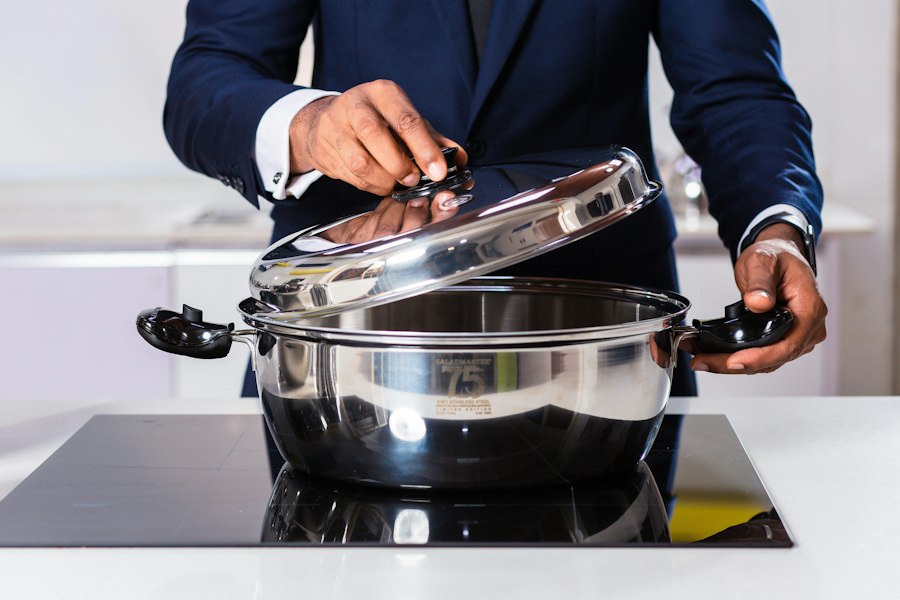
Beyond its efficiency, induction cooking offers a level of control and precision that often surpasses traditional methods. You’re not just turning up a dial; you’re finely tuning the energy delivered directly to your pan, allowing for a more responsive and intuitive cooking experience. This precision is a direct benefit of the underlying electromagnetic principles.
Instantaneous Response to Temperature Changes
One of the most remarkable aspects of induction is its responsiveness. When you adjust the power setting, the change in heat output is almost immediate. This is because the magnetic field strength is directly controlled by the electronic circuitry, and this directly affects the eddy current generation. There’s no lag time for a heating element to warm up or cool down.
The Digital Thermostat Effect
Think of induction as having a highly precise digital thermostat for your pan. When you select a lower power setting, the magnetic field strength decreases, reducing the eddy currents and thus the heat output. Conversely, a higher setting amplifies the magnetic field and the eddy currents. This direct relationship allows for very fine-tuned control over the cooking temperature.
Eliminating the “On-Off” Cycling
Traditional electric cooktops often cycle their heating elements on and off to maintain a temperature. This can lead to uneven heating and makes it difficult to achieve very low simmering temperatures. Induction, by contrast, can maintain a consistent low power output, providing a gentle and continuous heat.
Precise Temperature Management for Delicate Tasks
This precise control is particularly beneficial for tasks that require delicate temperature management, such as melting chocolate, simmering sauces, or gently poaching delicate foods. You can set the cooktop to a very low power level and be confident that it will maintain that exact heat, preventing scorching or overcooking.
The Art of the Simmer
Achieving a perfect, gentle simmer is often a challenge on other cooktops. On induction, you can set a specific low power setting and walk away, knowing your sauce will simmer gently without boiling over or sticking to the bottom of the pan. This consistent low heat is a game-changer for many recipes.
Searing and Browning Perfection
While known for its gentle simmering, induction is also excellent for searing and browning. The rapid and direct heating allows you to quickly bring the pan to very high temperatures, creating that perfect crust on meats and vegetables. And when you need to reduce the heat, the instant response prevents overcooking.
Safety Features Integrated into the Design
The precise control also translates into enhanced safety. Because the cooktop surface itself doesn’t become intensely hot, the risk of accidental burns is significantly reduced. Many induction cooktops also feature automatic shut-off functions when no pan is detected or when a pan is removed, adding another layer of safety.
The Cool-to-Touch Surface
After cooking, the induction cooktop surface remains relatively cool. This is a stark contrast to electric coil or gas cooktops, which remain dangerously hot for extended periods after use. This makes it much safer for households with children or pets, and it also means you can clean spills immediately without the risk of burning yourself.
Pan Detection Technology
Most induction cooktops have built-in pan detection technology. They can sense when a compatible pan is placed on the surface and will only activate the heating elements once a pan is present. If the pan is removed, the cooktop will automatically turn off, preventing accidental operation and saving energy.
Induction cooking is a fascinating method that uses electromagnetic fields to heat pans directly, making it an efficient and precise way to cook. For those interested in understanding the science behind this technology, a related article can provide deeper insights into how induction cooking works and its advantages over traditional methods. You can explore more about this innovative cooking technique in the article found here.
The Surprising Science of Induction Cookware
| Metric | Description | Typical Value | Unit |
|---|---|---|---|
| Frequency of Electromagnetic Field | Frequency at which the induction coil operates to generate the magnetic field | 20,000 – 50,000 | Hz (Hertz) |
| Power Output | Amount of power delivered to the pan for heating | 1000 – 3500 | Watts |
| Heating Efficiency | Percentage of electrical energy converted directly into heat in the pan | 80 – 90 | % |
| Induced Current in Pan | Electric current generated in the pan’s metal by the magnetic field | Varies with pan material and size | Amperes (A) |
| Temperature Rise Rate | Speed at which the pan temperature increases | Up to 10 | °C per second |
| Pan Material | Type of metal suitable for induction heating (ferromagnetic) | Cast iron, stainless steel | N/A |
| Magnetic Field Strength | Intensity of the magnetic field generated by the induction coil | 0.1 – 0.5 | Tesla (T) |
You’ve learned about the principles of induction, but the magic doesn’t stop with the cooktop. The cookware itself plays a crucial role, and there’s a fascinating science behind why certain materials work and others don’t. It all comes down to how effectively the pan can interact with the magnetic field generated by the cooktop.
The Importance of Material Composition
As mentioned earlier, ferromagnetic materials are essential for induction cooking. This means the pan must contain iron or steel. However, not all steel is created equal, and the composition of the base of your cookware is critical for efficient heat transfer.
Beyond Just “Steel”
While many pans are made of stainless steel or cast iron, the specific alloy and thickness of the base are important. A pan with a thick, flat, and well-conductive ferromagnetic base will perform best on an induction cooktop. Thin or warped pans can lead to uneven heating and reduced efficiency.
Layered Construction for Enhanced Performance
Many high-quality induction-compatible pans feature a layered construction. This often involves a core of aluminum or copper sandwiched between layers of stainless steel. The aluminum or copper provides excellent thermal conductivity, distributing heat evenly across the pan’s surface, while the ferromagnetic outer layers ensure compatibility with the induction cooktop.
Magnetic Properties and Heat Generation
The magnetic properties of the cookware directly influence the strength of the eddy currents and, consequently, the amount of heat generated. Materials with higher magnetic permeability are better at channeling magnetic flux, leading to stronger eddy currents and more efficient heating.
Permeability and Induction
Magnetic permeability is a measure of how easily a material can be magnetized. Ferromagnetic materials have high permeability, meaning they readily allow magnetic field lines to pass through them. This high permeability is what allows the induction cooktop’s magnetic field to effectively induce strong eddy currents in the pan.
Resistance and Heat Dissipation
While permeability is key for induction, the electrical resistance of the material is equally important for generating heat. The eddy currents, as they flow through the pan’s metal, encounter resistance, and this resistance is what converts electrical energy into heat. The interplay between permeability and resistance is optimized in good induction cookware.
The “Dished” or “Warped” Pan Problem
A flat, even base is crucial for optimal performance on an induction cooktop. If your pan is dished or warped, the contact with the cooktop surface will be uneven. This will lead to less efficient magnetic coupling and, therefore, less efficient heating. You might notice hot spots or areas that don’t heat up as well.
Achieving Optimal Magnetic Coupling
The induction coil generates a magnetic field that is strongest when it is close to the ferromagnetic material. Any gap between the pan and the cooktop surface reduces this magnetic coupling, diminishing the effectiveness of the induction. A flat base ensures maximum contact and therefore optimal magnetic coupling.
Ensuring Even Heat Distribution
Even heat distribution within the pan is also dependent on a flat base. If the base is warped, the eddy currents will be distributed unevenly, leading to hot spots and potentially uneven cooking of your food. Investing in good quality, flat-bottomed cookware is essential for maximizing the benefits of induction.
The Future of Cooking: Sustainable and Smart
Induction cooking isn’t just a technological advancement; it represents a shift towards more sustainable and intelligent kitchen practices. Its inherent efficiency, coupled with its precise control and safety features, positions it as a leading contender for the future of home cooking. As energy consciousness grows and smart home technologies become more integrated, induction is poised to become even more prevalent.
Environmental Benefits Beyond Energy Savings
While energy efficiency is a significant advantage, induction also contributes to a healthier home environment. Unlike gas stoves, which release combustion byproducts like nitrogen dioxide and carbon monoxide into the air, induction cooktops produce no direct emissions during operation. This can lead to improved indoor air quality, especially in well-sealed homes.
Cleaner Indoor Air
By eliminating the need for open flames and combustion, induction cooking helps to reduce indoor air pollution. This is particularly important for individuals with respiratory sensitivities or allergies. It contributes to a safer and more comfortable living space.
Reduced Carbon Footprint
The overall energy savings associated with induction cooking, especially when powered by renewable energy sources, translates into a lower carbon footprint. As we strive for more sustainable lifestyles, choosing energy-efficient appliances like induction cooktops plays a vital role.
Integration with Smart Home Technology
The electronic nature of induction cooktops makes them ideally suited for integration with smart home systems. Imagine preheating your cooktop remotely from your smartphone, or having your cooktop communicate with your smart oven to adjust cooking times and temperatures seamlessly.
Remote Control and Monitoring
Future induction cooktops will likely offer even more advanced connectivity. You could receive notifications when your food is cooked, adjust settings remotely, or even access recipes that automatically configure the cooktop for optimal results.
Energy Management and Optimization
Smart home integration can also extend to energy management. Your induction cooktop could be programmed to operate during off-peak hours when electricity rates are lower, or it could work in conjunction with your home’s solar power system for maximum efficiency.
A Culinary Tool for Every Skill Level
Whether you’re a novice cook or a seasoned chef, induction offers benefits that enhance the cooking experience. The ease of use, precise control, and safety features make it an accessible and enjoyable cooking method for everyone.
The “Set it and Forget it” Convenience
For busy individuals, the precise temperature control and safety features of induction offer a level of convenience that is unparalleled. You can trust that your food will cook evenly and safely, freeing you up to focus on other tasks.
The Precision for Culinary Artistry
For those who enjoy the art of cooking, the fine-grained control offered by induction allows for experimentation and mastery of complex techniques. The ability to precisely manage heat unlocks new possibilities in the kitchen, enabling culinary creativity.
In conclusion, you’ve journeyed through the fascinating world of induction cooking, uncovering the intricate interplay of electromagnetism, eddy currents, and material science that makes it so efficient. You now understand that the heat doesn’t come from the glass surface, but is generated directly within your cookware. This direct energy transfer, coupled with minimal heat loss, makes induction a truly remarkable and sustainable way to cook. As you continue to explore the possibilities of your induction cooktop, remember the science that powers it, and enjoy the benefits of faster, more precise, and more energy-efficient cooking.
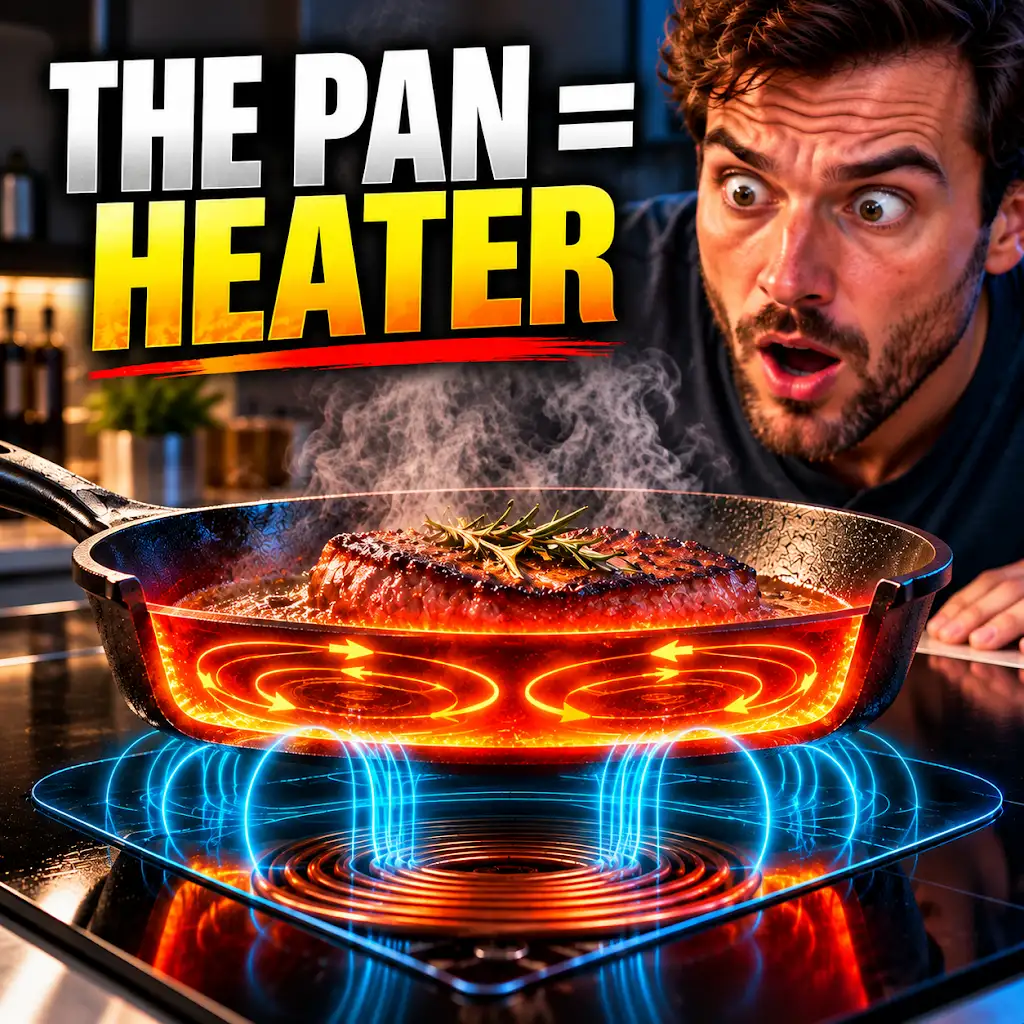
The Pan Is the Heater: How Induction Cooking Really Works
FAQs
What is induction cooking?
Induction cooking is a method of cooking that uses electromagnetic fields to heat the cookware directly, rather than relying on a flame or electric heating element.
How does induction cooking heat a pan?
Induction cooking heats a pan by creating an electromagnetic field that excites the iron molecules in the pan, causing them to generate heat. This heat is then transferred to the food inside the pan.
What are the advantages of using induction cooking?
Some advantages of using induction cooking include faster heating times, more precise temperature control, and increased energy efficiency compared to traditional cooking methods.
What types of cookware can be used with induction cooking?
Cookware that is made of ferrous materials such as cast iron or magnetic stainless steel is compatible with induction cooking. Non-ferrous materials like aluminum or copper will not work on an induction cooktop unless they have a magnetic base.
Is induction cooking safe to use?
Induction cooking is generally considered safe to use as long as proper precautions are taken. The cooktop itself remains cool to the touch, reducing the risk of burns, and the heat is generated directly in the cookware, minimizing the risk of accidental fires.