
You’ve stood in your kitchen, the comforting hum of your induction hob a familiar backdrop to your culinary adventures. Then, it happens. A subtle buzz, a slight vibration emanating from your favorite induction pan. It’s not alarming, not really, but it’s definitely there. You might have dismissed it as a quirk, a temporary anomaly. But what is it, exactly? Why do induction pans buzz? The answer, as is often the case with impressive technology, lies in the fascinating interplay of magnetism, electricity, and the very physics that makes your stovetop so efficient. It’s not a flaw, but rather an intrinsic characteristic of the induction cooking process.
Your induction hob isn’t a conventional stovetop. Forget glowing coils or visible flames. Instead, you have a sleek, flat surface, usually made of ceramic glass. Beneath this lies a meticulously engineered system of electromagnetic coils. When you turn on your induction hob, an alternating electric current flows through these coils. This current, by its very nature, generates a rapidly changing magnetic field. This magnetic field is the key to induction cooking, and it’s also the root cause of that subtle buzz you hear.
Understanding Electromagnetic Fields
Imagine a river flowing. Now, imagine that river’s flow constantly reversing direction, thousands of times a second. That’s essentially what’s happening with the electric current in your hob’s coils. This oscillating current creates a dynamic magnetic field that extends upwards, directly beneath the cooking surface. This field isn’t static; it’s constantly shifting, expanding, and contracting. The speed of this change is determined by the frequency of the alternating current supplied by your mains electricity. For most induction hobs, this frequency is in the range of 20 to 100 kilohertz (kHz), meaning the magnetic field is oscillating tens of thousands of times per second.
The Principle of Electromagnetic Induction
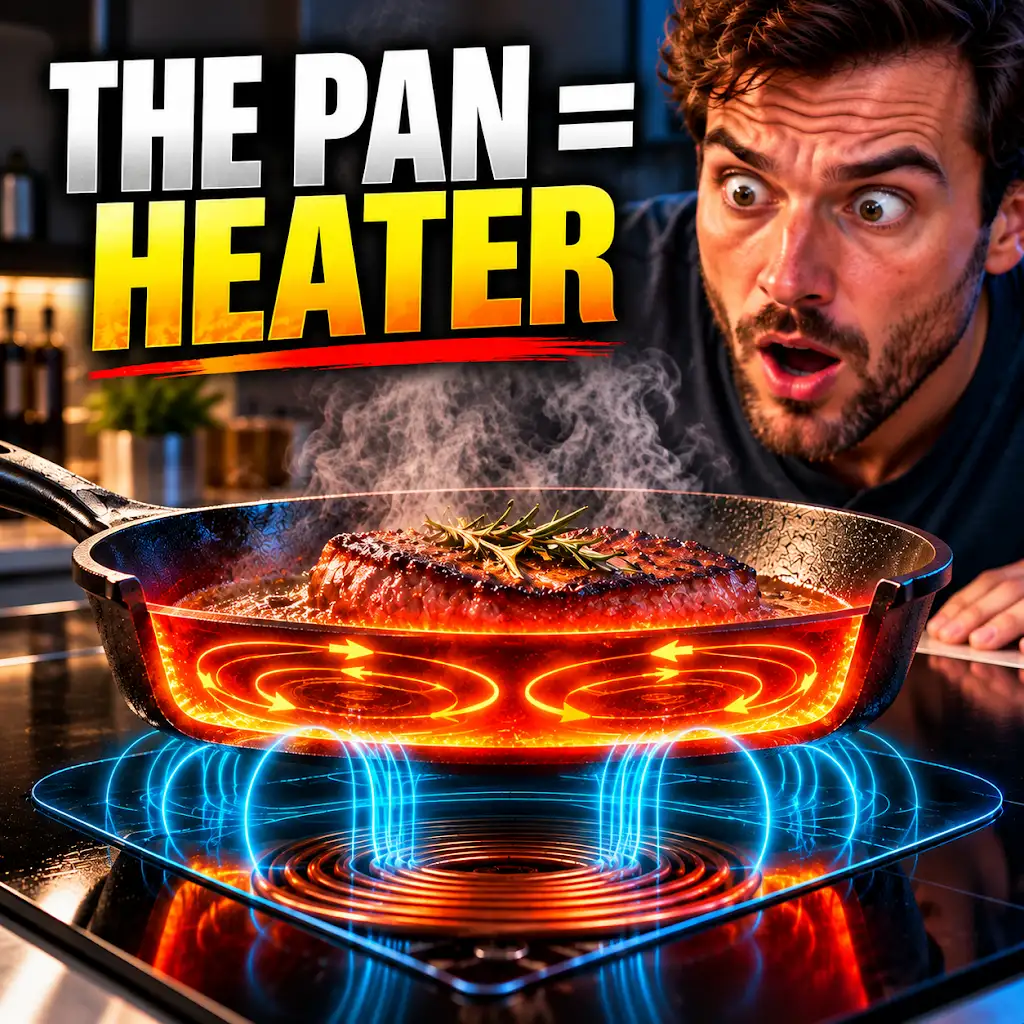
The real magic happens when you place a compatible pan on the hob. Induction-compatible pans are made from ferromagnetic materials – metals like cast iron, stainless steel with a magnetic base, or enamelled steel. These materials have a peculiar property: they can be magnetized. When the rapidly changing magnetic field from the hob interacts with the ferromagnetic material of your pan, it induces electrical currents within the pan itself. This phenomenon is known as electromagnetic induction, and it’s the very principle that gives induction cooking its name and its efficiency.
Induction pans can often produce a buzzing sound during cooking, which can be attributed to the interaction between the cookware and the induction cooktop’s electromagnetic field. This phenomenon is discussed in detail in a related article that explores the science behind induction cooking and the various factors that contribute to these sounds. For more information, you can read the article here: Why Induction Pans Make Buzzing Sounds. Understanding this aspect can help users better appreciate the technology behind their cooking appliances.
The Buzzing Symphony: Eddy Currents at Play
The induced electrical currents within your pan aren’t just passive participants; they are the direct cause of the heat generated. However, these currents don’t flow smoothly like water in a pipe. Instead, they form swirling, circular patterns within the metal of the pan. These are called eddy currents. And it’s these eddy currents, in their ceaseless dance, that are responsible for that distinctive buzz.
What Exactly Are Eddy Currents?
Think of a whirlpool in a river. Eddy currents are similar, but on a microscopic level within the metal of your pan. As the magnetic field from the hob fluctuates, it pushes and pulls on the free electrons within the metal. These electrons are forced to move in closed loops, creating these swirling electrical currents. The faster the magnetic field changes (i.e., the higher the frequency of the hob), and the more conductive the pan material, the stronger these eddy currents become.
The Mechanism of Heat Generation: Resistive Heating
The reason eddy currents generate heat is due to the electrical resistance of the pan’s material. Metals, while excellent conductors of electricity, aren’t perfect. There’s a natural opposition to the flow of electrons within the metal lattice. As the eddy currents surge and swirl, they encounter this resistance. This friction, so to speak, between the moving electrons and the metal atoms causes energy to be released in the form of heat. This is known as resistive heating, or Joule heating, and it’s the primary way your induction pan gets hot. The more vigorous the eddy currents, the more heat is generated.
The Sound of Vibrations: Magnetic Domains and Micro-Vibrations
The buzzing sound isn’t just about the electrical currents themselves; it’s about the physical consequences of these currents interacting with the magnetic properties of the pan. Ferromagnetic materials, like those used in induction pans, are composed of tiny regions called magnetic domains. These domains are like miniature magnets, each with its own north and south pole. In an unmagnetized state, these domains are randomly oriented, so their magnetic fields cancel each other out. However, when exposed to the external magnetic field of the hob, these domains try to align themselves with the field. This alignment process is not instantaneous or perfectly smooth.
Magnetic Domain Wall Movement
When the external magnetic field changes direction rapidly, the magnetic domains within the pan have to constantly reorient themselves. This reorientation involves the movement of the boundaries between these domains, known as domain walls. These domain walls don’t glide silently; their movement can cause minute, rapid deformations in the metal of the pan. Imagine tiny, internal jostling. These microscopic expansions and contractions, happening thousands of times per second, create subtle vibrations in the pan’s structure.
The Resonance Effect: Amplifying the Noise
These micro-vibrations, generated by the moving magnetic domains, are then transmitted through the pan. The shape, thickness, and material of the pan itself play a crucial role in how these vibrations are amplified and perceived as sound. Just like a musical instrument’s body amplifies the sound of its strings, your pan can resonate with these high-frequency vibrations. When the frequency of these vibrations happens to match a natural resonant frequency of the pan, the sound becomes louder and more noticeable. This is why some pans might buzz more than others, or why the buzzing might be more pronounced at certain power settings. The stovetop’s surface also contributes, acting as a resonator itself.
Factors Influencing the Buzz: Pan Properties and Power Levels
The intensity and pitch of the buzz you hear from your induction pan are not constant. They are influenced by a variety of factors, most of which are directly related to the characteristics of the pan itself and how you’re using your hob. Understanding these factors can help you troubleshoot or even mitigate the buzzing.
Material Composition and Thickness
The material of your induction pan is paramount. Pans made of pure cast iron or those with a thicker, denser ferromagnetic base tend to exhibit more pronounced buzzing. This is because these materials have more magnetic domains to align and offer greater resistance to the eddy currents, leading to stronger vibrations. Conversely, pans with thinner bases or those made of layered materials where the ferromagnetic layer is less prominent might buzz less. The inherent properties of the metal dictate how easily its magnetic domains can be manipulated.
Pan Shape and Design
The geometry of your pan also plays a role. Pans with flat, broad bases tend to make better contact with the induction hob, allowing for more efficient magnetic field transfer and thus stronger eddy current generation. However, the shape also influences resonance. A pan with a particularly uniform or symmetrical design might be more prone to resonating at specific frequencies, amplifying the buzzing sound. Complex shapes or those with raised elements might dampen vibrations in certain areas.
Power Settings and Frequency
The power level you select on your induction hob directly impacts the strength of the magnetic field and the rate at which it changes. Higher power settings mean a stronger magnetic field and often a higher frequency of the alternating current. This combination leads to more vigorous eddy currents and more significant domain wall movement, resulting in a louder and sometimes higher-pitched buzz. Lower power settings, on the other hand, produce a weaker magnetic field and generally less intense eddy currents, leading to a quieter experience. The specific frequencies used by different induction hob manufacturers can also vary, leading to different audible outcomes. Some hobs might even adjust their operating frequencies dynamically.
Induction pans can sometimes produce a buzzing sound during cooking, which can be quite perplexing for many users. This phenomenon is often attributed to the interaction between the pan’s material and the magnetic field generated by the induction cooktop. For a deeper understanding of this topic, you can explore a related article that delves into the science behind these sounds and offers insights into how different materials can affect cooking performance. To learn more, check out this informative piece on Freaky Science.
Beyond the Buzz: What It Means for Your Cooking
| Factor | Description | Cause of Buzzing | Typical Frequency Range (Hz) | Impact on User Experience |
|---|---|---|---|---|
| Magnetic Field Interaction | Induction cooktops generate a magnetic field that induces current in the pan. | Vibrations caused by alternating magnetic fields interacting with the pan’s metal. | 20 – 1000 | Produces a humming or buzzing noise during operation. |
| Pan Material | Type of metal used in the pan (e.g., stainless steel, cast iron, aluminum base). | Different metals vibrate differently; thin or layered bases can amplify buzzing. | Varies depending on material thickness and composition. | Thinner pans tend to buzz louder; heavier pans usually quieter. |
| Pan Base Construction | Multi-layered or sandwich bases designed for heat distribution. | Layers can vibrate against each other causing buzzing sounds. | 100 – 500 | Buzzing may be intermittent and varies with power level. |
| Power Level | Induction cooktop power setting (low to high). | Higher power increases magnetic field strength, causing stronger vibrations. | Frequency may increase with power level. | Louder buzzing at higher power settings. |
| Cooktop Coil Design | Shape and size of induction coil beneath the cooktop surface. | Coil vibrations can transfer to the pan and cause buzzing. | 50 – 1000 | Design improvements can reduce buzzing noise. |
| Pan Fit and Contact | How well the pan sits flat on the cooktop surface. | Poor contact can cause vibrations and buzzing sounds. | Varies | Ensuring flat, stable contact reduces noise. |
While the buzzing might be a curious sound, it’s important to remember that it’s a sign that your induction system is working as intended. It’s a tangible manifestation of the efficient energy transfer happening between the hob and your pan. For the most part, the buzz is entirely harmless and doesn’t indicate a problem with your cookware or your appliance. In fact, it’s a testament to the advanced technology at play.
A Sign of Efficient Heat Transfer
The very buzz you hear is an indication that electromagnetic induction is successfully generating eddy currents within your pan, and these currents are effectively converting electrical energy into heat. This is the core principle behind induction’s speed and energy efficiency. A pan that doesn’t buzz at all on an induction hob is likely not made of a compatible ferromagnetic material and therefore won’t heat up. So, in a way, the buzz is a reassuring sound.
Addressing and Minimizing the Noise
While the buzz is a normal part of induction cooking, there are a few things you can do if it becomes particularly bothersome. Ensure your pan has a perfectly flat base. Even a slight wobble can create uneven contact with the hob, potentially exacerbating vibrations. Using pans specifically designed for induction, often indicated by an induction symbol on the packaging, is also recommended, as these are engineered to work efficiently with the magnetic fields. Sometimes, simply adjusting the power level can change the pitch or intensity of the buzz to a more tolerable level. Experimenting with different pans in your collection might reveal that some are naturally quieter than others.
The Future of Induction: Quieter Innovations
As induction technology continues to evolve, manufacturers are constantly working on ways to minimize the audible side effects. This includes advancements in the design of the electromagnetic coils, the materials used in the hob’s construction, and sophisticated control algorithms that can fine-tune the operating frequencies to reduce resonance. While it’s unlikely that induction cooking will ever be completely silent, future innovations promise an even more refined and quieter culinary experience. The buzz, while a fascinating scientific phenomenon, is something that innovation is steadily aiming to make less prominent.
In conclusion, the next time you hear that familiar buzz from your induction pan, you can appreciate it for what it is: a Symphony of Science. It’s the sound of magnetic fields dancing, electrical currents swirling, and tiny magnetic domains shifting, all culminating in the efficient and precise heating that makes induction cooking such a joy. It’s a testament to the clever engineering that transforms electricity into delicious meals, one buzzing pan at a time.
The Pan Is the Heater: How Induction Cooking Really Works
FAQs
1. Why do induction pans make buzzing sounds?
Induction pans make buzzing sounds due to the electromagnetic field created by the induction cooktop. This field causes the metal in the pan to vibrate, resulting in the buzzing noise.
2. Are buzzing sounds from induction pans harmful?
The buzzing sounds from induction pans are not harmful. They are a normal occurrence when using induction cooktops and do not pose any danger to the user or the cookware.
3. Can the buzzing sound be reduced or eliminated?
While it is difficult to completely eliminate the buzzing sound from induction pans, using higher quality cookware with a thicker base can help reduce the noise. Ensuring the pan is placed properly on the cooktop can also minimize the buzzing.
4. Does the buzzing sound affect the cooking performance of the pan?
The buzzing sound from induction pans does not affect the cooking performance of the pan. It is simply a byproduct of the electromagnetic field generated by the cooktop and does not impact the cooking process or the quality of the food being prepared.
5. Are all types of pans prone to making buzzing sounds on induction cooktops?
Not all types of pans will make buzzing sounds on induction cooktops. Pans with a flat, magnetic base are required for induction cooking to work efficiently. Non-compatible pans may not produce the buzzing sound as they will not heat up properly on an induction cooktop.