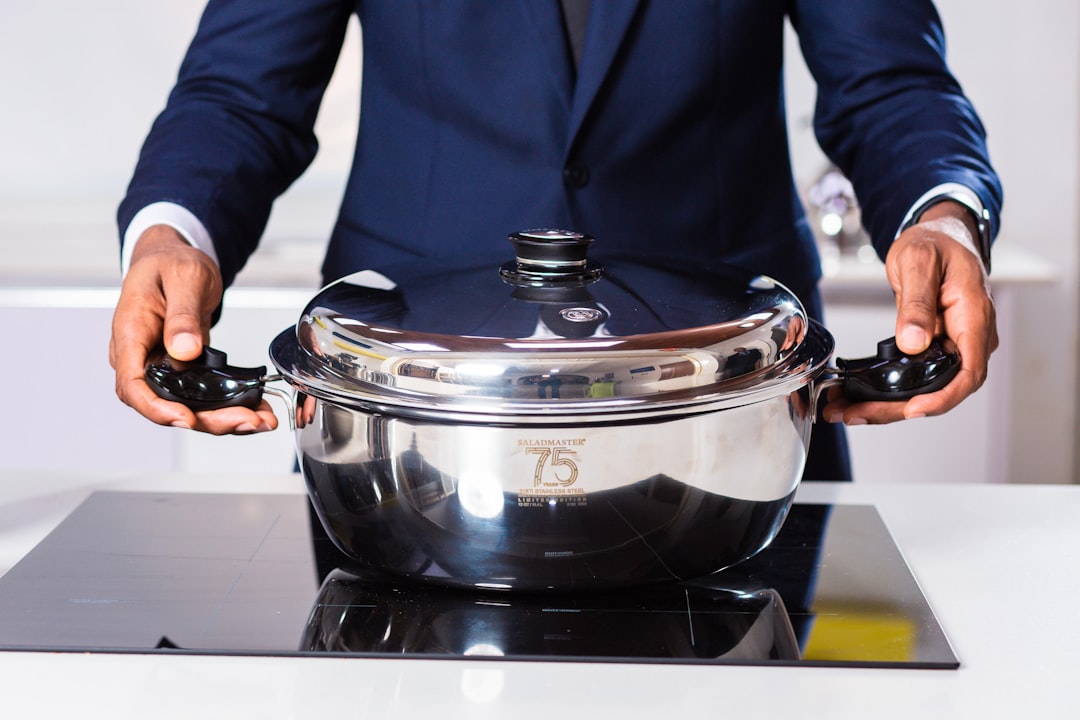
You’re standing in your kitchen, ready to whip up a meal. You place your favorite non-stick skillet on the gleaming surface of your induction cooktop, and with a flick of a dial, it hums to life, heat radiating from beneath the pan. It’s almost magical, isn’t it? But have you ever stopped to wonder how your induction cooktop knows exactly when a pan is there and how it heats it so efficiently? It’s not some mystical kitchen gremlin; it’s pure, applied science, and understanding it will give you a newfound appreciation for that sleek, modern appliance.
Before we dive into the specifics of pan detection, let’s lay the groundwork by understanding the fundamental principle of induction cooking. It’s a fascinating dance of electromagnetism that bypasses the traditional method of heating a resistive element.
Harnessing the Power of Electromagnetism
At its core, induction cooking relies on Faraday’s Law of Electromagnetic Induction. This fundamental law states that a changing magnetic field will induce an electric current in a conductor. Your induction cooktop is essentially a sophisticated electromagnet.
The Coil and the Current
Beneath the smooth ceramic glass surface of your cooktop lies a coiled copper wire. When you turn the cooktop on, an alternating current (AC) is passed through this coil. This alternating current is key. As the current flows back and forth through the coil, it generates a rapidly fluctuating magnetic field. Think of it like a magnetic wave being sent out from the coil.
The Magnetic Field’s Dance
The magnetic field isn’t static; it’s constantly changing its direction and intensity at a very high frequency (typically between 20 and 100 kHz). This dynamic magnetic field is the engine of induction cooking. It’s this invisible force that will interact with your cookware.
The Crucial Role of Ferrous Metals
This is where the magic of pan detection and efficient heating truly begins. Not just any pot or pan will work on an induction cooktop. The material of your cookware is paramount.
The Iron Connection
Induction cooktops require cookware made of ferromagnetic materials. This means the material must be attracted to a magnet. Common examples include cast iron, stainless steel with a magnetic base, and enameled cast iron. Aluminum, copper, glass, and ceramic cookware will not work on their own because they lack the necessary magnetic properties.
Why Ferromagnetic Matters
When the fluctuating magnetic field from the induction coil encounters a ferromagnetic material, it induces eddy currents within the base of the pan. These eddy currents are swirling electrical currents that flow within the metal itself.
From Magnetic Field to Heat: The Resistance Factor
The induced eddy currents are not what directly heats your food. The heat generation is a byproduct of the metal’s resistance to these currents.
Eddy Currents and Resistance
As the eddy currents flow through the metal of your pan, they encounter resistance. This resistance causes the metal to heat up, much like how a light bulb filament heats up when electricity flows through it. The faster the eddy currents flow and the higher the resistance of the pan’s material, the more heat is generated.
The Joules Heating Effect
This process is a direct application of Joule’s Law of Heating, which states that the heat produced by an electric current flowing through a conductor is proportional to the square of the current, the resistance of the conductor, and the time for which the current flows. In essence, the eddy currents are the ‘current’ and the pan’s material is the ‘conductor’ with its inherent ‘resistance.’
Induction cooktops are designed to detect pans through a process that involves electromagnetic fields, allowing for efficient and precise cooking. This technology not only enhances cooking performance but also ensures safety by preventing the cooktop from heating when no cookware is present. For a deeper understanding of how induction cooktops function and the science behind their operation, you can read a related article at Freaky Science.
The Ingenious System: How Pan Detection Works
Now that you understand the fundamental principles of induction, let’s delve into the clever mechanisms that allow your cooktop to recognize a pan and only then initiate the heating process. This isn’t a simple on/off switch; it’s a sophisticated sensing system.
The Magnetic “Hello”: Initial Sensing
The first layer of pan detection involves the very same magnetic field that drives the heating. Your cooktop is constantly “listening” for the right magnetic response.
The Field’s Echo
When you place a ferromagnetic pan on the cooktop, the pan’s magnetic properties alter the magnetic field generated by the coil. The cooktop’s internal circuitry is designed to detect this change. It’s like sending out a sound wave and listening for an echo. A ferromagnetic pan will “reflect” or interact with the magnetic field in a specific way.
The Magnetic Field Disturbance
The presence of the pan’s magnetic material disrupts the smooth, consistent magnetic field emanating from the coil. This disruption is a signature that the cooktop’s electronics can interpret. If no pan is present, or if the pan is not made of a suitable material, the magnetic field will behave differently, or not at all, in the way the cooktop expects.
The Electrical “Signature”: Inductive Coupling
Beyond just the magnetic interaction, the cooktop also relies on the electrical properties of the pan to confirm its presence and suitability.
The Importance of Inductive Coupling
For efficient heating to occur, there needs to be strong inductive coupling between the coil in the cooktop and the base of the pan. This means the magnetic field generated by the coil needs to effectively induce eddy currents within the pan.
Measuring the Inductance Change
The cooktop’s electronics can measure the inductance of the coil. When a suitable pan is placed on top, it changes the inductance of the coil. The cooktop’s circuitry analyzes this change. A significant change in inductance indicates that a conductive and ferromagnetic material is present and is capable of receiving energy from the coil.
The “No Pan” Scenario: Safety First
One of the most significant benefits of induction cooktops is their inherent safety. Pan detection plays a crucial role in this.
Preventing Accidental Activation
If you were to turn on a burner on a traditional electric cooktop without a pan, the element would get hot, posing a burn risk. Induction cooktops, thanks to their pan detection, simply won’t activate the heating process if no suitable pan is detected.
The Circuitry’s Decision
The cooktop’s control system receives signals from the sensors that monitor the magnetic field and inductance. If these signals don’t meet the predefined criteria for a valid pan, the power to the heating coil is not sent, or it’s immediately cut off. This prevents the cooktop from heating up unnecessarily.
Beyond Simple Presence: Advanced Pan Recognition

While basic pan detection is about recognizing any suitable pan, modern induction cooktops often employ more sophisticated methods to understand the cookware better. This leads to more precise control and improved performance.
Measuring Pan Size and Thickness
Some advanced induction cooktops can even estimate the size and thickness of the pan you’re using. This information is then used to optimize the power output.
The Eddy Current Distribution
The way eddy currents are distributed within the pan’s base is influenced by its size and thickness. A larger or thicker pan will interact with the magnetic field differently than a smaller or thinner one.
Fine-Tuning the Power
By analyzing these subtle variations in eddy current distribution, the cooktop can adjust the frequency and power of the magnetic field to achieve the most efficient and uniform heating for that specific piece of cookware. This means you get a more consistent temperature across the entire cooking surface of the pan.
Material Identification (Subtle and Indirect)
While not explicitly “identifying” the material by name, the cooktop can indirectly discern certain material properties through their electrical and magnetic responses.
Resistance and Permeability
Different ferromagnetic materials have varying electrical resistances and magnetic permeabilities. These properties affect how eddy currents are generated and how they interact with the magnetic field. The cooktop’s sensors can pick up on these differences.
Optimizing Energy Transfer
This indirect material analysis allows the cooktop to optimize the energy transfer. For instance, a pan with a very high resistance might require a different power setting or frequency to reach the desired temperature efficiently compared to a pan with lower resistance. This is a subtle but important aspect of sophisticated induction technology.
Multiple Pan Detection and Zone Management
Many induction cooktops offer multiple cooking zones. The pan detection system works independently for each zone, ensuring that only the intended area heats up.
Independent Sensing Circuits
Each cooking zone on an induction cooktop has its own dedicated induction coil and associated sensing circuitry. This allows each zone to detect and manage cookware independently.
Precise Zone Control
When you place a pan on a specific zone and activate it, the pan detection system for that zone kicks in. It confirms the presence of a suitable pan and then initiates heating only in that zone. This prevents heat from spilling over to adjacent, inactive zones, contributing to energy efficiency and safety.
The Electronics at Play: The Brains of the Operation

The magic of pan detection is orchestrated by a sophisticated electronic control system. This system acts as the brain, interpreting sensor data and making crucial decisions about power delivery.
Microcontrollers and Sensors
At the heart of the induction cooktop’s intelligence are microcontrollers and a network of sensors.
The Microcontroller’s Role
The microcontroller is a small computer that processes all the information coming from the sensors. It receives data about the magnetic field strength, inductance changes, and potentially other parameters. Based on this data and the user’s settings, it dictates the power output and frequency of the induction coil.
Integrated Sensor Systems
The sensors are often integrated directly into the cooktop’s design, working in conjunction with the induction coil. They are designed to be robust and sensitive enough to detect the subtle changes brought about by the presence of cookware.
Power Electronics and Control Algorithms
The microcontroller doesn’t directly control the coil; it communicates with power electronics that do the heavy lifting.
The Inverter Circuit
The power for the induction coil is generated by an inverter circuit. This circuit takes the alternating current from your home’s electrical supply and converts it into the high-frequency alternating current needed to drive the induction coil.
Sophisticated Control Algorithms
The microcontroller employs complex algorithms to manage the inverter circuit. These algorithms constantly monitor the sensor feedback and adjust the power and frequency of the output to the coil. They are programmed to recognize the “signature” of a valid pan and to respond appropriately, ensuring consistent and efficient heating. For instance, algorithms might include features like smooth power ramp-up and precise temperature holding.
User Interface Integration
The pan detection system is seamlessly integrated with the user interface, making the entire cooking experience intuitive.
Feedback Mechanisms
When you activate a burner, the display or indicator lights often provide feedback. If a pan is not detected, you might see an error message or an indicator light that remains off. Once a pan is correctly placed, the cooktop might indicate that it’s ready to heat.
Responsive Controls
The user interface allows you to select power levels and cooking modes. The pan detection system ensures that these selections are only applied when appropriate, preventing accidental activation and providing a responsive cooking experience.
Induction cooktops are designed to detect pans through a process that involves electromagnetic fields, which makes them both efficient and safe for cooking. This technology not only ensures that heat is generated only when a compatible pot or pan is placed on the surface, but it also enhances energy efficiency by minimizing heat loss. For a deeper understanding of how these cooktops function and their advantages over traditional cooking methods, you can read more in this insightful article on Freaky Science.
Benefits and Future of Induction Pan Detection
| Metric | Description | Typical Value/Range | Relevance to Pan Detection |
|---|---|---|---|
| Magnetic Permeability | Ability of the pan material to support magnetic field lines | High for ferrous metals (e.g., iron, steel); Low for non-ferrous (e.g., aluminum, copper) | Induction cooktops detect pans by sensing magnetic permeability; only ferrous pans are detected |
| Electrical Conductivity | Measure of how well the pan conducts electricity | Varies widely; copper and aluminum have high conductivity, cast iron lower | Conductivity affects eddy current generation, which is essential for heating and detection |
| Pan Size (Diameter) | Size of the pan base in contact with the cooktop | Typically 12 cm to 30 cm | Cooktops require a minimum pan size to detect and activate heating |
| Pan Thickness | Thickness of the pan base | 2 mm to 5 mm typical | Thicker pans improve magnetic coupling and detection reliability |
| Induction Coil Frequency | Operating frequency of the induction coil | 20 kHz to 50 kHz | Frequency affects eddy current induction and pan detection sensitivity |
| Induced Eddy Current | Electric currents generated in the pan by the magnetic field | Depends on pan material and coil frequency | Presence of eddy currents confirms pan presence and enables heating |
| Temperature Sensor Feedback | Sensor data monitoring pan temperature | Varies by model | Used to adjust power and confirm pan presence during cooking |
The advancements in induction cooktop pan detection have brought about numerous benefits, and the technology continues to evolve.
Enhanced Safety Features
As we’ve discussed, pan detection is a cornerstone of induction cooktop safety.
Reduced Risk of Burns and Fires
The elimination of residual heat on the cooktop surface and the inability to heat without a pan significantly reduces the risk of accidental burns, particularly for children, and minimizes the danger of fires from unattended heating elements.
Automatic Shut-off Capabilities
Many induction cooktops are programmed to automatically shut off after a certain period if no pan is detected or if the pan is removed. This adds another layer of safety and energy saving.
Improved Energy Efficiency
The precision of induction heating, driven by effective pan detection, translates directly into energy savings.
Direct Heating of the Pan
Unlike traditional electric or gas cooktops that heat the surrounding air or the cooktop surface, induction directly heats the pan. This means less energy is wasted.
Targeted Power Delivery
Pan detection ensures that power is only delivered when and where it’s needed, preventing energy dissipation into the environment.
Precise Temperature Control and Culinary Advantages
The ability of induction cooktops to finely tune their output based on pan detection opens up new possibilities for culinary control.
Rapid Response to Heat Changes
Induction cooktops can respond almost instantaneously to changes in power settings. This allows for precise control over simmering, searing, and other cooking techniques that require rapid adjustments in heat.
Consistent and Even Cooking
When the cooktop effectively detects and interacts with the pan, it can ensure more even heat distribution across the cooking surface, leading to better and more consistent cooking results.
The Future of Induction Pan Detection
The evolution of induction technology is far from over. We can anticipate even more intelligent and user-friendly features in the future.
Smarter Material Recognition
Future cooktops might be able to more precisely identify the material composition of cookware, allowing for even more optimized heating profiles and potentially offering advice to users about the best cookware for specific tasks.
Integrated Recipe Guidance
Imagine a cooktop that not only detects your pan but also recognizes the type of dish you’re preparing and suggests optimal cooking settings based on the pan and recipe.
Enhanced Connectivity and Smart Home Integration
As smart homes become more prevalent, induction cooktops will likely integrate more seamlessly with other smart devices, allowing for remote monitoring, control, and personalized cooking experiences.
In conclusion, the pan detection system in your induction cooktop is a marvel of modern engineering. It’s a testament to how the principles of physics, specifically electromagnetism, can be harnessed to create cooking appliances that are not only incredibly efficient and safe but also offer a level of control that empowers you in the kitchen. So the next time you see that radiant glow beneath your perfectly cooked meal, remember the unseen forces and the ingenious science at play.
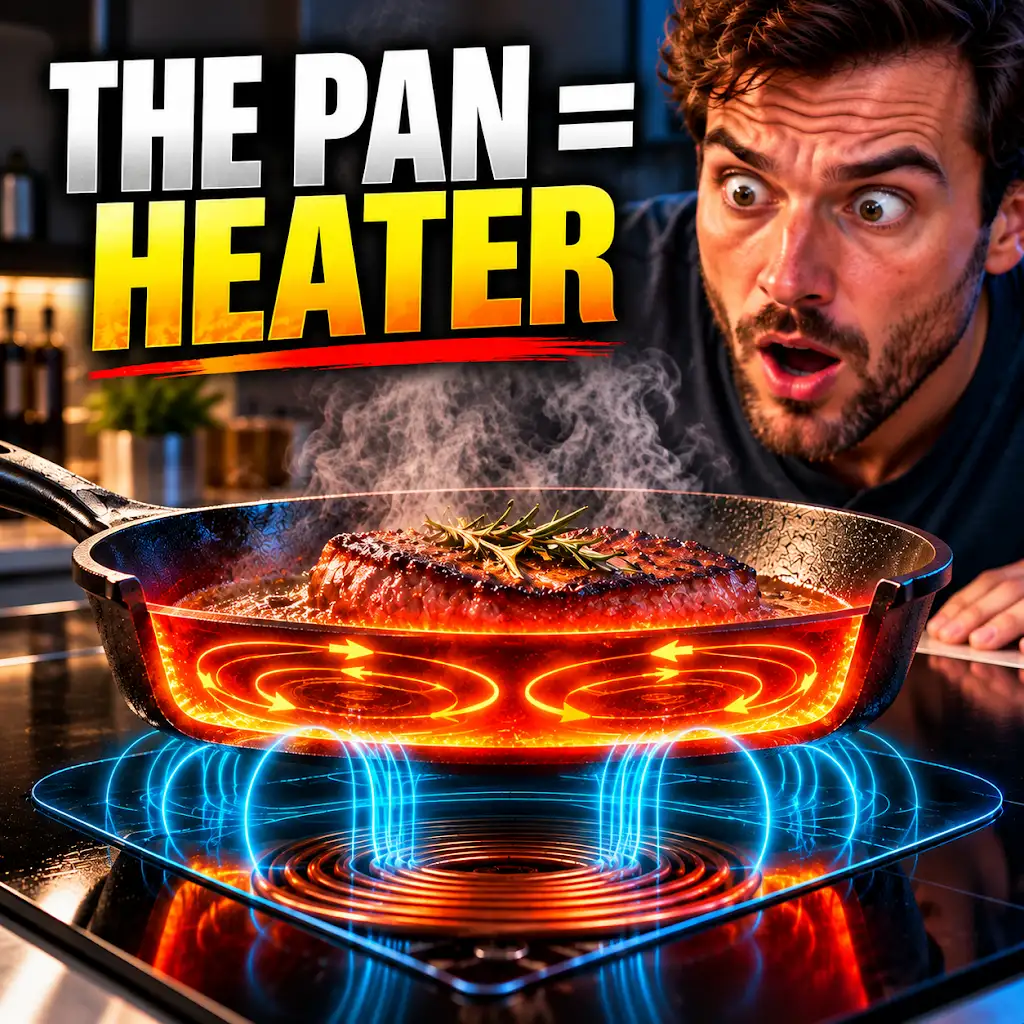
The Pan Is the Heater: How Induction Cooking Really Works
FAQs
1. How do induction cooktops detect pans?
Induction cooktops detect pans through electromagnetic induction. When a pan with a magnetic bottom is placed on the cooktop, the magnetic field induces electrical currents in the pan, which in turn generates heat for cooking.
2. Why do induction cooktops only work with certain types of pans?
Induction cooktops only work with pans that have a magnetic bottom, such as those made of cast iron or magnetic stainless steel. Non-magnetic pans, like aluminum or copper, will not work on induction cooktops because they do not generate the necessary electrical currents.
3. Can induction cooktops detect the size of the pan placed on them?
Yes, induction cooktops can detect the size of the pan placed on them. The cooktop uses sensors to determine the size of the pan and only activates the corresponding heating elements beneath the pan, ensuring efficient and even cooking.
4. Are there any safety features associated with induction cooktops detecting pans?
Yes, induction cooktops have safety features related to detecting pans. If a pan is not detected within a certain time frame, the cooktop will automatically shut off to prevent overheating. Additionally, some models have pan detection technology that will only activate the cooktop when a compatible pan is placed on it.
5. How does the detection of pans on induction cooktops contribute to energy efficiency?
The detection of pans on induction cooktops contributes to energy efficiency by only activating the heating elements beneath the pan. This targeted heating reduces energy waste and ensures that the heat is transferred directly to the pan, resulting in faster cooking times and lower energy consumption compared to traditional gas or electric cooktops.