
The realm of materials science has long been dedicated to discovering and engineering substances with remarkable properties. For centuries, this pursuit focused on tweaking the atomic and molecular composition of existing materials. However, a paradigm shift is underway, ushering in an era where the internal structure, rather than the constituent atoms, dictates a material’s extraordinary capabilities. This revolution is embodied in mechanical metamaterials, a class of engineered matter that defies conventional material behavior, offering properties previously confined to the realm of science fiction. These materials are not found in nature; they are meticulously designed and fabricated, their often counter-intuitive responses to mechanical stimuli arising from their intricate, sub-wavelength architecture.
The term “metamaterial” itself hints at something beyond the ordinary. Derived from the Greek word “meta,” meaning “beyond,” these materials possess properties that are not inherent to their base constituents. Instead, their exotic mechanical characteristics are a direct consequence of their carefully crafted, repeating structural patterns. Imagine a sponge, but instead of simple pores, picture a complex, three-dimensional lattice of precisely arranged beams and struts, each element smaller than the wavelength of the mechanical wave it’s intended to interact with. This intricate design allows mechanical metamaterials to exhibit phenomena such as negative compressibility, anisotropic stiffness, and even the ability to steer sound waves, opening up a vista of unprecedented engineering possibilities. The exploration of this bizarre world promises to redefine our understanding of physical limitations and unlock innovations across a multitude of disciplines.
The Foundation: What Defines a Mechanical Metamaterial?
At its core, a mechanical metamaterial is an artificial material engineered to exhibit macroscopic mechanical properties that are not found in its constituent materials. This is achieved by designing an internal structure with features that are significantly smaller than the scale of the wavelengths of mechanical excitations (e.g., stress waves, acoustic waves, vibration) with which they interact. This sub-wavelength structuring is crucial, as it allows the material to behave as a continuous medium with emergent properties.
Structural Design Principles: Beyond Atomic Arrangement
- Hierarchical Architectures: Many mechanical metamaterials employ hierarchical designs, where intricate structures are repeated at multiple length scales. This allows for fine-tuning of properties at each level, leading to a richer spectrum of emergent behaviors. For instance, a beam might be designed with a complex cross-section, and then multiple such beams are assembled into a larger lattice.
- Unit Cells and Repetition: The fundamental building block of most mechanical metamaterials is the “unit cell.” This is the smallest repeating structural unit that, when tessellated in three dimensions, forms the entire metamaterial. The geometry and properties of the unit cell directly dictate the macroscopic mechanical response of the metamaterial. Designers meticulously sculpt these unit cells to achieve specific outcomes.
- Constituent Materials: The Humble Building Blocks: While the structure is paramount, the choice of constituent materials still plays a role. Common base materials include polymers, metals, ceramics, and even composites. The advantages of a particular base material, such as lightness, strength, or flexibility, can be amplified or modulated by the metamaterial architecture. For example, a flexible polymer might be structured to achieve surprising stiffness in certain directions.
Size Matters: The Wavelength Dictates Behavior
- Sub-Wavelength Interactions: The defining characteristic of metamaterials is that their structural elements are significantly smaller than the characteristic wavelength of the phenomenon they are designed to influence. For mechanical waves, this means the repeating features of the metamaterial are smaller than the wavelength of sound or vibration. This allows the metamaterial to act as a homogeneous medium from the perspective of the wave, rather than scattering it due to individual structural elements.
- Resonance and Amplification: The sub-wavelength design often involves resonant behavior. The mechanical elements within the unit cell can be designed to resonate at specific frequencies, leading to enhanced or suppressed wave transmission, or even negative effective properties. This is analogous to how optical metamaterials interact with electromagnetic waves.
Strange mechanical metamaterials have garnered significant attention in recent years due to their unique properties and potential applications in various fields, including engineering and robotics. For those interested in exploring this fascinating topic further, a related article can be found at Freaky Science, which delves into the innovative designs and functionalities of these materials. This resource provides insights into how mechanical metamaterials can be engineered to achieve extraordinary characteristics, paving the way for advancements in material science.
Unconventional Responses: Bending the Rules of Mechanics
The true marvel of mechanical metamaterials lies in their ability to exhibit mechanical properties that are impossible to achieve with conventional materials. These counter-intuitive responses open doors to applications that were previously unimaginable.
Negative Compressibility: The Material That Expands Under Pressure
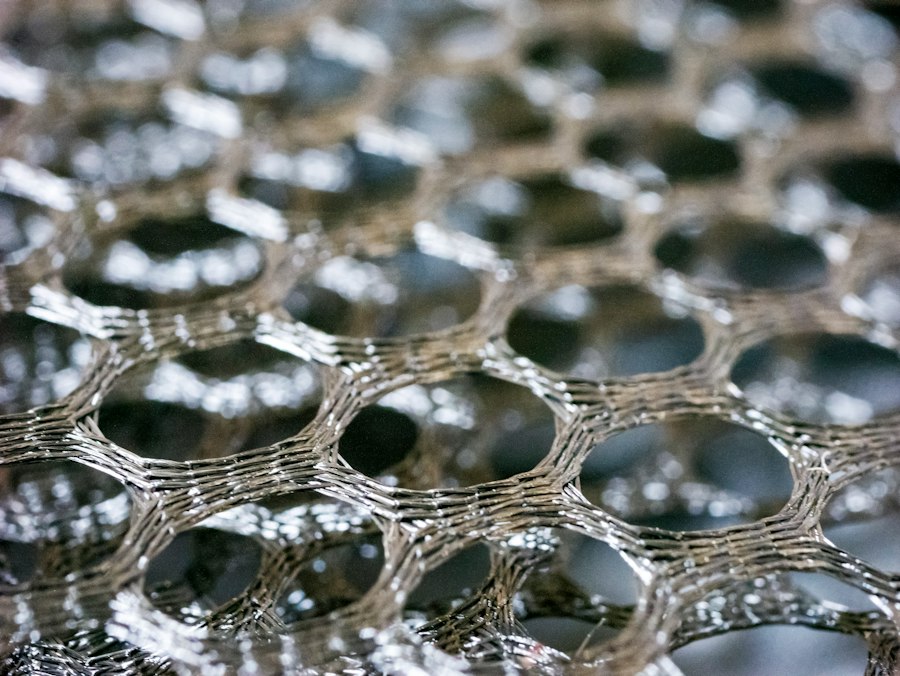
- The Paradoxical Behavior: Perhaps the most astonishing property of some mechanical metamaterials is negative compressibility. Conventionally, when a material is subjected to hydrostatic pressure, it shrinks. However, metamaterials designed with specific geometries, like the re-entrant honeycomb structure, can paradoxically expand in volume when compressed.
- Mechanism of Re-entrant Structures: These structures feature hinges or joints that, upon compression, rotate in a way that causes the overall structure to expand. Imagine a series of interconnected parallelograms. When you push on the sides, the corners move outwards, increasing the overall area. This effect can be scaled up to three dimensions.
- Applications: This seemingly bizarre property has profound implications for shock absorption, vibration isolation, and advanced prosthetic devices. Imagine a helmet that becomes less restrictive when you hit your head, absorbing the impact by expanding.
Anisotropic Stiffness: Directional Strength and Flexibility
- Tailoring Stiffness: Most conventional materials exhibit some degree of stiffness variation with direction, but this is usually an inherent property of their atomic or crystalline structure. Mechanical metamaterials, however, allow for extreme and precisely controlled anisotropy. They can be designed to be incredibly stiff in one direction while being remarkably flexible or even floppy in another.
- Design Strategies: This is often achieved by designing unit cells with directional structural elements. For instance, a lattice of beams oriented predominantly in one direction will resist deformation along that axis much more strongly than perpendicular to it.
- Applications: This has immense potential in aerospace, where lightweight structures need to withstand specific forces, and in robotics, where compliant joints with controlled stiffness are crucial for intricate movements.
Auxetic Materials: The More You Stretch, The Wider They Get
- A Neighbor to Negative Compressibility: Auxetic materials are closely related to negatively compressible materials. While negative compressibility refers to the volume response under hydrostatic pressure, auxetic behavior describes a material that contracts laterally when stretched longitudinally, and vice-versa. This is the opposite of most conventional materials, which become narrower when stretched.
- The Poisson’s Ratio Conundrum: This behavior is characterized by a negative Poisson’s ratio. The Poisson’s ratio describes the ratio of transverse strain to axial strain. For most materials, this ratio is positive, meaning they get thinner when stretched. Auxetic materials have a negative Poisson’s ratio.
- Structural Basis: Similar to negative compressibility, auxeticity is often achieved through re-entrant structures or specific hinged mechanisms within the unit cell.
- Applications: Auxetic materials offer enhanced puncture resistance, improved energy absorption, and unique tactile properties, making them suitable for applications in protective gear, medical implants, and even flexible electronics.
The Art of Creation: Fabrication Techniques for Mechanical Metamaterials
The realization of these exotic mechanical properties hinges on the ability to fabricate incredibly intricate micro- and nanoscale structures. Advances in manufacturing technologies have been instrumental in bringing mechanical metamaterials from theoretical concepts to tangible realities.
Additive Manufacturing: 3D Printing’s Role
- Democratizing Complexity: 3D printing, or additive manufacturing, has revolutionized the fabrication of mechanical metamaterials. Its ability to build complex geometries layer by layer, directly from digital designs, makes it ideally suited for creating the intricate unit cells and repeating patterns that define these materials.
- Material Versatility: Different 3D printing technologies, such as fused deposition modeling (FDM), stereolithography (SLA), and selective laser sintering (SLS), allow for the fabrication of metamaterials from a wide range of polymers, resins, and even metals.
- Scalability and Customization: 3D printing enables the rapid prototyping and customization of metamaterial designs, allowing researchers to quickly test and refine new concepts. It also offers the potential for on-demand manufacturing of complex components.
Microfabrication Techniques: Precision at the Microscopic Level
- Lithography and Etching: For creating metamaterials at the micro- or even nanoscale, techniques like photolithography and reactive ion etching, commonly used in the semiconductor industry, are employed. These methods allow for the precise patterning and removal of material to create the desired structures.
- Soft Lithography: This technique uses flexible molds to transfer patterns onto surfaces, offering a cost-effective way to create microscale metamaterials, particularly from polymers.
- Assembling Micro-Parts: In some cases, microfabricated components are assembled using micro-manipulation techniques to create the final metamaterial structure. This approach offers high precision but can be more time-consuming.
Beyond Conventional Methods: Emerging Fabrication Strategies
- Self-Assembly: Researchers are exploring self-assembly processes, where the constituent elements of a metamaterial spontaneously arrange themselves into the desired structure, mimicking natural biological processes. This holds promise for large-scale and cost-effective fabrication.
- Bio-inspired Fabrication: Drawing inspiration from natural structures like bone or wood, scientists are developing fabrication methods that leverage the hierarchical and porous nature of biological materials to create novel metamaterial designs.
Potential Applications: Shaping the Future with Metamaterial Marvels
The extraordinary properties of mechanical metamaterials are not merely academic curiosities; they hold the key to transformative innovations across a vast spectrum of industries.
Aerospace and Defense: Lightweighting and Advanced Protection
- Enhanced Structural Integrity: The ability to engineer materials with precisely controlled stiffness and strength-to-weight ratios is invaluable in aerospace. Metamaterials can lead to lighter aircraft and spacecraft, improving fuel efficiency and performance.
- Vibration and Noise Control: The unique wave manipulation capabilities of metamaterials can be harnessed to absorb vibrations and dampen noise within aircraft cabins and engine components, leading to a more comfortable and quieter experience.
- Impact and Ballistic Protection: Materials with negative compressibility and auxetic behavior offer superior shock absorption and energy dissipation, making them ideal for advanced body armor, vehicle protection, and impact-resistant structures.
Biomedical Engineering: From Implants to Rehabilitation
- Advanced Prosthetics and Orthotics: The ability to design materials with tailored stiffness and compliance can lead to more comfortable and functional prosthetic limbs and orthotic devices that better mimic natural tissues.
- Medical Implants: Metamaterials can be engineered to have mechanical properties that closely match those of biological tissues, reducing stress shielding and improving the longevity and integration of implants like bone prosthetics or stents.
- Drug Delivery Systems: The intricate internal structures of some metamaterials could be utilized to create sophisticated drug delivery vehicles, capable of releasing medication in a controlled and targeted manner.
Robotics and Automation: Dexterity and Adaptability
- Compliant Robotics: Designing robots with soft and adaptable joints is crucial for safe interaction with humans and delicate environments. Metamaterials offer unprecedented control over the compliance and stiffness of robotic components.
- Dexterous Grippers: Robots equipped with metamaterial grippers could be able to handle delicate objects with precision, adapting their grip to the shape and fragility of the item.
- Self-Healing Robots: Future robotic systems might incorporate self-healing metamaterials, allowing them to repair damage autonomously, extending their operational lifespan.
Other Frontiers: Acoustic Cloaking and Beyond
- Acoustic Manipulation: Beyond purely mechanical vibrations, metamaterials can be designed to manipulate sound waves. This opens up possibilities for acoustic cloaking devices that render objects invisible to sonar, or advanced soundproofing technologies.
- Seismic Wave Protection: In the future, large-scale metamaterial structures could potentially be employed to protect buildings and infrastructure from the destructive forces of earthquakes by diverting or absorbing seismic waves.
- Energy Harvesting: The resonant properties of certain metamaterials could be exploited to efficiently harvest ambient vibrational energy, powering small electronic devices without the need for traditional batteries.
Strange mechanical metamaterials have garnered significant attention in recent years due to their unique properties and potential applications in various fields. These materials can manipulate mechanical waves in ways that traditional materials cannot, leading to innovations in areas such as vibration control and sound insulation. For those interested in exploring this fascinating topic further, a related article can be found at Freaky Science, which delves into the latest advancements and research surrounding these extraordinary materials.
Challenges and the Road Ahead: Navigating the Metamaterial Frontier
Despite the immense promise, the field of mechanical metamaterials is still in its nascent stages, facing several significant challenges that need to be addressed for widespread adoption.
Scalability and Manufacturing Costs
- Transition from Lab to Industry: While laboratory-scale fabrication techniques are advancing rapidly, scaling up the production of complex metamaterial structures to industrial levels remains a significant hurdle. Cost-effective and high-throughput manufacturing processes are essential for commercial viability.
- Material Limitations: The properties of the base constituent materials can limit the overall performance of the metamaterial. Developing new constituent materials or optimizing existing ones for metamaterial applications is an ongoing area of research.
Durability and Long-Term Performance
- Fatigue and Creep: The intricate microstructures of metamaterials can be susceptible to fatigue failure under repeated stress cycles or creep under sustained loads. Understanding and mitigating these long-term performance issues is crucial for practical applications.
- Environmental Factors: The performance of metamaterials can be influenced by environmental factors such as temperature, humidity, and chemical exposure. Ensuring their robustness in diverse operating conditions is vital.
Design and Computational Tools
- Predictive Modeling: Developing sophisticated computational models and simulation tools that can accurately predict the mechanical behavior of complex metamaterial designs is essential for efficient design and optimization.
- Inverse Design: The ability to perform “inverse design,” where desired properties are specified and the corresponding metamaterial structure is automatically generated, would significantly accelerate the discovery and development process.
Standards and Characterization
- Establishing Benchmarks: The lack of standardized testing methods and characterization protocols for mechanical metamaterials makes it difficult to compare results across different research groups and to establish reliable performance benchmarks.
- Defining Properties: The emergent and often exotic properties of metamaterials require new approaches to material characterization and the definition of relevant mechanical parameters.
The journey into the bizarre world of mechanical metamaterials is just beginning. As researchers continue to unravel the intricate principles governing their behavior and engineers refine fabrication techniques, we can anticipate a future where these engineered materials play a pivotal role in shaping our technological landscape. From revolutionizing structural integrity in aerospace to enhancing the dexterity of robots and improving the quality of life through advanced biomedical devices, the potential applications are as boundless as the imagination that conceived them. The once-fanciful notion of materials behaving in ways that defy intuition is rapidly becoming a tangible reality, ushering in an era of unprecedented engineering possibilities.

Pull Harder… and This Material Suddenly Gets Shorter
FAQs
What are mechanical metamaterials?
Mechanical metamaterials are materials engineered to have properties not found in nature, such as negative Poisson’s ratio or negative compressibility.
How are strange mechanical metamaterials created?
Strange mechanical metamaterials are created by designing and arranging the structure of the material at a small scale to achieve desired mechanical properties.
What are some unique properties of strange mechanical metamaterials?
Some unique properties of strange mechanical metamaterials include the ability to expand in multiple directions when compressed, or to bend in unusual ways without breaking.
What are the potential applications of strange mechanical metamaterials?
Strange mechanical metamaterials have potential applications in fields such as aerospace, robotics, and biomedical engineering for creating lightweight, strong, and flexible materials.
How do strange mechanical metamaterials differ from traditional materials?
Strange mechanical metamaterials differ from traditional materials in that they are designed at a microstructural level to exhibit specific mechanical properties, rather than relying solely on the properties of the material itself.