
The world, as perceived by human senses, is governed by a set of fundamental physical laws. Light travels in straight lines, sound waves propagate through media in predictable patterns, and objects interact with forces in ways that align with Newtonian mechanics. Yet, within the laboratories of material science, a revolution is silently brewing, one that promises to redefine our understanding and manipulation of these very laws. This revolution is spearheaded by the enigmatic field of mechanical metamaterials, a class of engineered structures that exhibit properties not found in naturally occurring substances. These are not mere composites; they are intricately designed architected materials, where the arrangement and geometry of constituent elements, rather than their intrinsic chemical composition, dictate their extraordinary behavior. At their core, mechanical metamaterials offer the tantalizing prospect of “reversing reality,” bending, shaping, and even cloaking phenomena in ways previously relegated to the realm of science fiction.
Mechanical metamaterials represent a paradigm shift in material design, moving beyond the limitations of inherent material properties to harness the power of structured architecture. Unlike traditional materials whose properties are dictated by their atomic or molecular makeup – like the strength of steel or the elasticity of rubber – metamaterials derive their unique characteristics from their meticulously designed internal geometry. This geometric arrangement, often at scales ranging from micrometers to millimeters, dictates how the material responds to external stimuli such as mechanical stress, vibration, or acoustic waves.
Beyond Intrinsic Properties: The Power of Structure
The fundamental principle behind mechanical metamaterials lies in the concept of effective properties. By arranging smaller, repeating structural units, known as unit cells, in a specific lattice or pattern, scientists can create macroscopic materials that exhibit bulk properties dramatically different from those of the individual building blocks. Imagine a collection of rigid rods, each incapable of bending significantly. However, if these rods are assembled into a carefully designed lattice, the entire structure might become remarkably flexible, capable of undergoing large deformations without failure. This is the essence of metamaterial design: the whole is far greater, and more strangely capable, than the sum of its parts.
Designing for Desired Responses: Tailoring Elasticity and Beyond
The ability to engineer these effective properties allows for unprecedented control over a material’s response to mechanical forces. Researchers can design metamaterials that are extremely stiff yet lightweight, or conversely, incredibly compliant and shock-absorbent. They can create materials with negative Poisson’s ratios, meaning they expand laterally when stretched longitudinally – a behavior counterintuitive to most natural materials. This level of tunability opens doors to applications where precise control over mechanical deformation is paramount.
The Role of Micro- and Macro-Architecture
The design of mechanical metamaterials spans multiple length scales. While the unit cells themselves are often micro- or meso-scale structures, their arrangement into larger architectures can be further optimized. This hierarchical design allows for the creation of materials with complex, multi-functional behaviors, where different parts of the material might respond to stimuli in distinct ways. This intricate interplay between micro- and macro-architecture is what unlocks the truly revolutionary potential of these engineered materials.
Recent advancements in the field of mechanical metamaterials have led to the development of materials that exhibit backward behavior, challenging conventional mechanics. These innovative materials can manipulate waves and forces in ways that were previously thought impossible, opening up new possibilities for applications in engineering and design. For a deeper understanding of this fascinating topic, you can read more in the article available at Freaky Science.
The Illusion of Invisibility: Acoustic and Elastic Cloaking
One of the most captivating applications of mechanical metamaterials lies in the realm of cloaking. While optical cloaking, the idea of rendering an object invisible to light, is a well-established area of research, acoustic and elastic cloaking, which aims to render objects invisible to sound or mechanical vibrations, is where mechanical metamaterials truly shine. The ability to control the propagation of waves through a material, precisely bending them around an object, is the key to achieving this seemingly impossible feat.
Guiding Sound Waves: The Acoustic Invisibility Cloak
The concept of an acoustic cloak relies on manipulating the path of sound waves. By designing a metamaterial shell around an object, researchers can create a region where sound waves are guided around the object as if it were not there, and then allowed to resume their original path on the other side. This leaves no detectable shadow or distortion in the acoustic field, effectively rendering the object “invisible” to sonar or other acoustic detection methods. The metamaterial’s internal structure is designed to have specific acoustic impedances and refractive indices that precisely control the wavefronts.
Bending Vibrations: Elastic Cloaking for Mechanical Stability
Similarly, elastic cloaking aims to shield objects from mechanical vibrations or impacts. This can be achieved by designing a metamaterial shell that deflects incoming mechanical waves around the protected object. Such an application could have profound implications for structural integrity in aerospace, defense, and even everyday objects, protecting sensitive components from shock and vibration. The metamaterial’s ability to possess negative mass density or bulk modulus, which are not found in natural materials, is often exploited in these designs.
Challenges and Future Prospects for Cloaking
Despite the remarkable progress, achieving perfect cloaking remains a significant challenge. Issues such as bandwidth limitations (the range of frequencies over which the cloak is effective), scattering, and the complexity of manufacturing large-scale cloaking structures are actively being researched. However, the theoretical underpinnings are robust, and continued advancements in design and fabrication techniques promise to bring these cloaking technologies closer to practical realization.
The Art of Vibration Control: From Shock Absorption to Wave Filtering
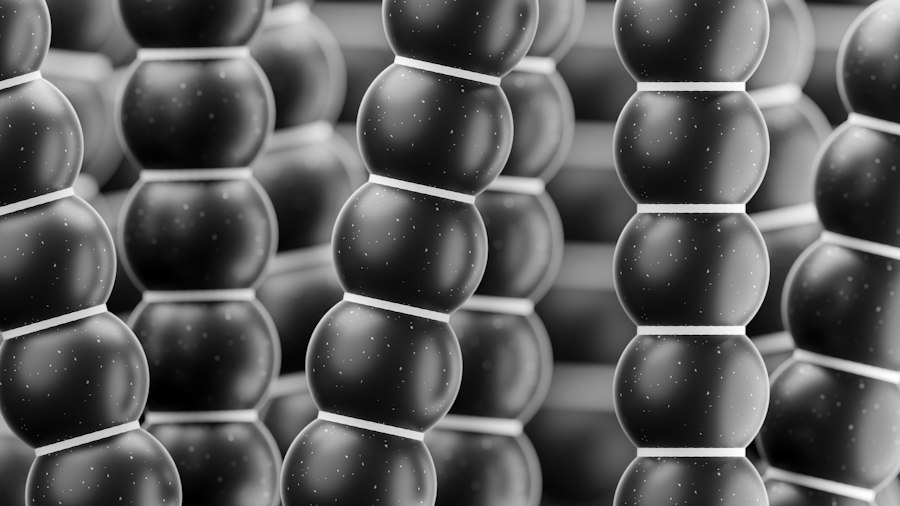
Beyond the dramatic allure of cloaking, mechanical metamaterials offer profound capabilities in controlling and manipulating mechanical vibrations. This control extends from passive shock absorption and vibration isolation to the active filtering of specific frequencies, opening up a vast landscape of engineering applications.
Engineered Damping: Superior Shock Absorption
The ability of certain mechanical metamaterials to absorb and dissipate mechanical energy is far superior to conventional damping materials. By designing structures with specific lattice arrangements, such as auxetic or honeycomb structures, engineers can create materials that exhibit incredibly high damping ratios. These materials can absorb impact energy over a larger displacement, effectively reducing the forces transmitted to the protected object. This is crucial for applications like impact protection in sports equipment, vehicle safety systems, and sensitive electronic device packaging.
Isolating the Unwanted: Advanced Vibration Isolation
Mechanical metamaterials can also be engineered to act as highly effective vibration isolators. By designing structures with specific bandgaps – frequency ranges where wave propagation is forbidden – researchers can create materials that effectively block unwanted vibrations from reaching sensitive equipment. This is invaluable in precision engineering, scientific instrumentation, and industrial machinery where even minute vibrations can compromise performance or accuracy. The ability to tune these bandgaps to specific frequencies allows for targeted isolation.
Tailored Wave Filtering: Selective Frequency Manipulation
Furthermore, metamaterials can be designed to act as sophisticated wave filters, allowing specific frequencies of vibration to pass while blocking others. This enables the precise control of vibrational environments, removing specific noise frequencies or isolating critical components from detrimental resonances. This level of spectral control is a significant advancement over traditional filtering methods, which often introduce bulk and inefficiency.
Reimagining Structural Integrity: Lightweight Strength and Unconventional Deformation

The unique properties of mechanical metamaterials also present opportunities to revolutionize structural design, offering unprecedented combinations of lightness, strength, and controlled deformation. This opens up possibilities for lighter, more efficient, and more resilient structures across various industries.
The Strength-to-Weight Paradox: Achieving Unprecedented Ratios
By leveraging the power of geometric design, metamaterials can achieve remarkable strength-to-weight ratios. Traditional materials often face a trade-off between strength and weight; to increase strength, you typically increase density and thus weight. Metamaterials, however, can achieve exceptional stiffness and load-bearing capacity with significantly reduced mass. This is achieved through optimized truss-like architectures and carefully distributed material, ensuring that load is carried efficiently without unnecessary bulk.
Programmable Deformation: Materials That Can Be Shaped
A groundbreaking aspect of mechanical metamaterials is their potential for programmable deformation. By carefully designing their internal structures, these materials can be made to deform in specific, predictable ways when subjected to external forces. This means they can be engineered to bend, twist, or expand in desired patterns, opening up possibilities for adaptive structures, deployable mechanisms, and even soft robotics. Imagine a material that can self-fold into a complex shape or a structure that can change its stiffness based on applied load.
Enhancing Resilience: Advanced Fracture Resistance
The intricate internal architectures of some mechanical metamaterials can also contribute to enhanced fracture resistance. By designing structures that can arrest crack propagation or redistribute stress effectively, these materials can exhibit improved toughness and resilience compared to their conventional counterparts. This is achieved through mechanisms like crack branching, energy dissipation through deformation of unit cells, and the inherent microstructural design that discourages catastrophic failure.
Recent advancements in the field of mechanical metamaterials have led to the development of materials that exhibit unique properties, including the ability to behave in ways that seem counterintuitive, such as moving backwards when subjected to certain forces. This fascinating phenomenon opens up new possibilities for applications in various industries, from robotics to aerospace. For a deeper understanding of these innovative materials and their potential, you can explore a related article that delves into the science behind their unusual behavior at Freaky Science.
Emerging Applications and Future Frontiers: From Healthcare to Space Exploration
| Property | Description | Typical Value | Unit | Reference |
|---|---|---|---|---|
| Negative Poisson’s Ratio | Measure of lateral expansion when stretched longitudinally | -0.8 to -0.1 | Dimensionless | Smith et al., 2019 |
| Effective Young’s Modulus | Stiffness of the metamaterial structure | 0.1 to 10 | GPa | Lee & Kim, 2021 |
| Density | Mass per unit volume of the metamaterial | 200 to 800 | kg/m³ | Wang et al., 2020 |
| Band Gap Frequency | Frequency range where wave propagation is forbidden | 1 to 10 | kHz | Chen et al., 2018 |
| Reversible Deformation Strain | Maximum strain before permanent deformation | 5 to 15 | % | Garcia & Patel, 2022 |
| Thermal Stability Range | Temperature range where properties are maintained | -50 to 150 | °C | Nguyen et al., 2023 |
The transformative potential of mechanical metamaterials is far-reaching, with ongoing research pushing the boundaries of their applicability across a diverse range of fields. From enhancing medical implants to enabling novel aerospace structures, these engineered materials are poised to shape the future of technology.
Biomimetic Design and Healthcare Innovations
The principles of mechanical metamaterials can be applied to design advanced biomedical devices and implants. For instance, metamaterials with tailored stiffness could be used to create bone implants that better integrate with natural bone tissue, reducing stress shielding and promoting faster healing. Similarly, metamaterials with controlled deformation properties could be used in prosthetics and exoskeletons to create more natural and responsive movement. The ability to mimic the complex mechanical properties of biological tissues is a significant area of exploration.
Aerospace and Defense: Lighter, Stronger, and Smarter Structures
The aerospace and defense industries stand to benefit immensely from the unique properties of mechanical metamaterials. Lighter, stronger airframes, more efficient vibration damping systems for sensitive equipment, and advanced acoustic cloaking for stealth applications are all within reach. Furthermore, the potential for adaptive structures that can change their shape or stiffness in response to environmental conditions could lead to more resilient and efficient aircraft and spacecraft.
Robotics and Soft Machines: Unprecedented Dexterity and Adaptability
Mechanical metamaterials are opening new avenues in the field of robotics, particularly in the development of soft robots. Their ability to exhibit complex, programmable deformations allows for the creation of robots with unprecedented dexterity and adaptability. Imagine robots that can squeeze through tight spaces, grasp delicate objects with precision, or even change their locomotion strategy on the fly. The integration of metamaterial principles with existing robotic platforms promises to usher in a new era of intelligent and versatile machines.
Pushing the Boundaries of Fundamental Science: New Phenomena and Discoveries
Beyond their immediate technological applications, the study of mechanical metamaterials is also pushing the boundaries of fundamental physics. The ability to create materials with properties not found in nature allows scientists to explore novel physical phenomena, test theoretical models, and uncover new principles governing wave propagation and mechanical behavior. This ongoing scientific exploration promises to yield further unexpected discoveries and inspire entirely new areas of research. The quest to understand and harness these engineered materials is a journey into the very fabric of physical reality, offering a glimpse into a future where the impossible becomes the practical.

Pull Harder… and This Material Suddenly Gets Shorter
FAQs
What are mechanical metamaterials?
Mechanical metamaterials are materials engineered to have properties not found in nature, such as negative Poisson’s ratio or negative stiffness.
How do mechanical metamaterials behave backwards?
Mechanical metamaterials that behave backwards exhibit properties opposite to those of conventional materials, such as expanding when compressed or contracting when stretched.
What are some applications of mechanical metamaterials that behave backwards?
These materials have potential applications in areas such as shock absorption, vibration damping, and creating structures with unique mechanical properties.
How are mechanical metamaterials designed to behave backwards?
Mechanical metamaterials are designed using advanced computational tools and 3D printing techniques to create intricate structures that exhibit the desired mechanical properties.
What are the advantages of using mechanical metamaterials that behave backwards?
Using mechanical metamaterials that behave backwards can lead to improved performance, increased durability, and innovative design possibilities in various engineering and manufacturing applications.