
The allure of stretchy fabric lies in its paradoxical nature: it contracts when pulled. This seemingly counterintuitive characteristic is a testament to ingenious material science and engineering, resulting in textiles that offer unparalleled comfort, functionality, and aesthetic possibilities. From the snug embrace of athletic wear to the supportive grip of medical compression garments, stretchy fabrics have revolutionized how we dress, move, and interact with the world around us. This exploration delves into the fascinating science behind these adaptable materials, their diverse applications, and the future possibilities they hold.
At its core, the “stretchiness” of a fabric refers to its ability to elongate under tension and then return to its original shape. This property is not inherent in all textiles. While natural fibers like cotton and wool possess some degree of elasticity, it is often limited and prone to permanent deformation after repeated stretching. Stretchy fabrics, in contrast, are designed to overcome these limitations through specific material compositions and structural designs.
Fiber Composition: The Building Blocks of Stretch
The foundation of a stretchy fabric lies in its constituent fibers. Synthetic polymers, known for their inherent elasticity, are the primary drivers behind most stretch fabrics.
Elastane (Spandex/Lycra): The King of Stretch
Elastane, also known by trade names like Spandex and Lycra, is the undisputed champion of elastic fibers. This synthetic polyurethane fiber is characterized by its long, amorphous polymer chains that are cross-linked by rigid segments. When the fabric is stretched, these long chains unfurl and align, allowing for significant elongation. Upon release of tension, the inherent attractive forces between the polymer chains, facilitated by the cross-links, pull the fibers back to their original configuration. Elastane can be stretched to several hundred percent of its original length and still recover. Its exceptional resilience and ability to maintain its elasticity over time make it indispensable in performance wear.
Polyester and Nylon: Supporting Roles in Stretch
While elastane provides the primary elastic return, other synthetic fibers like polyester and nylon often form the bulk of stretchy fabrics. These fibers contribute to the fabric’s overall durability, strength, and shape retention. In a typical stretch knit, elastane fibers are blended with polyester or nylon yarns. The knit structure itself plays a crucial role, creating loops of yarn that can unfurl and reform, further enhancing the fabric’s ability to stretch.
Weave and Knit Structures: Engineering the Contraction
The way fibers are assembled into a fabric also profoundly impacts its stretch properties. While woven fabrics can be engineered for some degree of stretch (e.g., with satin weaves or stretch yarns), it is the knit structure that truly unlocks the material’s inherent contracting ability.
Knit Construction: The Foundation of Flexibility
Knitting involves interlooping yarns, creating a flexible and adaptable structure. Different knit stitches offer varying degrees of stretch.
Jersey Knit: A Common Starting Point
The jersey knit, a fundamental knit construction, provides a good balance of stretch and drape. It’s characterized by its smooth face and slightly looped back. The inherent elasticity of the yarns used, particularly when elastane is incorporated, allows the jersey fabric to stretch significantly in both the width and length directions.
Rib Knit: Enhanced Stretch and Recovery
Rib knits, formed by alternating rows of knit and purl stitches, offer even greater elasticity and a more pronounced contracting ability. The vertical ribs create a more open structure that allows for substantial stretching, and the alternating stitches provide a strong pulling force, ensuring excellent recovery to the original shape. This makes rib knits ideal for areas requiring a snug fit, such as cuffs, neckbands, and waistbands.
Purl Knit: Dimensional Stretch
Purl knits, where both the front and back of the fabric feature purl stitches, offer a more dimensional stretch. The looped structure on both sides allows for expansion in multiple directions, creating a fabric that can adapt to intricate body contours.
Woven Fabrics: Targeted Stretch Engineering
While knits are inherently stretchy, woven fabrics can be engineered for stretch through specific techniques.
Stretch Woven Fabrics: Incorporating Elastic Yarns
Modern woven fabrics can incorporate elastane yarns alongside traditional warp and weft yarns. This allows for a two-way stretch (across the width) or four-way stretch (both width and length) depending on the yarn placement and proportion of elastane. This approach provides the structure and stability of a woven fabric with the added benefit of stretch.
Mechanical Stretch: Woven with Intention
Some woven fabrics achieve a degree of stretch through their weave structure and yarn tension during manufacturing, even without the inclusion of elastane. This “mechanical stretch” often involves creating a fabric with inherent “give” due to the way the yarns are interlaced, allowing for some deformation under stress. However, this type of stretch is typically less pronounced and may not offer the same level of recovery as fabrics containing elastane.
In the study of materials that exhibit unique properties, one fascinating phenomenon is the behavior of certain materials that contract when pulled. This property can be observed in various applications, from engineering to everyday products. For a deeper understanding of this topic, you can explore a related article that discusses the science behind these materials and their practical implications. Check it out here: Freaky Science.
Applications: Where Elasticity Meets Functionality
The unique properties of stretchy fabrics have led to their widespread adoption across a diverse range of industries and

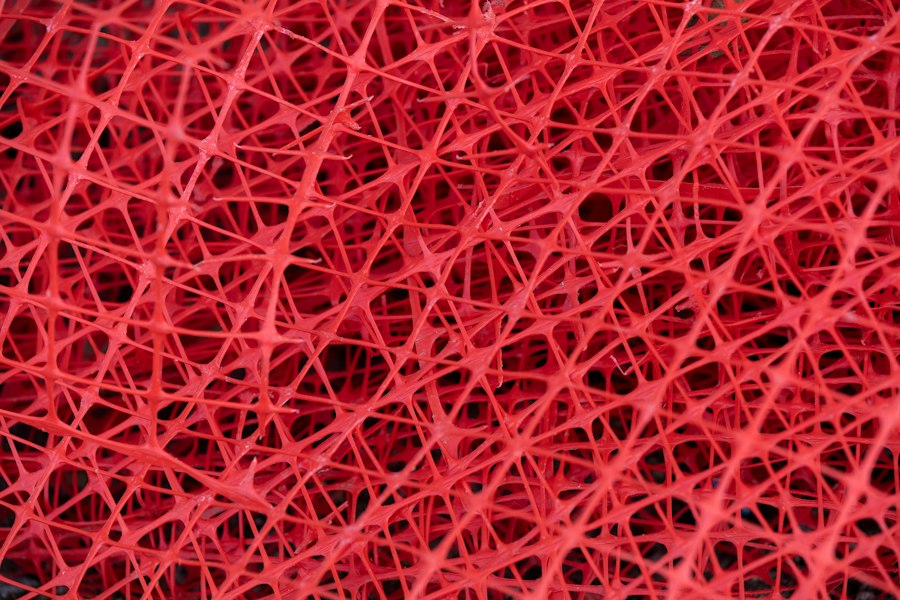
Pull Harder… and This Material Suddenly Gets Shorter
FAQs

What is a material that contracts when pulled?
A material that contracts when pulled is a type of material that decreases in length or volume when subjected to a tensile force.
How does a material that contracts when pulled work?
This type of material typically exhibits a negative Poisson’s ratio, meaning that it contracts in the direction of the applied force rather than expanding.
What are some examples of materials that contract when pulled?
Examples of materials that contract when pulled include auxetic materials like certain polymers, foams, and textiles that have a unique cellular structure allowing them to exhibit this behavior.
What are the applications of materials that contract when pulled?
Materials that contract when pulled have various applications in industries such as aerospace, automotive, sports equipment, and medical devices where properties like impact resistance, energy absorption, and flexibility are important.
How are materials that contract when pulled different from traditional materials?
Materials that contract when pulled differ from traditional materials in their unique mechanical behavior, which can provide advantages in specific applications requiring enhanced performance characteristics.