
The human fascination with the fundamental laws of the universe, particularly the enigmatic forces of gravity and the relentless march of time, has driven countless scientific endeavors. These aren’t just abstract concepts confined to textbooks; they are forces that shape our daily existence. Yet, the quest to understand, and in some instances, manipulate these cosmic orchestrators has led to some of the most mind-bending physics experiments ever conceived. These experiments delve into the very fabric of reality, challenging our intuitions and pushing the boundaries of what we thought possible, from seemingly defying gravity to unraveling the very nature of time’s passage.
For centuries, Isaac Newton’s law of universal gravitation provided a robust framework for understanding how objects attract each other. The image of an apple falling from a tree, a story often associated with Newton himself, epitomizes this intuitive understanding of gravity. However, the 20th century ushered in a revolutionary paradigm shift with Albert Einstein’s theory of general relativity. This theory didn’t just describe gravity as a force, but as a curvature in spacetime itself, caused by mass and energy. The mind-bending experiments that followed sought to confirm and explore the subtle implications of this radical new perspective.
The Deflection of Starlight: Einstein’s Triumph
One of the most celebrated and crucial confirmations of general relativity came with the observation of starlight bending around the Sun. This phenomenon, predicted by Einstein, was a direct consequence of gravity warping spacetime.
The Eddington Expedition of 1919
The 1919 solar eclipse provided a unique opportunity to test Einstein’s theory. Sir Arthur Eddington led two expeditions to observe stars near the Sun during the eclipse. If general relativity was correct, the Sun’s immense gravity would bend the path of light from these stars, making them appear to shift from their normal positions.
The Observation and Its Significance
During the eclipse, photographs were taken of the stars in the Sun’s vicinity. When these were compared to photographs of the same star field taken at night, away from the Sun’s influence, a measurable shift was indeed observed. The degree of deflection matched Einstein’s predictions with remarkable accuracy. This experiment was a watershed moment, catapulting Einstein to global fame and fundamentally altering our understanding of gravity. It demonstrated that gravity wasn’t just an invisible pull, but a geometric distortion of the universe itself.
Gravitational Lensing: Cosmic Magnifying Glasses
The concept of gravitational lensing, a direct manifestation of light bending around massive objects, has become an invaluable tool in modern astrophysics.
Observing Distant Galaxies
When light from a very distant galaxy passes by a more massive object, such as another galaxy or a cluster of galaxies, its path is bent. This bending can cause the distant galaxy to appear distorted, magnified, or even as multiple images.
Unveiling the Universe’s Structure
By studying these gravitational lenses, astronomers can infer the mass distribution of the intervening objects, even if those objects are dark matter. This has provided crucial insights into the large-scale structure of the universe, the distribution of dark matter, and the existence of exoplanets through microlensing events. The universe, in essence, becomes its own telescope, with gravity acting as the lens.
Gravitational Waves: Ripples in Spacetime
General relativity also predicted the existence of gravitational waves – ripples in spacetime that propagate at the speed of light, generated by the acceleration of massive objects. Their detection represented another monumental leap in our understanding of gravity and the dynamic nature of the cosmos.
The LIGO and Virgo Observatories
The Laser Interferometer Gravitational-Wave Observatory (LIGO) in the United States and the Virgo interferometer in Italy were specifically designed to detect these incredibly faint signals.
The First Detection: A Celestial Symphony
In 2015, LIGO made the first direct detection of gravitational waves. The signal originated from the merger of two black holes, an event that produced a cataclysmic release of energy. This groundbreaking discovery opened a new window onto the universe, allowing us to “hear” cosmic events that are otherwise invisible.
What Gravitational Waves Tell Us
The analysis of gravitational wave signals provides unprecedented information about extreme astrophysical phenomena, such as the mergers of black holes and neutron stars. These events are not only spectacular but also crucial for understanding the formation of heavy elements and the evolution of galaxies. The detection of gravitational waves has ushered in the era of multi-messenger astronomy, where observations from different sources (light, gravitational waves, neutrinos) are combined to provide a more complete picture of cosmic events.
In the realm of physics, there are numerous experiments that challenge our understanding of the universe, often appearing impossible at first glance. For those intrigued by such phenomena, a fascinating article can be found at Freaky Science, which delves into various groundbreaking experiments that defy conventional logic and push the boundaries of scientific inquiry. These explorations not only captivate the imagination but also inspire future generations of physicists to think outside the box and explore the unknown.
Challenging the Timeless Flow: The Enigmas of Time
Time, often perceived as a universal constant, a steady and unyielding current, is another fundamental aspect of our reality that has been subjected to rigorous scientific scrutiny and mind-bending experiments. Einstein’s theories, once again, revolutionized our understanding, revealing time to be a far more fluid and malleable dimension than previously imagined.
Time Dilation: The Relativity of Clocks
One of the most counterintuitive consequences of Einstein’s special and general relativity is the concept of time dilation – the idea that time does not flow at the same rate for all observers.
Special Relativity and Velocity
According to special relativity, the faster an object moves, the slower time passes for that object relative to a stationary observer. This effect, though negligible at everyday speeds, becomes significant as one approaches the speed of light.
The Hafele-Keating Experiment
A classic experiment that demonstrated this effect was the Hafele-Keating experiment in 1971. Atomic clocks were flown around the world on commercial airplanes, once eastward and once westward. Upon their return, these clocks were compared to stationary atomic clocks. The clocks that traveled experienced time dilation and showed a slight difference, confirming the predictions of special relativity.
Implications for Space Travel
While seemingly abstract, time dilation has significant implications for future long-duration space travel. Astronauts traveling at very high speeds for extended periods would age less than those remaining on Earth. This “twin paradox,” a thought experiment stemming from time dilation, highlights the profound implications of relativity for our understanding of temporal experience.
General Relativity and Gravity’s Influence
General relativity further elaborates on time dilation, positing that gravity also affects the passage of time. The stronger the gravitational field, the slower time passes.
The GPS System: A Practical Application
The Global Positioning System (GPS) is a perfect real-world example of time dilation in action. The satellites orbiting Earth experience both special relativistic effects (due to their speed) and general relativistic effects (due to weaker gravity at their altitude). Without accounting for these time dilations, GPS systems would become inaccurate very quickly, demonstrating the tangible impact of Einstein’s theories on our daily technology.
Atomic Clocks and Gravitational Potential
Precise atomic clocks can measure the minuscule differences in time flow caused by variations in gravitational potential even on Earth’s surface. This has allowed scientists to observe the subtle effects of altitude on time, further solidifying the link between gravity and the temporal dimension.
The Arrow of Time: Why Does Time Only Move Forward?
While relativity describes how time can be affected by speed and gravity, it doesn’t inherently explain why time appears to have a unidirectional flow – why we experience events in a sequence from past to future, never the other way around. This is often referred to as the “arrow of time.”
Thermodynamics and Entropy
The second law of thermodynamics offers a compelling explanation for the arrow of time. This law states that the total entropy (a measure of disorder or randomness) in an isolated system can only increase or remain constant; it never decreases.
The Universe’s Increasing Disorder
The universe, as a whole, is a vast and complex system. Over time, its entropy tends to increase. Processes that involve an increase in disorder, such as a dropped glass shattering or a hot cup of coffee cooling, are far more probable than their reverse. The past is characterized by lower entropy, and the future by higher entropy. This thermodynamic irreversibility gives time its perceived direction.
Reconciling with Microscopic Reversibility
A fascinating aspect of this puzzle is that the fundamental laws of physics at the microscopic level are largely time-symmetric. That is, if you were to play a video of individual particles interacting backward, it would still be consistent with the laws of physics. The arrow of time, therefore, emerges from the statistical behavior of vast numbers of particles, not from a fundamental asymmetry in the underlying laws.
Quantum Mechanics and the Nature of Time
The realm of quantum mechanics introduces its own set of perplexing questions about time, often challenging our classical intuitions about its smooth and continuous nature.
Quantum Entanglement and Non-Locality
Quantum entanglement, a phenomenon where two or more particles become linked in such a way that they share the same fate, regardless of the distance separating them, raises profound questions about the nature of reality and causality.
Instantaneous Correlation, Not Communication
When entangled particles are measured, their properties are instantly correlated, even if they are light-years apart. This “spooky action at a distance,” as Einstein called it, does not allow for faster-than-light communication, as it doesn’t convey information in a usable way. However, it does suggest a deeper interconnectedness in the quantum world that transcends our everyday notions of space and time.
Philosophical Implications
The implications of entanglement for our understanding of time are still being debated. Some interpretations suggest that at the quantum level, time might not be as linear or sequential as we perceive it. The interconnectedness of entangled particles hints at a reality where events might be correlated in ways that defy our classical understanding of temporal order.
The Uncertainty Principle and Temporal Resolution
Heisenberg’s uncertainty principle, a cornerstone of quantum mechanics, also has implications for how we measure and perceive time at the quantum scale.
The Energy-Time Uncertainty Relation
The uncertainty principle states that certain pairs of physical properties, like position and momentum, cannot be simultaneously known with perfect accuracy. A related uncertainty relation exists between energy and time. This means that the more precisely we know the energy of a quantum system, the less precisely we can know the duration of its state, and vice versa.
Quantum Fluctuations and Time’s Granularity
This has led some physicists to speculate about the “granularity” of time at the Planck scale (an extremely small unit of length and time). At such minuscule scales, the concept of a continuous flow of time might break down, with time potentially exhibiting quantum fluctuations. Experiments aiming to probe these extremely small scales are at the forefront of modern physics, seeking to understand if time itself is quantized.
Defying Gravity: The Quest for Levitation and Propulsion

The dream of defying gravity, of effortless flight and levitation, has captivated humanity for millennia. While the concept of antigravity remains in the realm of science fiction, scientific endeavors have explored various avenues to counteract or manipulate gravitational forces, some of which border on the mind-bending.
Magnetic Levitation: Harnessing Repulsion
Magnetic levitation, or maglev, is a technology that uses magnetic forces to lift and propel objects without physical contact. While not defying gravity in its entirety, it effectively counteracts its pull.
Superconductors and the Meissner Effect
Superconductors, materials that conduct electricity with zero resistance below a critical temperature, exhibit a phenomenon called the Meissner effect. When placed in a magnetic field, they expel the magnetic field from their interior, creating a repulsive force that can levitate magnets.
Maglev Trains and Future Applications
This principle is famously employed in maglev trains, which float above their tracks, enabling incredibly fast and smooth transportation. Beyond trains, research is ongoing for applications in areas like frictionless bearings and advanced magnetic confinement for fusion reactors.
Diamagnetism and Everyday Levitation
Even everyday materials exhibit diamagnetism, a weak form of repulsion from magnetic fields. While usually too weak to levitate macroscopic objects, scientists have demonstrated the levitation of tiny, lightweight objects like water droplets or even small insects using powerful magnetic fields and diamagnetism. This highlights that even seemingly mundane materials possess the potential to interact with magnetic forces in surprising ways.
Exotic Propulsion Concepts: Pushing the Boundaries
While direct antigravity technology remains elusive, theoretical physicists have explored exotic propulsion concepts that could, in principle, circumvent or manipulate the conventional understanding of gravity and inertia.
The Alcubierre Drive: Warping Spacetime for Faster-Than-Light Travel
The Alcubierre drive, a theoretical concept proposed by physicist Miguel Alcubierre, is a hypothetical means of achieving faster-than-light travel by warping spacetime.
Contracting and Expanding Spacetime
This drive would create a “warp bubble” around a spacecraft. Spacetime would be contracted in front of the bubble and expanded behind it, effectively allowing the spacecraft to travel vast distances without actually moving through spacetime at superluminal speeds locally.
Energy Requirements and Exotic Matter
The major hurdle for the Alcubierre drive is its immense energy requirement and the need for “exotic matter” with negative mass or energy density, which has not been observed. Despite these challenges, it remains a fascinating theoretical exploration of how spacetime itself could be manipulated for propulsion.
Inertial Propulsion and Manipulating Mass
Some speculative research explores concepts of inertial propulsion, which aims to generate thrust by manipulating the inertia of an object, rather than expelling mass.
The EM Drive Debate
The EM Drive (electromagnetic drive) is a controversial concept that claims to produce thrust by reflecting microwaves within a specially shaped cavity. Proponents argue that it violates Newton’s third law and could enable propellantless propulsion. However, the scientific community largely remains skeptical due to the lack of independent verification and potential for experimental error.
The Search for New Physics
These concepts, while highly theoretical and facing significant scientific hurdles, represent the persistent human drive to push the boundaries of what is known and to explore the potential for novel forms of propulsion that could fundamentally alter our relationship with gravity and the vastness of space.
The Quantum Realm: Where Intuition Fails and Reality Bends
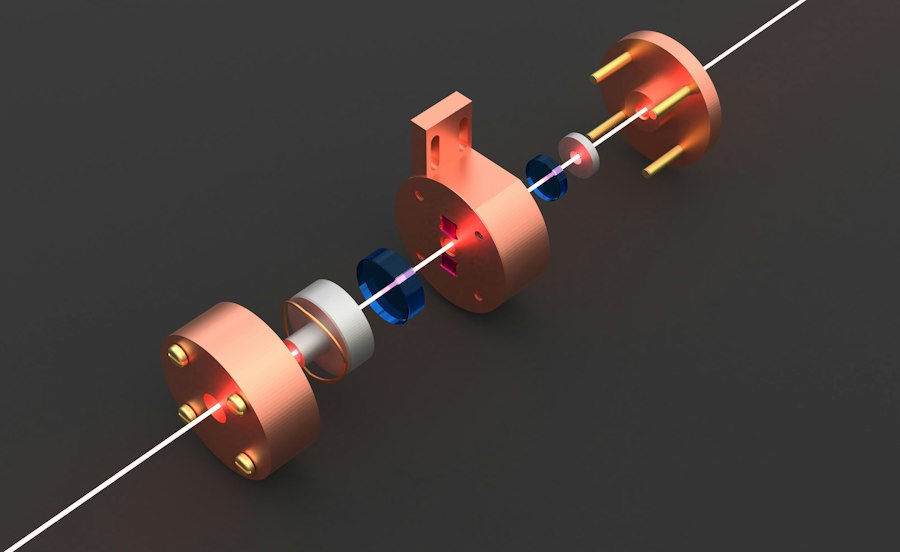
The quantum realm, the domain of the infinitesimally small, is where our everyday intuitions about gravity and time truly begin to unravel. Here, probability, superposition, and entanglement reign, leading to experiments that are both profoundly revealing and bewildering.
The Double-Slit Experiment: Waves and Particles Collide
The double-slit experiment is arguably the most famous and conceptually challenging experiment in quantum mechanics, revealing the wave-particle duality of matter.
Observing Interference Patterns
When particles, such as electrons or photons, are fired one at a time towards a barrier with two slits, they are expected to pass through one slit or the other, creating two distinct bands on a screen behind the barrier. However, what is observed is an interference pattern – a series of bright and dark bands, characteristic of waves interfering with each other.
The Role of the Observer
The truly mind-bending aspect arises when an attempt is made to observe which slit the particle goes through. The act of observation causes the interference pattern to disappear, and the particles behave as discrete entities, passing through only one slit. This suggests that the observer’s interaction can influence the outcome of the experiment, blurring the lines between observation and reality.
Implications for Causality and Determinism
This experiment challenges our notions of classical causality and determinism. It implies that at the quantum level, reality is not fixed until it is observed, and that particles can exist in multiple states simultaneously (superposition) until measurement forces them into a definite state.
Quantum Tunneling: Passing Through Walls
Quantum tunneling is a phenomenon where a particle can pass through a potential energy barrier, even if it doesn’t have enough energy to overcome it classically.
The Probability of Penetration
Imagine a ball rolling towards a hill. If it doesn’t have enough energy to go over, it will roll back. However, in the quantum world, there’s a non-zero probability that the particle can “tunnel” through the barrier and appear on the other side, as if it had passed through a solid wall.
Applications in Technology
This seemingly bizarre phenomenon has crucial applications in modern technology, including scanning tunneling microscopes (STMs) that allow us to image surfaces at the atomic level, and the operation of flash memory and some types of diodes. It demonstrates that at the quantum scale, strict barriers are not always absolute.
The Uncertainty Principle in Action
Quantum tunneling is a direct consequence of the uncertainty principle. The uncertainty in a particle’s position and energy allows for a small but non-zero probability of finding it on the other side of a barrier, even when classical physics would deem it impossible.
Quantum Entanglement: The Spooky Connection
As mentioned earlier, quantum entanglement is a phenomenon where particles become linked, sharing properties instantaneously regardless of distance. This has profound implications for our understanding of space, time, and interconnectedness.
Bell’s Theorem and Experimental Verification
John Stewart Bell formulated a theorem that provided a way to experimentally test whether the correlations observed in entangled particles could be explained by “local hidden variables” (pre-determined properties of the particles).
Violating Local Realism
Numerous experiments, most notably by Alain Aspect and his colleagues, have consistently violated Bell’s inequalities, providing strong evidence against local realism. This means that either locality (the principle that an object is only directly influenced by its immediate surroundings) or realism (the idea that physical properties have definite values independent of observation) must be abandoned in our description of quantum reality.
Implications for Quantum Computing and Communication
Entanglement is the bedrock of emerging quantum technologies like quantum computing and quantum communication. These technologies leverage the unique properties of quantum mechanics to perform calculations and transmit information in ways that are impossible with classical systems, hinting at a future where our manipulation of quantum phenomena will redefine our interaction with the universe.
In the realm of physics, many experiments challenge our understanding of the universe and often seem impossible at first glance. For instance, researchers have recently explored concepts that defy traditional laws of physics, leading to groundbreaking discoveries that push the boundaries of what we know. A fascinating article discussing such extraordinary experiments can be found at Freaky Science, where you can delve into the details of these mind-bending phenomena and the implications they have for our understanding of reality.
The Frontier of Consciousness and Reality: Pondering the Ultimate Questions
| Experiment Name | Description | Key Metric | Result | Year Conducted |
|---|---|---|---|---|
| Double-Slit Experiment | Demonstrates wave-particle duality of electrons and photons | Interference Pattern Visibility | Clear interference fringes observed | 1801 (Young), repeated with electrons in 1961 |
| Quantum Entanglement Test | Tests non-local correlations between entangled particles | Bell Inequality Violation | Strong violation confirming entanglement | 1982 (Aspect et al.) |
| Levitation via Diamagnetism | Levitation of small objects using strong magnetic fields | Magnetic Field Strength (Tesla) | Stable levitation achieved at ~16 T | 1997 |
| Time Dilation with Atomic Clocks | Measures time difference due to relative velocity/gravity | Time Difference (nanoseconds) | Measured differences consistent with relativity | 1971 (Hafele-Keating) |
| Superconducting Quantum Interference Device (SQUID) | Detects extremely small magnetic fields | Magnetic Flux Sensitivity (Φ0) | Detection of fields as low as 10^-15 T | 1960s |
The mind-bending experiments in physics, particularly those dealing with gravity and time, don’t just expand our scientific knowledge; they also prod at the deeper philosophical questions about the nature of reality itself, the role of consciousness, and the very essence of our existence.
The Measurement Problem: Does Consciousness Play a Role?
The measurement problem in quantum mechanics is the unresolved question of how and why the act of measurement causes a quantum system to collapse from a superposition of states into a single definite state.
Von Neumann-Wigner Interpretation
One interpretation, the Von Neumann-Wigner interpretation, suggests that consciousness itself might be the agent that collapses the wave function. This idea, while controversial, posits a direct link between the observer’s mind and the physical reality being observed.
Scientific Skepticism and Alternative Explanations
Many physicists find this interpretation problematic due to its anthropocentric nature and the difficulty in defining what constitutes “consciousness.” Alternative interpretations, such as the Many-Worlds Interpretation (which suggests that every quantum measurement splits the universe into multiple parallel realities) or decoherence (which explains the apparent collapse as a loss of quantum coherence due to interaction with the environment), are more widely favored.
The Limits of Our Perception
Regardless of the ultimate explanation, the measurement problem highlights the limitations of our classical, everyday perception when applied to the quantum realm. It forces us to confront the possibility that our understanding of reality is intrinsically tied to the tools and processes we use to observe it.
The Nature of Spacetime: A Fundamental Illusion?
Einstein’s theories revolutionized our understanding of spacetime, treating it as a dynamic entity that can be curved and warped. However, at the most fundamental levels of physics, questions remain about its true nature.
Quantum Gravity and the Search for a Unified Theory
One of the biggest challenges in modern physics is the quest for a theory of quantum gravity, which would unify general relativity with quantum mechanics. Such a theory is expected to provide insights into what spacetime is like at the Planck scale.
Loop Quantum Gravity and String Theory
Leading candidates for a theory of quantum gravity include loop quantum gravity, which suggests that spacetime itself is quantized into discrete loops, and string theory, which posits that fundamental particles are actually tiny vibrating strings in higher dimensions. These theories challenge our notions of continuous, smooth spacetime, suggesting it might be an emergent property of something more fundamental.
The Block Universe vs. Presentism
These explorations of spacetime also fuel philosophical debates about the nature of time. The “block universe” model, supported by some interpretations of relativity, suggests that all of past, present, and future exist simultaneously, with time being a dimension much like space. In contrast, “presentism” argues that only the present moment is real.
The Universe’s Fine-Tuning: Signs of Design or Cosmic Coincidence?
The observed values of fundamental physical constants, such as the strength of gravity, the charge of an electron, and the cosmological constant, appear to be remarkably fine-tuned for the existence of life. Even slight variations in these constants would result in a universe that is inhospitable to stars, galaxies, and life as we know it.
The Anthropic Principle
The anthropic principle attempts to address this fine-tuning. The weak anthropic principle states that we observe the universe to be the way it is because if it were different, we wouldn’t be here to observe it. The strong anthropic principle goes further, suggesting that the universe must have properties that allow life to develop within it at some stage.
Multiverse Hypothesis
The multiverse hypothesis, which suggests that our universe is just one of many, each with different
Pull Harder… and This Material Suddenly Gets Shorter
FAQs
What are some examples of physics experiments that look impossible?
Some examples of physics experiments that look impossible include levitating objects using sound waves, creating a perpetual motion machine, and achieving superconductivity at room temperature.
How do these physics experiments challenge our understanding of the laws of physics?
These experiments challenge our understanding of the laws of physics by pushing the boundaries of what we currently know to be possible based on established scientific principles and theories.
What is the significance of conducting experiments that appear impossible?
Conducting experiments that appear impossible can lead to groundbreaking discoveries, advancements in scientific knowledge, and the development of new technologies that were previously thought to be unattainable.
What role does creativity play in designing and conducting these experiments?
Creativity plays a crucial role in designing and conducting these experiments as it often requires thinking outside the box, exploring unconventional ideas, and approaching problems from new perspectives.
How do these physics experiments inspire future generations of scientists and researchers?
These physics experiments inspire future generations of scientists and researchers by demonstrating the power of curiosity, innovation, and perseverance in pushing the boundaries of what is possible in the field of physics.