The hushed anticipation in the darkened theater was palpable, a collective breath held before the unveiling of something grand. Then, the screen flickered to life, not with sweeping vistas of nebulae or the sterile gleam of laboratory equipment, but with the earnest, intelligent gaze of Dr. Aris Thorne, the driving force behind the documentary “Unraveling the Universe: Engineering Physics.” This wasn’t just another foray into the cosmos; it was a deeply personal and intellectually rigorous exploration of how the fundamental forces and particles that govern existence are not merely observed, but actively engineered, manipulated, and understood through the lens of physics, and more specifically, engineering physics. The film promised to bridge the perceived chasm between the abstract beauty of theoretical physics and the tangible, problem-solving nature of engineering, a testament to the idea that understanding the universe is an active, constructive endeavor.
The documentary immediately established its core premise: that our understanding of the universe, from the subatomic to the cosmic, is not a passive reception of data, but an active construction of knowledge. Dr. Thorne, a physicist with a distinctly engineering mindset, argued that the very act of formulating theories and designing experiments is a form of cosmic engineering. He posited that humanity’s relentless curiosity has driven a process akin to reverse-engineering the universe, painstakingly deciphering its underlying principles.
The Architect of Inquiry: Dr. Aris Thorne’s Vision
The film introduced Dr. Thorne not just as a narrator but as an architect of the inquiry itself. His personal journey, subtly woven into the narrative, revealed a childhood fascination with both the stars and the mechanisms that powered his world. This duality, the seemingly disparate worlds of the celestial and the mechanical, formed the bedrock of his academic and professional pursuits. Thorne’s voice, calm yet infused with an infectious enthusiasm, guided the audience through complex concepts with an accessible clarity that belied their inherent difficulty. He presented the history of physics not as a linear march of discoveries, but as a series of ingenious engineering challenges met and overcome by human intellect.
Early Innovations: The Telescope and the Microscope
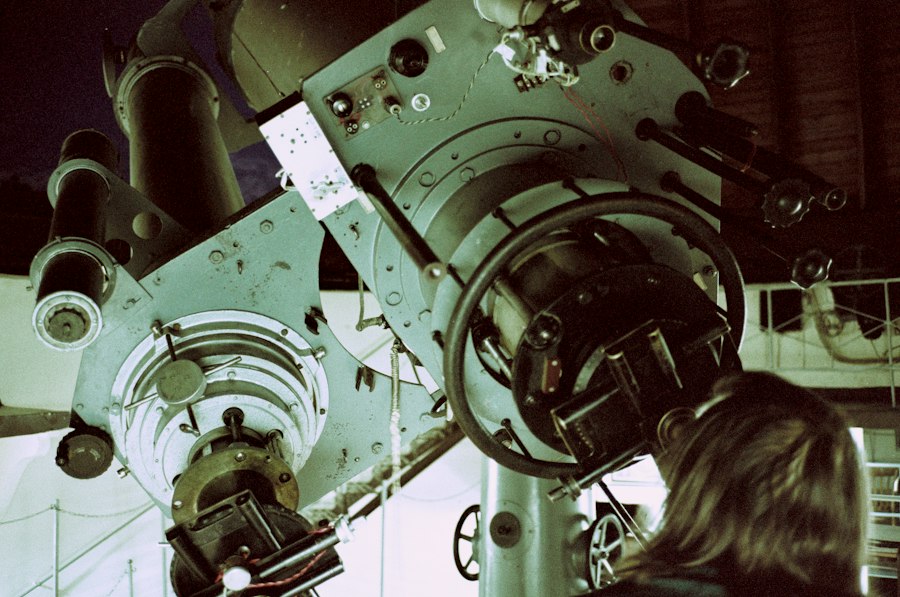
The initial segments of the documentary delved into the foundational tools that enabled humanity’s first significant leaps in understanding. The invention of the telescope, for instance, was framed not just as an observational instrument, but as a sophisticated piece of optical engineering that allowed us to ‘engineer’ our perception of distant celestial bodies. Similarly, the microscope was presented as a tool that engineered our vision into the microscopic realm, revealing a universe of complexity previously unimagined. The film emphasized how these early advancements were not mere passive observations, but active interventions in our ability to perceive and therefore understand reality.
The Rise of Theoretical Frameworks: Equations as Blueprints
Dr. Thorne then transitioned to the development of theoretical physics, skillfully reframing abstract equations as detailed blueprints for the universe. Newton’s laws of motion and gravitation, Einstein’s theory of relativity, and Maxwell’s equations for electromagnetism were presented as elegant, albeit complex, engineering schematics that described how the universe was built and how its components interacted. The documentary highlighted the predictive power of these theories, demonstrating how they weren’t just descriptive but prescriptive, allowing engineers to predict and manipulate physical phenomena.
The Engineering of Measurement: Quantifying the Infinite
A significant portion of the film was dedicated to the crucial role of measurement in engineering physics. Thorne argued that without precise measurement, theoretical frameworks would remain abstract curiosities. The journey from rudimentary measurements to the highly sophisticated techniques employed today was showcased as a testament to human ingenuity in overcoming the challenges of quantifying the vast and the infinitesimally small.
From Sundials to Atomic Clocks: The Evolution of Precision
The documentary traced the evolution of measurement tools, from ancient sundials and water clocks to modern atomic clocks and interferometers. This progression was presented as a continuous engineering feat, each advancement driven by the need for greater precision to test and refine theoretical models. The film showed how the development of increasingly sensitive instruments allowed physicists to probe deeper into the fabric of reality, revealing phenomena that challenged existing paradigms.
The Challenge of the Unseen: Detecting Gravitational Waves
The detection of gravitational waves was presented as a paramount example of engineering physics in action. Dr. Thorne explained the immense technical hurdles involved in detecting these minuscule ripples in spacetime, ripples generated by cataclysmic cosmic events. The design and construction of observatories like LIGO and Virgo were depicted as extraordinary feats of engineering, requiring unprecedented levels of precision and noise reduction. The successful detection was hailed not just as a scientific breakthrough, but as a triumph of human engineering in its ability to perceive the imperceptible.
For those interested in the fascinating intersection of engineering and physics, a related article can be found on Freaky Science, which delves into the latest advancements and applications in the field. This article explores how engineering physics is shaping modern technology and innovation, providing insights into the principles that drive various engineering solutions. To read more about this intriguing topic, visit the article at Freaky Science.
Deconstructing the Cosmos: The Art of the Experiment
“Unraveling the Universe” placed a strong emphasis on the experimental aspect of engineering physics. Thorne articulated that while theories provide the blueprints, experiments are the construction sites where these blueprints are tested, refined, and sometimes, dramatically rewritten. The film showcased how physicists, through meticulous experimental design, actively ‘engineer’ phenomena to observe them under controlled conditions.
The Particle Accelerator: Building Worlds in Miniature
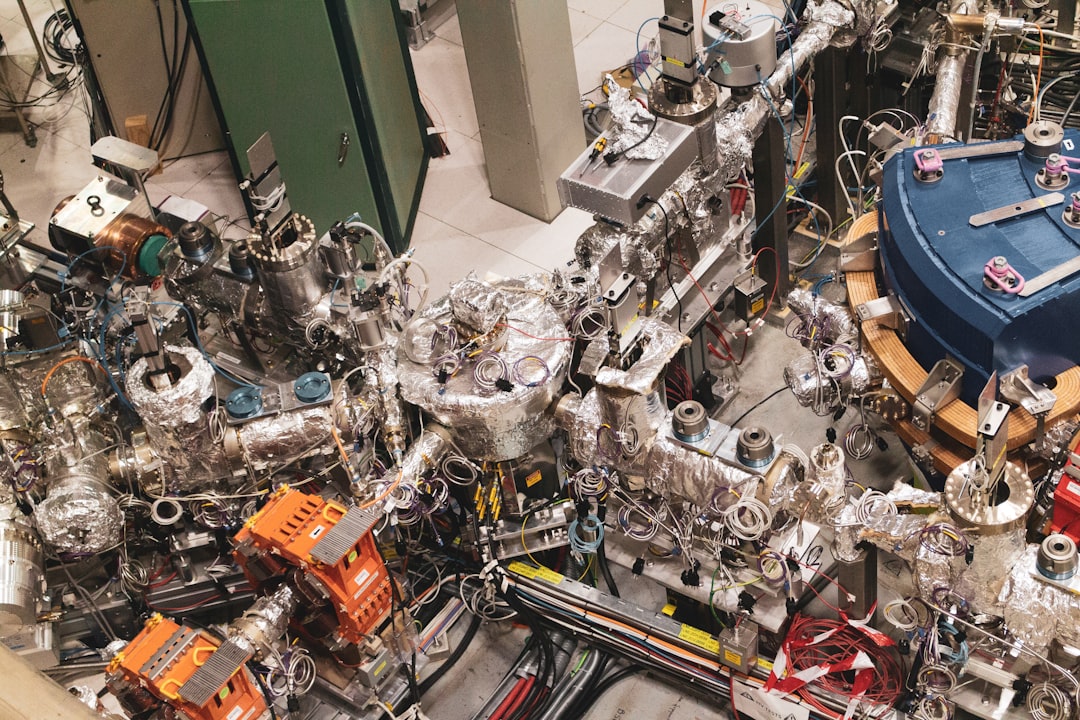
The documentary dedicated a substantial segment to particle accelerators, often referred to as the “factories of physics.” Dr. Thorne explained that these colossal machines are not merely designed to collide particles; they are engineered environments that allow scientists to recreate the conditions of the early universe. The scale, complexity, and precision required to build and operate accelerators like the Large Hadron Collider were presented as a testament to the collaborative power of engineering and physics.
Recreating the Big Bang: The Genesis Collider
The film vividly illustrated how particle accelerators, by smashing particles together at near light speed, are effectively recreating miniature versions of the Big Bang. This process allows physicists to study the fundamental forces and particles that governed the universe in its nascent moments. Thorne explained how the engineering challenges involved in achieving these high energies, controlling particle beams, and detecting the resulting debris are immense, requiring expertise in fields ranging from cryogenics and vacuum technology to advanced computing and data analysis.
Unveiling the Higgs Boson: The Prize of Particle Physics
The discovery of the Higgs boson was presented as a crowning achievement of this experimental approach. The documentary detailed the decades-long quest to find this elusive particle, the key to understanding mass. Thorne highlighted how the scientific community, through a global collaborative effort, engineered experiments with unprecedented sensitivity and data-gathering capabilities. The film showcased the intricate detectors designed to capture the fleeting signatures of the Higgs boson, emphasizing the meticulous engineering that underpinned this groundbreaking discovery.
The Observational Arena: Telescopes as Cosmic Eyes
Beyond particle accelerators, the documentary also explored the engineering of astronomical observation. Thorne argued that telescopes, from ground-based behemoths to space-based observatories, are engineered extensions of our senses, designed to capture the faintest whispers from the farthest reaches of the universe.
Hubble and Beyond: Engineering for the Void
The film featured the iconic Hubble Space Telescope as a prime example of engineering physics at its most ambitious. Thorne discussed the challenges of building and maintaining an instrument in the harsh environment of space, highlighting the intricate design considerations for optics, power systems, and communication. The subsequent generation of space telescopes, such as the James Webb Space Telescope, were presented as even more advanced feats of engineering, pushing the boundaries of what is observable.
The Quest for Exoplanets: Engineering Detection
The ongoing search for exoplanets was also framed through the lens of engineering physics. Thorne explained how various detection methods, such as the transit method and radial velocity method, rely on sophisticated engineering to measure incredibly subtle changes in starlight or stellar motion. The development of advanced spectrographs and photometers were showcased as crucial engineering innovations that enable us to identify worlds beyond our solar system.
The Blueprint of the Universe: Mathematical Models and Their Engineering
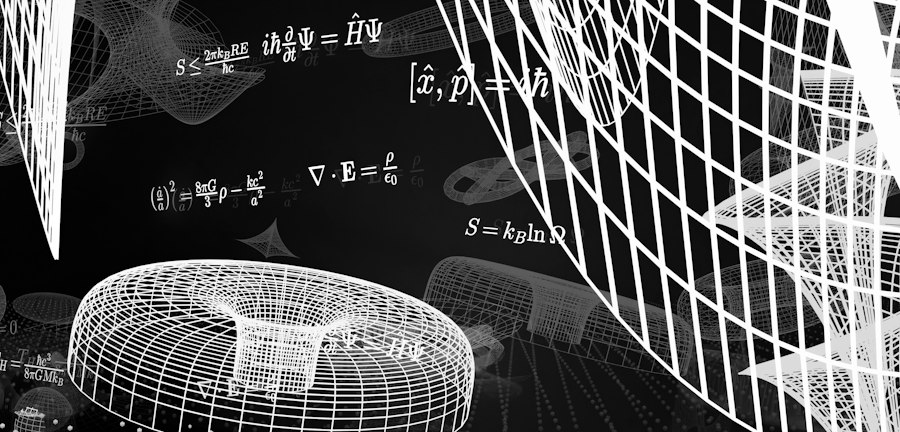
The documentary emphasized the profound synergy between mathematical models and their engineering realization. Dr. Thorne argued that mathematical frameworks are the initial designs, but their true power lies in their translation into tangible engineering solutions that can be tested and applied.
In exploring the fascinating world of engineering physics, one can gain deeper insights by watching a captivating documentary that delves into the principles and applications of this field. For those interested in expanding their knowledge, a related article can be found at Freaky Science, which discusses various innovations and breakthroughs that have emerged from engineering physics. This resource complements the documentary by providing additional context and examples that illustrate the real-world impact of these scientific principles.
Equations as Predictive Tools: From Theory to Application
Thorne elaborated on how fundamental equations of physics, once derived, become powerful predictive tools for engineers. He presented examples of how these equations are used to design everything from bridges and aircraft to microchips and medical devices. The film illustrated that the understanding of physics is not an end in itself but a foundation upon which technological progress is built.
The Engineering of Flight: Aerodynamics and Relativity
The principles of aerodynamics, derived from fluid dynamics and Newtonian mechanics, were shown as the core engineering concepts behind flight. The documentary explored how these principles, coupled with an understanding of materials science and propulsion engineering, have enabled humanity to conquer the skies. The film also touched upon the subtle yet crucial role of relativistic effects in high-speed flight and satellite navigation, demonstrating how even abstract physics has practical engineering implications.
The Digital
Pull Harder… and This Material Suddenly Gets Shorter
FAQs
What is engineering physics?
Engineering physics is a branch of physics that applies the principles of physics to solve engineering problems. It involves the study of various physical phenomena and their applications in technology and engineering.
What is the significance of engineering physics?
Engineering physics plays a crucial role in developing new technologies, designing innovative products, and solving complex engineering challenges. It provides a strong foundation in both physics and engineering principles, making it a versatile and interdisciplinary field.
What can viewers expect from an engineering physics documentary?
An engineering physics documentary typically explores the intersection of physics and engineering, showcasing real-world applications of physics principles in engineering projects. Viewers can expect to learn about cutting-edge technologies, innovative research, and the impact of engineering physics on society.
Who are the key figures in the field of engineering physics?
Key figures in the field of engineering physics include renowned physicists and engineers who have made significant contributions to the development of new technologies and advancements in engineering. These individuals often lead research teams, work on groundbreaking projects, and inspire future generations of engineers and physicists.
How can someone pursue a career in engineering physics?
To pursue a career in engineering physics, individuals typically need to earn a degree in engineering physics or a related field, such as physics or mechanical engineering. They can then explore opportunities in research and development, academia, industry, or government agencies where their skills in physics and engineering can be applied.