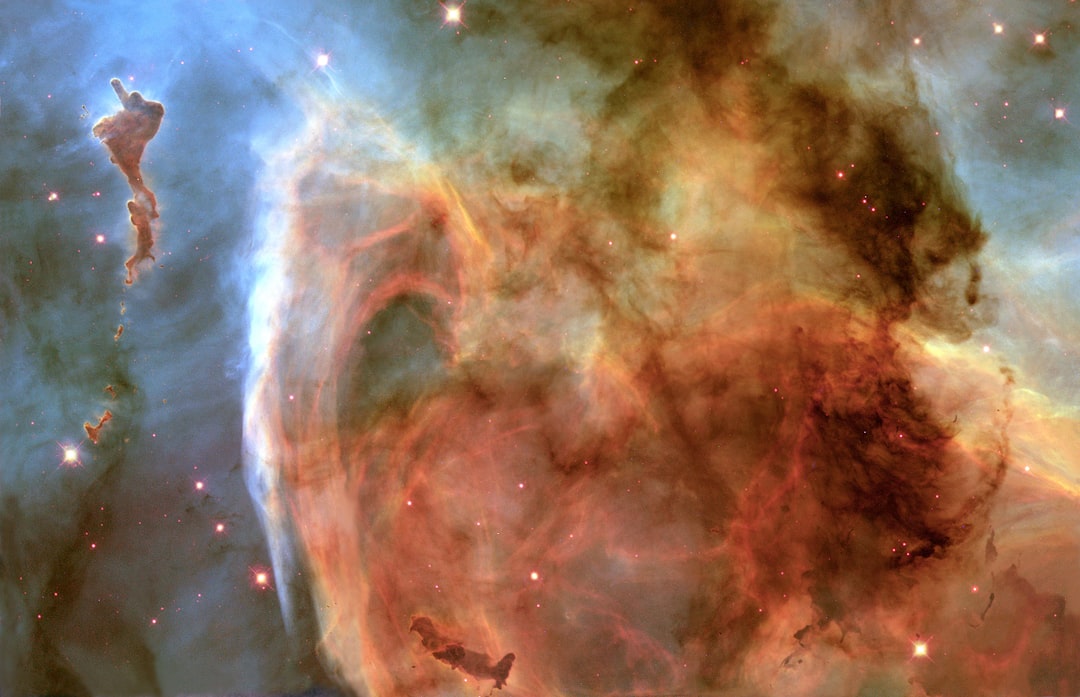
The universe, a canvas of unimaginable beauty and mystery, has been revealed to humanity in unprecedented detail thanks to the Hubble Space Telescope. Its iconic images, bursting with color and cosmic grandeur, have graced textbooks, inspired art, and fueled our collective imagination. Yet, the breathtaking vistas captured by Hubble are not raw snapshots plucked directly from the void. They are the product of a complex and intricate process of image processing, a digital alchemy that transforms faint starlight into the stunning visuals we have come to know. Unveiling the magic behind these images requires delving into the scientific and technical journey from raw data to artistic masterpiece.
The Hubble Space Telescope operates as a sophisticated observatory, its primary function to collect light from distant celestial objects. This light, a stream of photons, is detected by highly sensitive instruments aboard the spacecraft. These instruments, each designed to capture different wavelengths of light – from ultraviolet to near-infrared – convert the incoming photons into digital signals. This process is the very genesis of the data that will eventually form an image.
The Instruments of Observation: Eyes on the Cosmos
Hubble is equipped with a suite of advanced scientific instruments, each playing a crucial role in its observational capabilities. These instruments are the telescope’s “eyes,” meticulously designed to capture specific types of light.
The Wide Field Camera 3 (WFC3): A Versatile Workhorse
The WFC3, a later addition to Hubble, is one of its most powerful cameras. It can observe in both ultraviolet, visible, and near-infrared light, providing astronomers with a broad spectrum of data. This versatility allows WFC3 to capture the formation of stars in nebulae, the light from distant galaxies, and the atmospheres of exoplanets. Its ability to operate in multiple wavelengths is critical for understanding the diverse physical processes occurring in the universe.
The Advanced Camera for Surveys (ACS): Peering Deeper
The ACS, another key instrument, was designed to conduct wide-field imaging surveys of the sky. It excels at capturing faint objects and observing large areas of the sky efficiently. ACS has been instrumental in pushing the frontiers of cosmology, enabling the discovery of thousands of galaxies in the early universe and contributing to the understanding of dark energy.
Spectrographs: Decoding the Light’s Composition
While cameras capture images, spectrographs break down light into its constituent wavelengths, revealing the chemical composition, temperature, and velocity of celestial objects. These instruments are vital for scientific analysis, but their output is often not directly visual. The data they produce is interpreted and analyzed by scientists to extract crucial physical information about the universe.
The Digital Signal: Raw Data in Its Purest Form
Once the photons are detected and converted, they are translated into a stream of digital data. This raw data, often referred to as “calibrated files” or “FITS files” (Flexible Image Transport System), represents the telescope’s measurements of light intensity at specific locations on its detectors. At this stage, the data is far from the vibrant images we see. It is typically grayscale, noisy, and requires significant manipulation to reveal the underlying cosmic structures. The sheer volume of data generated by Hubble is immense, requiring sophisticated data management and storage systems.
For those interested in a deeper understanding of the Hubble Space Telescope’s image processing techniques, a related article can be found at Freaky Science. This resource provides insights into the methods used to enhance and interpret the stunning images captured by Hubble, shedding light on the intricate processes that transform raw data into breathtaking visuals of the cosmos.
From Grayscale to Color: The Art of Representative Imaging
One of the most striking aspects of Hubble images is their vibrant color. However, it’s crucial to understand that these colors are not always what the human eye would perceive if it could see the object directly. Instead, they are a powerful tool used by scientists to represent different physical properties and enhance our understanding.
The Invisible Spectrum: Capturing Beyond Human Vision
Many celestial objects emit light in wavelengths that are invisible to the human eye, such as ultraviolet and infrared radiation. Hubble’s instruments are designed to detect these invisible wavelengths. To translate this information into a visible color image, astronomers assign specific colors to different wavelength bands.
Pseudo-Coloring: A Scientific Representation
This process is known as pseudo-coloring. For example, ultraviolet light might be assigned blue, visible light green, and infrared light red. By combining images taken through different filters, each corresponding to a specific wavelength range, scientists can create a composite image. The resulting colors reveal the distribution of different elements, the temperature of gas and dust, and the presence of specific chemical compounds. This scientific representation allows us to visualize information that would otherwise remain hidden.
Enhancing Detail: Revealing Subtle Structures
Beyond representing invisible light, color is also used to enhance the visibility of subtle details within an image. By carefully adjusting the color mapping, astronomers can highlight faint structures, differentiate between gas clouds of varying densities, and reveal the intricate patterns within nebulae. This manipulation is not about fabricating information but about making existing, scientifically relevant data more accessible and interpretable.
Combining Filters: Building the Composite Image
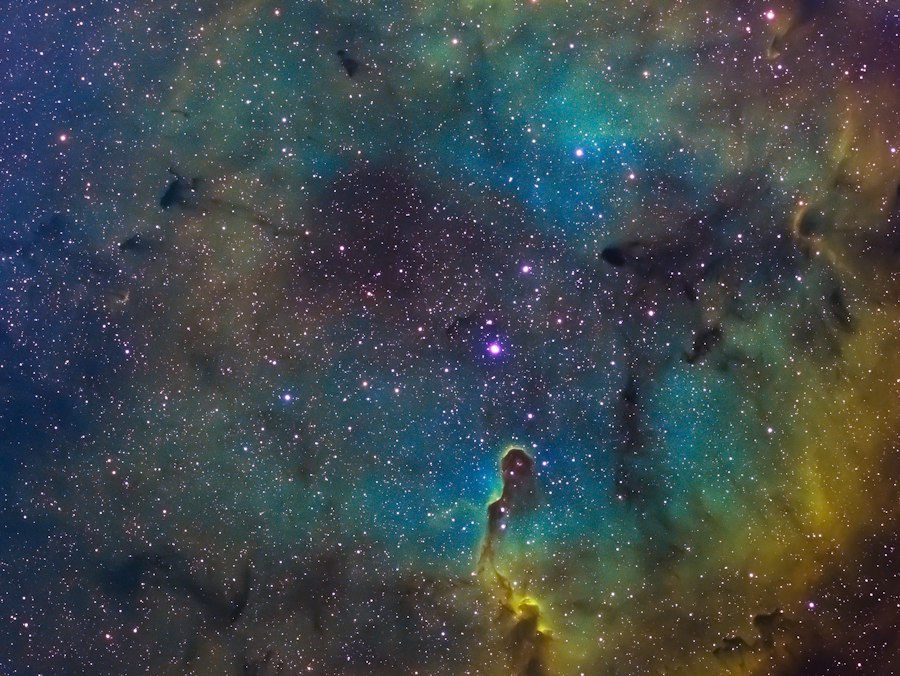
Hubble typically takes multiple exposures of the same celestial object, each through a different color filter. These filters isolate specific portions of the electromagnetic spectrum. For instance, an image might be taken through a filter that captures light primarily from ionized hydrogen (H-alpha), another for doubly ionized oxygen (O III), and another for sulfur.
The Role of Filters: Isolating Specific Light
Filters are optical components that allow only specific wavelengths of light to pass through. They are fundamental to how Hubble gathers data across different parts of the electromagnetic spectrum. Each filter is carefully chosen based on the scientific questions being addressed. For example, a filter might be selected to isolate the emission from a particular element, allowing astronomers to study its distribution and abundance.
Overlaying and Alignment: Stitching Together the Cosmos
Once the individual filtered images are processed and calibrated, they are digitally overlaid and aligned with extreme precision. This step is critical for ensuring that features in each filtered image correspond correctly to the same physical location in space. Any misalignment could lead to distorted or inaccurate representations of the celestial object. Sophisticated software is used to perform this precise alignment.
Navigating the Noise: Calibration and Artifact Removal
The raw data from Hubble, while scientifically valuable, is often marred by various forms of noise and instrumental artifacts. These imperfections can obscure faint details and lead to misinterpretations. Therefore, a crucial stage in image processing is calibration and artifact removal, a meticulous process that cleans the data and brings forth the true cosmic signal.
Understanding Instrumental Noise: The Unwanted Companions
Space is not silent, and neither are telescopes. Even with Hubble’s advanced technology, its instruments are susceptible to various sources of noise. This noise can arise from the detectors themselves, from stray light within the telescope, or even from cosmic rays that strike the sensors.
Detector Noise: The Inherent Imperfection
The electronic detectors used in Hubble, while highly sensitive, have inherent imperfections that generate a small amount of random signal, even in the absence of incoming light. This “dark current” can vary with temperature and time, and must be accounted for.
Cosmic Rays: Fleeting Interlopers
Cosmic rays, high-energy particles from space, can occasionally strike Hubble’s detectors. These impacts create bright, spurious pixels that can be mistaken for actual celestial sources. Sophisticated algorithms are employed to identify and remove these cosmic ray hits.
Calibration Frames: The Baseline of Purity
To accurately remove instrumental effects, astronomers use a set of “calibration frames.” These are special exposures taken under controlled conditions to characterize the telescope’s behavior.
Bias Frames: Reading Out the Detector
Bias frames are taken with the telescope’s shutter closed and the instrument exposed for the same duration as an astronomical observation. They capture the electronic “bias” signal present in the detector readout, which is then subtracted from the actual science data.
Dark Frames: Measuring Intrinsic Detector Signal
Dark frames are taken with the telescope’s shutter closed but with a longer exposure time, similar to a science exposure. These frames measure the “dark current” – the signal generated by the detector itself due to thermal energy. Subtracting dark frames helps to remove this intrinsic detector signal from the science data.
Flat-Field Frames: Correcting for Detector Non-Uniformities
Flat-field frames are taken by imaging a uniformly illuminated source, such as the inside of the telescope illuminated by a special lamp or a uniformly bright sky. These frames reveal variations in the detector’s sensitivity across its surface and any subtle optical imperfections. By dividing the science data by the normalized flat-field frame, astronomers can correct for these non-uniformities, ensuring that the brightness of a celestial object is accurately represented across the entire image.
Artifact Removal Techniques: Cleaning the Cosmic Canvas
Once the calibration frames are used to correct the raw science data, further processing is applied to remove any remaining artifacts.
Cosmic Ray Rejection: Identifying and Erasing Spurious Signals
As mentioned earlier, cosmic rays create bright streaks or spots in the images. Algorithms compare multiple exposures of the same region of the sky. Pixels that appear bright in only one or a few exposures, and are not consistent with astronomical sources, are identified as cosmic ray hits and masked or interpolated over.
Dithering: Capturing Multiple Perspectives
Hubble often employs a technique called “dithering,” where the telescope slightly shifts its pointing between successive exposures of the same target. This is done for several reasons, including cosmic ray removal. By dithered exposures, a cosmic ray artifact present in one image will likely fall on a different location in another, making it easier to identify and reject. Dithering also helps to fill in gaps between detector pixels and improve the overall sampling of the image.
Combining the Pieces: Mosaicking and Super-Resolution

Many of Hubble’s most spectacular images are not single snapshots but intricate mosaics, painstakingly stitched together from numerous individual exposures. This process allows astronomers to capture vast swathes of the sky with unprecedented detail and resolution, creating a panoramic view of cosmic wonders.
The Need for Mosaics: Expanding the Field of View
Hubble’s instruments have a limited field of view. To image large nebulae, entire galaxies, or vast regions of the universe, multiple overlapping exposures are required. Mosaicking is the technique used to seamlessly combine these individual images into a single, cohesive picture.
Overlapping Exposures: Building a Larger Picture
When imaging a large target, Hubble’s pointing is meticulously planned to ensure that successive exposures overlap. This overlap is crucial for two main reasons: it allows for accurate alignment and stitching of the images, and it provides redundancy, which is helpful for cosmic ray rejection and other artifact removal.
Stitching Algorithms: Seamlessly Merging Images
Specialized software algorithms are used to align and “stitch” these overlapping exposures together. These algorithms identify common features in the overlapping regions and use them to precisely register the images. The process involves carefully adjusting the position and orientation of each individual image before blending them to create a seamless mosaic.
Super-Resolution: Pushing the Limits of Detail
In some cases, astronomers might combine multiple exposures of the same region of the sky, taken with slight offsets (dithering). This technique, when applied with advanced algorithms, can achieve a form of “super-resolution,” effectively creating an image with higher detail than would be possible from any single exposure.
The Power of Dithering for Resolution
By dithering, different parts of the celestial object are sampled by different pixels in the detector across multiple exposures. When these dithered images are combined, sophisticated reconstruction algorithms can interpolate between these sampled points, effectively creating a higher-resolution representation of the original object. This is akin to filling in the gaps and smoothing out the jagged edges that might be present in individual exposures.
Combining Multiple Observations: Deepening the Cosmic View
The ability to mosaic and create super-resolution images allows Hubble to reveal the intricate structures within distant galaxies, the delicate tendrils of nebulae, and the fine details of planetary surfaces. These techniques are essential for pushing the boundaries of what we can observe and understand about the universe.
The intricate process of image processing for the Hubble Space Telescope is fascinating, as it involves a combination of advanced technology and artistic interpretation to bring the wonders of the universe to life. For those interested in delving deeper into this topic, a related article can be found at Freaky Science, which explores the techniques used to enhance and analyze astronomical images. This resource provides valuable insights into how scientists and astronomers work together to transform raw data into stunning visual representations of celestial phenomena.
The Final Polish: Color Balancing and Presentation
| Image Processing Step | Description |
|---|---|
| Data Acquisition | Raw data collected by the Hubble Space Telescope’s instruments. |
| Calibration | Correction of instrumental and environmental effects on the raw data. |
| Alignment | Matching and aligning multiple images to create a single composite image. |
| Stacking | Combining multiple images to improve signal-to-noise ratio and enhance details. |
| Deconvolution | Removing blurring effects caused by the Earth’s atmosphere or telescope imperfections. |
| Color Balancing | Adjusting color channels to create a visually appealing and scientifically accurate image. |
Once the mosaic is complete and the data has been meticulously calibrated and assembled, the image undergoes a final stage of processing: color balancing and presentation. This is where the scientifically representative colors are refined, and the image is prepared for public release, transforming the raw data into the awe-inspiring visuals that capture our imagination.
Scientific Integrity vs. Aesthetic Appeal: A Delicate Balance
The goal of Hubble image processing is to maintain scientific integrity while also creating visually compelling images that can be appreciated by the public. This involves a careful balancing act.
Iterative Refinement: Fine-Tuning the Colors
The pseudo-coloring process is iterative. Astronomers and image processing specialists work together to fine-tune the color maps. They adjust the brightness, contrast, and color balance to highlight specific features and scientific phenomena without introducing misleading information. The aim is to make the science visible and comprehensible.
Expert Interpretation: Understanding the Cosmic Story
The interpretation of the colors is paramount. Each color in a Hubble image tells a story about the physical conditions of the object being observed. For example, the vibrant reds in nebulae often indicate the presence of ionized hydrogen, a key ingredient in star formation. Blues might represent hotter stars or dust, while greens could signify other elements or compounds. Understanding these scientific meanings is crucial for a correct interpretation of the image.
Public Outreach and Communication: Sharing the Universe
The final processed images are a powerful tool for public outreach and education. They serve to inspire curiosity about space exploration and to communicate the groundbreaking discoveries made by the Hubble Space Telescope.
Capturing the Imagination: Artistry in Science
The aesthetic appeal of Hubble images is undeniable. They are often described as works of art, and indeed, there is an artistic element to their creation. However, this artistry is rooted in scientific data and serves to make complex scientific information accessible and engaging to a broad audience. The beauty of these images is a testament to the wonders of the universe itself, revealed through the lens of human ingenuity.
The Role of the Space Telescope Science Institute (STScI): Custodians of Cosmic Visions
The Space Telescope Science Institute (STScI) plays a pivotal role in Hubble’s mission, including the processing and release of its iconic images. Their teams of scientists and image specialists are responsible for ensuring the scientific accuracy and visual appeal of the final products, making the universe accessible to everyone.
In conclusion, the breathtaking images captured by the Hubble Space Telescope are not simply photographs of space; they are the result of a sophisticated and multi-faceted process of image processing. From the initial capture of photons by its advanced instruments to the intricate calibration, mosaic construction, and careful color balancing, each step is a testament to scientific rigor and artistic vision. The “magic” of Hubble images lies not in artificial embellishment, but in the profound ability of human ingenuity to translate the faint whispers of distant stars into a visual symphony that continues to expand our understanding and ignite our imagination about the vast and wondrous universe we inhabit.

The Space Photos Are Real—But Your Eyes Would See This
FAQs
What is the Hubble Space Telescope?
The Hubble Space Telescope is a space telescope that was launched into low Earth orbit in 1990 and remains in operation. It is a collaboration between NASA and the European Space Agency.
How does the Hubble Space Telescope capture images?
The Hubble Space Telescope captures images using a combination of mirrors and sensors. Light from distant objects in space is collected by the telescope’s primary mirror and then directed to its various instruments for analysis and imaging.
What is image processing in the context of the Hubble Space Telescope?
Image processing in the context of the Hubble Space Telescope refers to the techniques and software used to enhance and analyze the raw images captured by the telescope. This can involve correcting for distortions, removing noise, and enhancing details to create the stunning images that the telescope is known for.
Why is image processing important for Hubble Space Telescope images?
Image processing is important for Hubble Space Telescope images because it allows astronomers to extract as much information as possible from the raw data. By enhancing and analyzing the images, scientists can better understand the objects and phenomena they are observing in space.
What are some common image processing techniques used for Hubble Space Telescope images?
Common image processing techniques used for Hubble Space Telescope images include deconvolution to sharpen details, color balancing to enhance visual appeal, and noise reduction to improve image quality. Additionally, astronomers use specialized software to create composite images from multiple exposures taken with different filters.