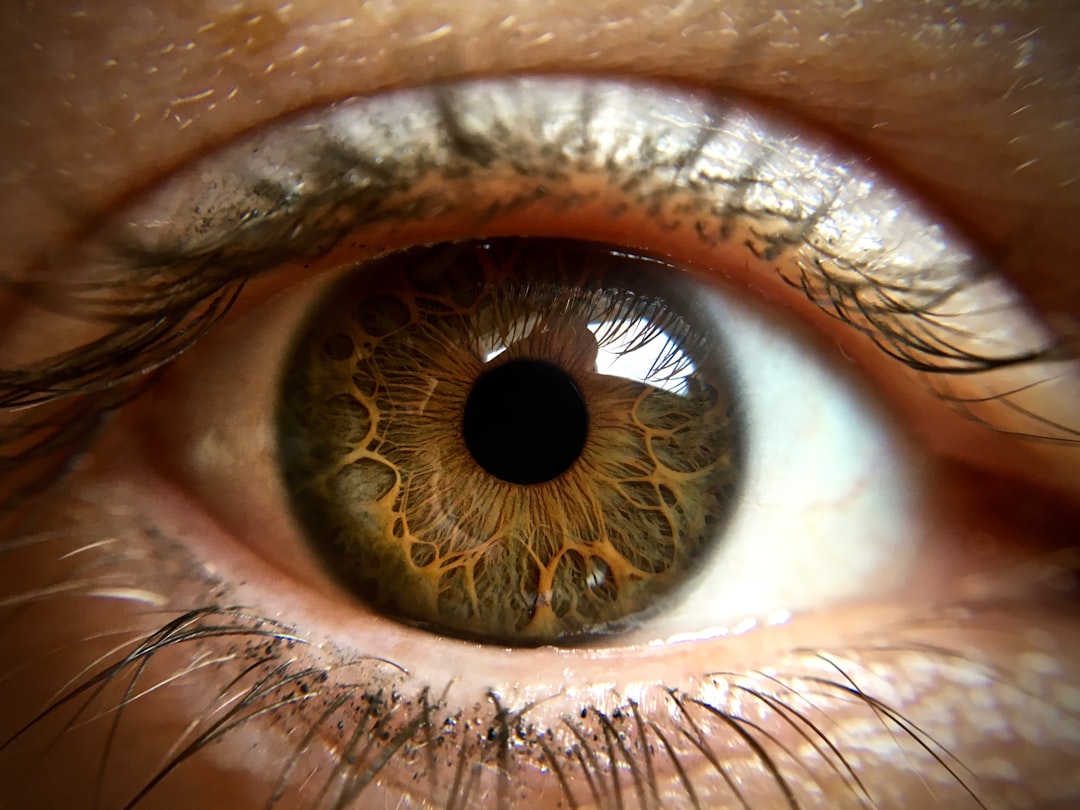
The world we perceive is a vibrant tapestry of hues and shades, a symphony of light that paints our reality. Yet, this visual feast is a carefully curated experience, an edited version of what truly exists in the electromagnetic spectrum. Humans, despite our remarkable visual acuity, are surprisingly limited in our ability to discern the subtlest nuances of color, particularly when light is scarce. This inherent limitation stems from a complex interplay of biological mechanisms within our eyes, the physics of light, and the evolutionary pressures that shaped our visual system. Understanding these constraints sheds light on why we cannot see faint colors, revealing a fascinating landscape of visual perception that extends far beyond our everyday experience.
At the heart of our ability to perceive color lies a remarkable class of photoreceptor cells within the retina: the cone cells. These specialized neurons are responsible for our sharp, detailed, and color vision. However, their sensitivity to light is relatively low, meaning they require a certain intensity of light to be activated. Complementing the cones are another type of photoreceptor, the rod cells. These cells are far more sensitive to light than cones and are crucial for vision in dim conditions. The fundamental trade-off, however, is that rod cells are incapable of distinguishing between different wavelengths of light, meaning they contribute to our perception of brightness but not to color.
The Three Types of Cones and Their Spectral Sensitivities
Human color vision is trichromatic, meaning it relies on the stimulation of three distinct types of cone cells. Each type of cone is maximally sensitive to a specific range of wavelengths, loosely corresponding to blue, green, and red light.
S-Cones: The Blue Perceivers
The S-cones, or short-wavelength sensitive cones, are primarily responsible for our perception of blue hues. Their peak sensitivity lies in the shorter wavelengths of the visible spectrum, around 420-440 nanometers. While essential for a complete color experience, S-cones are the least numerous of the three cone types and are also generally less sensitive than the other two. This lower sensitivity plays a crucial role in our difficulty perceiving faint blues.
M-Cones: The Green Detectors
The M-cones, or medium-wavelength sensitive cones, are the most abundant type of cone in the human retina. They are most sensitive to wavelengths in the middle of the visible spectrum, around 530-540 nanometers, which we perceive as green. Their abundance and relatively high sensitivity contribute significantly to our ability to see a wide range of greens and the finer gradations within this color family.
L-Cones: The Red Responders
The L-cones, or long-wavelength sensitive cones, are responsible for our perception of red and yellow hues. Their peak sensitivity is in the longer wavelengths, around 560-580 nanometers. While we perceive their stimulation as red, their broader sensitivity also contributes to our perception of yellows and oranges when combined with the signals from M-cones.
The Role of Light Intensity in Cone Activation
The activation of cone cells is not an all-or-nothing phenomenon; it is directly proportional to the intensity of the light that strikes them. When light levels are high, photons have sufficient energy to stimulate the photopigments within the cones, triggering a cascade of biochemical events that ultimately lead to a neural signal being sent to the brain. As light intensity decreases, fewer photons are available to activate the cones. This means that even if a particular wavelength of light is present, if its intensity is below a certain threshold, it will not be enough to reliably stimulate the cones and produce a discernible color perception. This is a fundamental reason why faint colors become invisible in dim light.
The Dominance of Rods in Low Light Conditions
As light levels dim, our vision transitions from cone-dominated to rod-dominated. Rod cells, with their extreme sensitivity, are able to detect even the faintest traces of light. However, they lack the photopigments necessary to differentiate between wavelengths. Therefore, in conditions where only rods are active, our perception is largely monochromatic, perceived as shades of gray. This explains why, in near darkness, we can still see shapes and movement but lose our ability to perceive color. The faint colors that might be present in such low light are simply not strong enough to overcome the threshold for cone activation, and our visual system defaults to the more sensitive, albeit color-blind, rod system.
Human eyes are remarkably complex, yet they have limitations when it comes to perceiving faint colors. This phenomenon can be attributed to the structure and function of the photoreceptors in our retinas, particularly the rods and cones. While cones are responsible for color vision, rods are more sensitive to light but do not detect color. For a deeper understanding of this topic, you can explore the article on the science behind human vision at Freaky Science, which delves into how our eyes process light and color, shedding light on why we struggle to see faint hues.
The Physics of Light and Color Perception
Our perception of color is not solely an internal biological process; it is also intrinsically linked to the physical properties of light itself. The way light interacts with objects and the wavelengths that are reflected or transmitted play a critical role in determining what colors we see. When light intensity is low, these physical interactions become more subtle, further contributing to the challenge of perceiving faint colors.
Wavelengths of Light: The Electromagnetic Spectrum
Visible light is a small portion of the electromagnetic spectrum, ranging from approximately 400 to 700 nanometers. Each wavelength within this range corresponds to a different color, from violet at the shorter end to red at the longer end. Objects appear colored because they absorb certain wavelengths of light and reflect others. The reflected wavelengths are what reach our eyes and are interpreted by our brain as color.
The Concept of Spectral Reflectance
The spectral reflectance of an object describes the proportion of light that it reflects at each wavelength of the visible spectrum. A red apple, for instance, absorbs most wavelengths of light but reflects a significant portion of red light, making it appear red. A white object reflects nearly all wavelengths equally, while a black object absorbs almost all wavelengths.
The Intensity of Light: Photon Flux
The intensity of light is a measure of the number of photons striking a given area per unit of time. Higher light intensity means a greater flux of photons. For our photoreceptor cells to be activated, a sufficient number of photons must interact with their photopigments. In low light conditions, the photon flux is significantly reduced, making it harder for these cells to reach their activation threshold.
Photon Counting in Vision
At a fundamental level, our visual system can be thought of as performing a form of photon counting. When enough photons of a particular wavelength hit the appropriate cone cells, a signal is generated. In very low light, the random arrival of photons might sometimes trigger a cone cell, leading to a momentary sensation of color, but these events are infrequent and unreliable, making it difficult to perceive a consistent color.
The Impact of Light Scattering and Absorption
The way light interacts with the atmosphere and the medium it travels through can also affect the intensity and spectral composition of light that reaches our eyes. For example, light scattered by particles in the air can reduce the overall intensity of light. Similarly, absorption by pigments in the environment can selectively reduce certain wavelengths. In low light conditions, these effects can further diminish the already limited available light, making faint colors even harder to discern.
Atmospheric Effects on Perceived Color
On a clear day, sunlight reaches us with its full spectral range. However, through haze or fog, light can be scattered, altering the perceived color. Similarly, the color of the sky itself is a result of Rayleigh scattering, where shorter wavelengths (blue) are scattered more effectively by atmospheric particles.
The Limits of Photoreceptor Sensitivity and Neural Processing
Beyond the physical properties of light and the basic mechanics of our photoreceptor cells, the intricate processes of neural signal transduction and brain interpretation also impose limitations on our ability to perceive faint colors. Even if a cone cell is minimally stimulated, the subsequent processing of that signal can be overwhelmed by noise or lack the necessary amplification.
The Absolute Threshold of Vision
There is an absolute threshold below which light is simply undetectable by the human eye. This threshold is determined by the sensitivity of our photoreceptors and the inherent noise in the biological system. While we can perceive single photons under ideal laboratory conditions, in natural viewing, the threshold is higher due to various factors.
The “Dark Light” and Stochastic Events
Even in complete darkness, our photoreceptor cells are not entirely inactive. Random thermal events can cause photopigments to isomerize, mimicking the effect of light absorption. This “dark light” or spontaneous activation can create a baseline level of neural activity, making it harder to distinguish true light signals from this inherent noise.
Signal-to-Noise Ratio in Photoreception
The ability to detect a faint color signal depends heavily on the signal-to-noise ratio. If the incoming light signal is weak, and the inherent biological noise is significant, the signal can be lost within the noise. This is akin to trying to hear a whisper in a crowded room.
Amplification in Phototransduction Cascade
The process of phototransduction, by which light energy is converted into an electrical signal, involves a cascade of biochemical reactions. This cascade provides amplification, meaning a single photon can ultimately lead to a significant change in the membrane potential of the photoreceptor. However, this amplification also has limits and can be affected by noise at various stages.
Neural Noise and the Brain’s Interpretation
Once a signal is generated by the photoreceptors, it is transmitted through a network of neurons in the retina and then to the brain. Each synapse and each neuron in this pathway can introduce its own form of noise. The brain then has to interpret these noisy signals to construct our conscious perception of color.
The Role of the Visual Cortex
The visual cortex, located in the occipital lobe of the brain, is where visual information is processed and interpreted. Even with precise input from the retina, the brain’s interpretation can be influenced by factors such as attention, expectation, and existing knowledge, all of which can subtly alter our perception of faint stimuli.
Evolutionary Pressures and the Adaptive Value of Color Vision

The limitations of human color vision are not arbitrary; they are the result of millions of years of evolution, shaped by the environmental challenges and adaptive needs of our ancestors. Our visual system is optimized for survival and reproduction in specific ecological niches, and the ability to see faint colors may not have always been a primary evolutionary advantage.
The “Dazzle Camouflage” Hypothesis and Predator Avoidance
One theory suggests that our visual system evolved to be less sensitive to extremely faint colors to avoid being overwhelmed by the subtle variations in the environment, which could be a form of “dazzle camouflage” used by prey. Conversely, a system tuned to more distinct colors would have allowed for better detection of predators or potential mates.
Avoiding Overstimulation in Complex Environments
In dense forests or under varied lighting conditions, a hyper-sensitive color vision might lead to sensory overload. Evolution might have favored a system that prioritizes clear perception of more pronounced colors for tasks like identifying ripe fruits, spotting predators, or recognizing social cues.
The Importance of Detecting Contrast and Movement
For our ancestors, detecting movement and contrast against the background was often more critical for survival than discerning subtle color variations. A highly sensitive system that could quickly pick out the slightest flicker of movement or the silhouette of a predator would have been a significant advantage.
The Dichromatic Vision of Many Mammals
Many mammals have dichromatic vision, meaning they have only two types of cone cells. This suggests that for many species, the evolutionary pressure for a full spectrum of color vision was not as strong as for primates. This highlights that color vision itself is not a universal necessity for survival.
The Energetic Cost of Complex Visual Systems
Maintaining and operating a complex visual system, especially one with a large number of highly specialized photoreceptor cells and extensive neural processing, comes with an energetic cost. Evolution tends to favor efficient solutions, and if the adaptive benefit of seeing extremely faint colors was marginal, then a less demanding visual system would be favored.
The human eye is an incredible organ, but it has its limitations, especially when it comes to perceiving faint colors. This phenomenon is largely due to the way our photoreceptors, specifically rods and cones, function under varying light conditions. For a deeper understanding of this topic, you can explore a related article that delves into the science behind our color perception and the challenges we face in low-light environments. To learn more, check out this insightful piece on faint colors and vision.
Extending Our Vision: Technology and Future Possibilities
| Reasons | Explanation |
|---|---|
| Limited Photoreceptors | The human eye has a limited number of photoreceptor cells, which are responsible for detecting different colors. This limits the ability to perceive faint colors. |
| Low Light Sensitivity | In low light conditions, the sensitivity of the photoreceptor cells decreases, making it difficult to perceive faint colors. |
| Color Perception Threshold | There is a threshold for color perception, and faint colors may not reach this threshold, making them difficult to see. |
| Brain Processing | The brain plays a role in processing and interpreting the signals from the photoreceptor cells, and faint colors may not be effectively processed. |
While our natural vision is limited, technological advancements are increasingly allowing us to peer beyond these biological constraints. By employing different physical principles and processing techniques, we can reveal the hidden colors that lie beyond our innate perception.
The Electromagnetic Spectrum Beyond Visible Light
The visible spectrum is just a small sliver of the electromagnetic spectrum. Technologies like infrared cameras can detect heat radiation, revealing patterns invisible to the naked eye. Ultraviolet photography can capture subtle differences in reflectivity that are not apparent in visible light.
Infrared Imaging for Thermal Detection
Infrared cameras detect emitted thermal radiation, allowing us to see objects based on their temperature. This has applications in night vision, medical diagnostics, and industrial inspections, revealing subtle heat signatures that might indicate underlying issues.
Ultraviolet Photography and Fluorescent Signatures
Ultraviolet photography can reveal patterns invisible to human eyes, such as the markings on flower petals that attract pollinators or the fluorescent properties of certain substances. This opens up a new dimension of visual information.
Advanced Image Processing and Color Enhancement
Sophisticated algorithms and image processing techniques can be used to enhance subtle color differences in digital images. By adjusting contrast, saturation, and color balance, faint colors that were previously imperceptible can be brought to the forefront.
False-Color Imaging for Scientific Visualization
In scientific fields, false-color imaging is often employed to represent data that is not directly visible as color. For instance, satellite imagery might use false colors to highlight differences in vegetation health or geological composition.
The Future of Human Vision Augmentation
The ongoing research in areas like optogenetics and neural interfaces holds the potential for augmenting human vision in unprecedented ways. Future technologies might allow us to selectively enhance the sensitivity of our cone cells, expand the range of wavelengths we can perceive, or even directly interface with our visual cortex to process information beyond our current biological limitations.
Optogenetic Interventions for Enhanced Photoreception
Optogenetics, which involves using light to control genetically modified cells, could potentially be used to engineer photoreceptor cells with altered spectral sensitivities or enhanced responsiveness to low light conditions.
Neural Implants and Direct Visual Input
The development of neural implants that can directly stimulate the visual cortex could bypass the limitations of the retina altogether, allowing for the direct perception of information from external sensors that capture a wider range of light or spectral data.
In conclusion, the human inability to perceive faint colors is a testament to the intricate evolutionary compromises that have shaped our visual system. While our current biological apparatus provides us with a rich and detailed perception of the world, it is also a system that operates within specific parameters of light intensity and spectral sensitivity. The limitations imposed by the number and sensitivity of our cone cells, the dominance of rods in low light, and the inherent noise in neural processing all contribute to this phenomenon. However, as technology continues to advance, our ability to explore and understand the hidden spectrum of light expands, revealing a universe of colors that lie just beyond our natural grasp. The exploration of these limitations not only deepens our appreciation for the marvel of human vision but also opens doors to exciting new possibilities for augmenting our perceptual abilities in the future.

The Space Photos Are Real—But Your Eyes Would See This
FAQs
1. Why can’t human eyes see faint colors?
Human eyes have three types of color receptors called cones, which are sensitive to red, green, and blue light. These cones are not as sensitive to faint colors, making it difficult for the eyes to perceive them.
2. What causes some colors to appear faint to the human eye?
Faint colors are often the result of low light levels or the presence of colors that are not within the range of sensitivity of the human eye’s cones. This can make it challenging for the eyes to distinguish these colors.
3. Can the ability to see faint colors be improved?
While the sensitivity of the human eye to faint colors cannot be significantly improved, technological advancements such as night vision goggles or cameras with enhanced low-light capabilities can help in perceiving faint colors.
4. Are there any biological reasons for the limitations in perceiving faint colors?
The limitations in perceiving faint colors are primarily due to the structure and function of the human eye’s cones. These cones have a threshold for detecting light, and faint colors may not reach this threshold, making them difficult to see.
5. How do animals with better night vision perceive faint colors?
Animals with better night vision often have a higher density of rod cells in their eyes, which are more sensitive to low light levels and can perceive faint colors more effectively than human eyes.